Budget-Friendly Healthy Meal Plan
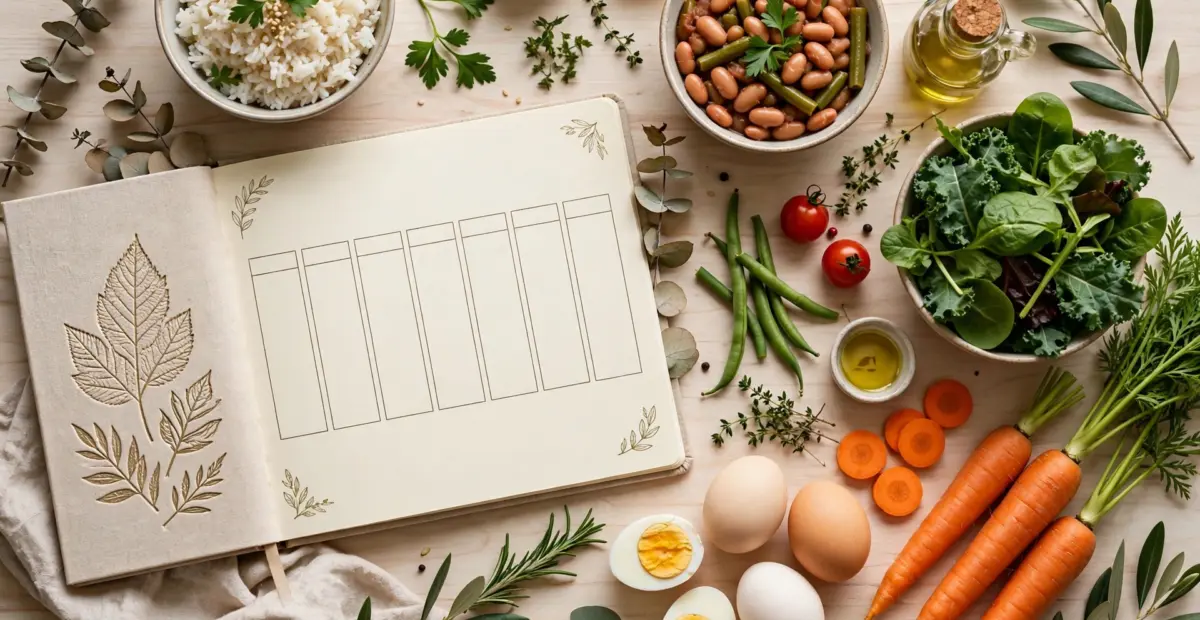
Eating well on a tight budget is less about willpower and more about planning. When you decide your meals before the week starts, you buy only what you need, you waste less, and you stop reaching for the most expensive option just because it is the closest one. A budget-friendly healthy meal plan is not a strict diet or a list of rules. It is a simple system: a few flexible meals, a pantry that does the heavy lifting, and a shopping list that repeats from week to week.
The good news is that the cheapest foods in the store are often the most nutritious ones. Dried beans, lentils, oats, brown rice, eggs, frozen vegetables, and seasonal fruit cost little per serving and keep you full for hours. The trick is building your week around them instead of treating them as an afterthought.
Start With a Budget, Not a Recipe Book
Before you plan a single meal, set a rough weekly food budget that fits your household. It helps to know what a low-cost nutritious diet actually looks like in numbers. The U.S. Department of Agriculture’s Thrifty Food Plan, its lowest-cost food plan, put the cost of a nutritious diet prepared entirely at home at $228 a week — $988 a month — for a reference family of four in December 2024. That figure assumes every meal and snack is cooked at home, which is exactly the habit this plan leans on.
Your number will differ depending on where you live, how many people you feed, and what you already have in the cupboard. The point is not to hit the USDA figure exactly. It is to give yourself a target, track what you actually spend for two or three weeks, and adjust from there. Most people are surprised to find that takeout coffees, delivery fees, and impulse snacks — not groceries — are what blow the budget.
Read also: How to Plan Nutritious Meals on a Budget
The Pantry-First Rule
The cheapest meal is the one you make from food you already own. Before you write your shopping list, open the cupboard and the freezer and build the week around what is already there. A bag of lentils, a tin of tomatoes, and some rice is already the start of three different dinners.
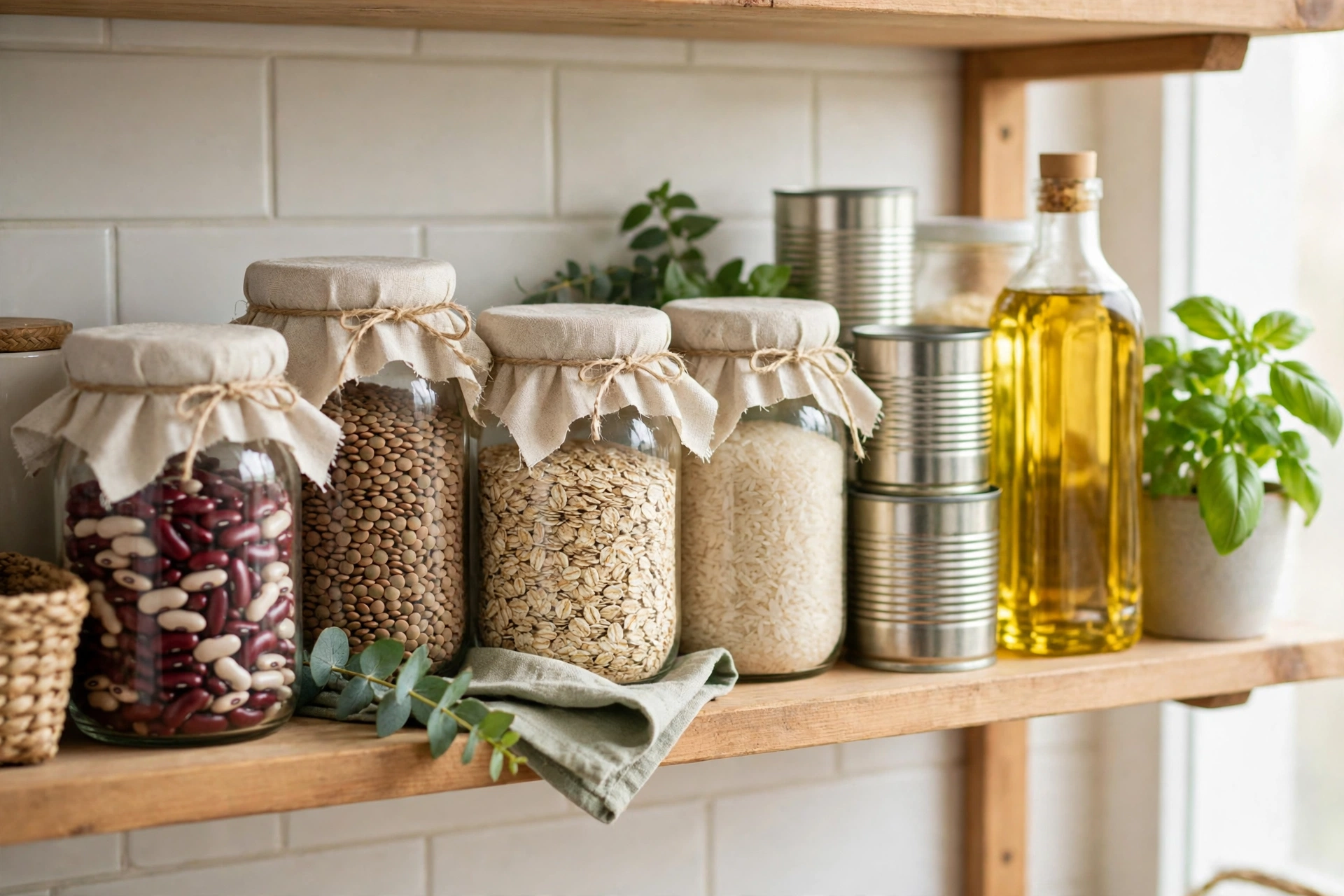
A budget pantry worth keeping stocked includes dried or canned beans and lentils, oats, rice, whole-wheat pasta, canned tomatoes, frozen vegetables, onions, garlic, cooking oil, and a few spices you actually use. These foods last for months, cost little per portion, and turn into balanced meals with the addition of one or two fresh items. When a pantry staple goes on sale, buy two instead of one — you will use it, and you will not pay full price next month.
Read also: How to Stock a Healthy Pantry
Build Each Meal Around the Same Template
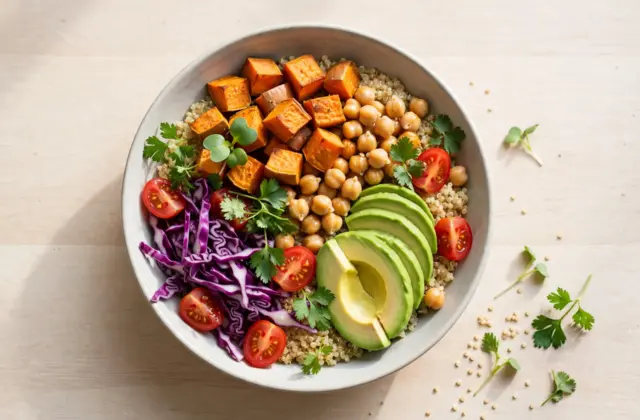
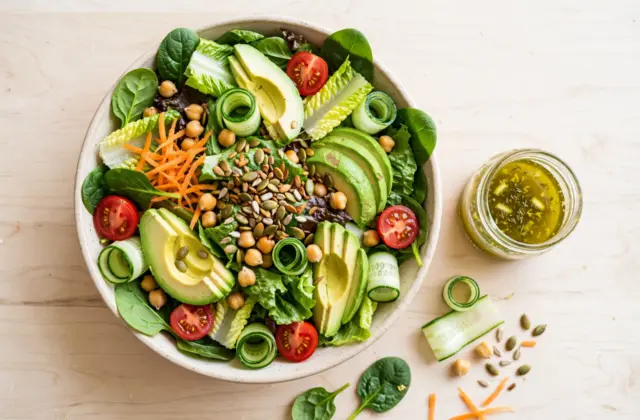
You do not need a different recipe for every meal. A simple template keeps meals balanced without a new shopping list each time. Aim for a plate that is roughly half vegetables and fruit, a quarter whole grains or starchy foods, and a quarter protein, with a little healthy fat from oil, nuts, or seeds. The World Health Organization recommends at least 400 grams of fruit and vegetables a day — about five portions — and that target is easier to hit when vegetables show up at lunch and dinner, not just as a side thought.
Here is how the template plays out across a day:
- Breakfast: oats with fruit, or eggs on whole-grain toast with a piece of fruit.
- Lunch: a grain bowl — rice or pasta, beans or lentils, frozen or fresh vegetables, and a simple dressing.
- Dinner: one cooked meal built from the same ingredients, like a bean stew, a vegetable stir-fry with rice, or roasted vegetables with eggs.
- Snacks: fruit, yogurt, or a handful of nuts when you need something between meals.
Repeat the template, change the seasoning and the vegetables, and the week never feels like the same meal twice.
A Sample Budget-Friendly Week
This sample week is a starting point, not a prescription. Swap ingredients for what is on sale near you, and repeat a dinner you liked the next day for lunch — leftovers are the budget cook’s best friend.
- Monday: Oatmeal with banana; lentil soup with bread; rice, beans, and roasted carrots.
- Tuesday: Eggs on toast with fruit; leftover lentil soup; pasta with canned tomatoes, beans, and frozen spinach.
- Wednesday: Yogurt with oats and fruit; rice bowl with egg and vegetables; bean and vegetable stew with rice.
- Thursday: Oatmeal with apple; leftover stew; stir-fried frozen vegetables with noodles and tofu or egg.
- Friday: Eggs on toast with fruit; bean wrap with salad vegetables; homemade vegetable soup with bread.
- Saturday: Pancakes made with oats and banana; rice and leftover soup; roasted potatoes, carrots, and beans.
- Sunday: Yogurt with fruit and oats; a big batch-cook meal for the week ahead; leftovers from the batch cook.
Notice how often ingredients repeat: the same lentils appear in soup and stew, the same rice carries three dinners, and Sunday’s batch cook becomes Monday’s lunch. That repetition is where the savings live.
Read also: How to Make Healthy Eating More Affordable
Five Habits That Keep Costs Down
1. Shop with a list, and stick to it. A list built from your meal plan is the single most effective way to cut impulse spending. Shop after a meal if you can — a hungry shop is an expensive shop.
2. Buy frozen and canned without guilt. Frozen vegetables are picked and frozen at peak ripeness, and canned beans and tomatoes are pantry gold. Rinse canned beans to cut some of the salt, and check labels for added sugar. The American Heart Association suggests most adults aim for no more than 2,300 mg of sodium a day, moving toward an ideal limit of 1,500 mg — a good reason to compare labels and rinse what you can.
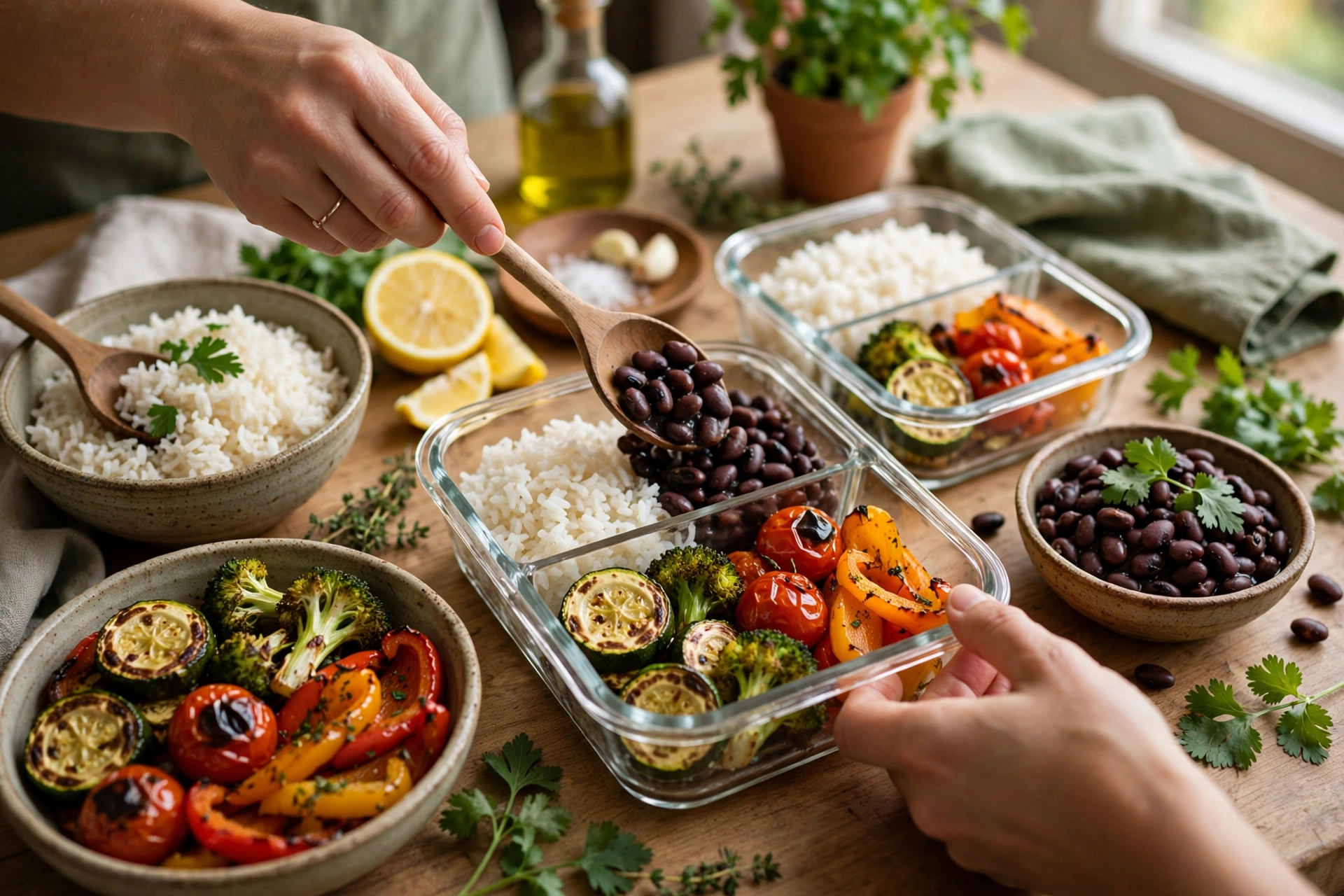
3. Cook once, eat twice. Double the pot of soup, stew, or rice. Tonight’s dinner becomes tomorrow’s lunch, and you only wash the pot once. Refrigerate leftovers within two hours, eat them within three to four days, and reheat them until steaming hot — 165°F (about 74°C) — following standard food-safety guidance.
4. Cut back on sugary drinks. The World Health Organization recommends keeping free sugars below 10% of daily energy intake, and ideally below 5%. Water, tea, and homemade infused water cost a fraction of sweetened drinks and leave more of your budget for actual food.
5. Keep salt in check. WHO advises less than 5 grams of salt a day. Cooking at home already gives you control here: you season the food, so you decide how much salt goes in.
What If the Week Falls Apart?
Some weeks, the plan will not survive contact with real life. A late workday, a sick child, or an empty fridge can undo the best intentions. That is normal, and it is not a failure of the plan — it is the reason the plan is flexible.
Keep two or three “emergency meals” in the pantry for exactly those nights: pasta with canned tomatoes and beans, rice with a fried egg and frozen vegetables, or soup made from whatever vegetables are left. A backup meal you can cook in fifteen minutes is cheaper than delivery and far kinder than skipping dinner altogether. When the week goes sideways, pick the plan back up at the next meal, not next Monday.
FAQ
Is eating healthy actually more expensive?
Not necessarily. The USDA’s Thrifty Food Plan shows that a nutritious diet cooked at home can be built at the lowest of its four cost levels. Meals built around beans, lentils, whole grains, and frozen vegetables tend to cost less per serving than meat-heavy or heavily processed meals, especially when you cook in batches.
How much should I spend on groceries each week?
It depends on your household size and where you live. As a reference point, the USDA’s December 2024 Thrifty Food Plan put a family of four at $228 a week with all meals prepared at home. Use that as a benchmark to compare against, then set a target that fits your own budget and track it for a few weeks.
Are frozen vegetables as nutritious as fresh ones?
Yes, in general. Frozen vegetables are usually frozen soon after harvest, which helps preserve their nutrients, and they keep for months without spoiling. They are also a practical way to eat a variety of vegetables without worrying about waste.
How do I stop wasting food?
Plan meals around what you already have, buy only what your plan needs, and use leftovers deliberately — tonight’s dinner is tomorrow’s lunch. Store leftovers promptly, refrigerate within two hours, and eat them within three to four days.
Sources
- USDA Food and Nutrition Service — Cost of Food: Thrifty Food Plan, December 2024
- World Health Organization — Healthy diet fact sheet
- American Heart Association — How much sodium per day?
- FoodSafety.gov — Cold food storage chart
This article is for general information only and is not medical advice. If you have a health condition or specific dietary needs, talk to your doctor or a registered dietitian.