How to Eat More Fruit Every Day
Most of us know fruit is good for us. Few of us eat enough of it. In the United States, only 12.3% of adults meet the recommended fruit intake, according to the CDC’s analysis of 2019 survey data — and the typical adult reported eating fruit just once a day. The gap isn’t a knowledge problem. It’s a habit problem: fruit competes with snacks that are easier to grab, already open, and sitting at eye level.
The good news is that closing the gap doesn’t take a diet overhaul. Two servings a day is the target for most adults — about two cups of fruit — and getting there is mostly a matter of making fruit the easy choice. This guide shows how.
How Much Fruit Do You Actually Need?
The Dietary Guidelines for Americans, 2025–2030 recommend 2 servings of fruit a day for adults eating around 2,000 calories. One serving is 1 cup of raw fruit — roughly one medium apple, one medium banana, or a cup of berries — or half a cup of dried fruit. People who need fewer calories aim for 1 to 1½ servings; very active people may need up to 2½.
That “2 servings” number is simpler than it sounds. A banana with breakfast and an apple in the afternoon, and you’re done. The trick is building the pattern so it happens without thinking about it.
What Fruit Actually Gives You
Fruit earns its place for a few concrete reasons. First, fiber. Whole fruit keeps the fiber that juice strips away, and fiber is what slows digestion, steadies blood sugar, and helps you feel full. A large apple with the skin on delivers about 5 grams of fiber; a medium banana about 3 grams; a medium orange about 3 grams. For reference, most adults need 25 to 38 grams of fiber a day, and fruit is one of the easiest ways to get a meaningful share of it.
Second, potassium and vitamin C. A medium banana carries about 450 mg of potassium; a medium orange about 250 mg and roughly 130% of the daily value for vitamin C. The vitamin C target for adults is 90 mg a day for men and 75 mg for women, according to the National Institutes of Health — one orange covers it.
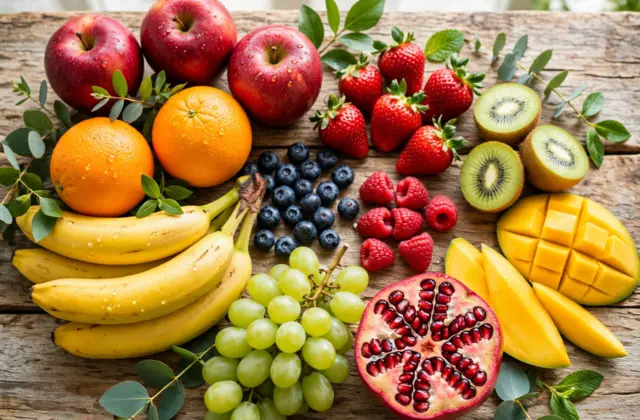
Third, variety of plant compounds. Berries bring anthocyanins, citrus brings flavanones, apples bring quercetin in their skins. No single fruit covers everything, which is why mixing up what you eat matters more than finding one “best” fruit.
Read also: Vitamin C Foods: Everyday Sources
Whole Fruit Beats Juice — Every Time
If your fruit habit is mostly a glass of orange juice, you’re getting some vitamins but missing most of the point. Juicing removes nearly all the fiber — apple juice has about 0.5 grams of fiber per cup, compared with 4.4 grams in a medium apple with skin. The sugars that were locked inside the fruit’s cells become free sugars in juice, absorbed faster and with less satiety.
The research backs the difference. A Harvard analysis published in the BMJ found that eating whole fruit — especially blueberries, grapes, and apples — at least twice a week was associated with a 23% lower risk of developing type 2 diabetes, while a daily serving of fruit juice was associated with up to a 21% higher risk. A 2025 review of more than 80 studies reached a similar conclusion: whole fruit consistently looks more beneficial than 100% juice, largely because of the fiber and the slower, more filling way solid fruit is digested.
The current dietary guidelines reflect this too: the 2025–2030 edition explicitly recommends limiting and diluting juice, and favoring whole fruit. Juice can still have a place — a small glass with a meal, diluted half and half with water — but it shouldn’t be how you count your daily fruit.
Make Fruit the Easy Choice
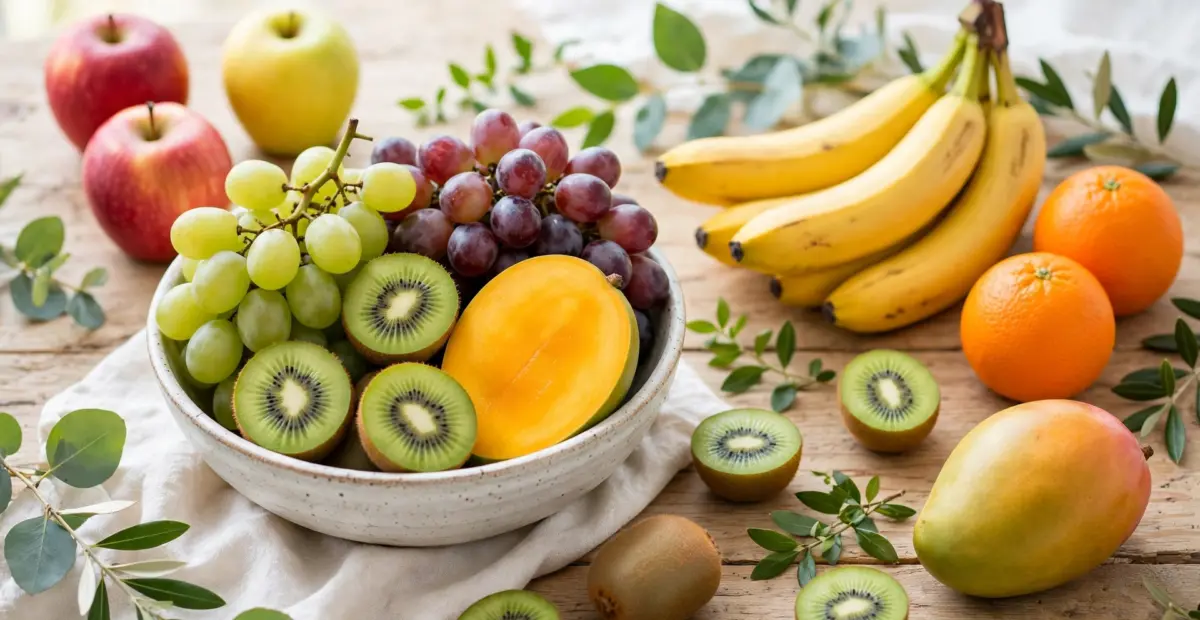
Behavior beats willpower. The single most effective change is visibility: keep a bowl of fruit on the counter or the top shelf of the fridge, where you see it before you open a cupboard. Studies of eating behavior keep finding the same thing — we eat what we see first.
Buy fruit you actually like. That sounds obvious, but plenty of people buy grapefruit out of duty and let it rot while reaching for cookies. If you love mangoes and hate pears, buy mangoes. Liking what you eat is what makes a habit stick.
Prep once, eat all week. Wash berries, peel and slice melon, and portion grapes into small containers on shopping day. A container of ready-to-eat fruit in the fridge is as grabbable as any snack — and once it’s prepped, it’s the fastest thing in the kitchen.
Keep a backup that doesn’t spoil. Frozen berries, frozen mango chunks, and dried fruit (unsweetened, and watch the portion — half a cup counts as a serving) cover the weeks when fresh fruit runs out or gets expensive. Frozen fruit is picked and frozen at peak ripeness, so its nutrient content holds up well.
Seven Simple Ways to Fit Fruit Into Your Day
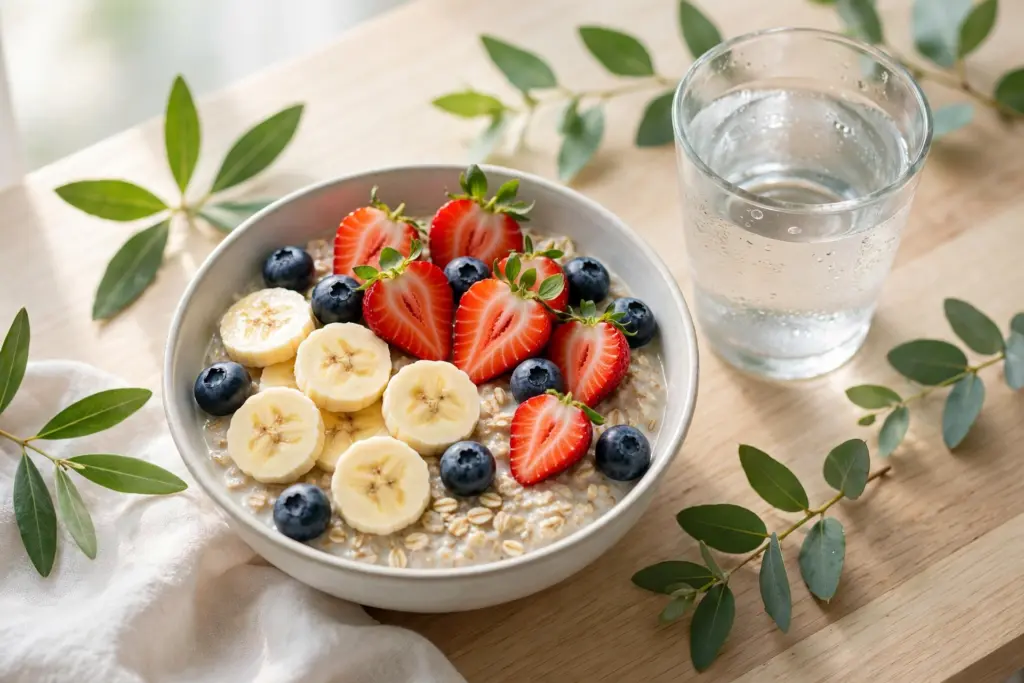
1. Start with breakfast. Sliced banana or berries on oatmeal, yogurt, or whole-grain toast takes thirty seconds and covers your first serving before the day gets busy.
2. Pair it with protein. An apple with a spoonful of peanut butter, or pear slices with a few cubes of cheese, turns fruit into a snack that actually keeps you full until the next meal.
3. Carry one piece with you. A banana, an apple, or a small box of grapes fits in a bag without a container or cutlery. Keep one in your work bag or car so the vending machine never gets the first vote.
4. Add fruit to foods you already eat. Toss berries into a salad, stir diced mango into rice, or add sliced strawberries to a sandwich. Fruit doesn’t have to be a separate course.
5. Make dessert work for you. Baked apples with cinnamon, grilled peaches, or a bowl of frozen grapes taste like dessert and count toward your two servings. Frozen grapes, in particular, feel like a treat on a hot day.
6. Drink it — the whole-fruit way. Smoothies keep the whole fruit, fiber included, unlike juice. Blend a banana, a handful of frozen berries, and milk or yogurt and you have a full serving in a glass.
7. Use the “one more” rule. If you already eat one piece of fruit a day, add one more. Don’t aim for a perfect diet — aim for one more piece than yesterday.
Read also: Simple Ways to Eat More Fruit
What About the Sugar in Fruit?
This is the question that holds a lot of people back, so let’s settle it. Yes, fruit contains sugar — a medium banana has about 12 grams, an apple about 10. But that sugar comes packaged with fiber, water, and micronutrients, and your body handles it very differently from the same amount of sugar in a soft drink.
The fiber in whole fruit slows digestion, so blood sugar rises gradually rather than spiking. The water and bulk make you feel full, which naturally limits how much you eat — it’s hard to overeat apples the way it’s easy to over-drink soda. And the sugars in whole fruit are not counted as added sugars by nutrition authorities; the limits on added sugars (no more than 10% of daily calories) don’t apply to the sugars naturally present in whole fruit.
People managing blood sugar still need to pay attention to portions and pair fruit with protein or fat, and anyone with diabetes should talk through their fruit choices with their clinician or dietitian. For most people, though, fruit sugar is not a reason to skip fruit — the bigger risk is eating too little of it.
Fresh, Frozen, or Dried — Does It Matter?
Fresh fruit is the benchmark, but frozen and dried fruit count, and canned fruit packed in juice (not syrup) counts too. The differences are practical, not nutritional deal-breakers:
- Fresh: best texture and variety; buy what’s in season for price and flavor.
- Frozen: just as nutritious, often cheaper out of season, and perfect for smoothies and oatmeal.
- Dried: portable and long-lasting, but calorie-dense — a small handful is a serving, and the sugars concentrate as water leaves. Choose unsweetened varieties.
- Canned: fine when packed in its own juice; rinse fruit packed in syrup, or skip it.
The form that matters most is the one you’ll actually eat. A bag of frozen berries you blend every morning beats a bowl of fresh fruit that goes soft in the fridge.
Read also: How to Make Fruit-Infused Water

Picking Fruit That Stays Fresh
Nothing kills a fruit habit faster than a fridge full of mush. A few storage basics help:
- Berries: rinse just before eating, not when you bring them home — moisture speeds mold. Store in a breathable container lined with a paper towel.
- Bananas: buy a mix of ripe and slightly green so they ripen across the week. Pop overripe ones in the freezer for smoothies.
- Apples and pears: keep in the fridge crisper; they last weeks there and only days on the counter.
- Citrus: fine at room temperature for a week, longer in the fridge.
- Melon: whole melons keep at room temperature; cut melon goes in the fridge and should be eaten within a few days.
A Simple One-Week Plan
If you want a concrete starting point, here’s a week of two-a-day fruit that needs almost no prep:
- Monday: banana at breakfast, apple in the afternoon
- Tuesday: berries on yogurt, orange after lunch
- Wednesday: pear with breakfast, grapes as an evening snack
- Thursday: mango chunks in oatmeal, banana before your walk
- Friday: apple slices with peanut butter, kiwi after dinner
- Saturday: smoothie with banana and frozen berries, melon with lunch
- Sunday: baked apple with cinnamon, whatever’s left in the fruit bowl
Notice what’s missing: no special shopping trips, no exotic fruit, no complicated recipes. Two servings a day fits into meals you’re already eating.
Frequently Asked Questions
How many servings of fruit should I eat each day?
Most adults need about 2 servings a day — roughly 2 cups of fruit — according to the Dietary Guidelines for Americans, 2025–2030. One serving is 1 cup of raw fruit or half a cup of dried fruit. Your exact target depends on your calorie needs, ranging from 1 to 2½ servings.
Is fruit juice as good as whole fruit?
No. Juice loses most of the fiber, and its sugars are absorbed faster. Whole fruit is more filling and linked to better health outcomes in research. The guidelines recommend whole fruit as the main source and suggest limiting and diluting juice.
Does frozen fruit count toward my daily fruit?
Yes. Frozen fruit is frozen at peak ripeness and keeps its nutrients well. It counts the same as fresh fruit and is a practical option when fresh fruit is out of season or expensive.
Can I eat too much fruit?
It’s very hard to overeat whole fruit — the fiber and water make you full first. The main things to watch are dried fruit and juice, where the calories and sugars concentrate without the same fullness. If you have diabetes or another condition that affects blood sugar, discuss portions with your clinician.
The Bottom Line
Eating more fruit every day isn’t about discipline or a perfect diet. It’s about two servings, a visible fruit bowl, and a few small habits — fruit at breakfast, one piece in your bag, a smoothie instead of juice. Most adults are eating about half of what they need, and the fix is smaller than it looks. Start with one more piece than yesterday.
This article is for general information only and is not medical advice. If you have diabetes, kidney disease, or another condition that affects how you eat fruit, talk with your clinician or a registered dietitian about what fits your needs.
Sources
- U.S. Department of Agriculture and U.S. Department of Health and Human Services — Dietary Guidelines for Americans, 2025–2030
- Centers for Disease Control and Prevention — Adults Meeting Fruit and Vegetable Intake Recommendations, United States, 2019 (MMWR 2022)
- National Institutes of Health, Office of Dietary Supplements — Vitamin C Fact Sheet for Consumers
- U.S. Food and Drug Administration — Raw Fruits Nutrition Facts
- Whole Fruits Versus 100% Fruit Juice: Revisiting the Evidence (Nutrition Bulletin, 2025)
- Harvard Health Publishing — Eating Fruit Is Better for You Than Drinking Fruit Juice