How to Make Healthy Eating More Affordable
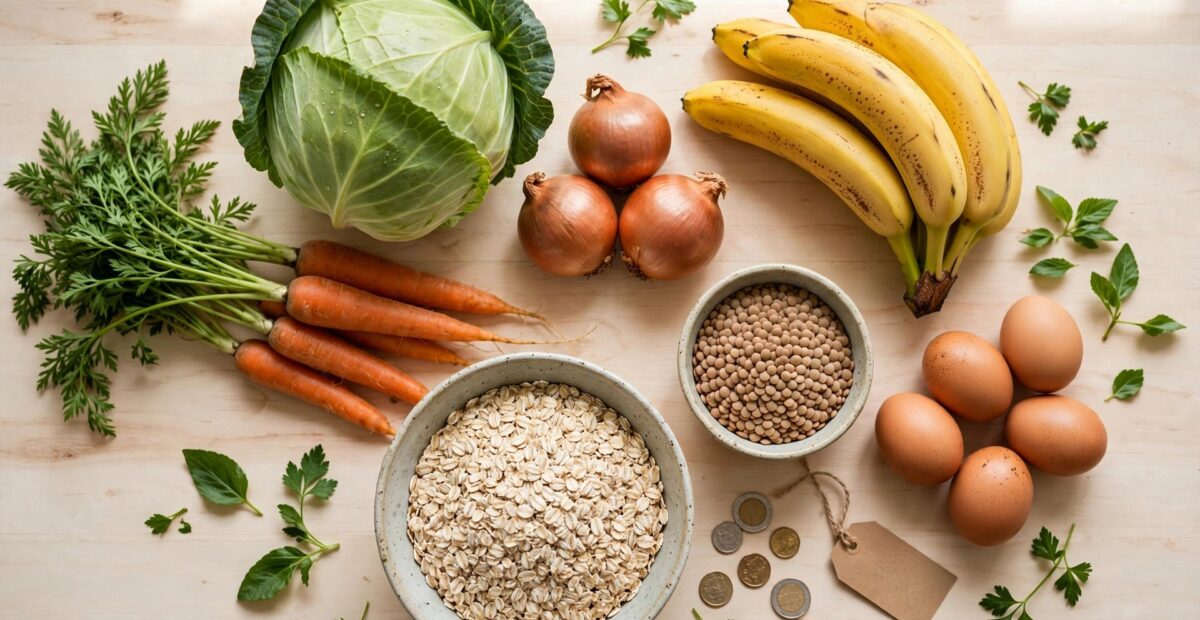
Healthy food has a reputation problem. Walk through any grocery store and it looks like the “good” stuff lives behind glass: organic berries at $6 a punnet, fancy grain bowls, supplements in pretty bottles. So most of us assume eating well costs a small fortune — and plenty of people decide it’s simply out of reach.
But here’s the twist: the gap between a healthy diet and an unhealthy one is much smaller than the myth suggests, and a lot of what drives the price difference has nothing to do with the food itself. It’s about how we shop, how we cook, and — more than anything — how much of what we buy never gets eaten at all.
This guide breaks down where your grocery money actually goes and the practical levers that bring the cost of healthy eating down to something that works for real budgets. No fancy ingredients required.
The real price gap is smaller than you think
When researchers at the Harvard School of Public Health pulled together the data from 27 studies across 10 countries, they found that the healthiest dietary patterns — rich in fruits, vegetables, fish, and nuts — cost roughly $1.50 more per person per day than the least healthy ones. That’s about $550 a year for one person, or the price of a cup of coffee a day, as the study’s senior author put it.
Now, $1.50 a day is still real money, and the researchers are clear that for lower-income families it’s a genuine burden — not a trivial detail. But the number punctures the idea that healthy eating is some luxury good. The difference isn’t between a $5 dinner and a $50 one. It’s the difference between a bag of chips and a head of cabbage, between a soda and a glass of water. Small, boring choices, made consistently.
Which means the affordable-healthy-eating game is mostly about making sure every dollar you spend on food actually becomes nutrition — instead of trash, impulse buys, and markups you never needed.
Stop paying for food you never eat
This is the biggest line item in most grocery budgets, and it hides in the trash can. According to the USDA, the average American family of four loses about $1,500 a year to uneaten food. Roughly 30–40% of the U.S. food supply goes to waste. That wilted bag of spinach, the leftovers nobody touched, the bananas that went brown overnight — that’s your grocery budget literally decomposing.
Wasting less isn’t about guilt; it’s about having a system. Three habits make most of the difference:
- Plan before you shop. Pick 3–4 dinners for the week, check what you already have, and write a list. Shoppers with a list buy less on impulse and throw less away.
- Serve smart. Sensible portions at the table mean less plate waste, and it helps to cook only what your household will actually eat before it spoils.
- Love your leftovers. Pack them in small, shallow containers, label them with the date, and refrigerate or freeze them the same day. Leftovers that are visible and labeled get eaten; mystery containers get binned.
If your family throws away even half the national average, fixing that alone covers the entire $1.50-a-day healthy-eating premium from the Harvard study. Your budget doesn’t need new money — it needs less waste.
Make frozen and canned your secret weapons
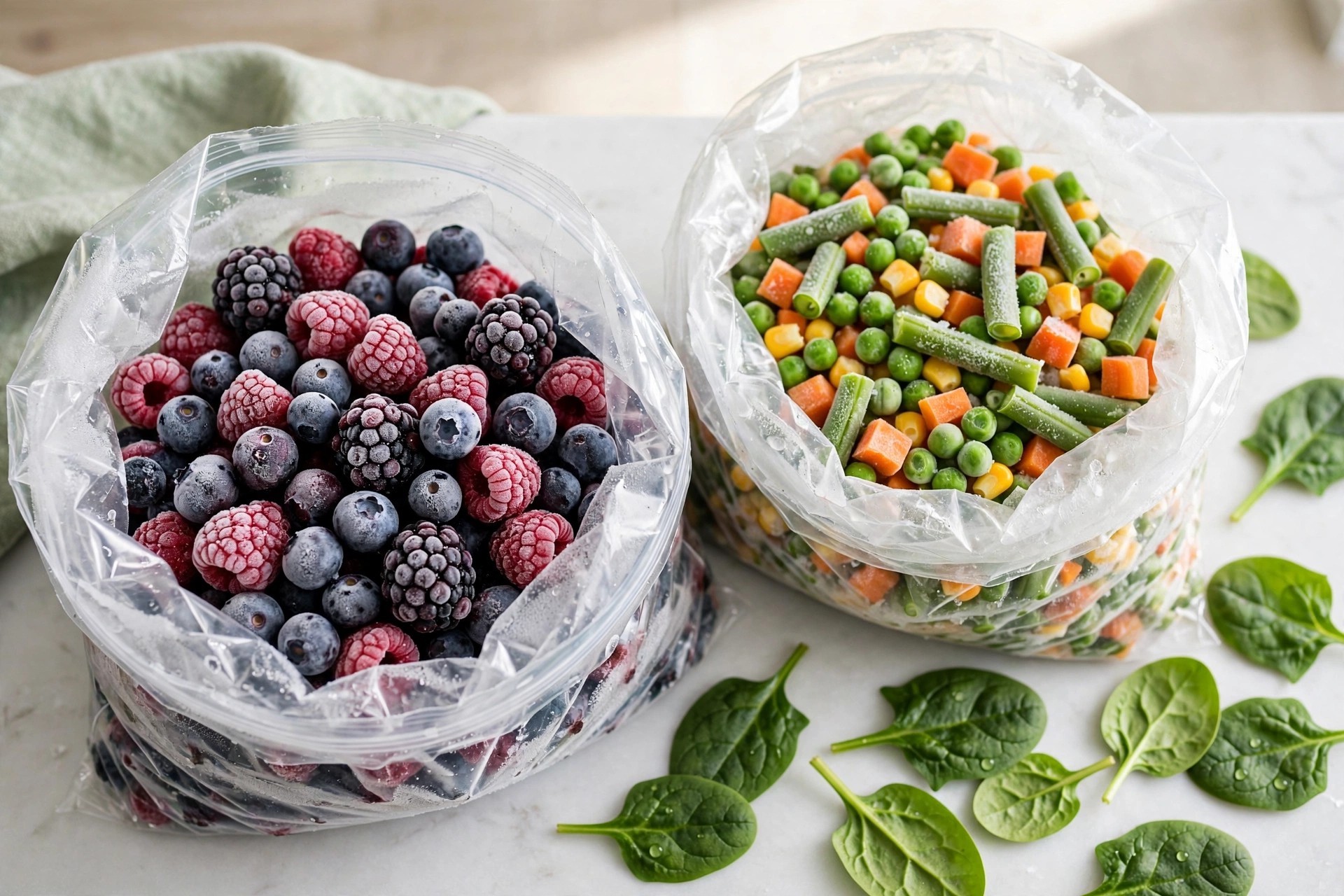
Somewhere along the way, “frozen” became a synonym for “processed junk.” For produce, it’s the opposite. Frozen fruits and vegetables are typically picked at peak ripeness and flash-frozen within hours of harvest, which locks in vitamins and minerals. Research comparing fresh and frozen produce has repeatedly found minimal nutritional difference — in some cases, frozen berries, spinach, broccoli, and green beans contain similar or even higher levels of certain vitamins than fresh items that have spent days in transit and storage.
And the price difference can be dramatic, especially out of season. Frozen berries in January cost a fraction of fresh ones, and they don’t go soft in your fridge before you get to them. Canned produce is even cheaper, with a shelf life of two to four years — just choose options packed in water or their own juice, with no added sugar, and look for “no salt added” on canned vegetables. A quick rinse of canned beans and vegetables under the tap washes away a meaningful share of the added sodium.
Bottom line: buy what’s affordable and convenient — fresh, frozen, or canned — and stop paying a nutrition premium that doesn’t exist.
Build meals around the cheapest nutrients in the store
Some foods deliver enormous nutrition per dollar, and they’ve been doing it for centuries. A short list of budget superstars:
Read also: Small Diet Changes That Last
- Dried beans and lentils are among the cheapest sources of protein and fiber anywhere in the store. A pound of dried pinto beans typically costs around $1 and cooks up into about 12 half-cup servings — compare that to $5 or more for a pound of ground beef. Lentils cook faster than beans, need no soaking, and pack roughly 18 grams of protein and 15 grams of fiber per cooked cup (values vary by variety; check USDA FoodData Central for exact figures).
- Oats cost pennies per serving and work far beyond breakfast — thickening soups, stretching meatloaf, or forming the base of overnight oats.
- Brown rice and other whole grains like barley and whole-wheat pasta provide steady energy and form the backbone of filling, low-cost meals like rice and beans or grain bowls.
- Eggs remain one of the most economical complete proteins, and they fit every meal of the day.
- Cabbage, carrots, and onions are cheap year-round, keep for weeks in the fridge, and show up in endless soups, stir-fries, slaws, and roasts.
- Seasonal fruit — bananas, apples, and oranges are reliably among the cheapest items in the produce section.
Notice what’s not on this list: protein powders, superfood blends, imported “health” snacks. You don’t need any of them. Whole, ordinary foods bought in their simplest forms do the job at a fraction of the price.
Shop with a system, not your appetite
The way you move through the store matters almost as much as what’s on your list:
- Buy seasonal. Produce is cheapest — and tastes best — in season. Strawberries in June, citrus in winter, squash in fall.
- Compare unit prices. The shelf tag usually shows price per ounce or per 100 grams. Bigger isn’t always cheaper; check the number, not the package.
- Reach for store brands. For staples like oats, canned tomatoes, frozen vegetables, and milk, the store brand is often nutritionally identical at 15–30% less.
- Buy staples in bulk when you have storage. Rice, dried beans, lentils, and oats keep for months and drop sharply in price per unit at bulk sizes.
- Shop the perimeter first. That’s where produce, dairy, eggs, and fresh protein live. The center aisles are where ultra-processed foods — the most expensive per nutrient — do their best marketing.
None of this is glamorous. It’s arithmetic: fewer markups, less packaging, less waste. That arithmetic compounds week after week.
Cook more, and cook once for twice
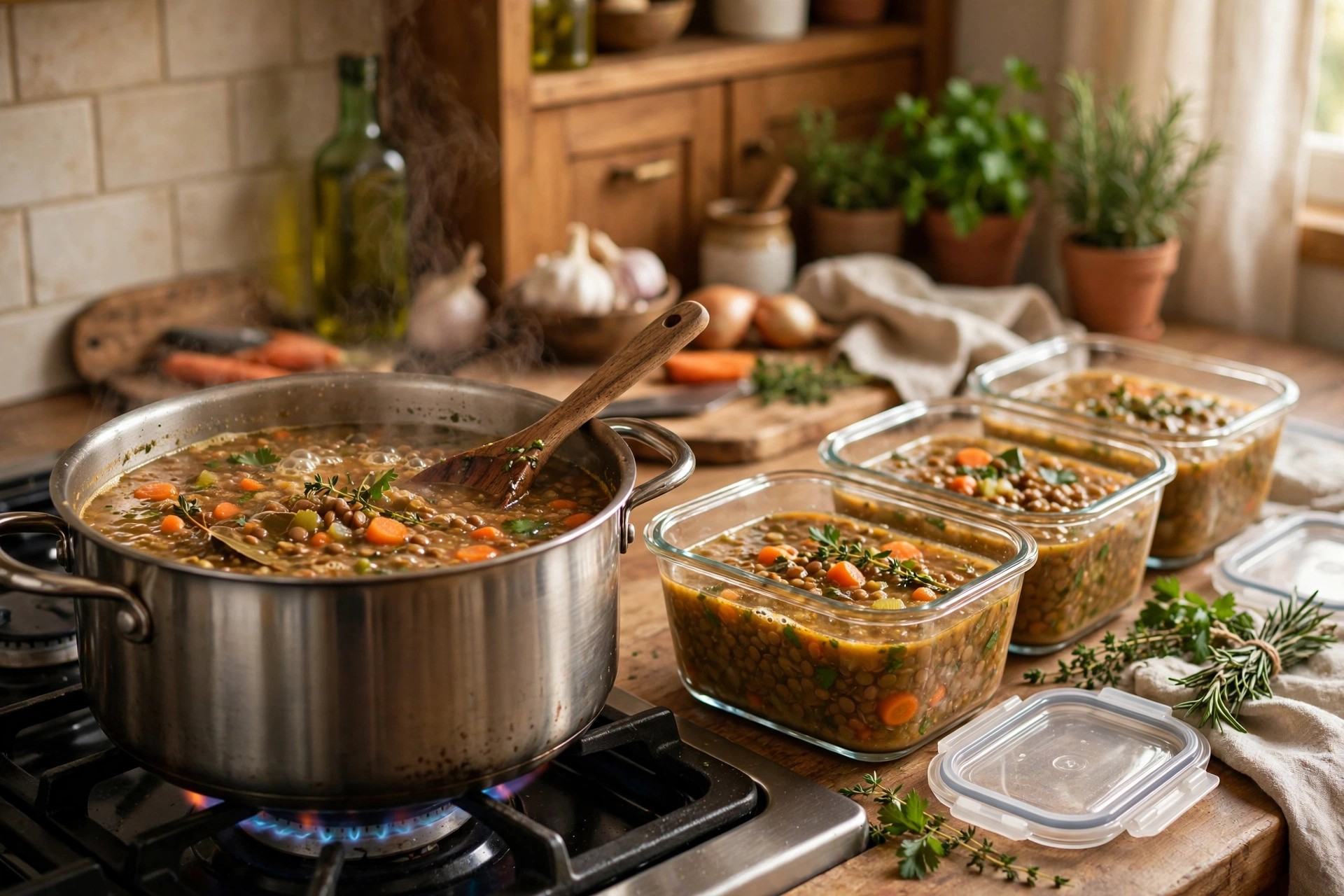
Cooking from scratch is the single highest-leverage move in this whole guide. A pot of lentil soup or rice and beans can land under $1.25 a serving with bulk staples, while a delivered meal or ready-made equivalent costs five to ten times more. You don’t need to cook every meal — batch cooking once or twice a week covers most of it.
The trick is cooking components, not just meals: a big pot of brown rice, a tray of roasted vegetables, a pound of dried beans, some hard-boiled eggs. These become lunches, soup bases, fried rice, grain bowls, and wraps across the week. Leftovers aren’t failures; they’re pre-paid ingredients.
And don’t overlook the humble frozen “cook once” meal: soups, stews, and cooked beans freeze beautifully for up to three months, giving you future-you a home-cooked meal at zero extra cost.
What a budget-friendly day can look like
Theory is nice; here’s what it looks like on a plate:
- Breakfast: oatmeal made with water or milk, topped with a sliced banana and a spoonful of peanut butter.
- Lunch: rice-and-bean bowl with shredded cabbage, thawed frozen corn, salsa, and a fried egg.
- Snack: carrots with homemade hummus (canned chickpeas, lemon, garlic).
- Dinner: lentil soup with carrots, onions, and celery — big pot, feeds everyone, freezes the rest.
Filling, balanced across the food groups, fiber-rich — and the whole day’s groceries cost a few dollars per person.
FAQ
Is it actually possible to eat healthy on a very tight budget?
Yes — research puts the average premium of a healthy diet at about $1.50 a day, and strategies like cutting food waste, buying frozen produce, and centering meals on beans, lentils, and whole grains can erase even that. The USDA’s food-waste data suggests most families can fund the entire gap just by throwing less away.
Are frozen fruits and vegetables as healthy as fresh?
Generally yes. Frozen produce is picked at peak ripeness and flash-frozen quickly, preserving vitamins and minerals. Studies have found minimal nutritional difference between fresh and frozen, with frozen sometimes testing higher in certain vitamins. It’s also cheaper out of season and lasts months.
What’s the cheapest healthy protein?
Dried beans and lentils are consistently among the cheapest proteins available — roughly $1 per pound dried, yielding a dozen or more servings. Eggs are another excellent budget protein, and canned beans (rinsed) are a close, convenient second.
Do I need to buy organic to eat healthy?
No. Organic is a production standard, not a nutrition requirement. Conventional fruits, vegetables, whole grains, and legumes deliver the same core nutrients. On a budget, prioritize eating enough produce of any kind over paying extra for an organic label.
Disclaimer: This article is for general nutrition information only and is not medical advice. If you have a health condition or specific dietary needs, talk to your doctor or a registered dietitian before making major changes to your diet.
Sources
- Harvard Gazette — Pinpointing the higher cost of a healthy diet (Rao et al., BMJ Open, 2013)
- EurekAlert / Harvard School of Public Health — Eating healthy vs. unhealthy diet costs about $1.50 more per day
- USDA — Food Loss and Waste: Consumers
- Consumer Reports — Are Frozen Fruits and Vegetables Healthy and Safe?
- Mississippi State University Extension — Fresh, Frozen, or Canned: Which is Better?
- Sharecare / American Heart Association — The Many Health Benefits of Beans, Peas, and Lentils
- AgriNews — Super Foods on a Shoestring: Eating Well for Less Than $1 a Serving