Healthy Grain Bowl Ideas for Lunch
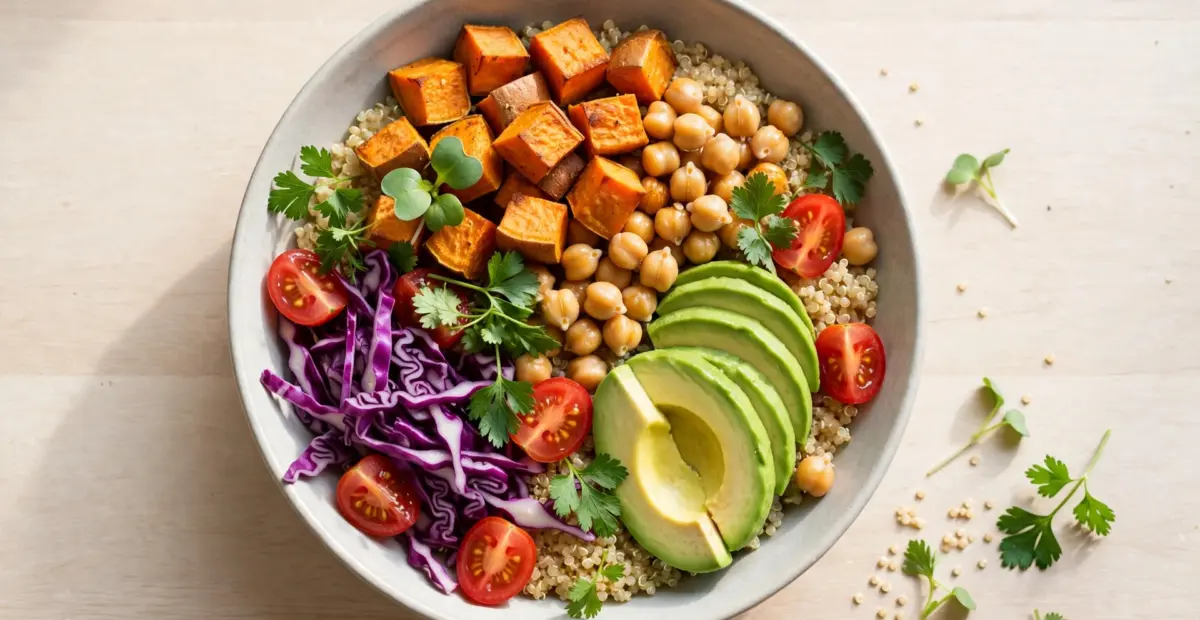
A grain bowl is the rare lunch that is fast, filling, and genuinely good for you — no recipe required. Cook a pot of grains on Sunday, keep a few proteins and vegetables ready in the fridge, and you can build a different bowl every day of the week in about five minutes. The trick is the formula, not any single recipe: a whole grain base, a protein, plenty of vegetables, a little healthy fat, and a sauce that makes you want to eat it.
Done well, a grain bowl is one of the easiest ways to hit the targets nutrition experts keep repeating. The Dietary Guidelines for Americans recommend that at least half of the grains you eat be whole grains, and a large dose-response meta-analysis in the BMJ found that each extra 90 grams of whole grains a day — roughly three servings — was associated with a 19% lower risk of coronary heart disease and a 17% lower risk of death from any cause. A bowl built on brown rice or quinoa gets you most of the way there before noon.
The five-part formula
Every good grain bowl follows the same shape. Once you know it, you can improvise with whatever is in the fridge and still end up with a balanced lunch.
1. The grain (about 1 cup cooked). This is the base and the main source of slow-burning energy. Whole grains keep you full longer than refined ones because the bran and germ are still intact, bringing fiber and B vitamins with them.
2. The protein (a palm-sized portion, roughly 15–25 grams). Protein is what turns a side dish into a lunch. Beans, lentils, eggs, tofu, chicken, and fish all work — and a bowl is a forgiving place to use leftovers.
3. The vegetables (at least 1–2 cups). Mix raw and cooked, and mix colors. The World Health Organization recommends at least 400 grams of fruit and vegetables a day, and a bowl makes that target feel easy rather than aspirational.
4. The healthy fat (1–2 tablespoons). Olive oil, avocado, nuts, or seeds. Fat carries flavor, helps your body absorb fat-soluble vitamins from the vegetables, and keeps hunger away longer.
5. The sauce. This is the part people skip, and it is the part that makes the difference between a bowl you look forward to and one you force down. A simple lemon-tahini, yogurt-herb, or soy-ginger dressing takes two minutes and transforms everything underneath it.
Read also: How to Choose Whole Grains
Pick your grain
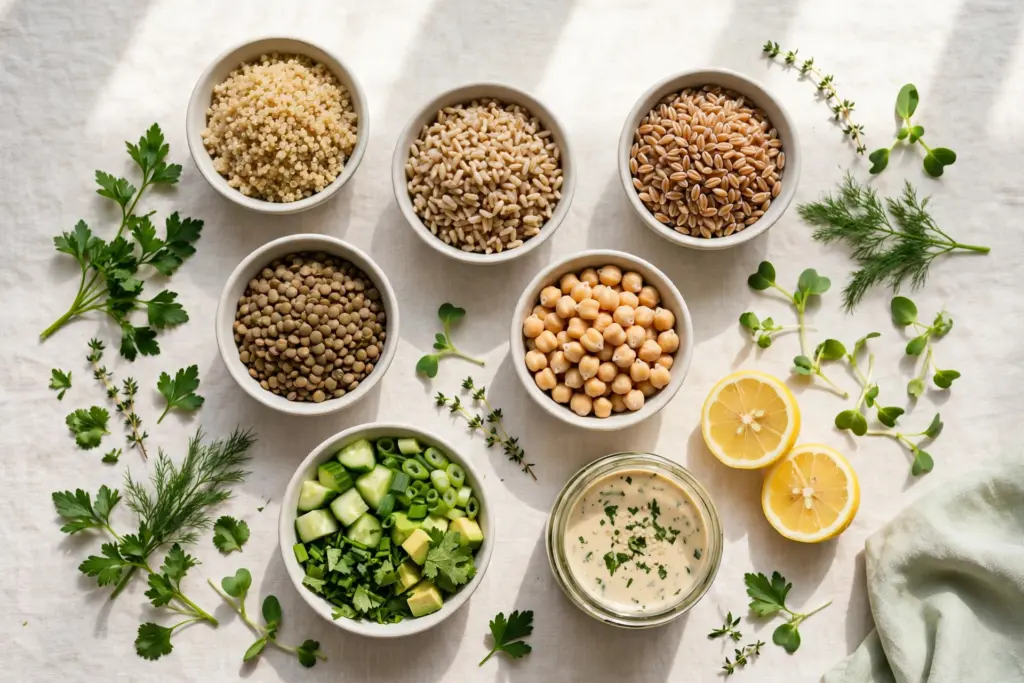
Quinoa is the easiest starting point. One cooked cup (185 grams) gives you about 222 calories, 8 grams of protein, and 5 grams of fiber, according to USDA FoodData Central — and unlike most grains, quinoa is a complete protein, containing all nine essential amino acids. It cooks in 15 minutes and keeps well in the fridge for four days.
Brown rice is the budget workhorse. A cooked cup has about 248 calories, 5.5 grams of protein, and 3.2 grams of fiber — more than five times the fiber of white rice, which has just 0.6 grams per cup. Farro is chewier and heartier, with roughly 7 grams of fiber and 6 grams of protein per cooked cup, though it contains gluten, so it is not an option for people avoiding it. Bulgur cooks in ten minutes with no simmering — just pour boiling water over it and wait — and a cooked cup carries about 8 grams of fiber.
Batch-cook two grains at once if you can. A pot of brown rice and a pot of quinoa in the fridge means the base of the bowl is already decided every day, and variety keeps the week from feeling repetitive. Cooked grains keep three to four days refrigerated, so a Sunday cook covers Monday through Thursday; a quick midweek batch handles Friday.
Add protein that actually satisfies
The protein is what keeps a grain bowl from leaving you hungry at 3 p.m. Lentils are the standout for value: one cooked cup provides about 18 grams of protein and nearly 16 grams of fiber for roughly 230 calories. Chickpeas are close behind, with around 9 grams of protein and 12 grams of fiber per cooked cup. Both cost very little, and both are ready to eat straight from a can after a rinse — rinsing canned beans also cuts their sodium by roughly 9–23%.
Eggs are the fastest animal protein for a bowl: one large egg has about 6 grams of protein, and a soft-boiled egg sliced over warm grains needs no recipe at all. Tofu absorbs whatever sauce you pour over it, and a block pressed and cubed will last several days. Leftover chicken, salmon, or tuna from dinner the night before is the easiest protein of all, because it is already cooked.
If you are building a plant-based bowl, pair your grains with legumes. Grains and beans complement each other nutritionally, and together they cover the amino acids either one lacks alone. That is the quiet logic behind rice and beans, dal and rice, and every other grain-and-legume pairing that has fed people for centuries.
Fill half the bowl with vegetables
Vegetables are where a grain bowl earns its color and its crunch. A good rule: half the bowl should be vegetables, and at least two different colors. Roasted sweet potato and red cabbage, raw cucumber and shredded carrot, steamed broccoli and pickled onion — the contrast keeps each bite interesting.
Roasting a big tray of vegetables at the same time you cook your grains is the single best meal-prep habit for bowl lunches. Sweet potatoes, broccoli, cauliflower, and carrots all roast at the same temperature, and they hold up in the fridge for days. Raw vegetables — cucumber, cherry tomatoes, grated carrot, shredded cabbage — add crunch and need no cooking at all.
Frozen vegetables deserve a mention here, because they are the backup that keeps bowl lunches going on a busy week. Research comparing fresh and frozen produce has found that frozen vegetables retain their vitamin C as well as fresh ones do, and they go straight from the freezer into a hot pan. Keep a bag of frozen broccoli or stir-fry mix on hand for the days the fridge is empty.
Read also: How to Prep Produce for the Week
Seven grain bowl ideas to start with
Use these as starting points, not rules. Swap the grain, swap the protein, keep the formula.
1. Mediterranean chickpea bowl. Quinoa, chickpeas, cucumber, cherry tomatoes, red onion, and crumbled feta, finished with lemon and olive oil. The chickpeas and quinoa together give you a solid protein base, and the raw vegetables keep it bright.
2. Southwest black bean bowl. Brown rice, black beans, roasted sweet potato, corn, and shredded cabbage, with a lime-yogurt sauce. Sweet potato adds natural sweetness and fiber; the cabbage adds crunch and keeps for days.
3. Asian-inspired tofu bowl. Brown rice or farro, baked tofu, edamame, shredded carrot, and steamed broccoli, with a soy-ginger dressing and a sprinkle of sesame seeds. The edamame and tofu together make this one of the highest-protein plant-based bowls you can build.
4. Salmon and greens bowl. Quinoa, leftover salmon, wilted spinach, and roasted broccoli, with a squeeze of lemon. Oily fish brings omega-3 fats that grains and vegetables cannot, so this bowl covers a nutrient the others miss.
5. Egg and lentil bowl. Brown rice, green lentils, a soft-boiled egg, and sautéed mushrooms, with a drizzle of olive oil and herbs. Lentils and egg together push this bowl past 25 grams of protein, and it costs very little.
6. Harvest grain bowl. Farro, roasted sweet potato and Brussels sprouts, apple slices, and toasted walnuts, with a mustard vinaigrette. The apple sounds unusual in a lunch bowl, but its crunch and sweetness balance the earthy grains.
7. Clean-out-the-fridge bowl. Whatever grain is left, whatever protein is left, whatever vegetables are left, and a sauce made from tahini, lemon juice, and water whisked together. This is the bowl that prevents food waste — and it is often the best one of the week.
The sauce makes the bowl
If your grain bowls taste boring, the problem is almost never the grain. It is the sauce — or the lack of one. Keep three two-minute sauces in rotation and your bowls will never repeat themselves:
- Lemon-tahini: tahini, lemon juice, garlic, and warm water whisked until pourable. Creamy, nutty, and good on everything.
- Yogurt-herb: plain yogurt, chopped herbs, lemon zest, and a pinch of salt. Light, tangy, and cooling with spicy or roasted flavors.
- Soy-ginger: soy sauce, rice vinegar, grated ginger, and a little honey or sesame oil. Sharp and savory, ideal with tofu, eggs, and Asian-style bowls.
Make a small jar of one sauce on Sunday and keep it in the fridge. A bowl without sauce is a chore; a bowl with sauce is lunch.
Meal-prep tips that keep bowls fresh
The biggest mistake with grain bowls is assembling them too early. A bowl built on Sunday tastes tired by Wednesday. Prep the parts, not the bowl: cook grains, roast vegetables, cook proteins, and mix sauces, then store each in its own container and assemble the morning you eat it.
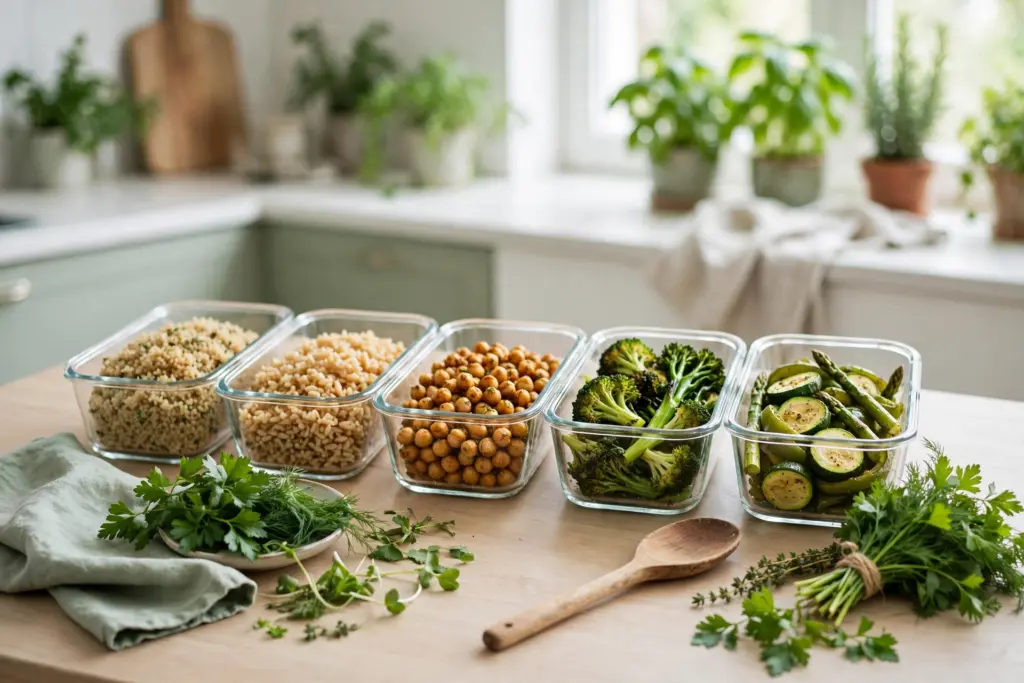
Keep wet and dry separate. Sauces and dressings go in a small container on the side, and anything meant to stay crisp — cucumber, nuts, seeds — goes in last. Store cooked grains and proteins at or below 40°F (4°C) and eat leftovers within three to four days, following USDA food safety guidance.
Finally, watch the sodium. Soy sauce, feta, and many jarred dressings are salty, and a healthy bowl can quietly become a high-sodium one. The American Heart Association suggests aiming for no more than 2,300 milligrams of sodium a day, moving toward an ideal of 1,500 milligrams for most adults. Rinsing canned beans, choosing low-sodium soy sauce, and making your own dressing are three easy ways to keep a bowl on the right side of that line.
Read also: How to Build a Balanced Dinner
Frequently asked questions
How many calories are in a grain bowl?
It depends on the build, but a typical lunch bowl — 1 cup of cooked grain, a palm of protein, vegetables, and a tablespoon of dressing — lands somewhere around 450–650 calories. The grain and the sauce are the two levers: a bigger scoop of grains or a heavy, oily dressing pushes the total up fast.
Are grain bowls good for weight management?
They can be. Whole grains and legumes are high in fiber, and fiber-rich meals tend to keep you full longer — the Institute of Medicine sets adequate fiber intake at 25 grams a day for women and 38 grams for men under 50, and a well-built bowl can supply half of that in one meal. The key is the proportions: half vegetables, a measured scoop of grains, and a light hand with the dressing.
Can I eat grain bowls every day?
Yes, as long as you vary them. Rotate the grain, the protein, and the vegetables across the week so you get a wider range of nutrients. Eating the same bowl every day is not harmful, but variety is what makes a diet nutritionally complete — and more interesting.
How long do grain bowls last in the fridge?
The parts last three to four days refrigerated; an assembled bowl with sauce is best eaten within a day or two, since the vegetables soften and the grains absorb the dressing. If you want a full week of lunches, cook a second batch of grains midweek rather than stretching Sunday’s batch to Friday.
Sources
- USDA FoodData Central — nutrient values for quinoa, brown rice, white rice, lentils, chickpeas, and eggs
- Aune D, et al. Whole grain consumption and risk of cardiovascular disease, cancer, and all cause and cause specific mortality. BMJ 2016;353:i2716
- Aune D, et al. Whole grain consumption and risk of cardiovascular disease, cancer, and all cause and cause specific mortality. PubMed PMID 27301975
- Dietary Guidelines for Americans, 2025–2030
- World Health Organization — Healthy diet fact sheet
- Whole Grains Council — whole grain definition and serving guidance
This article is for general nutrition information only and is not medical advice. If you have a health condition or specific dietary needs, talk with your clinician or a registered dietitian before changing your diet.