How to Stock a Healthy Pantry
Open your cupboard on a tired Tuesday evening and you will know, in about three seconds, whether dinner is going to be easy or a scramble. A well-stocked pantry does not mean a cupboard stuffed to the brim. It means the right basics are always there, so a balanced meal is the path of least resistance — not a special project.
Think of your pantry as the quiet backbone of healthy eating. Fresh produce still matters, and it still deserves a place in your week. But the pantry is what carries you between shops, on busy nights, and when the fridge looks uninspiring. Stock it once, thoughtfully, and then top it up as you go.
Start with a small, useful core — not a bulk-buying spree
The biggest pantry mistake is buying everything at once. A huge haul feels productive, but half of it sits untouched, goes stale, or gets pushed to the back and forgotten. Start smaller. Pick the foods you already cook with, then add one or two new staples at a time and actually use them before you buy more.
A useful core covers five jobs: something grainy and filling, something protein-rich, something vegetable-like, something to cook with, and something to season with. If a staple cannot do at least one of those jobs in a meal you genuinely like, it does not earn shelf space yet.
Write your starter list around your own cooking, not someone else’s ideal pantry. If you never make curry, a shelf of curry paste will not make you healthier. If you live on grain bowls, extra quinoa and canned chickpeas will get used in a week.
Whole grains: the workhorse shelf
Whole grains are the easiest pantry win. They keep well, cost little per serving, and turn a handful of other ingredients into a proper meal. Brown rice, oats, quinoa, whole-wheat pasta, and barley all belong here, and you do not need all of them at once. Two or three that you enjoy are plenty to start.
The 2025–2030 Dietary Guidelines for Americans urge people to focus on whole grains, recommending 2–4 servings a day for adults on a typical 2,000-calorie pattern, and to significantly reduce highly processed, refined carbohydrates. That is a helpful anchor when you are choosing between a whole-grain staple and a refined one — not a rule to obsess over at every meal.
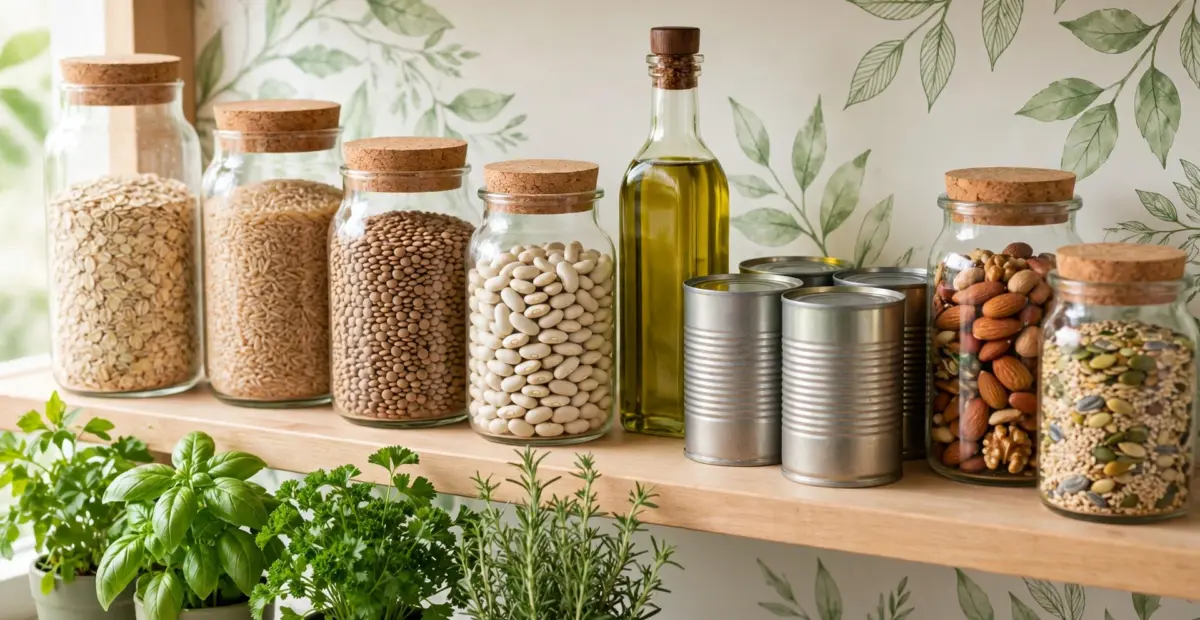
Store grains in airtight jars or containers, away from heat and damp. Clear containers help twice over: you can see what you have, and you will notice when something is running low before you need it for dinner. Label anything you decant, especially flours and mixed grains that start to look alike after a month.
Read also: How to Eat More Whole Foods
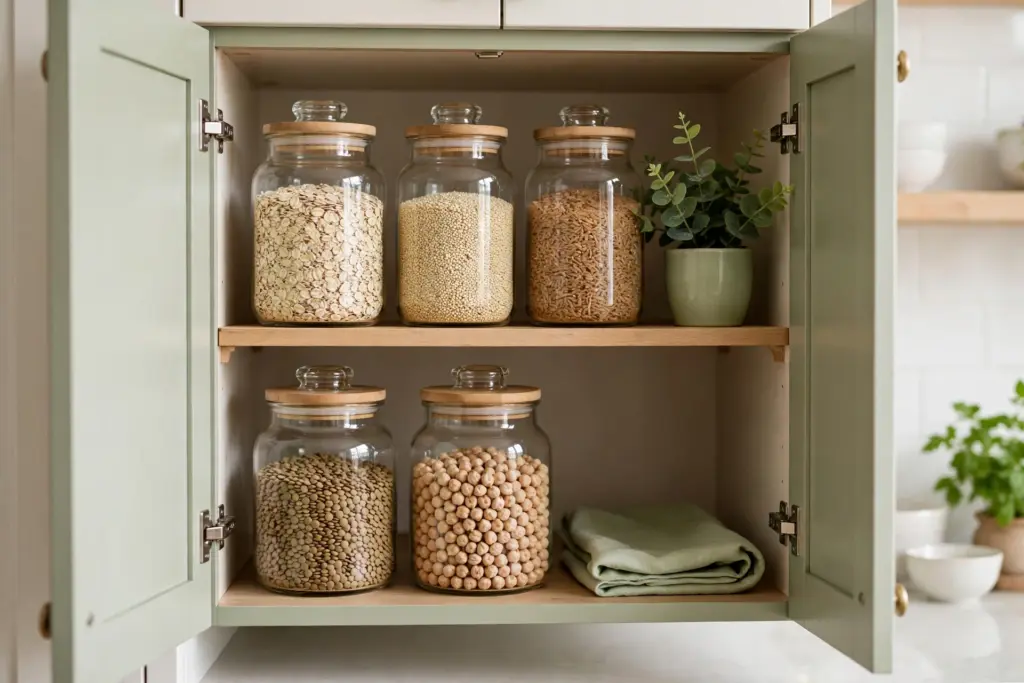
Beans, lentils, and other shelf-stable proteins
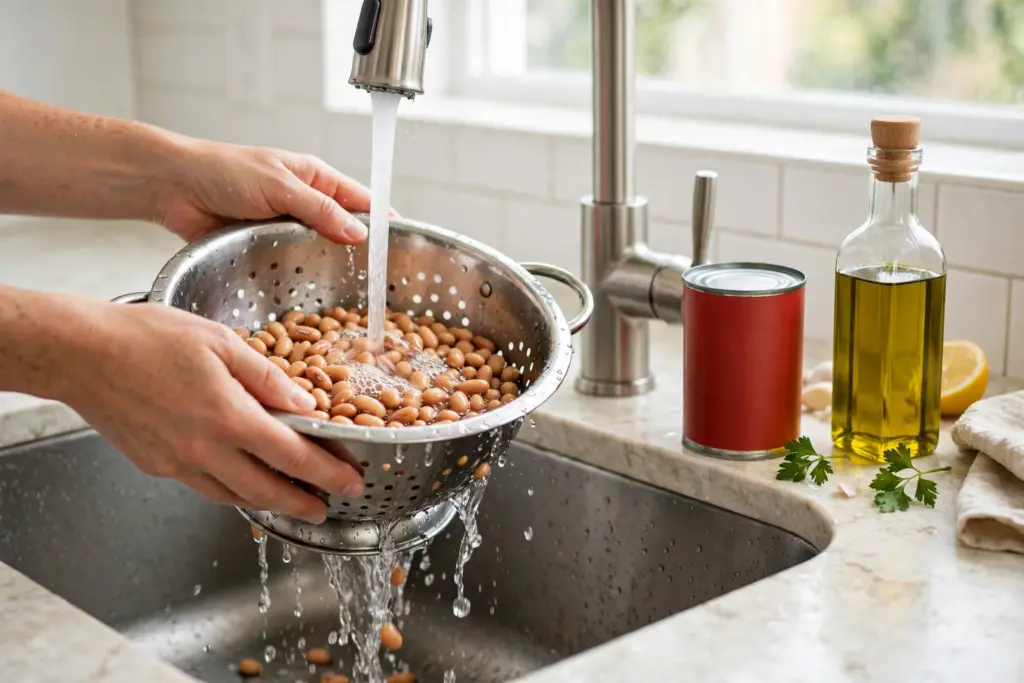
Dried lentils cook quickly with no soaking, which makes them a weeknight hero. Canned beans and chickpeas are even faster: open, drain, rinse, and they are ready. Keep a few cans of the beans you actually eat — black beans, kidney beans, chickpeas, cannellini beans — rather than a whole rainbow you will never open.
Canned beans deserve one extra step. Draining and rinsing canned vegetables can lower sodium by roughly 9% to 23%, according to USDA research summarised by dietitians, with the exact reduction depending on the vegetable. It takes under a minute, and it also washes away some of that starchy, salty canning liquid, so your dish tastes cleaner. The one exception is when a recipe specifically needs the bean liquid, such as aquafaba for chickpeas — then keep it on purpose, not by accident.
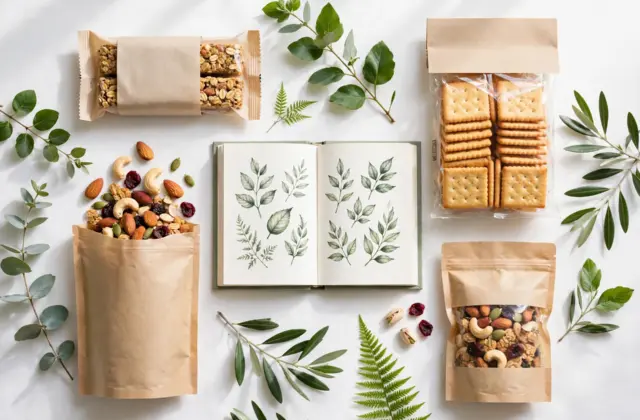
Nut butters, canned tuna or sardines, and dried soy foods like tofu shelf-stable packs round out the protein shelf for many households. Check the ingredient list rather than the front-of-pack claims: a peanut butter with just peanuts (and maybe salt) is a different pantry citizen from a sweetened spread.
Canned produce: your backup vegetables and fruit
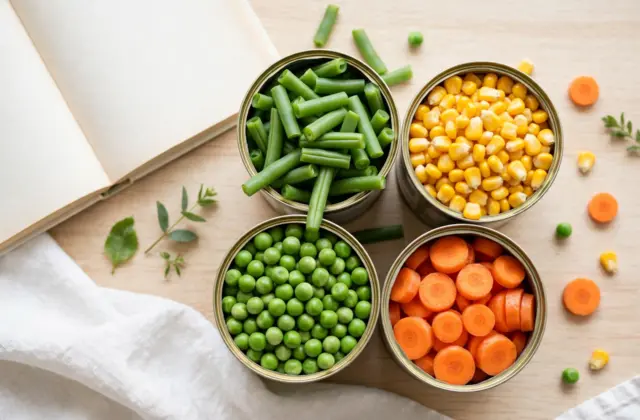
Canned tomatoes are arguably the hardest-working pantry item of all. They become soup, pasta sauce, shakshuka, chili, and curry base with almost no effort. Canned corn, peas, and carrots fill gaps when fresh produce runs out, and canned fruit packed in water or its own juice — not syrup — can rescue breakfast or a dessert.
Here, too, the label does the talking. Choose “no salt added” vegetables where you can, and fruit in water or juice rather than heavy syrup. Rinse canned vegetables before use, and drain canned fruit well. These small steps keep the convenience without letting salt and added sugar quietly take over the dish.
Pantry produce is not a replacement for fresh food. It is the bridge that stops a low-produce week from becoming a no-produce week. A tin of tomatoes plus a tin of beans plus rice is already a balanced, filling meal — no heroics required.
Healthy fats and flavour builders
A bottle of olive oil, a jar of tahini or nut butter, vinegar, soy sauce or tamari, mustard, and a small spice collection will carry more meals than any fancy sauce. Spices lose their punch over time, so buy smaller jars of the ones you use weekly — cumin, paprika, chilli flakes, black pepper, cinnamon, dried oregano — and replace the rest as needed rather than hoarding them for years.
Herbs and spices are also how pantry cooking stays interesting. The same beans and rice taste completely different with cumin and lime, or with oregano, lemon, and olive oil. If your pantry meals feel boring, the answer is rarely a new staple. It is usually better seasoning.
Keep oils away from the stove’s heat and out of direct light, and keep lids tight. Rancid oil smells off and tastes bitter, and no amount of seasoning rescues a dish cooked in it.
Read the label before it earns a permanent spot
Pantry shopping rewards label-readers. Two cans of tomato soup or two jars of pasta sauce can look identical and differ wildly in salt and added sugar. Compare the sodium per serving, check whether sugar appears early in the ingredient list, and look at the serving size — a small-looking number on a large jar can be misleading.
The World Health Organization recommends keeping salt intake below 5 grams a day (about a teaspoon), limiting free sugars to less than 10% of total energy intake, and keeping total fat below 30% of energy, with saturated fat below 10%. You do not need to calculate this for every tin. Use it as a filter: if a staple routinely blows past those proportions, it is a sometimes food, not a pantry foundation.
Watch for health halos, too. “Natural,” “multigrain,” and “made with whole grains” are marketing phrases, not guarantees. The ingredient list tells the real story: a whole grain should be the first ingredient if the product claims to be whole-grain, and a short, recognisable list is usually a good sign.
Read also: How to Read Food Labels
How to store it so it actually lasts
Cool, dry, and dark is the pantry mantra. Heat and humidity shorten shelf life and dull flavour, so avoid storing food above the stove, next to the dishwasher, or in a damp garage. Use the FIFO rule — first in, first out — by putting new purchases behind older ones and using the older stock first.
Canned goods keep for a long time, but quality, not just safety, matters. The USDA’s shelf-stable guidance puts high-acid canned foods such as tomatoes and fruit at about 12–18 months for best quality, and low-acid canned foods such as beans, corn, and soups at about 2–5 years. Those are quality windows, not a promise that a dented or swollen can is fine — discard any can that is swollen, badly dented, rusted, or spurts on opening, whatever the date says.
Once opened, the rules change completely: transfer leftovers to a clean container and refrigerate them promptly. Dried goods like rice, pasta, and flour do best in sealed containers that keep out moisture and pantry moths. A quick monthly glance at your shelves — what is low, what is past its best, what never gets used — prevents both waste and the “I thought we had that” dinner crisis.
Build pantry meals, not just a pantry
A stocked pantry only helps if you know three or four meals you can make from it without thinking. Write them down and stick the list inside a cupboard door. Ours might look like this: beans on whole-grain toast with a fried egg; tomato and chickpea stew over rice; tuna pasta with canned tomatoes, olives, and capers; lentil soup with carrots, stock, and crusty bread.
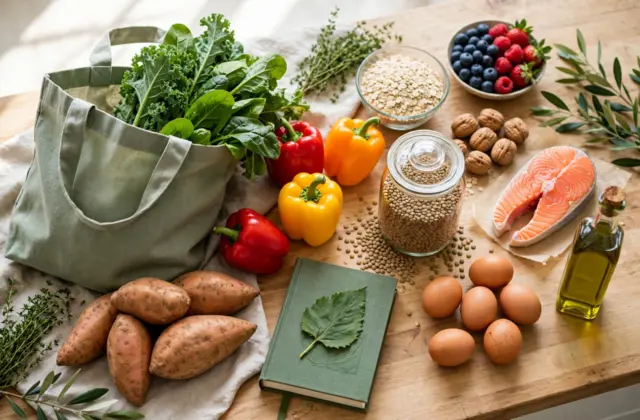
Then add fresh food on top when you have it. A bag of spinach wilts into that lentil soup in two minutes. A cucumber and some herbs turn beans and rice into a grain bowl. Frozen vegetables, kept in the freezer rather than the pantry, play the same backup role and need no chopping at all.
That combination — pantry foundations plus whatever fresh food is around — is what makes healthy eating sustainable. You are not starting from zero every night. You are starting from a shelf that already has most of dinner in it.
Read also: How to Create a Healthy Grocery List
A starter pantry checklist
Use this as a starting point, then adapt it to your taste and budget:
- Grains: brown rice, oats, quinoa or barley, whole-wheat pasta
- Proteins: dried red lentils, canned chickpeas, canned black or kidney beans, nut butter, canned tuna or sardines
- Produce: canned tomatoes, canned corn or peas, tomato paste, dried fruit (unsweetened)
- Fats and flavour: olive oil, vinegar, soy sauce or tamari, mustard, tahini, stock cubes or paste, honey or maple syrup (small amounts)
- Seasoning: salt, black pepper, cumin, paprika, chilli flakes, cinnamon, dried oregano, garlic powder
Buy the smallest size first when trying something new, and only stock up on the items you reach for week after week. A pantry that reflects your real cooking will always beat a pantry that reflects someone else’s ideal.
Frequently asked questions
Do I need to buy everything organic for a healthy pantry?
No. Organic and conventional versions of the same staple — oats, beans, rice — are nutritionally similar in most cases. Spend your budget on variety and on foods you will actually eat, and choose organic where it matters to you, not as a condition for starting.
Are canned foods as nutritious as fresh?
It depends on the food and the product. Canned tomatoes, beans, and fish retain much of their nutrition, and some nutrients become more available after cooking and canning. Choose low-sodium and no-added-sugar versions, rinse canned vegetables, and treat canned produce as a strong backup rather than a total replacement for fresh food.
How often should I clear out my pantry?
A quick check once a month is enough for most households: toss anything damaged, stale, or long past its best, move older items to the front, and note what needs replacing. A deeper clear-out once or twice a year catches the forgotten jars at the back.
What is the one pantry item you would buy first?
If you could only pick one, pick something you can build a meal around — for most people, that is dried lentils or canned chickpeas. They are cheap, filling, rich in fibre and protein, and they pair with grains, tomatoes, spices, and whatever vegetables you have on hand.
Sources
- World Health Organization — Healthy diet fact sheet
- Whole Grains Council — U.S. Dietary Guidelines and whole grains (2025–2030)
- Simply Recipes — Rinsing canned vegetables (USDA research on sodium reduction)
- USDA AskUSDA — How long can you keep canned goods?
This article is for general information only and is not medical advice. If you have a health condition, food allergy, or specific dietary needs, talk to your doctor or a registered dietitian before making significant changes to your diet.