How to Plan Nutritious Meals on a Budget
Eating well on a tight budget is less about willpower and more about having a system. When you decide what you will eat before you shop, you stop buying on impulse, you waste less, and you give yourself a real chance to build balanced meals from affordable ingredients. This guide walks through a simple weekly routine that works for one person or a whole household — no fancy equipment, no expensive superfoods, and no need to cook everything from scratch every night.
Start with a clear picture of what a balanced week looks like. The World Health Organization recommends at least 400 grams of fruits and vegetables a day for adults, along with at least 25 grams of naturally occurring dietary fibre from foods. That sounds like a lot until you break it down: a banana with breakfast, a handful of carrots or cucumber at lunch, and two vegetables with dinner gets you most of the way there. Frozen and canned produce count too, as long as they have no added sugars and are not swimming in salt. When your plan is built around those foods first, the rest of the week tends to fall into place.
Start with what you already have
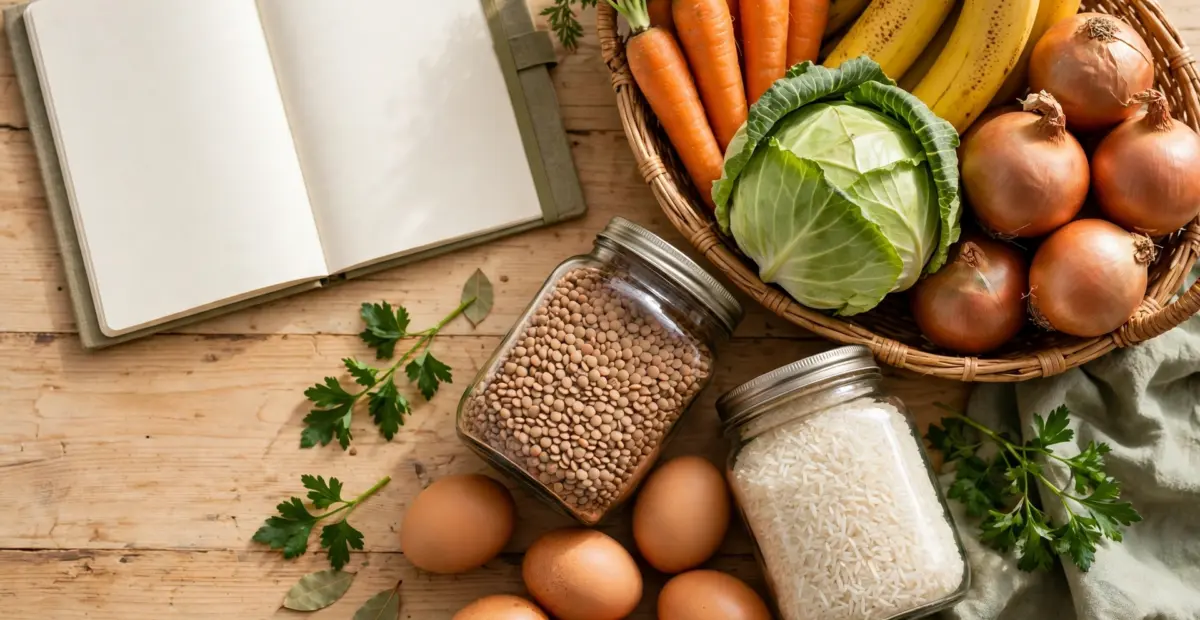
Before you write a single meal idea down, open your fridge, freezer, and pantry. Half-used bags of rice, a tin of beans at the back of the cupboard, frozen vegetables you forgot about — these are the cheapest ingredients you own, because you have already paid for them. Build two or three meals around them first, then shop only for what is missing. This one habit cuts waste more reliably than any app, and it stops the familiar pattern of buying a new jar of something you already own.
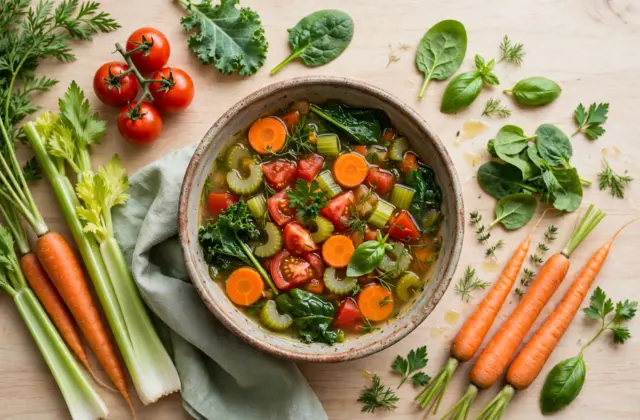
Next, pick a small set of meals you actually like and can repeat without getting bored. You do not need seven different dinners. Three or four core dinners — say, a lentil soup, a bean and rice bowl, a vegetable stir-fry with eggs, and a pasta with canned tomatoes and greens — rotated across the week, plus simple breakfasts and lunches, will cover most households. Repetition is not a failure of creativity. It is how you learn which ingredients to buy, how long they last, and how to cook them without a recipe open on your phone.
Read also: How to Cook More Meals at Home
Build meals around cheap, nutrient-dense staples
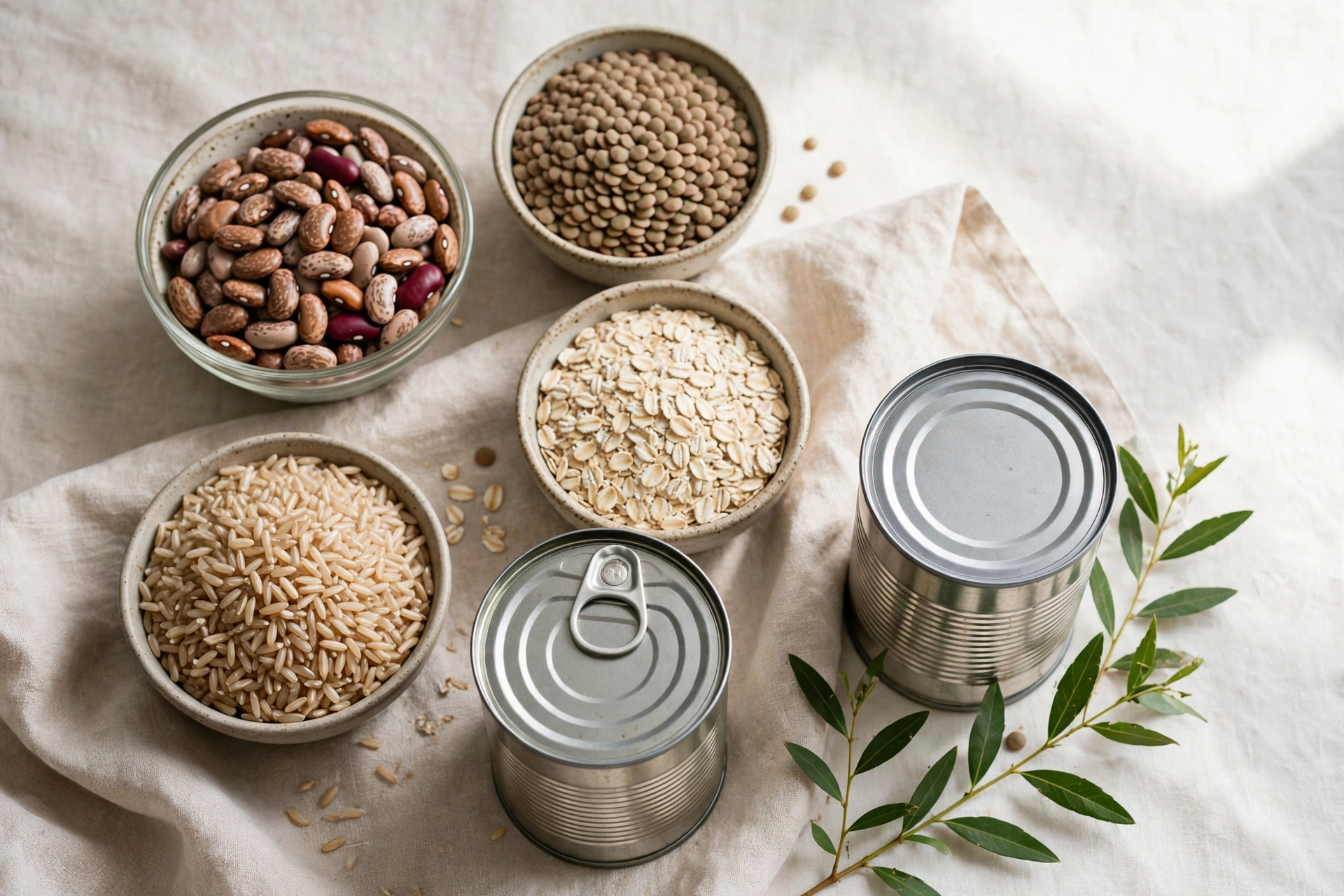
The most affordable nutritious foods are rarely the ones with the loudest packaging. Dried and canned beans and lentils, oats, brown rice, eggs, canned fish, frozen vegetables, seasonal fresh produce, and plain yogurt give you protein, fibre, and a wide range of vitamins and minerals for a fraction of the cost of ready meals and meat-heavy dishes. Meat can still be part of the plan, but using it in smaller amounts — stretched through a stew, a soup, or a stir-fry with plenty of vegetables and grains — keeps both the cost and the saturated fat down.
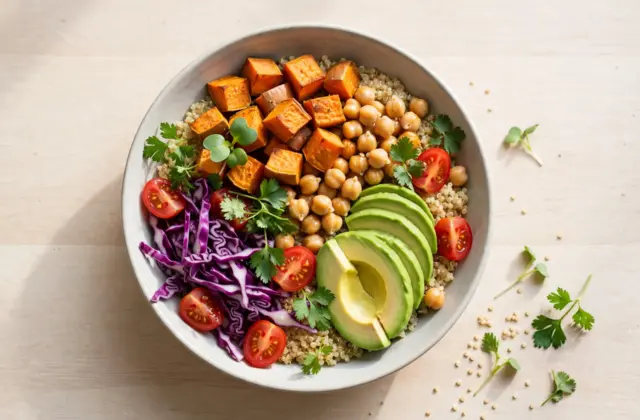
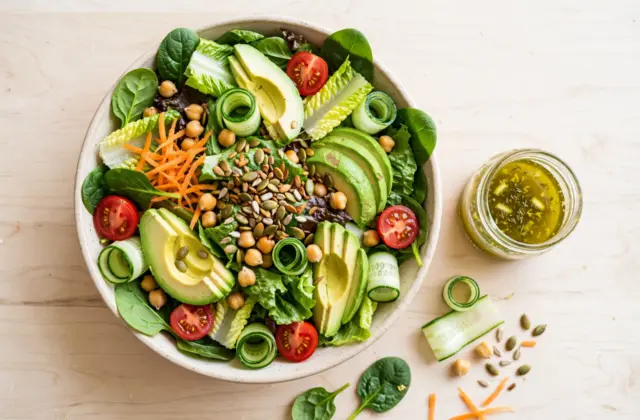
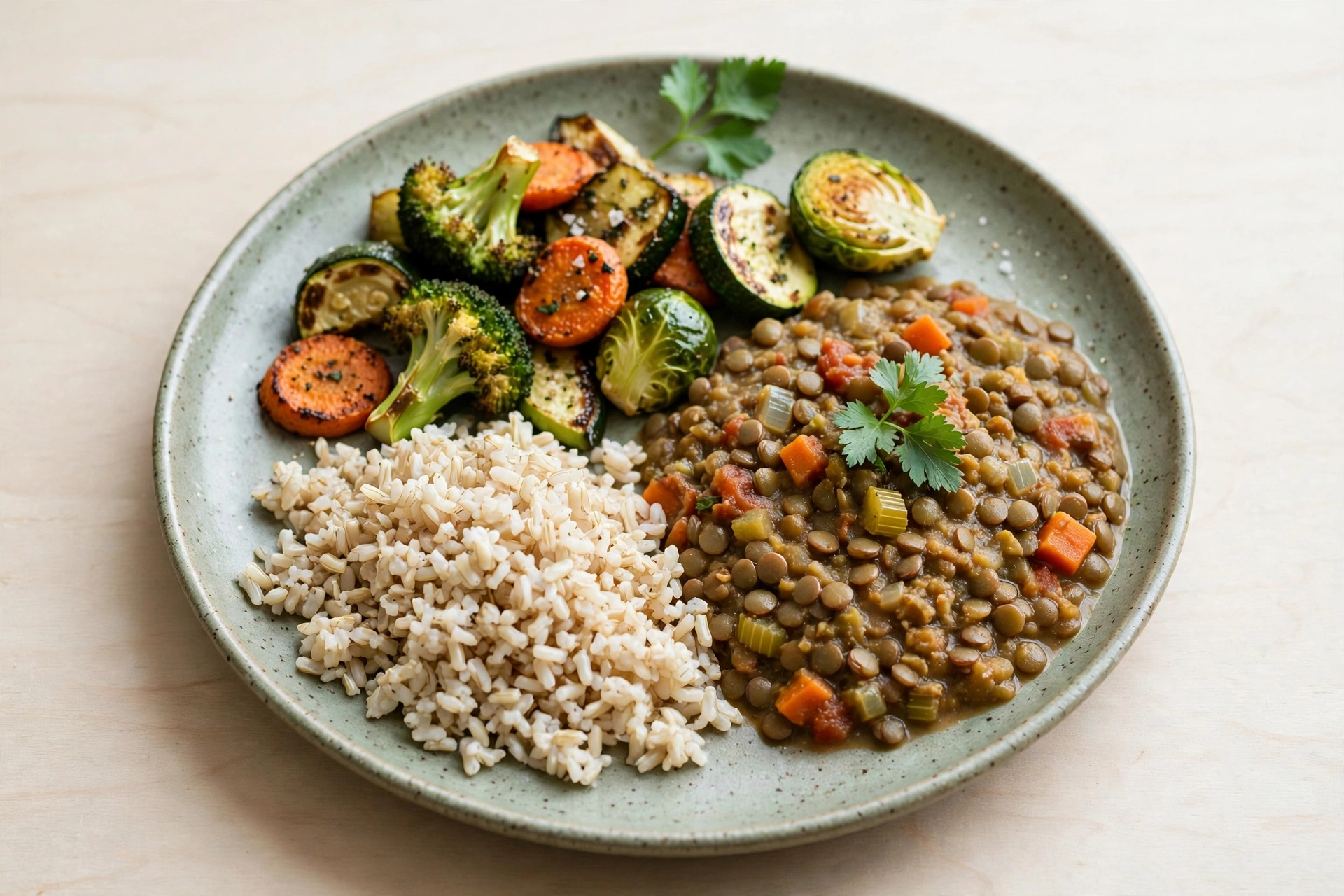
Think in terms of a plate, not a single perfect food. A practical template is half vegetables and fruit, a quarter whole grains or starchy vegetables, and a quarter protein, with a drizzle of oil or a handful of nuts or seeds for healthy fats. The classic plate method remains a sound way to picture this, even though the USDA retired the MyPlate graphic in January 2026 and replaced it with a new dietary graphic. The proportions themselves have not changed: vegetables and fruit still deserve the biggest share of the plate.
Make a list that matches your plan — and stick to it
Write your shopping list meal by meal, then check it against what you already have. Group items by section of the store so you are not wandering past tempting extras, and consider shopping the perimeter and the frozen aisle first, where whole foods tend to live. Store brands are usually the same staple in a plainer bag; for oats, rice, canned beans, and frozen vegetables, the difference is almost always price, not nutrition.
It also helps to know roughly what a healthy diet can cost, so your budget feels realistic rather than punishing. The USDA publishes monthly food-plan costs, and its September 2026 report put the Thrifty Food Plan — its lowest-cost healthy diet estimate — at $236.30 per week for a reference family of two adults and two children. That figure reflects US prices and a diet cooked mostly at home, so it will not match every household or country, but it shows an important point: a nutritious diet has a calculable floor, and it is built on the same staples this article recommends, not on premium products.
Read also: How to Create a Healthy Grocery List
Use the freezer and the leftovers
Your freezer is the best tool for budget eating. Cook a double batch of soup, stew, or grains, and freeze half in single portions. Those portions become your busy-night dinners — the ones that would otherwise turn into takeout. Frozen vegetables are picked and frozen at peak ripeness, they keep for weeks, and they let you add vegetables to a meal in two minutes flat. Bread, bananas for smoothies, and cooked beans freeze well too.
Leftovers deserve the same respect. Roasted vegetables from dinner become tomorrow’s lunch wrap filling. Extra rice becomes fried rice with an egg and frozen peas. A pot of beans cooked on Sunday can appear in tacos on Monday and soup on Wednesday. Plan these second uses when you write the week’s meals, not after the fact, and label containers with the date so nothing lingers long enough to be thrown away.
Read also: How to Cut Food Waste When Meal Planning
A sample week on a budget
Here is what a low-cost, balanced week can look like in practice. Adjust portions and ingredients to your household, your cooking skills, and what is in season near you.
- Monday: lentil soup with carrots, onions, and canned tomatoes, served with whole-grain bread.
- Tuesday: brown rice bowls with black beans, frozen corn, shredded cabbage, and a squeeze of lime.
- Wednesday: vegetable stir-fry with eggs, frozen mixed vegetables, and noodles or rice.
- Thursday: pasta with canned tomatoes, white beans, spinach, and garlic.
- Friday: baked potatoes topped with cottage cheese or yogurt, beans, and steamed broccoli.
- Saturday: homemade soup or stew using leftover vegetables and grains from the week.
- Sunday: a simple roast or one-pan meal with seasonal vegetables, plus a batch of grains for the week ahead.
Breakfasts can stay simple all week: oats with banana and yogurt, eggs on whole-grain toast, or fruit with peanut butter. Lunches can repeat the previous night’s dinner or use the same staples — a bean wrap, a grain bowl, or soup. When every meal draws on the same short ingredient list, your shopping list shrinks, and so does your bill.
Shop smarter, not harder
A few shopping habits add up fast. Buy produce in season, when it is cheapest and tastes best, and lean on frozen or canned options when fresh prices spike. Compare the price per kilogram or per unit, not just the pack price — a bigger bag of oats is usually cheaper per serving, but only if you will actually use it before it goes stale. Avoid paying a premium for pre-cut vegetables unless they genuinely save a meal from being skipped; a whole cabbage costs less and lasts longer than a bag of pre-shredded mix.
Watch the extras that quietly inflate a food bill: sugary drinks, single-serve snacks, and ready meals. The WHO recommends keeping free sugars below 10% of total daily energy, and water is both the cheapest and the healthiest thirst-quencher in most homes. If you enjoy flavoured drinks, fruit-infused water or plain tea costs far less than bottled sweetened drinks and keeps added sugar out of the day.
When money is really tight
Some weeks, even a careful plan feels stretched. In those weeks, protect the basics: enough food overall, vegetables and fruit in whatever form you can get them, a protein source at most meals, and whole grains for fibre and staying power. Community food programs, food banks, school meal programs, and local markets near closing time can all help bridge a hard week, and using them is a practical step, not a sign of failure. If cost is regularly forcing you to skip meals, talk to a clinician or dietitian — they can point you to local support and help you prioritise within a very tight budget.
Frequently asked questions
Is it really possible to eat healthily on a low budget?
Yes. The USDA’s Thrifty Food Plan is designed to show exactly that: a diet meeting dietary guidance at the lowest cost, built on staples like grains, legumes, vegetables, and fruit. It takes planning and mostly home cooking, but it does not require expensive specialty foods.
Are frozen and canned vegetables as nutritious as fresh?
Generally, yes. Frozen vegetables are usually frozen soon after harvest, and canned vegetables without added salt or sugar retain most of their nutrients. The WHO’s guidance counts frozen and canned produce toward the daily fruit and vegetable target, provided they have no added sugars or excess sodium.
How much should I spend on groceries each week?
There is no single right number — it depends on household size, location, and how much you cook at home. As a reference point, the USDA’s September 2026 Thrifty Food Plan estimate was $236.30 per week for a family of four in the US. Use official benchmarks like that as a starting point, then adjust to your own prices and track what you actually spend for a few weeks.
What is the single best first step?
Plan just three dinners for next week, shop only for those meals, and cook one double batch to freeze. Once that feels easy, expand to a full week. Small, repeatable systems beat ambitious plans that collapse by Wednesday.
The bottom line
Planning nutritious meals on a budget comes down to a short loop: check what you have, choose a few meals you like, build them around affordable staples, shop from a list, and use your freezer and leftovers well. You will not get every week perfect, and prices will sometimes force a swap — frozen vegetables instead of fresh, beans instead of meat. That flexibility is part of the skill, not a break from it. Over a month, the savings add up, the waste drops, and balanced meals stop feeling like a special effort and start feeling like the normal way you eat.
Sources
- World Health Organization — Healthy diet
- USDA Food and Nutrition Service — USDA Food Plans: Cost of Food Monthly Reports
This article is for general information only and is not medical advice. If you have a health condition or specific dietary needs, talk to a qualified clinician or dietitian before changing your diet.