High-Protein Meal Plan for Beginners
If you have ever stared at a high-protein meal plan and wondered where to start, you are not alone. Most of them jump straight to grams, powders, and strict rules, and they skip the part beginners actually need: what a normal, satisfying day of eating looks like. This plan does the opposite. It starts with real food, keeps portions realistic, and spreads protein across the day so no single meal has to do all the work.
You do not need to buy protein powder, count every gram, or give up foods you enjoy. You need a repeatable pattern: a protein source at each meal, vegetables or fruit on the side, and a whole grain or starchy vegetable to round things out. Once that pattern feels automatic, the details get much easier.
What “high-protein” actually means
The word “high” causes most of the confusion. In nutrition guidance, the adult Recommended Dietary Allowance (RDA) for protein is 0.8 grams per kilogram of body weight per day — a minimum meant to meet the needs of nearly all healthy adults, not a target for everyone. The Acceptable Macronutrient Distribution Range is broader: 10–35% of daily calories from protein. So a plan can be “higher in protein” than average without being extreme.
For a 70-kilogram (154-pound) adult, the RDA works out to about 56 grams of protein a day. Many everyday eating patterns land well above that once you include a protein food at breakfast, lunch, and dinner. This beginner plan aims for roughly 80–100 grams a day, spread across three meals and one snack, which suits many moderately active adults. That is a planning guide, not a prescription: your needs depend on your body size, activity, age, and health, so talk with a clinician or dietitian if you have kidney disease, are pregnant, or are managing a medical condition.
It also helps to know why protein gets so much attention. Research on higher-protein meals suggests they may help you feel fuller for longer than meals built mostly on refined carbohydrates, though the effect varies from person to person and depends on the whole meal, not protein alone. Fullness is useful, but it is not magic — a balanced plate still matters.
A quick protein cheat sheet
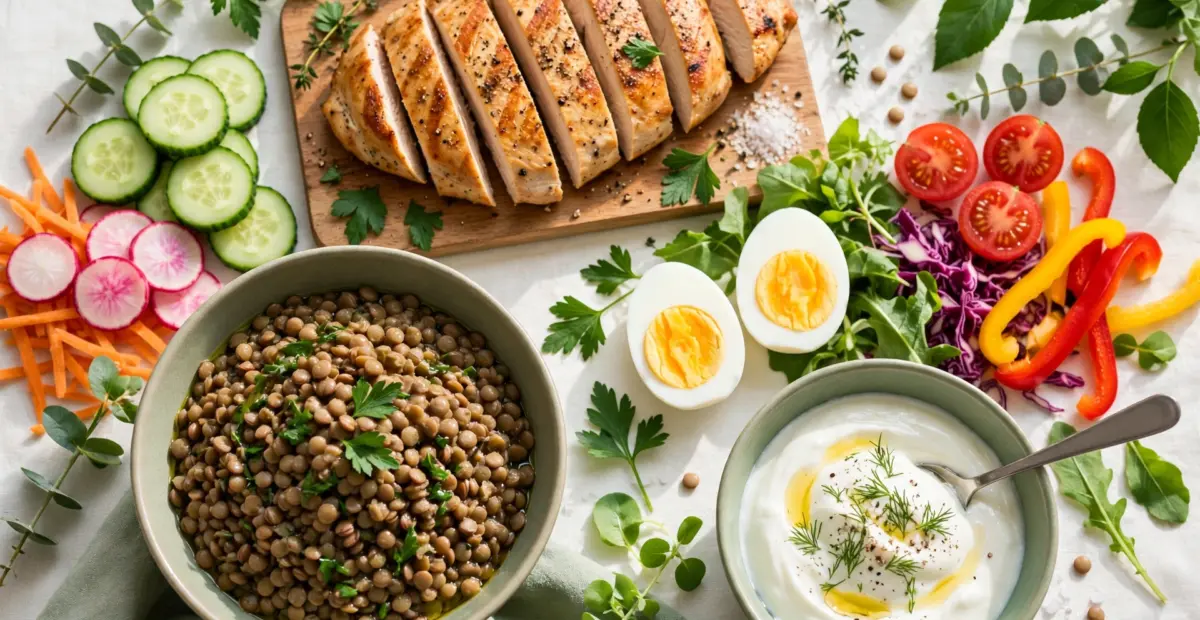
You do not need a spreadsheet to eat more protein. These everyday portions, drawn from USDA FoodData Central records, give you a sense of scale:
- Roasted chicken breast, 3 ounces (about the size of a deck of cards): about 26 grams
- Cooked lentils, 1 cup: about 18 grams
- Plain nonfat Greek yogurt, 3/4 cup: about 17 grams
- Two large eggs: about 12–13 grams
- Firm tofu, 1/2 cup: about 11 grams (brands vary)
- Black beans, cooked, 1 cup: about 15 grams
- Cottage cheese, 1/2 cup: about 12–14 grams (brands vary)
Notice the pattern: one palm-sized portion of meat, fish, or tofu, or one generous scoop of beans or yogurt, already covers a large share of a meal’s protein. You are not chasing tiny amounts from garnishes. You are anchoring each meal with one clear source, then adding the rest around it.
The simple plate formula
Use this formula for lunch and dinner, and a smaller version for breakfast:
- Protein first. Pick one anchor: chicken, fish, eggs, tofu, tempeh, beans, lentils, Greek yogurt, or cottage cheese.
- Half the plate in vegetables or fruit. The World Health Organization recommends at least 400 grams — roughly five portions — of fruit and vegetables a day, and protein meals are an easy place to fit them in.
- Add a whole grain or starchy vegetable. Brown rice, quinoa, whole-wheat bread, oats, sweet potato, or corn tortillas add staying power and fiber.
- Add a little healthy fat for flavor. Olive oil, nuts, seeds, or avocado make the meal taste complete, so you are less tempted to snack an hour later.
Read also: How to Build a Balanced Plate
That is the whole system. The seven-day plan below just repeats it with different ingredients so you do not get bored by Wednesday.
A 7-day high-protein starter plan
Treat this as a template, not a test. Swap any protein for one you prefer, keep the portions similar, and repeat a day you liked instead of forcing a meal you dread.
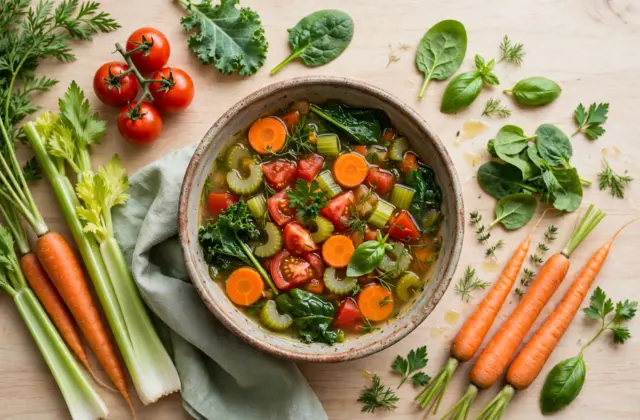
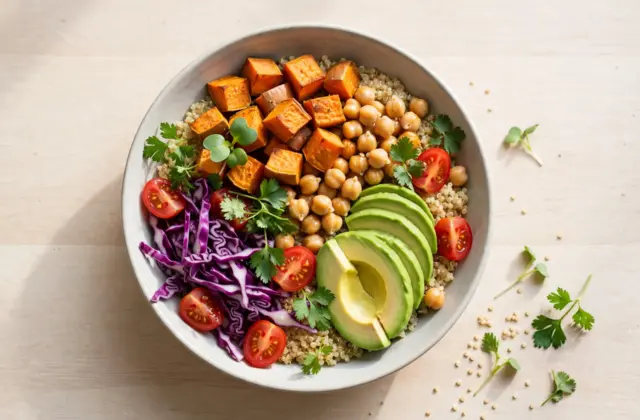
- Day 1: Breakfast — Greek yogurt with berries and oats. Lunch — chicken and vegetable grain bowl. Dinner — lentil soup with whole-grain bread.
- Day 2: Breakfast — two eggs on whole-grain toast with tomato. Lunch — tuna or chickpea salad sandwich with carrot sticks. Dinner — tofu stir-fry with brown rice and broccoli.
- Day 3: Breakfast — cottage cheese with sliced fruit and a handful of nuts. Lunch — black bean tacos with cabbage slaw. Dinner — salmon or canned fish with sweet potato and green beans.
- Day 4: Breakfast — overnight oats made with milk and yogurt, topped with seeds. Lunch — leftover tofu stir-fry in a wrap. Dinner — chicken soup with beans and vegetables.
- Day 5: Breakfast — scrambled eggs with spinach and whole-grain toast. Lunch — lentil and grain salad with feta. Dinner — turkey or bean chili with a small portion of rice.
- Day 6: Breakfast — smoothie with milk or soy milk, yogurt, banana, and peanut butter. Lunch — egg salad on whole-grain bread with salad. Dinner — baked tofu or chicken with quinoa and roasted vegetables.
- Day 7: Breakfast — Greek yogurt parfait, your way. Lunch — grain bowl with whatever protein and vegetables are left. Dinner — your favorite meal from the week, cooked again on purpose.
Day 7 is deliberate. Beginners often quit because a plan feels like a new chore every night. Repeating a favorite meal teaches you that a high-protein plan can be a routine, not a performance.
Breakfasts that actually keep you full
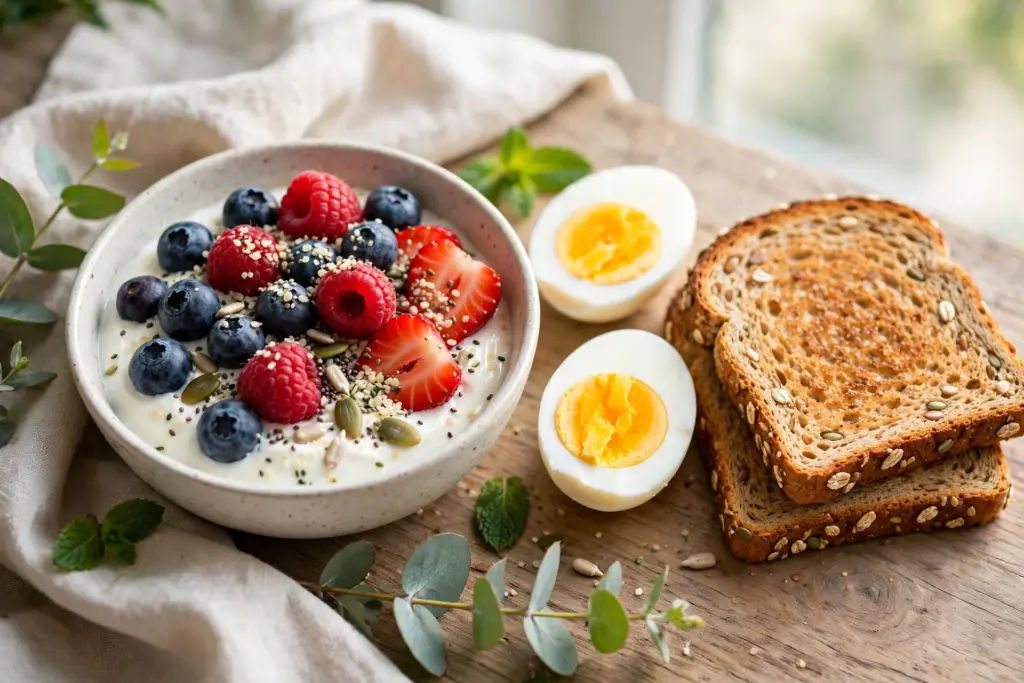
Breakfast is where most people under-eat protein without realizing it. Toast with jam, a pastry, or juice alone may taste fine at 8 a.m. and leave you hungry by 10. Adding one protein anchor changes the morning: eggs, Greek yogurt, cottage cheese, or milk and yogurt in oats are all quick options that do not require cooking a full meal.
Keep two or three breakfasts in rotation rather than inventing a new one daily. If Greek yogurt with berries works on Monday, it will work on Thursday too. Variety can come from toppings — different fruit, nuts, or seeds — while the protein base stays the same.
Read also: How to Stock a Healthy Pantry
Lunches, dinners, and plant-based swaps
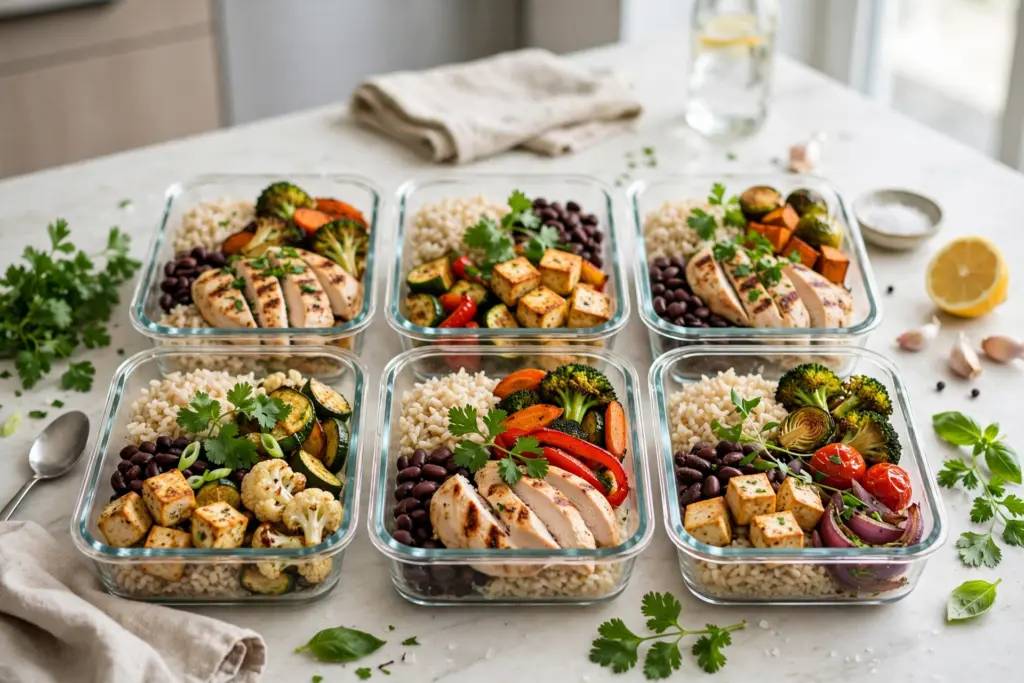
For lunch, think portable and repeatable: a grain bowl, a wrap, or a hearty soup. Cook a double batch of lentils or chicken at dinner and lunch the next day is already half done. For dinner, the plate formula does the work — protein, vegetables, a grain — and sauces, herbs, and spices provide the variety.
If you eat mostly plant-based meals, combine sources across the day rather than stressing about a single “complete” meal. Beans plus grains, tofu plus vegetables, lentils plus bread — eaten across the day, these combinations cover a wide range of amino acids. Soy foods such as tofu, tempeh, and edamame are especially handy because they are rich in protein on their own. And if you eat dairy or eggs, yogurt, cottage cheese, and eggs can fill gaps on busy days when cooking feels like too much.
One honest note on portions: “a serving” on a package is not a judgment. Check it when you are learning, because yogurt tubs, bread slices, and meat portions vary more than people expect. After a week or two of checking, you will be able to estimate by eye without a scale.
Meal prep without boredom
Prep the building blocks, not identical meals. On a Sunday, cook one grain, one bean or lentil dish, and one or two proteins. Store them separately. During the week, mix and match: the same chicken works in a grain bowl on Monday, a wrap on Tuesday, and soup on Wednesday, and it never feels like leftovers three nights running.
Freeze half of anything you cook in a big batch. Future you, on a tired Thursday, will be grateful. Keep frozen vegetables, canned beans (rinsed), eggs, and yogurt on hand as backups, so a missed shopping trip does not turn into a skipped protein meal.
Read also: Weekly Meal Planning for Balanced Meals
Common beginner mistakes
Loading it all into dinner. A huge steak at night and almost no protein at breakfast is a common pattern, and it makes mornings harder. Spread protein out — breakfast, lunch, dinner, and a snack if you want one.
Forgetting vegetables and fiber. Protein works best as part of a balanced plate. Beans, lentils, and whole grains help here twice over: they add protein and fiber, and fiber supports digestion, especially as protein intake rises.
Buying a powder before building a habit. Powders can be convenient, but they are optional. Most beginners do better by first learning three or four meals they like with whole foods, then deciding whether a powder earns a place.
Treating the plan as all or nothing. One low-protein day does not ruin anything. The goal is a pattern across the week, not a perfect score every day.
Frequently asked questions
Do I need to count grams every day? Not to start. Use the cheat sheet above to learn what a portion contains, anchor each meal with a protein food, and check in after a week. Counting can help later if you have a specific goal, but it is not required for a beginner plan.
Can I follow this plan without meat? Yes. Lentils, beans, tofu, tempeh, edamame, eggs, and dairy (if you eat them) can cover each meal. Combine plant proteins across the day and include soy foods regularly for a straightforward path.
Is more protein always better? No. Needs vary, and very high intakes are not automatically healthier. The RDA of 0.8 grams per kilogram per day is a floor for adequacy, and the acceptable range runs to 35% of calories — but “more” is not a goal in itself. If you have a medical condition or take medication, check with a clinician before making a big change.
What if I am still hungry between meals? First check the whole meal: was there enough protein, fiber, and volume from vegetables? A snack that pairs protein with produce — yogurt with fruit, cottage cheese with cucumber, or a small handful of nuts with an apple — usually lasts longer than a snack of refined carbohydrates alone.
Sources
- National Library of Medicine — Is It Time to Reconsider the U.S. Recommendations for Dietary Protein and Amino Acid Intake? (adult protein RDA of 0.8 g/kg/day; Estimated Average Requirement 0.66 g/kg/day)
- National Library of Medicine — Optimizing Protein Intake in Adults (RDA 0.80 g/kg/day; Acceptable Macronutrient Distribution Range 10–35% of calories)
- Food and Nutrition — Protein Sources Reference (protein per serving from USDA FoodData Central records: chicken breast, lentils, Greek yogurt, eggs, tofu, black beans)
- World Health Organization — Nutrition for a Healthy Life (at least 400 g of fruit and vegetables a day; free sugars below 10% of energy, ideally below 5%; salt below 5 g a day)
This article is for general information only and is not medical advice. Protein needs vary with age, body size, activity, pregnancy, and health conditions. If you have kidney disease, diabetes, or another medical condition, or you are considering a major change to your diet, talk with a clinician or registered dietitian first.