A Simple Healthy Meal Plan for Busy Weeks
Busy weeks have a way of deciding dinner for you. You get home late, the fridge looks uninspiring, and the easiest option wins — again. A healthy meal plan for a busy week is not about cooking elaborate meals every night. It is about making a few decisions once, on a calmer day, so the tired version of you does not have to start from zero at 6 p.m.
This plan keeps things deliberately simple: one short prep session, five weeknight dinners built from repeatable parts, and a grocery list that covers the whole week. Nothing here needs special equipment or hard-to-find ingredients, and every dinner can be swapped for another one on the list without breaking the plan.
Why busy weeks derail eating — and what actually helps
Most busy-week eating problems are not willpower problems. They are decision problems. When every meal needs a fresh idea, a shopping trip, and a recipe, you will run out of energy before you run out of hunger. The fix is to shrink the number of decisions: pick a handful of meals you like, buy the ingredients once, and repeat the pattern with small changes.
A useful shape for most dinners is the one used by the Harvard Healthy Eating Plate: about half the plate vegetables and fruit, a quarter whole grains, and a quarter healthy protein. You do not need to measure anything. Just eyeball it, and let that picture guide you when you are building a plate from leftovers or a takeaway container. The World Health Organization recommends at least 400 grams — about five portions — of fruit and vegetables a day, so aiming for vegetables at both lunch and dinner gets you most of the way there.
Read also: Weekly Meal Planning for Balanced Meals
The 20-minute Sunday setup
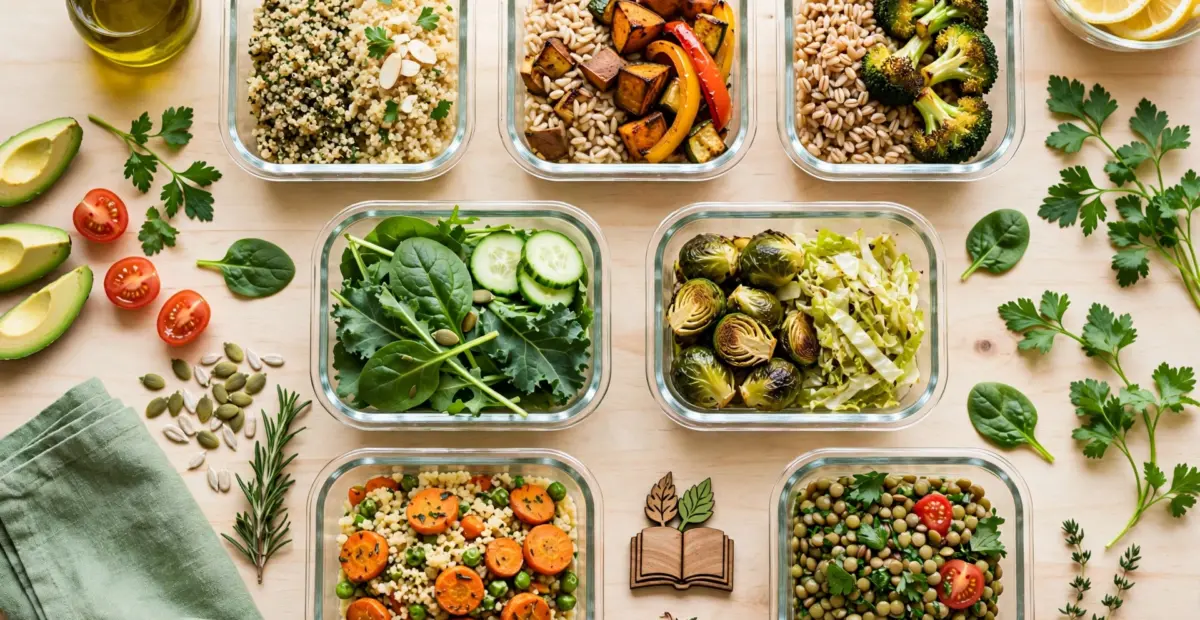
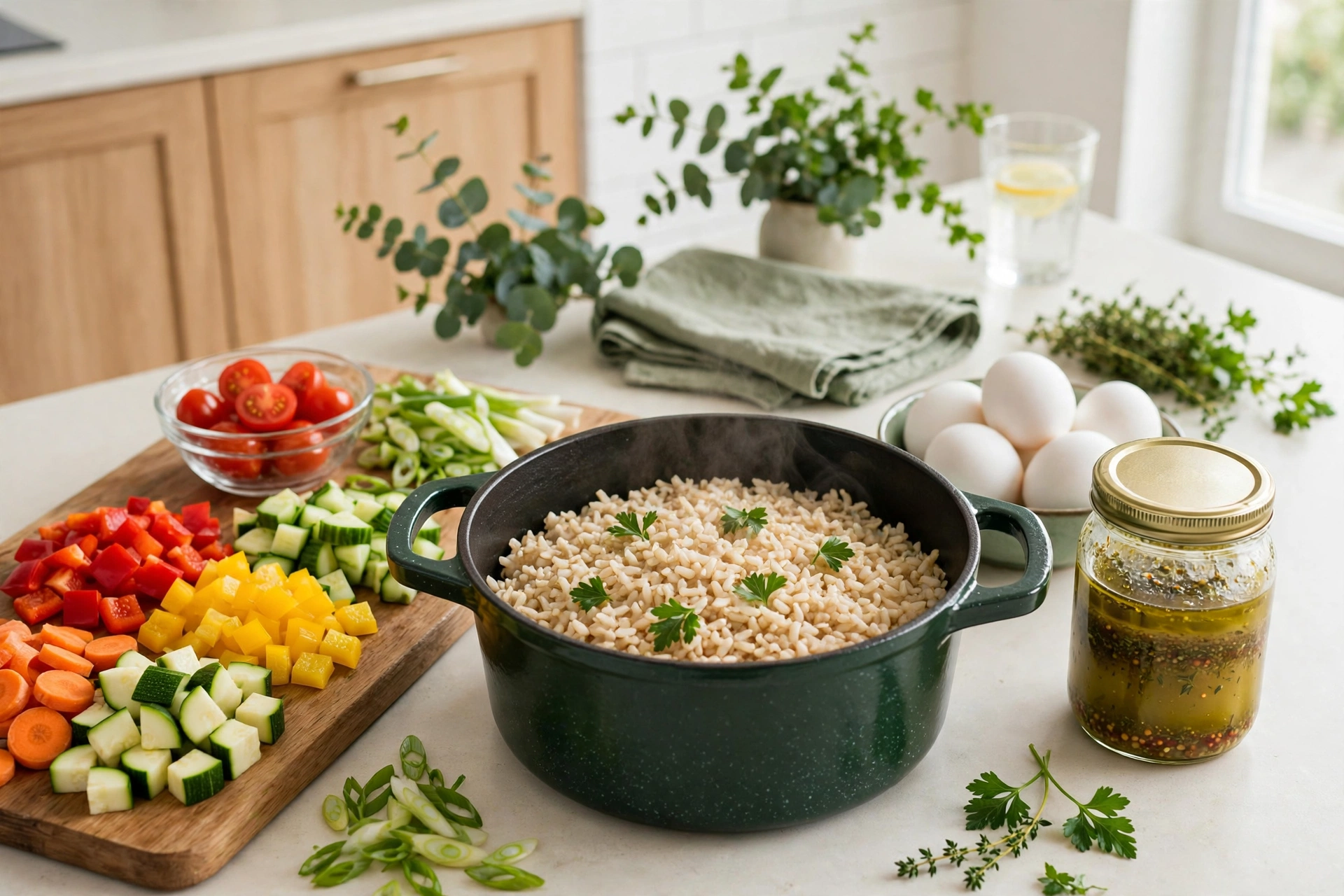
You do not need a full afternoon of meal prep. Twenty focused minutes on Sunday — or whatever your quietest day is — can carry the whole week. Pick a time when you are already in the kitchen, put on something you enjoy listening to, and do only these jobs:
- Cook one grain in bulk. A large pot of brown rice or quinoa covers three or four meals. Cool it quickly and refrigerate it in a shallow container.
- Wash and chop vegetables. Slice peppers, cucumber, and carrots; wash salad leaves and store them dry with a paper towel. Ready-to-eat vegetables get eaten. Whole ones in the crisper drawer often do not.
- Prep two proteins. Hard-boil a few eggs, and cook a tray of chicken thighs, tofu, or lentils. Season them simply — salt, pepper, garlic, lemon — so they fit into different meals later.
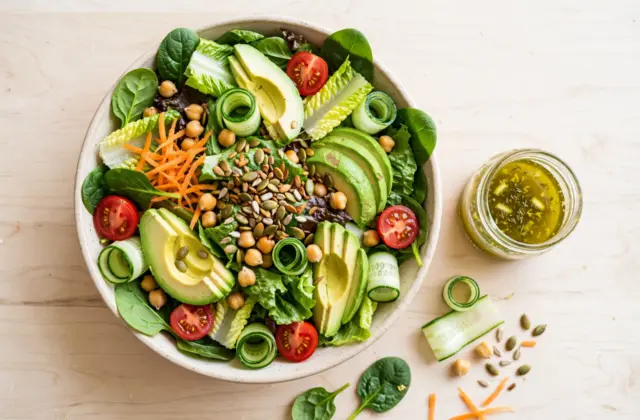
- Make one sauce. A jar of olive-oil vinaigrette, peanut sauce, or yogurt-herb dressing turns plain ingredients into a meal that feels finished.
That is the whole session. You are not cooking five dinners in advance. You are removing the fiddly steps — washing, chopping, waiting for grains — from every weeknight.
A simple 5-day plan for busy weeks
Use this as a starting point, not a rulebook. Swap any dinner for leftovers, a freezer meal, or a simpler version of itself. Breakfasts and lunches repeat on purpose: repetition is what makes a busy week manageable.
Breakfast (repeat all week): Oats with fruit and nuts, or whole-grain toast with eggs and a piece of fruit. Both take under ten minutes and keep you full until lunch.
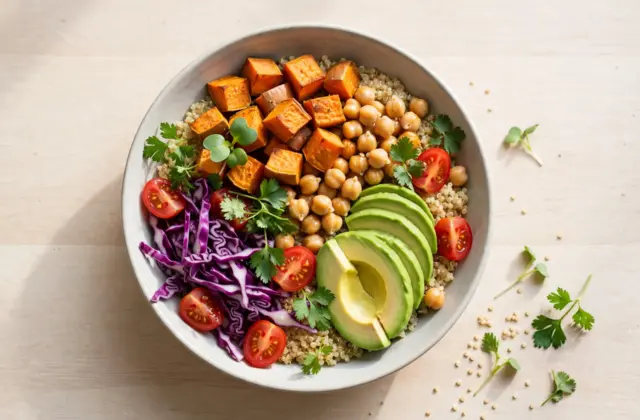
Lunch (rotate two options): Grain bowl — leftover grain, vegetables, protein, sauce — or a whole-grain wrap with beans or chicken, salad leaves, and cucumber. Pack it the night before if mornings are rushed.
Monday — sheet-pan chicken and vegetables: Chicken thighs, sweet potato chunks, broccoli, and red onion tossed in olive oil, roasted until cooked through. Serve with your pre-cooked grain.
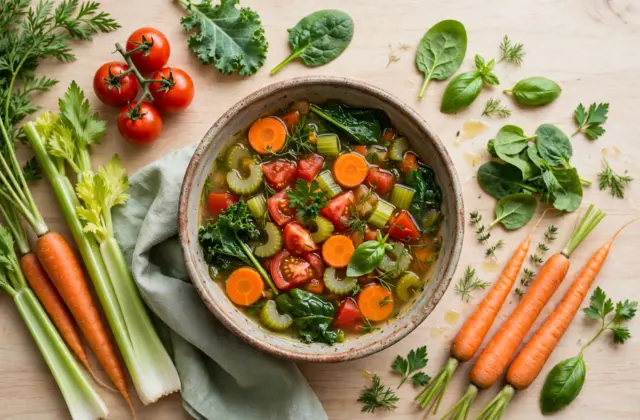
Tuesday — lentil and vegetable soup: Canned or pre-cooked lentils simmered with chopped vegetables, canned tomatoes, and broth. Make a double batch; Wednesday’s lunch is already done.
Wednesday — tofu and vegetable stir-fry: Tofu, frozen stir-fry vegetables, garlic, and ginger over rice. Frozen vegetables are a busy-week secret weapon — they are already washed and chopped, and they keep for weeks.
Thursday — pasta with beans and greens: Whole-grain pasta tossed with white beans, spinach, garlic, olive oil, and lemon. Dinner in about fifteen minutes, using pantry staples.
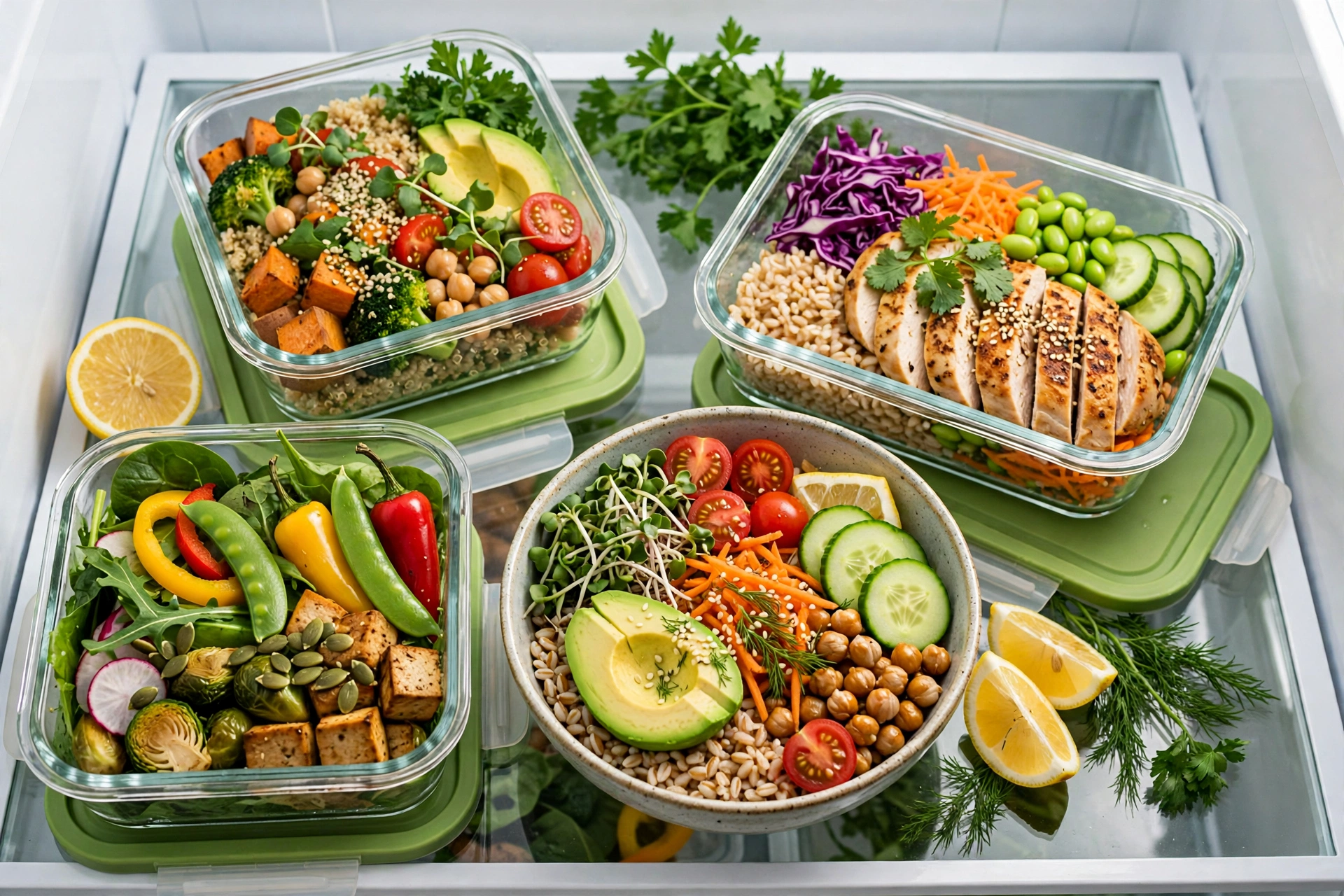
Friday — build-your-own bowls: Set out the remaining grain, protein, vegetables, and sauces and let everyone assemble their own bowl. It clears the fridge and ends the week with zero new cooking.
The 3-anchor formula for any busy-week meal
When a planned dinner falls through — a late meeting, a missing ingredient, a day that just went sideways — fall back on three anchors instead of skipping a real meal:
- One vegetable, ready to eat. Salad leaves, cucumber sticks, cherry tomatoes, frozen vegetables, or yesterday’s roasted vegetables all count.
- One protein you already have. Eggs, canned beans, canned tuna, tofu, yogurt, or leftover chicken. Protein is what keeps a quick meal satisfying rather than just filling.
- One whole grain or starchy vegetable. Whole-grain bread, tortillas, microwave rice, oats, or a sweet potato. This is the steady-energy part of the plate.
Add a drizzle of olive oil or a spoonful of sauce, and you have a balanced meal in about ten minutes. It will not win awards. It will keep you fed, and that is the point on a busy night.
Read also: How to Stock a Healthy Pantry
The grocery list that makes it work
One shopping trip, one list. Buy for the plan above, plus a few backups, and you should not need a midweek shop:
- Vegetables and fruit: salad leaves, broccoli, peppers, carrots, cucumber, onions, garlic, sweet potatoes, spinach, tomatoes, bananas, apples, and frozen stir-fry vegetables.
- Proteins: chicken thighs, tofu, eggs, canned lentils or beans, canned tuna.
- Grains: brown rice or quinoa, whole-grain pasta, whole-grain bread or tortillas, oats.
- Pantry: olive oil, canned tomatoes, vegetable or chicken broth, peanut butter, vinegar, lemon, dried herbs and spices.
- Extras: plain yogurt, cheese for topping, nuts and seeds for breakfasts.
Keep salt in check while you shop: the American Heart Association recommends no more than 2,300 milligrams of sodium a day, moving toward an ideal limit of no more than 1,500 milligrams for most adults. Sauces, bread, cheese, and canned foods are where sodium quietly adds up, so comparing labels for a lower-sodium option is one of the easiest upgrades on this list.
Leftovers: your busiest-week ally, used safely
Leftovers are the backbone of this plan — Tuesday’s soup becomes Wednesday’s lunch, Monday’s chicken tops Friday’s bowls. A few habits keep them safe. Refrigerate cooked food within two hours of cooking (within one hour if it has been sitting above 90°F), store it in shallow containers so it cools quickly, and eat refrigerated leftovers within three to four days, according to FoodSafety.gov. Anything you will not eat in that window goes straight into the freezer, labelled with the date. When in doubt, throw it out — a wasted container costs far less than a bout of food poisoning.
Read also: How to Prep Produce for the Week
When the plan falls apart
Some weeks, even a simple plan is too much. That is normal, and it is not a reason to abandon the whole idea. Keep three backup meals on hand for those nights: eggs on toast with vegetables, canned bean soup with bread, or a frozen vegetable stir-fry with rice. Each takes under fifteen minutes and uses the same three anchors — vegetable, protein, grain — so the week still holds together.
Also, give yourself permission to use shortcuts without guilt. Pre-cut vegetables, rotisserie chicken, canned beans, and frozen meals with a short ingredient list are tools, not cheating. The goal of a busy-week plan is a week of mostly balanced meals, not a perfect week. If four out of five dinners follow the plan, that is a very good week.
Frequently asked questions
Do I have to cook every night on this plan?
No. Only Monday and Wednesday involve real cooking from scratch, and both use your Sunday prep. Tuesday’s soup doubles as lunch, Thursday’s pasta is a pantry meal, and Friday is assembly, not cooking.
Can I repeat the same meals every week?
Yes — repetition is the point. Once you know a handful of meals by heart, shopping and cooking get faster every week. Change one ingredient at a time (swap chicken for tofu, rice for quinoa) when you want variety.
What if I don’t eat meat?
Every dinner here works without meat: swap chicken for tofu, tempeh, or extra beans, and keep the same vegetables, grains, and sauces. Lentils, beans, and tofu all supply protein and fibre.
How do I keep this plan affordable?
Build meals around beans, lentils, eggs, oats, and frozen vegetables, buy grains in bulk, and let leftovers do double duty as lunches. Cooking one grain and one protein in bulk also means fewer impulse purchases during the week.
Sources
- World Health Organization — Healthy diet (at least 400 g of fruit and vegetables a day; free sugars below 10% of energy, ideally below 5%; salt below 5 g a day)
- Harvard T.H. Chan School of Public Health — Healthy Eating Plate (half vegetables and fruit, a quarter whole grains, a quarter healthy protein)
- American Heart Association — How much sodium should I eat per day? (no more than 2,300 mg a day; ideal limit no more than 1,500 mg for most adults)
- FoodSafety.gov — Food safety tips (refrigerate leftovers within 2 hours; eat refrigerated leftovers within 3 to 4 days; reheat to 165°F)
This article is for general information only and is not medical advice. If you have a health condition, food allergy, or specific dietary needs, talk with a qualified health professional before changing how you eat.