Simple Vegetable Soup Ideas
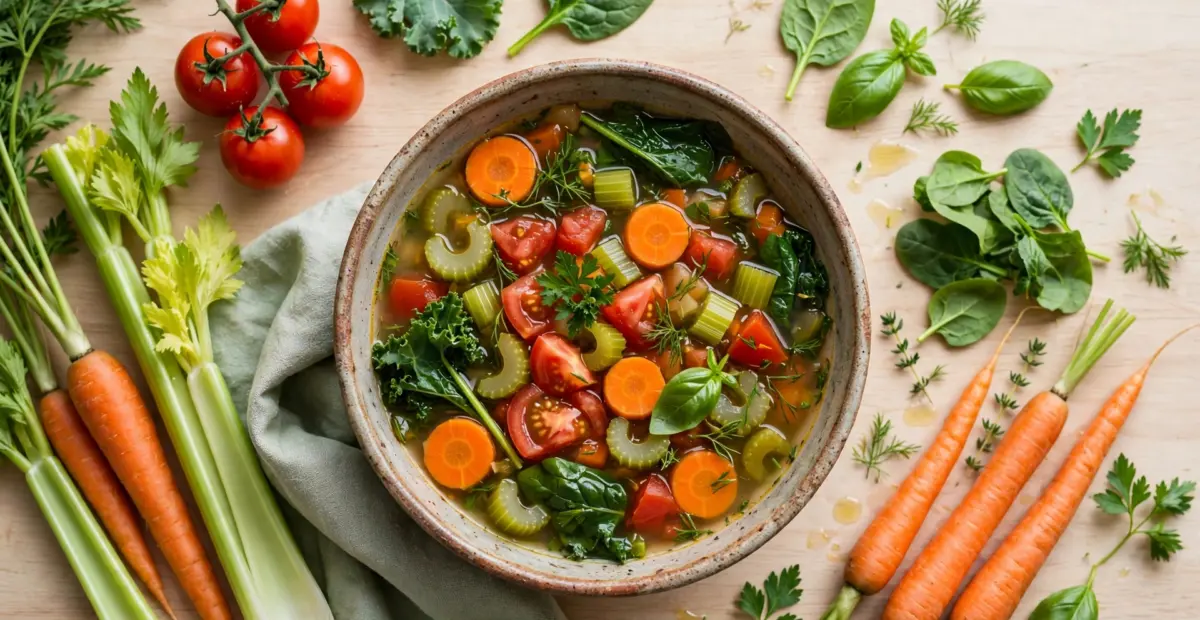
Some nights you want a real meal but you do not want a project. That is exactly when vegetable soup earns its keep. A pot of soup turns a few tired carrots, half an onion, and whatever else is lingering in the crisper drawer into dinner in about half an hour — and it happens to be one of the easiest ways to eat more vegetables without thinking very hard about it.
Soup is forgiving in a way few other dishes are. You do not need exact measurements, fancy equipment, or a recipe you memorised. If you can chop, simmer, and taste as you go, you can make soup. The five ideas below all follow the same loose pattern, so once you learn one, you can improvise the rest.
Why soup works so well
First, the practical case. A bowl of vegetable soup is mostly water and vegetables, which means it takes up a lot of space in your stomach for relatively few calories. Researchers at Penn State tested this directly: in a 2007 study, people who ate a low-energy-density soup before lunch cut their total meal energy intake by about 20% — roughly 134 calories — compared with skipping the soup, and it did not matter whether the soup was chunky, pureed, or somewhere in between. Soup simply helps you feel full sooner.
Second, the nutrition case. The World Health Organization recommends at least 400 grams of fruits and vegetables a day for adults, and a single generous bowl of vegetable soup can cover a meaningful chunk of that — often two or more portions in one sitting, depending on how loaded you make it. Cooking the vegetables in broth also means the vitamins and minerals that leach out during cooking stay in the bowl instead of going down the drain with the cooking water.
Third, the waste case. Soup is the natural destination for produce that is past its prime but not past saving: the softening tomato, the wilting celery, the carrots that have gone a little bendy. Chop, simmer, and they are dinner instead of compost.
Read also: How to Add More Vegetables to Your Meals
Five simple vegetable soup ideas
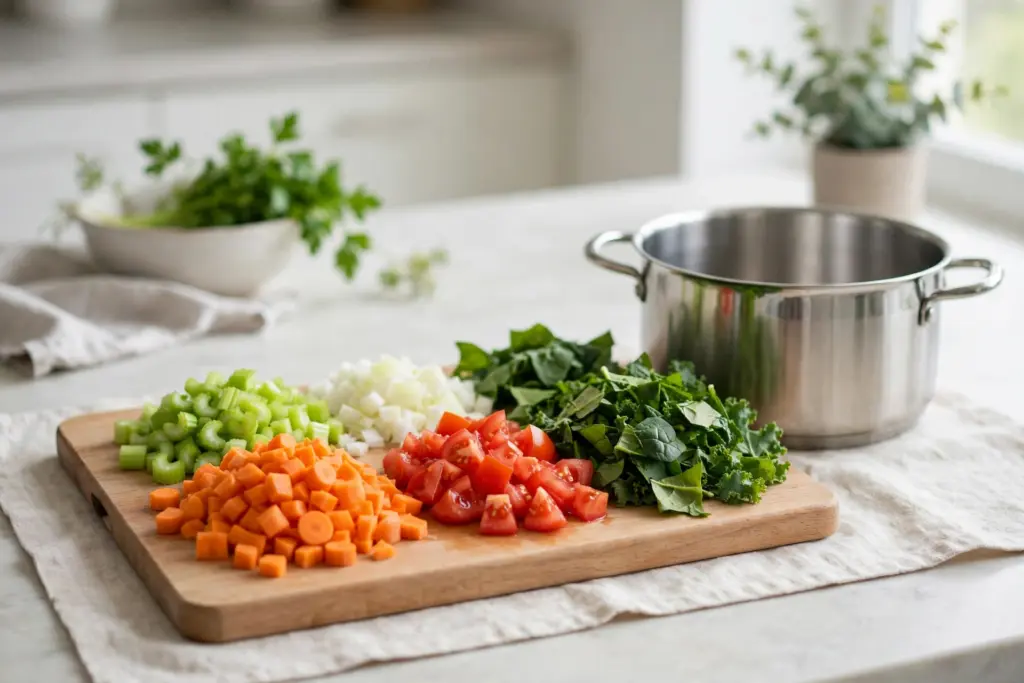
Each idea below makes about four servings and takes 30 to 40 minutes, most of it hands-off simmering. Start every one the same way: warm a tablespoon of olive oil in a large pot, soften a diced onion for five minutes, add garlic for the last minute, then add your vegetables and broth.
1. Classic garden vegetable soup
This is the one to learn first. Carrots, celery, onion, and canned tomatoes form the base; add diced potatoes, green beans, and peas in the last ten minutes so they stay bright instead of turning to mush. A handful of chopped parsley or a bay leaf at the start gives it depth without any extra effort. Season with salt and pepper at the end, not the beginning — the broth concentrates as it simmers, and salting early is how soup ends up too salty.
2. Tomato and white bean soup
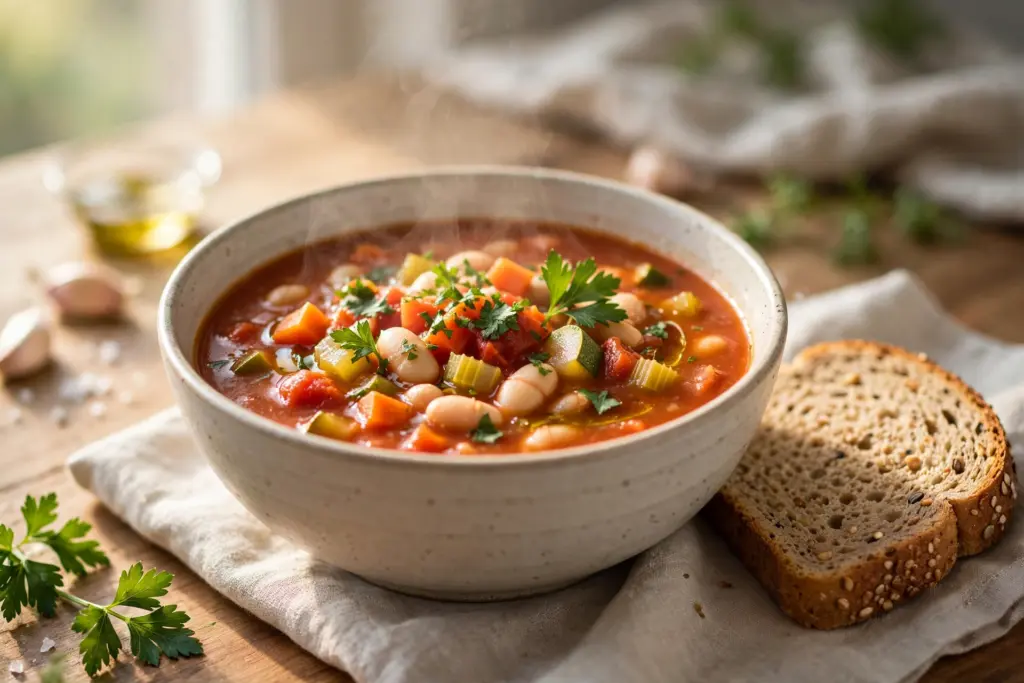
When soup needs to be a full meal rather than a starter, beans do the heavy lifting. Sauté onion and garlic, add a can of chopped tomatoes and two cans of drained white beans (cannellini work well), then pour in low-sodium vegetable broth and simmer for 20 minutes. A splash of lemon juice at the end wakes the whole pot up. The beans add fibre and protein, which is what keeps you full until the next meal instead of hungry again an hour later.
3. Carrot and ginger soup
This one is smooth, warming, and good when you want something gentle. Simmer sliced carrots with onion and a thumb of fresh ginger in broth until the carrots are completely soft, about 25 minutes, then blend until smooth. A spoonful of plain yoghurt swirled on top adds creaminess and a little protein without the saturated fat of cream. If you like heat, a pinch of chilli flakes goes in with the ginger.
4. Green minestrone-style soup
Think of this as the fridge-cleanout soup. Zucchini, green beans, peas, spinach, and a can of beans go into broth with a little tomato paste and Italian herbs. Stir the spinach in during the last two minutes so it wilts but stays green. If you have a parmesan rind in the fridge, drop it in while the soup simmers and fish it out before serving — it adds a surprising amount of savoury flavour for something you were about to throw away.
5. Roasted squash and sweet potato soup
Roasting first is the one extra step that pays off. Halve a butternut squash, scoop out the seeds, and roast it cut-side down with a sweet potato until soft — about 35 minutes at 200°C. Scoop the flesh into a pot with onion, garlic, and broth, then blend. The roasting concentrates the natural sweetness, so the soup needs almost no seasoning beyond salt and a little cumin. This is also the soup that freezes best, because its smooth texture does not suffer in the freezer the way chunky soups can.
Read also: How to Prep Produce for the Week
Keeping the sodium in check
Here is the honest caveat: soup’s biggest nutritional weakness is salt, and it mostly comes from the broth and canned ingredients, not from anything you do wrong. According to USDA FoodData Central, a cup of canned chunky vegetable soup ready to serve carries about 614 mg of sodium — roughly 27% of the 2,300 mg daily value — while a vegetarian canned version prepared with water runs about 815 mg per cup, or 35% of the daily value. Reduced-sodium versions drop to around 331 mg per cup, about 14%.
Homemade soup gives you control over that number. A few habits make the biggest difference:
- Start with low-sodium or no-salt-added broth. It is the single easiest swap, and you can always add a pinch of salt at the end if the soup needs it.
- Rinse canned beans and vegetables. Rinsing drained canned beans under running water cuts their sodium by roughly 40% — a free improvement that takes ten seconds.
- Season with acid and herbs before reaching for salt. Lemon juice, vinegar, fresh herbs, and black pepper add flavour without sodium. Taste after each addition; you will often find you need less salt than you expected.
- Check the broth label. The same brand can sell a regular and a low-sodium version side by side, and the difference on the label is often several hundred milligrams per cup.
Turning soup into a full meal
Vegetable soup on its own is light — a bowl of the classic garden version is often under 150 calories. That is a feature when soup is a starter, and a problem when it is the whole dinner. The fix is to add something with staying power:
- Beans, lentils, or chickpeas for fibre and plant protein. A cup of cooked lentils stirred into the pot adds roughly 18 grams of protein and 15 grams of fibre.
- Whole grains like barley, brown rice, or small pasta shapes. Cook them separately and add to individual bowls, so the grains do not swell and soak up all the broth overnight.
- A protein on the side — a boiled egg, a piece of crusty whole-grain bread with cheese, or leftover chicken shredded into the bowl.
- A drizzle of healthy fat. A spoonful of olive oil or a few pumpkin seeds on top adds flavour and helps your body absorb the fat-soluble vitamins from the vegetables.
Read also: How to Cut Food Waste When Meal Planning
Storing and freezing soup safely
Soup is one of the best things to batch-cook, because it genuinely improves overnight as the flavours settle. The food-safety rules are straightforward. According to the USDA Food Safety and Inspection Service, cooked soup keeps for 3 to 4 days in the refrigerator at 40°F (4°C) or below, and 2 to 3 months in the freezer. Get it into the fridge within two hours of cooking — split a big pot into shallow containers so it cools quickly instead of sitting warm in the middle for hours. When reheating, bring soup to a rolling boil.
For freezing, leave about an inch of space at the top of each container, because soup expands as it freezes. Label with the date, and use frozen soup within 2 to 3 months for the best quality. Thaw overnight in the fridge, then reheat to a boil. One practical tip: freeze soup in individual portions, so you can defrost exactly one lunch instead of committing to a whole pot.
Frequently asked questions
Is vegetable soup actually healthy?
It depends on what is in it. A homemade broth-based soup full of vegetables, beans, and whole grains is nutrient-dense and low in calories. A canned soup can be a reasonable choice too, but check the sodium — some canned versions pack a third of your daily sodium into a single cup.
Can vegetable soup help with weight management?
It can help, mainly because of volume. A low-energy-density soup eaten before a meal reduced total meal intake by about 20% in a controlled study, and a bowl of vegetable soup is filling for relatively few calories. It is a tool, not a magic trick — the rest of the meal still matters.
Do vegetables lose nutrients when you cook them in soup?
Some heat-sensitive vitamins, like vitamin C, do decline with cooking. But in soup the nutrients that leach into the water stay in the broth you eat, so losses are smaller than with boiling and draining. Adding leafy greens and peas near the end of cooking also helps preserve more of their vitamins.
Can I use frozen vegetables for soup?
Absolutely — frozen vegetables are frozen at peak freshness, so their nutrition is well preserved, and they are already chopped. They go straight from the freezer into the pot, and they are often cheaper than fresh out-of-season produce. Just add them a little later than fresh vegetables, since they cook faster.
Sources
- World Health Organization — Healthy diet (at least 400 g of fruits and vegetables per day)
- Flood JE, Rolls BJ — Soup preloads in a variety of forms reduce meal energy intake (Appetite, 2007)
- USDA FoodData Central — Soup, chunky vegetable, canned, ready-to-serve (sodium and calorie values per cup)
- USDA FoodData Central — Soup, chunky vegetable, reduced sodium, canned, ready-to-serve
- USDA Food Safety and Inspection Service — Leftovers and Food Safety (3–4 days refrigerated, reheat to a rolling boil)
This article is for general information only and is not a substitute for personalised advice from a qualified health professional. If you have a medical condition or dietary restriction, talk to your doctor or a registered dietitian before changing your diet.