Easy Homemade Salad Combinations
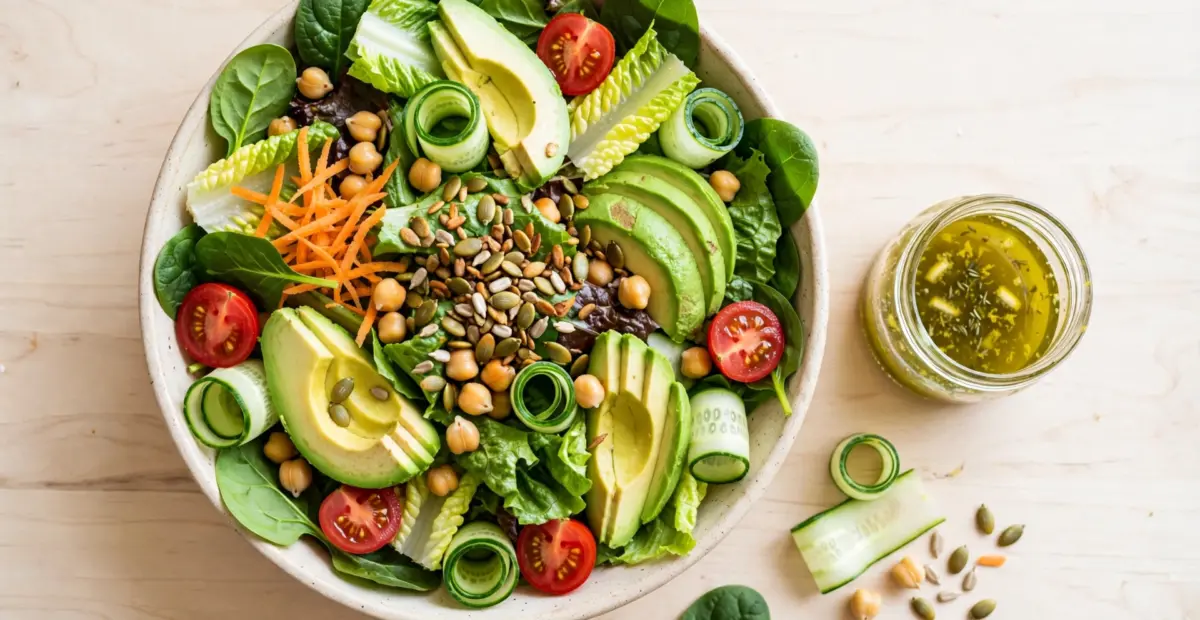
A good salad is not a punishment bowl of wet lettuce. It is a plate that actually fills you up, tastes like something you want to eat again, and takes less time to build than ordering takeout. The difference between a salad you love and one you abandon halfway through usually comes down to combinations — pairing a sturdy base with something crunchy, something with protein, and a dressing that ties it together.
This guide gives you a simple formula plus eight combinations that work for lunch, dinner, or a side that steals the show. No special equipment, no exotic ingredients, and nothing that wilts into sadness by the time you sit down.
Why salads work (and where they usually go wrong)
A salad built mostly from vegetables is one of the easiest ways to close the gap between what you eat and what the World Health Organization recommends: at least 400 grams of fruit and vegetables a day, roughly five 80-gram portions. Most of us fall short, and a big bowl at lunch can quietly cover two or three of those portions in one sitting.
There is also good evidence that the payoff is real. A large Harvard study published in Circulation in 2021 found that people eating two servings of fruit and three of vegetables a day had the lowest risk of death from any cause, compared with people eating two servings total. The benefit flattened out beyond five servings a day — which is reassuring, because five is a reachable target, not a heroic one.
So why do so many homemade salads disappoint? Usually one of three things is missing: enough protein to keep you full, enough texture to keep it interesting, or a dressing with actual flavor. A bowl of plain greens with a squeeze of lemon is a side dish, not a meal. Fix those three things and salads stop feeling like a compromise.
The five-part formula for a salad that satisfies
You do not need a recipe for every salad you make. You need a formula. Pick one item from each group and you will land on something balanced almost every time:
1. A base with backbone. Baby spinach, chopped romaine, massaged kale, or shredded cabbage. Leafy greens are light on calories and generous with nutrients — raw spinach has about 23 calories per 100 grams with 2.2 grams of fiber, while raw kale has about 35 calories and 4.1 grams of fiber, according to USDA FoodData Central. In a CDC ranking of nutrient-dense “powerhouse” vegetables, watercress scored a perfect 100 and spinach scored 86 out of 100. Mix two greens if one alone bores you.
2. Something crunchy. Cucumber, shredded carrot, radish, bell pepper, or toasted seeds. Crunch is what makes a salad feel like eating rather than grazing.
3. Something with protein. This is the part that turns a side into lunch. Eggs (about 6 grams of protein each), chickpeas, lentils, grilled chicken, canned tuna, tofu, or feta all work. A cup of cooked chickpeas adds roughly 9 grams of protein and 12 grams of fiber.
4. Something soft or sweet. Avocado, roasted sweet potato, orange segments, berries, or a spoonful of hummus. This is the contrast that keeps the bowl from tasting one-note.
5. A dressing with flavor. Olive oil and lemon, yogurt and herbs, or a simple vinaigrette. Measure the oil rather than pouring freehand — a tablespoon of olive oil carries around 120 calories, so a heavy hand can quietly double a salad’s energy.
Read also: How to Add More Vegetables to Your Meals
Eight easy combinations to start with
1. The everyday garden bowl
Romaine + cucumber + cherry tomatoes + shredded carrot + a boiled egg + olive oil and lemon. This is the baseline. It takes ten minutes, uses whatever is in the fridge, and works as a side with almost any dinner.
2. Mediterranean chickpea
Chopped romaine + cucumber + tomato + red onion + chickpeas + crumbled feta + olives + lemon-oregano dressing. The chickpeas and feta supply the protein and salt, so the dressing can stay simple. This one holds up well in the fridge, which makes it a strong meal-prep candidate.
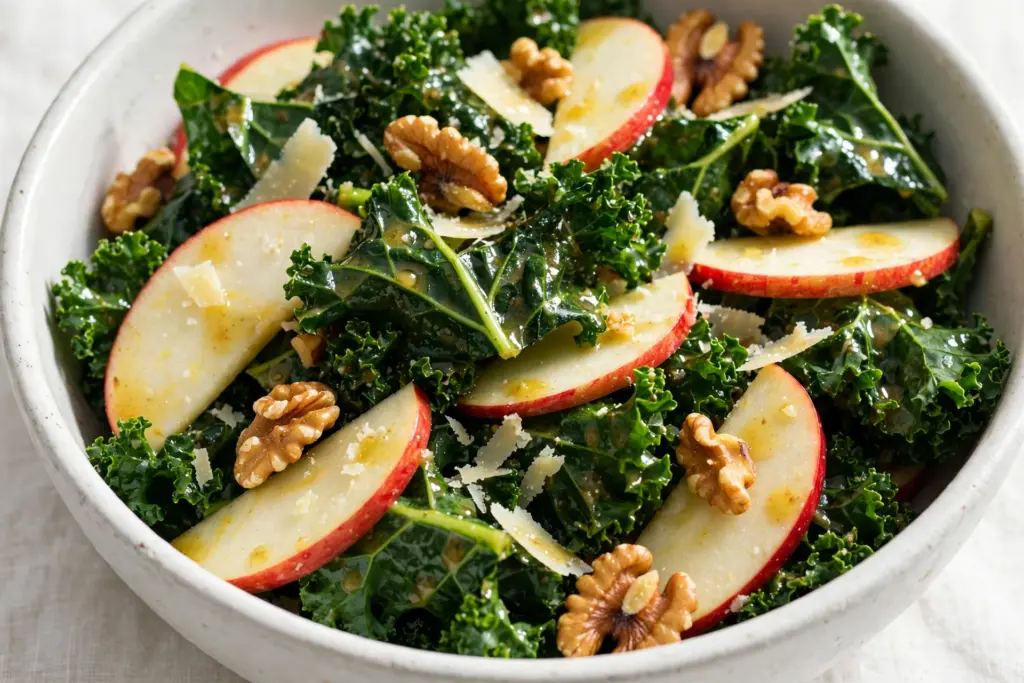
3. Kale, apple, and walnut
Massaged kale + thinly sliced apple + toasted walnuts + shaved parmesan + a mustard vinaigrette. Massaging kale with a pinch of salt and a drizzle of oil for a minute softens the leaves and tames the bitterness. The apple adds sweetness; the walnuts add crunch and healthy fats.
4. Spinach, strawberry, and feta
Baby spinach + sliced strawberries + crumbled feta + toasted almonds + balsamic vinaigrette. Sweet fruit in a salad surprises people who have never tried it, and strawberries are a practical choice: they are widely available, cheap in season, and high in vitamin C.
5. Asian-style crunchy cabbage
Shredded cabbage + grated carrot + edamame + mandarin segments + toasted sesame seeds + a dressing of soy sauce, rice vinegar, sesame oil, and a little honey. Cabbage is the unsung hero of salads — it stays crisp for days, costs very little, and stands up to bold dressing without wilting.
6. Warm grain and greens
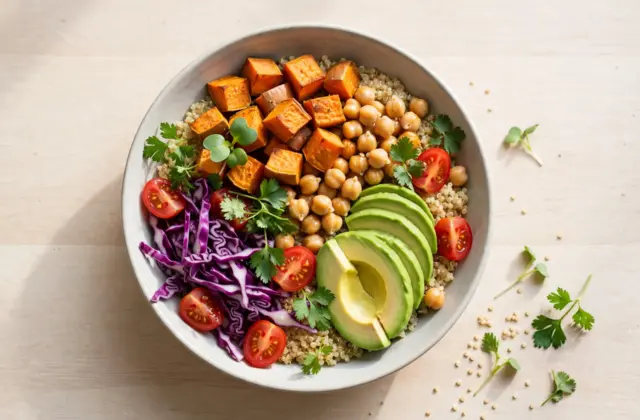
Warm quinoa or brown rice + wilted spinach + roasted sweet potato + black beans + lime and cumin dressing. The warm grains slightly wilt the spinach, which makes a big bowl easier to eat. Beans and grains together cover protein and fiber in one move.
7. Tuna and white bean
Butter lettuce or romaine + canned tuna + white beans + red onion + celery + parsley + lemon and olive oil. This is a pantry salad in the best sense: everything except the lettuce can sit on a shelf for months, so it is the bowl to make when the fridge is nearly empty.
8. Roasted vegetable and goat cheese
Arugula or mixed leaves + roasted beetroot and sweet potato + goat cheese + pumpkin seeds + a light honey-mustard dressing. Roast a tray of vegetables on Sunday and this salad assembles itself on Monday. The warm vegetables against cool greens is a combination worth trying once — it tends to convert skeptics.
Read also: How to Prep Produce for the Week
Dressings that don’t undo the good work
A salad dressing is where a healthy bowl can quietly turn into a calorie bomb, and the main culprit is usually bottled creamy dressing. Two tablespoons of ranch can carry around 140 calories and close to 300 milligrams of sodium — and most people pour far more than two tablespoons. That matters if you are watching sodium: the American Heart Association recommends no more than 2,300 milligrams a day, and ideally moving toward 1,500 milligrams for most adults.
Three homemade options that take under two minutes:
- Lemon-olive oil: 3 parts olive oil, 1 part lemon juice, a pinch of salt, cracked pepper. Shake in a jar.
- Yogurt-herb: plain Greek yogurt thinned with a splash of water, plus garlic, dill, and lemon zest. Creamy without the cream.
- Mustard vinaigrette: olive oil, red wine vinegar, a teaspoon of Dijon mustard, and a drizzle of honey. The mustard helps the oil and vinegar stay mixed.
Make a jar on Sunday and it will cover a week of salads. Dress the leaves, not the whole bowl, and add dressing just before eating if you are packing lunch — soggy greens are the number-one reason packed salads get thrown away uneaten.
Prep it once, eat it all week
The reason salads fail as a habit is rarely the recipe. It is the prep. Washing and chopping everything from scratch every day is a chore most people will quit within a week. A single 30-minute session changes that:
- Wash and dry greens properly. A salad spinner is worth the cupboard space. Wet leaves make dressing slide off and turn limp by lunchtime. Store dried greens in a container lined with a clean tea towel.
- Chop the sturdy vegetables. Carrots, cabbage, bell pepper, and cucumber keep well for four to five days in sealed containers.
- Cook one protein and one grain. A pot of lentils or a tray of chicken thighs plus a batch of quinoa covers most of the week’s bowls.
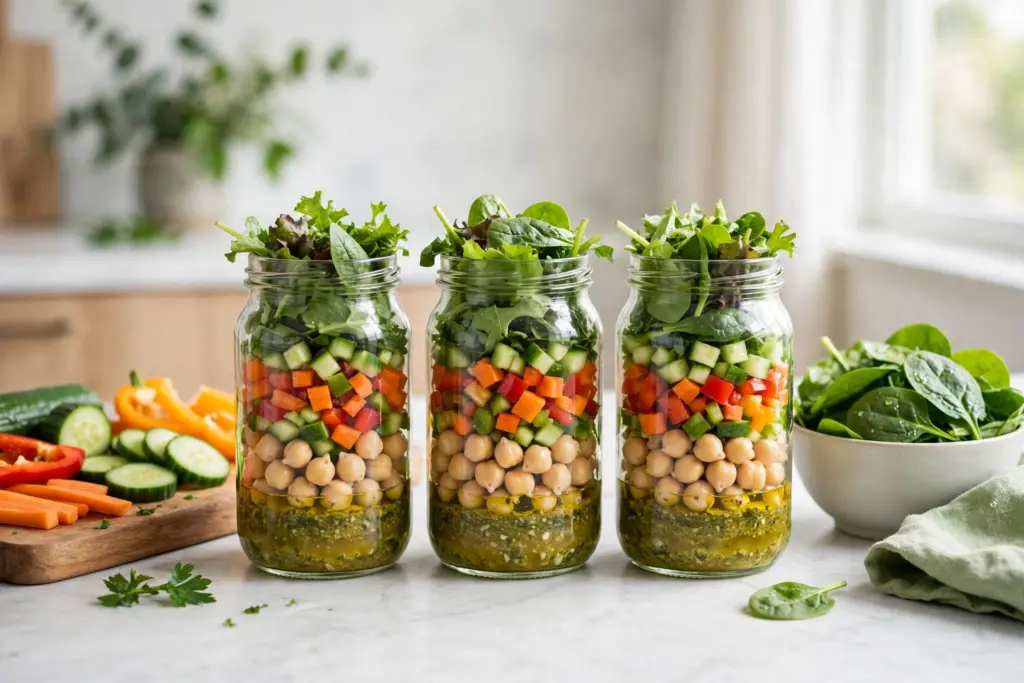
- Keep wet and dry apart. Dressing, tomatoes, and anything juicy go in a separate small container until serving time.
Fiber is another quiet win here. A salad built on greens, beans, and whole grains can easily deliver a third of your daily fiber in one bowl — useful when the Institute of Medicine’s adequate intake is 25 grams a day for women and 38 grams for men under 50, and most people eat far less.
Read also: How to Include More Colorful Produce in Meals
Frequently asked questions
How do I keep a packed salad from going soggy?
Layer it: dressing at the bottom, then sturdy vegetables and grains, then greens on top. Shake or toss just before eating. Wet ingredients like tomato and citrus should sit above the greens, not under them.
Can a salad really be a full meal?
Yes, if it has protein and enough volume. Aim for a palm-sized portion of protein — an egg or two, a cup of beans, or a serving of chicken or tofu — plus a grain or starchy vegetable if you are still hungry an hour later. A bowl of leaves alone is a side dish, not dinner.
Are bagged salad mixes okay?
They are a reasonable shortcut. Check the date, wash the leaves even if the bag says pre-washed, and skip mixes that come with heavy creamy dressing packets if you are watching sodium or calories. A plain mix plus your own dressing is usually the better buy.
How much salad should I eat a day?
There is no fixed quota for salad specifically. A useful target is the WHO guidance of at least 400 grams of fruit and vegetables a day — a generous salad at lunch can cover roughly half of that in one sitting.
This article is for general information only and is not a substitute for personalized medical or dietary advice. If you have a health condition or take medication that affects your diet, talk to your clinician or a registered dietitian before making major changes.
Sources
- World Health Organization — Healthy diet (fact sheet)
- Wang et al., Circulation, 2021 — Fruit and vegetable intake and mortality
- USDA FoodData Central
- Di Noia, J. — Defining Powerhouse Fruits and Vegetables, CDC Preventing Chronic Disease, 2014
- American Heart Association — How Much Sodium Should I Eat Per Day?
- Institute of Medicine — Dietary Reference Intakes for fiber (25 g women / 38 g men)