Vitamin E Food Sources and Meal Ideas
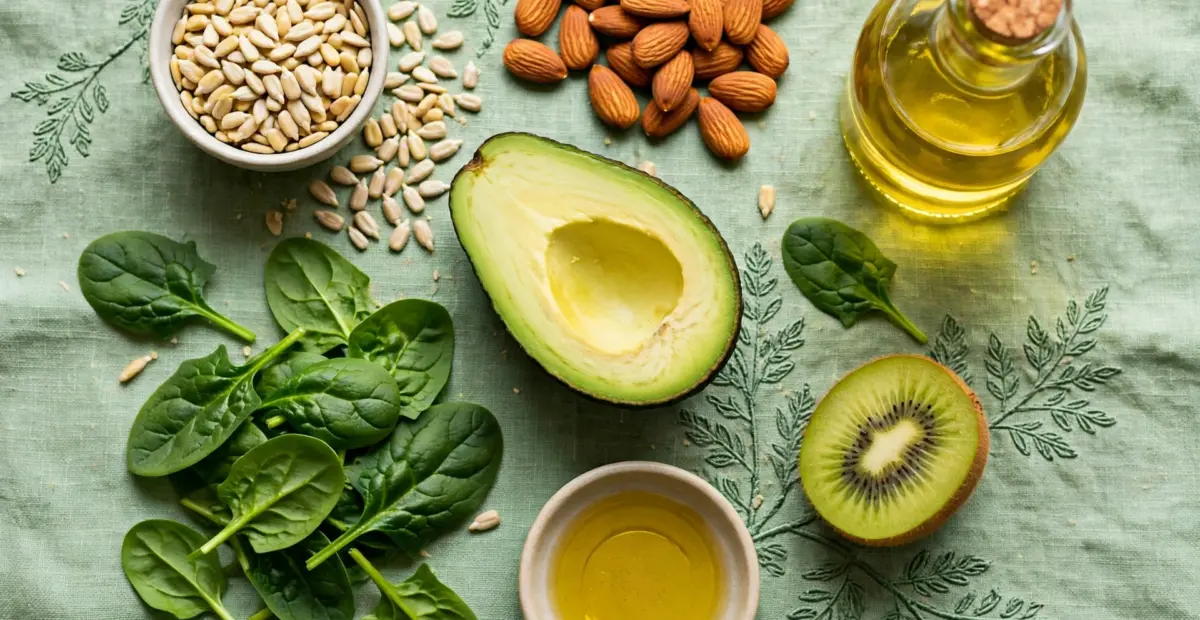
Vitamin E rarely makes headlines, and that is exactly why most of us fall short on it. It is not a nutrient you feel working — there is no energy rush, no obvious symptom when you are a little low — yet it quietly protects every cell membrane in your body. The good news is that hitting your daily target does not take supplements or exotic foods. A spoonful of sunflower seeds on your breakfast, a handful of almonds in the afternoon, and a drizzle of sunflower oil on your salad can get you most of the way there.
Here is what vitamin E actually does, which foods carry the most of it, and a handful of meal ideas that make the numbers add up without you having to think about them.
What vitamin E does in your body
Vitamin E is a fat-soluble nutrient, and its main job is acting as an antioxidant. Every cell in your body is wrapped in a membrane made largely of fat, and fat is vulnerable to damage from unstable molecules called free radicals — byproducts of normal metabolism, but also of cigarette smoke, air pollution, and sunlight. Vitamin E sits inside those membranes and interrupts the chain reaction that would otherwise damage them.
That protection matters most where membranes matter most. Nerve cells, wrapped in long fatty sheaths, depend heavily on it — which is why a true deficiency tends to show up first in the nervous system, as loss of feeling, muscle weakness, or trouble with coordination. Immune cells need intact membranes to communicate, so vitamin E also helps your immune system do its work, and it helps blood vessels widen and keeps blood from clotting too readily inside them.
One detail worth knowing: “vitamin E” is actually a family of eight related compounds. Your liver has a sorting protein that holds on to just one of them — alpha-tocopherol — and lets most of the others pass through. When health agencies set requirements, alpha-tocopherol is the form they are counting, and it is the form listed on food labels.
How much vitamin E do you need?
For adults, the recommended dietary allowance (RDA) is 15 mg of alpha-tocopherol a day — the same for men and women, and the same during pregnancy. Breastfeeding raises the target to 19 mg a day. The Daily Value printed on nutrition labels is also 15 mg, so a food that lists 50% of the Daily Value for vitamin E gives you about 7.5 mg.
Most people do not reach that number. According to the National Health and Nutrition Examination Survey (NHANES) data from August 2021 to August 2023, the average daily intake from food and drinks was 9.8 mg for males and 8.5 mg for females aged 2 years and older — roughly two-thirds of the target. That gap is not usually dangerous: true vitamin E deficiency is very rare in healthy people and is almost always linked to conditions where fat is not properly digested or absorbed, such as Crohn’s disease or cystic fibrosis. But a steady shortfall means you are getting less of that membrane protection than your body was built to use.
The richest food sources of vitamin E
Nuts, seeds, and plant oils do almost all the heavy lifting. Green vegetables and a few fruits contribute smaller amounts, but they add up across a day. The amounts below are alpha-tocopherol per serving, from USDA data compiled by the National Institutes of Health Office of Dietary Supplements.
| Food | Serving | Vitamin E (mg) | % Daily Value |
|---|---|---|---|
| Wheat germ oil | 1 tablespoon | 20.3 | 135% |
| Sunflower seeds, dry roasted | 1 ounce (about ¼ cup) | 7.4 | 49% |
| Almonds, dry roasted | 1 ounce (about 23 nuts) | 6.8 | 45% |
| Sunflower oil | 1 tablespoon | 5.6 | 37% |
| Safflower oil | 1 tablespoon | 4.6 | 31% |
| Hazelnuts, dry roasted | 1 ounce | 4.3 | 29% |
| Peanut butter | 2 tablespoons | 2.9 | 19% |
| Butternut squash, cooked | 1 cup | 2.6 | 17% |
| Avocado | ½ fruit | 2.1 | 14% |
| Peanuts, dry roasted | 1 ounce | 2.2 | 15% |
| Spinach, boiled | ½ cup | 1.9 | 13% |
| Olive oil | 1 tablespoon | 1.9 | 13% |
| Broccoli, boiled | ½ cup | 1.2 | 8% |
| Kiwifruit | 1 medium | 1.1 | 7% |
Look at the top of that list and the strategy becomes obvious. A single tablespoon of wheat germ oil covers more than a full day’s requirement — it is the outlier of the bunch, useful in a salad dressing or drizzled over cooked grains. But the everyday winners are sunflower seeds and almonds: one small handful of either covers close to half your daily target. That is why the meal ideas below lean on them so heavily.
Read also: How to Include Healthy Fats in Meals
Meal ideas that reach 15 mg without trying
You do not need a spreadsheet to hit 15 mg. You need one vitamin E anchor per meal, plus the small contributions from everything else on the plate. Here are four days’ worth of starting points.
Breakfast: sunflower-seed oatmeal
Stir two tablespoons of sunflower seeds (about 3.7 mg) into a bowl of oatmeal, and add a sliced kiwi (about 1.1 mg) on the side. The seeds give the porridge a nutty crunch, and you have already covered a third of the day before 9 a.m. Swap the kiwi for a spoonful of peanut butter on toast (2.9 mg per two tablespoons) and you are past the halfway mark with breakfast alone.
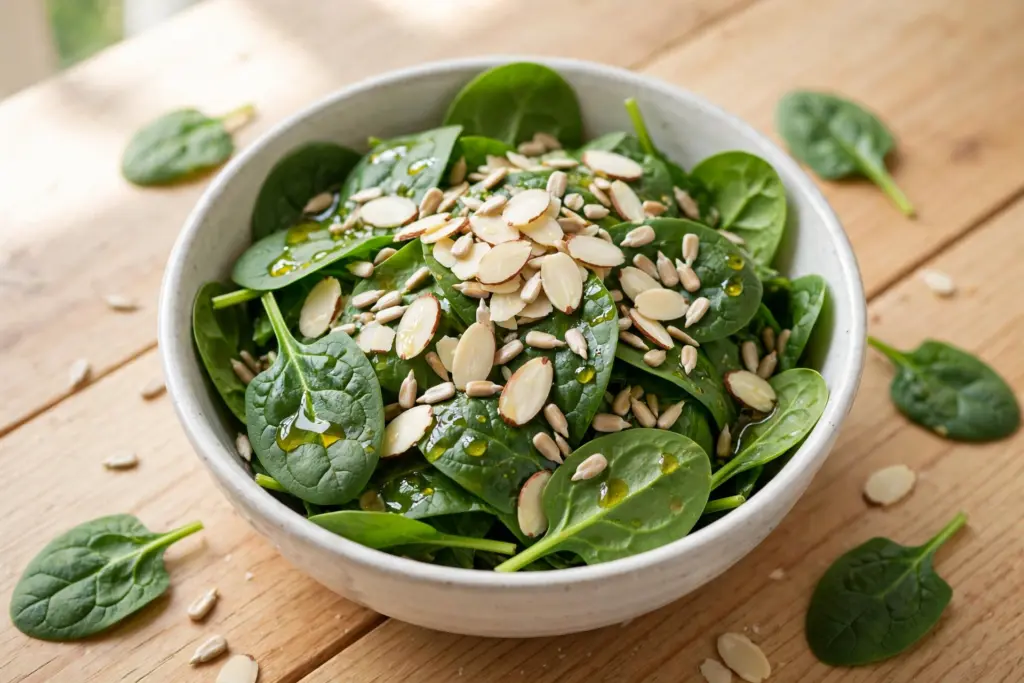
Lunch: spinach salad with almonds and sunflower oil
Build a salad on a bed of raw spinach, toss in a handful of dry-roasted almonds (6.8 mg per ounce), and dress it with a tablespoon of sunflower oil whisked with lemon juice and mustard (5.6 mg). Even before you count the other vegetables in the bowl, that lunch delivers around 12 mg — nearly the whole day in one plate. A slice of whole-grain bread on the side adds a little more, and the oil does double duty: because vitamin E is fat-soluble, the dressing helps your body absorb the vitamin from the greens themselves.
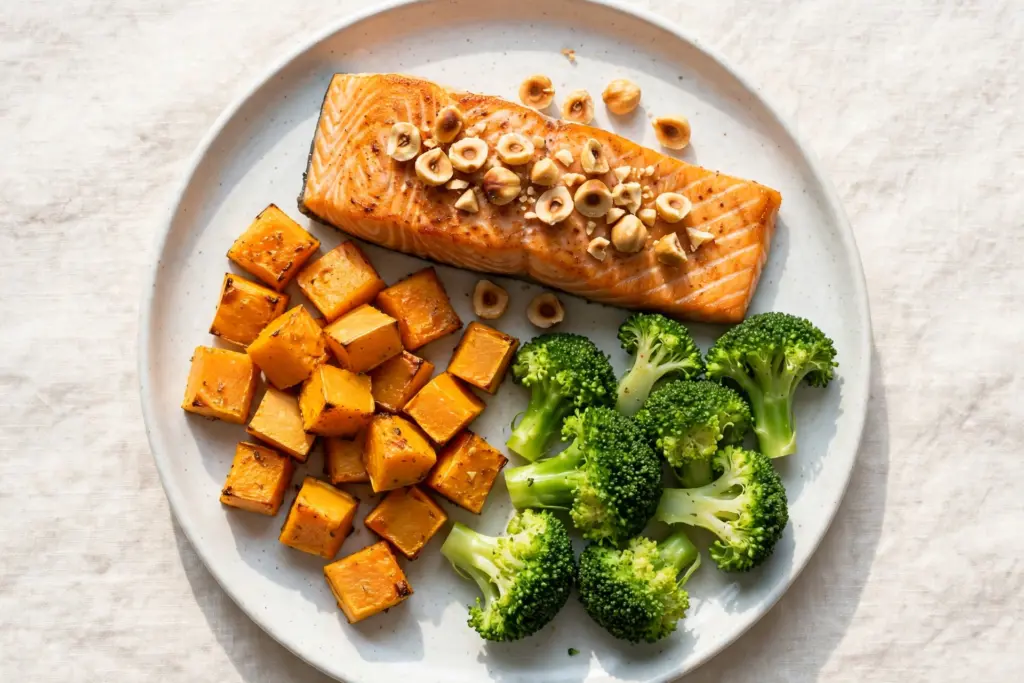
Dinner: roasted squash and salmon
A cup of roasted butternut squash (2.6 mg) next to a piece of salmon — which contributes roughly 1.8 mg per 3-ounce serving — makes a dinner that is quietly rich in vitamin E, especially if you roast the squash in a tablespoon of olive oil (another 1.9 mg) and finish it with a sprinkle of toasted hazelnuts (4.3 mg per ounce). Add a side of steamed broccoli (1.2 mg per half cup) and dinner alone can clear 8–10 mg.
Snacks: the simplest fix of all
If there is one habit that fixes a vitamin E shortfall, it is the afternoon handful of nuts. An ounce of almonds with a piece of fruit, or a small pot of peanut butter with apple slices, is about 7 mg in the time it takes to open a bag. Trail mix made from sunflower seeds, almonds, and dried apricots (about 3 mg per half cup) travels well and keeps for weeks in a desk drawer.
Read also: How to Add More Vegetables to Your Meals
Getting more from the vitamin E you eat
A few practical points make the difference between eating vitamin E and actually absorbing it.
First, eat it with fat. Vitamin E is fat-soluble, which means your digestive system needs some dietary fat to absorb it. That is rarely a problem in practice — the nuts, seeds, and oils that carry vitamin E bring their own fat along — but it is one reason a fat-free dressing on a spinach salad is a poor trade. A spoonful of olive oil on the greens does more than add flavour.
Second, think in servings, not superfoods. Wheat germ oil is impressive on paper, but almost nobody cooks with it daily. Almonds and sunflower seeds are the workhorses precisely because they are easy to eat every day. A food you actually reach for beats a richer one you forget about.
Third, store nuts and oils properly. Vitamin E is an antioxidant, and it degrades when exposed to heat, light, and air — the same conditions that turn oils rancid. Keep oils in a cool, dark cupboard, and store nuts in a sealed container away from heat. Whole nuts last far longer than ground or chopped ones.
What about vitamin E supplements?
For most people, food is the better source, and the research backs that up. Large trials have found that vitamin E supplements do not seem to prevent heart disease, reduce its severity, or affect the risk of death from it. And more is emphatically not better: because vitamin E is fat-soluble, high doses accumulate in fatty tissue and the liver rather than being flushed out in urine.
At high intakes, the vitamin’s mild effect on blood platelets becomes a real anticoagulant effect. High-dose supplements may raise the risk of bleeding — and of hemorrhagic stroke, bleeding in the brain. That is why the tolerable upper intake level for adults is 1,000 mg a day from supplements (equivalent to 1,500 IU of natural vitamin E or 1,100 IU of synthetic). The risk is highest for people taking blood thinners such as warfarin, and vitamin E supplements can also interact with chemotherapy and radiation therapy.
Note the asymmetry: vitamin E from food is considered safe at any level — no upper limit applies to what you eat. The caution is about concentrated supplement doses, not about a second handful of almonds. A standard multivitamin that stays near the recommended intake is generally considered safe for healthy adults, according to the NIH Office of Dietary Supplements. If you take blood thinners or are going through cancer treatment, talk with your clinician before taking any vitamin E supplement.
Read also: Vitamin A Foods for a Balanced Diet
Frequently asked questions
How much vitamin E do I need each day?
Adults need 15 mg of alpha-tocopherol a day, and the same amount applies during pregnancy. Breastfeeding raises the target to 19 mg. The average American adult gets only about 8.5–9.8 mg from food, so most people have room to add a handful of nuts or seeds a day.
What food has the most vitamin E?
Wheat germ oil is by far the richest source, with 20.3 mg per tablespoon — more than a full day’s requirement. Among everyday foods, dry-roasted sunflower seeds (7.4 mg per ounce) and dry-roasted almonds (6.8 mg per ounce) top the list, followed by sunflower oil (5.6 mg per tablespoon) and hazelnuts (4.3 mg per ounce).
Can you get too much vitamin E from food?
No upper limit applies to vitamin E from food — it is considered safe at any level you could realistically eat. The 1,000 mg-a-day upper limit applies only to supplements, where high doses may increase bleeding risk. Reaching 15 mg through meals is a goal, not a ceiling to worry about.
Do I need a vitamin E supplement?
Most healthy people do not. Deficiency is very rare in healthy adults and is almost always linked to conditions that prevent fat absorption. If your diet includes nuts, seeds, and vegetable oils most days, you are very likely covered. Anyone considering a high-dose supplement — especially people on blood thinners — should discuss it with a clinician first.
Sources
- National Institutes of Health, Office of Dietary Supplements — Vitamin E: Fact Sheet for Health Professionals
- National Institutes of Health, Office of Dietary Supplements — Vitamin E: Fact Sheet for Consumers
- Selected dietary sources of vitamin E (alpha-tocopherol), adapted from USDA data — PMC
- USDA Agricultural Research Service — FoodData Central
- Vitamin E (α-Tocopherol): Emerging Clinical Role and Adverse Risks of Supplementation in Adults — Cureus, 2025
This article is for general information only and is not medical advice. If you have a condition that affects fat absorption, take blood-thinning medication, or are considering a high-dose vitamin E supplement, talk with your clinician first.