7-Day Balanced Meal Plan for Beginners
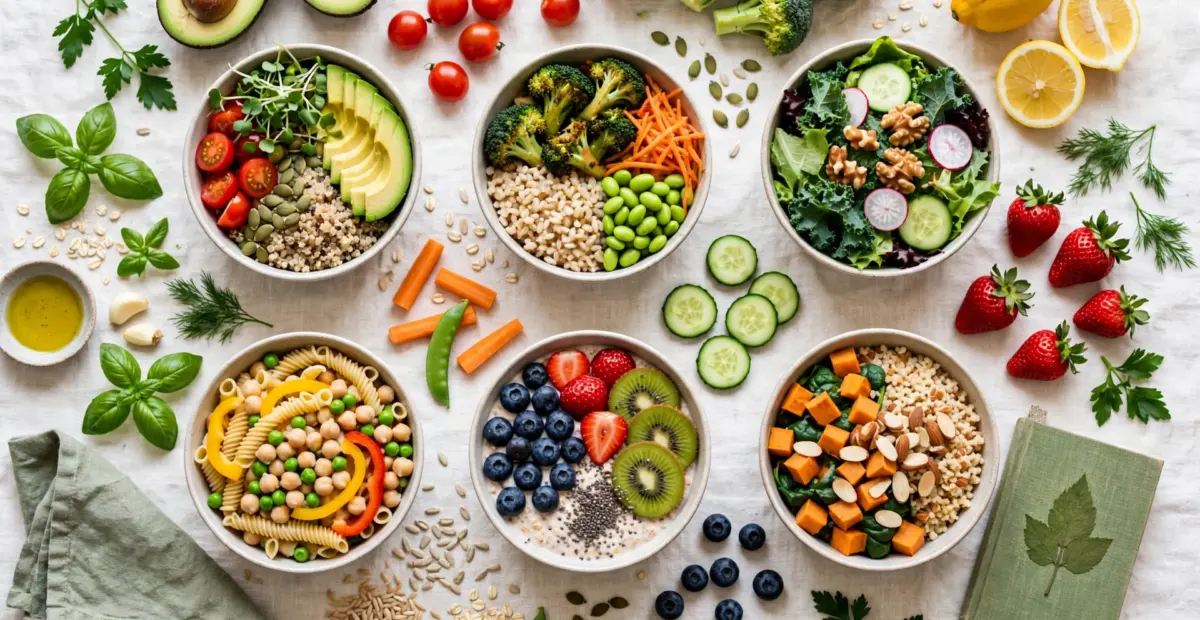
A balanced meal plan does not have to mean cooking every meal from scratch, weighing your food, or giving up the dishes you love. It just means giving your week a little shape: a protein, a vegetable, and a whole grain or starchy vegetable at most meals, fruit when you want something sweet, and water as your default drink. This 7-day plan is built for beginners. Every day uses familiar foods, repeat ingredients, and at least one shortcut, so you can actually finish the week without burning out by Wednesday.
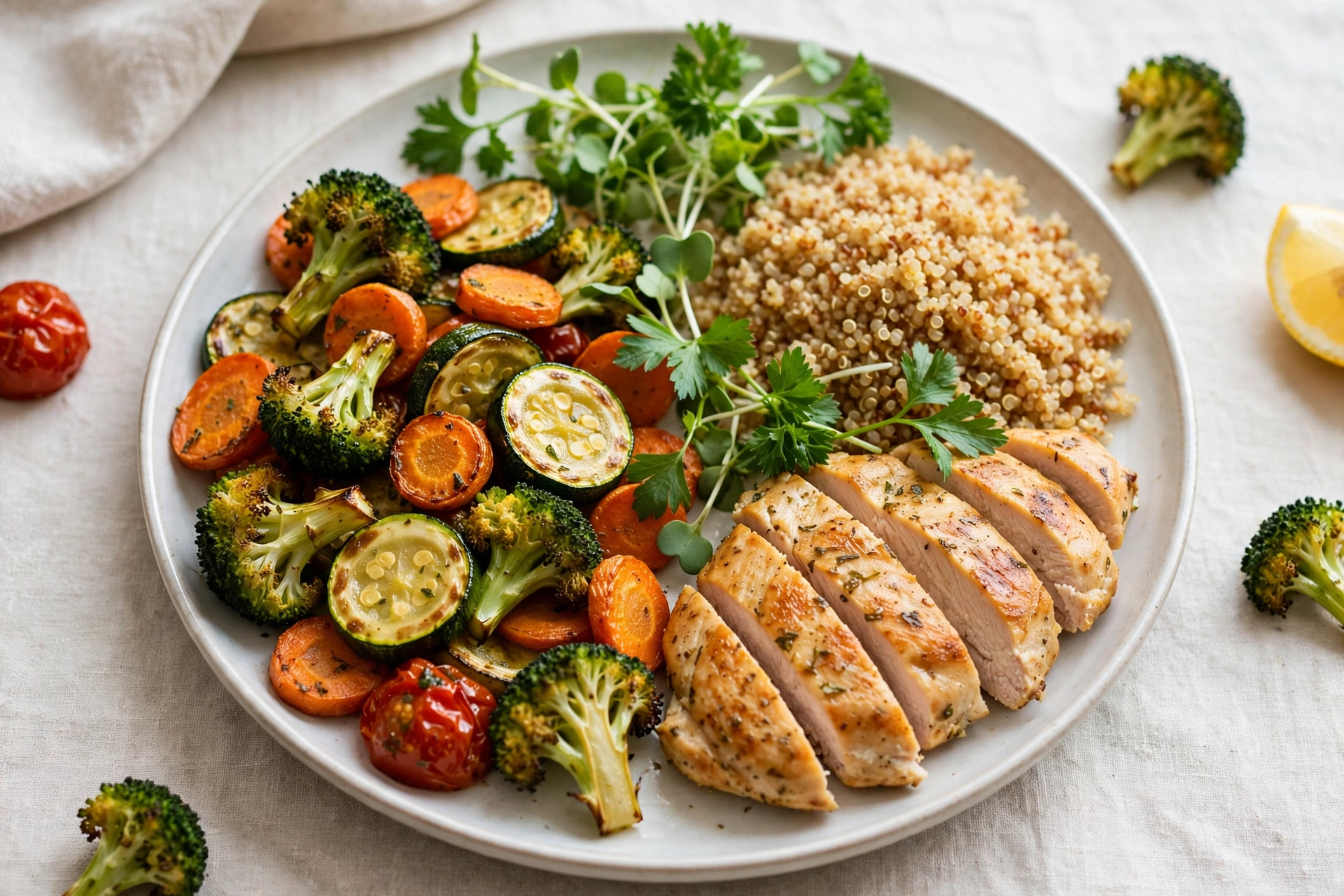
Think of the plan as a template, not a prescription. Swap chicken for tofu, swap rice for quinoa, or move a dinner to lunch if your day flips upside down. The structure stays the same even when the details change, and that is what makes a plan stick. Portion sizes here are described in everyday terms — a palm-sized piece of protein, a fist-sized scoop of grains, and vegetables filling about half the plate — because most beginners do better with a visual guide than with a calculator at the table.
The classic plate method still works beautifully as a starting point: picture half your plate filled with vegetables and fruit, a quarter with a protein food, and a quarter with whole grains or a starchy vegetable. The World Health Organization recommends at least 400 grams — about five portions — of fruits and vegetables a day, and keeping free sugars below 10% of daily energy, ideally below 5%. The 2025–2030 Dietary Guidelines for Americans recommend 2–4 servings of whole grains a day on a typical 2,000-calorie pattern. None of this needs to be perfect every day. A week that lands close to those benchmarks most days is a genuinely good week.
Before you start: the 30-minute setup
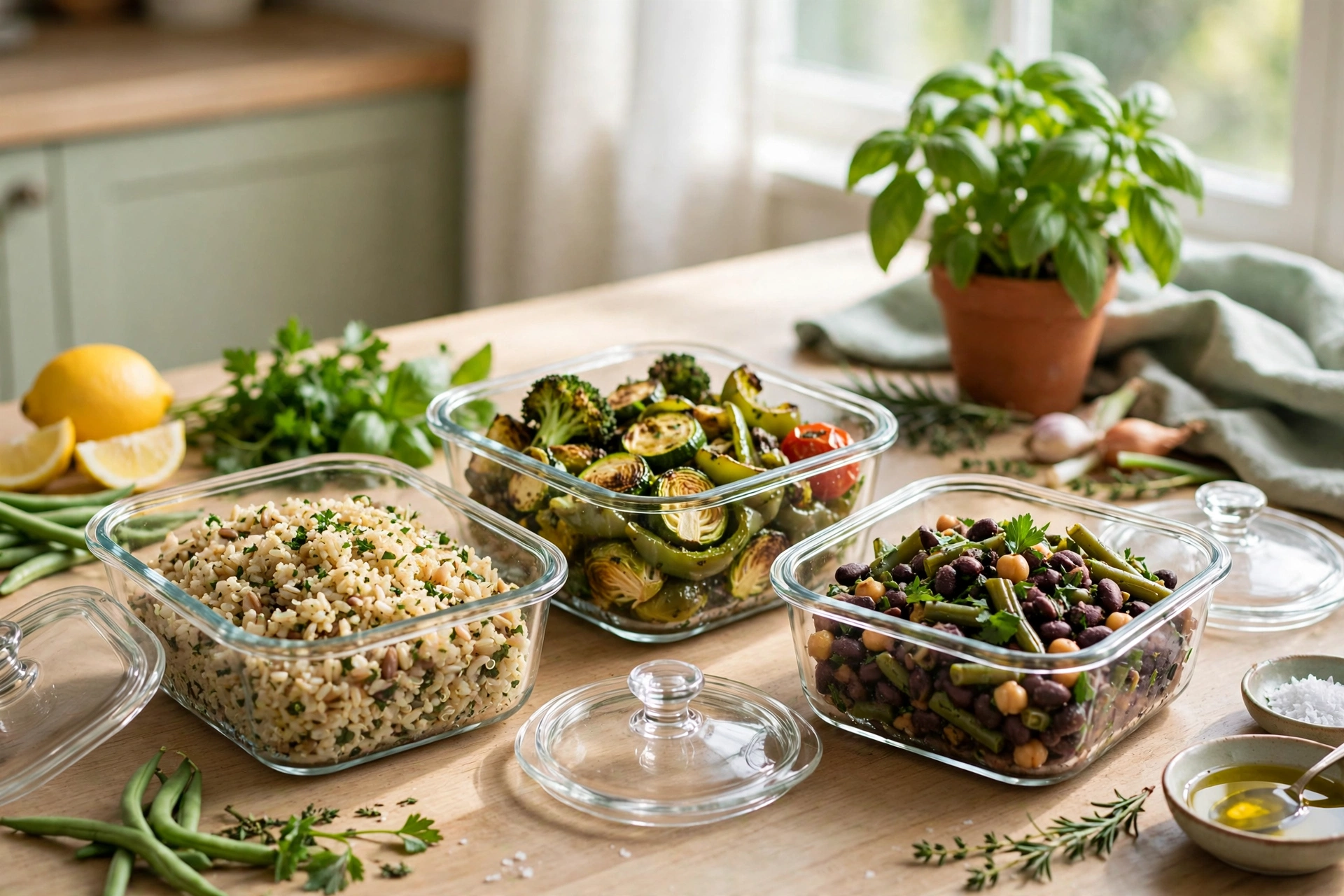
One short prep session makes the whole week easier. On Sunday, or whatever day feels like your reset day, cook a pot of brown rice or quinoa, roast a tray of vegetables, hard-boil a few eggs, and wash and chop fruit and vegetables for snacks. Store everything in clear containers at eye level in the fridge, so the healthy choice is also the easy choice when you are hungry and tired.
Next, write your grocery list from the plan, not from memory. Group it by store section — produce, protein, grains, dairy or alternatives, pantry — and check what you already have before you leave. A list built around the week’s meals cuts impulse buys, reduces waste, and means you are far less likely to stand in front of an empty fridge at 6 p.m. wondering what to eat.
Read also: How to Stock a Healthy Pantry
The 7-day plan at a glance
Day 1 — Monday: Breakfast: oatmeal with banana, walnuts, and milk or a fortified alternative. Lunch: whole-grain wrap with chickpeas, spinach, cucumber, and hummus. Dinner: baked chicken or tofu, brown rice, and roasted broccoli and carrots.
Day 2 — Tuesday: Breakfast: Greek yogurt with berries and a spoonful of oats. Lunch: leftover chicken or tofu over a big salad with beans, tomatoes, and olive-oil dressing. Dinner: salmon or lentils, quinoa, and green beans.
Day 3 — Wednesday: Breakfast: scrambled eggs on whole-grain toast with spinach and tomato. Lunch: lentil soup with whole-grain bread and an apple. Dinner: whole-wheat pasta with marinara, white beans, and a side salad.
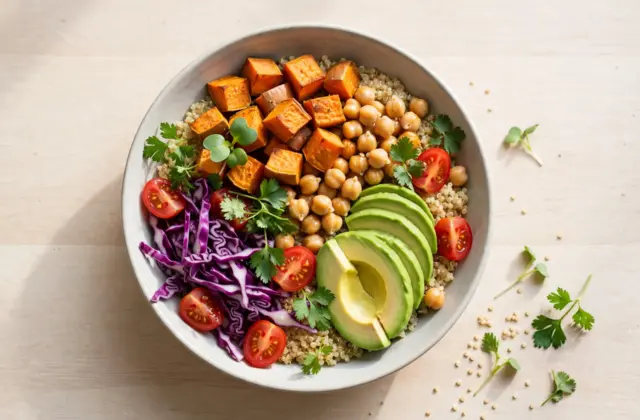
Day 4 — Thursday: Breakfast: overnight oats with chia seeds, milk, and sliced fruit. Lunch: grain bowl — brown rice, roasted vegetables, chickpeas, and tahini drizzle. Dinner: turkey or black-bean tacos with corn tortillas, cabbage slaw, salsa, and avocado.
Day 5 — Friday: Breakfast: whole-grain toast with peanut butter and banana. Lunch: tuna or chickpea salad sandwich on whole-grain bread with carrot sticks. Dinner: stir-fry with tofu or chicken, mixed vegetables, and brown rice or noodles.
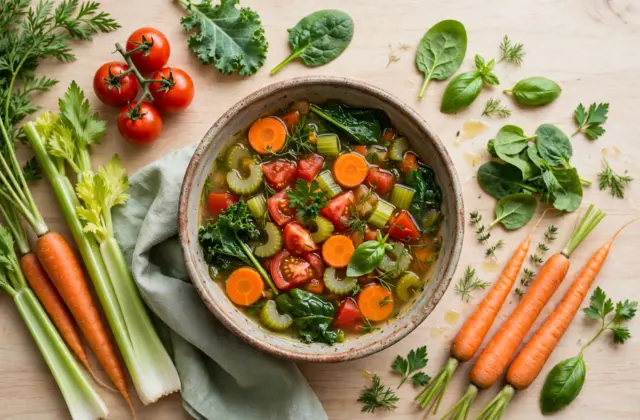
Day 6 — Saturday: Breakfast: vegetable omelet with whole-grain toast and fruit. Lunch: homemade soup or leftovers, plus a side of fruit. Dinner: build-your-own grain bowls — a fun, low-effort way to use up the week’s remaining vegetables and grains.
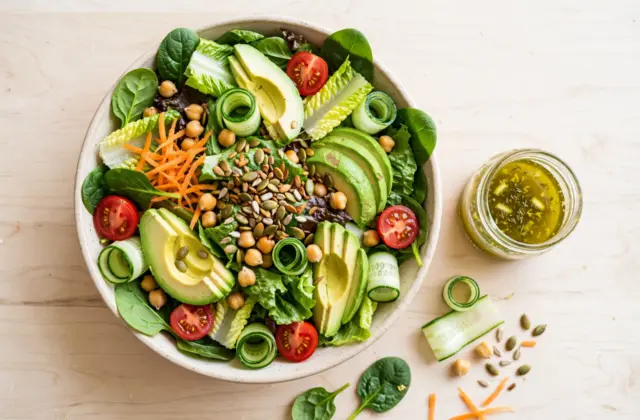
Day 7 — Sunday: Breakfast: pancakes made with whole-grain flour, topped with fruit instead of syrup. Lunch: big salad with eggs, beans, whole-grain crackers, and olive-oil dressing. Dinner: roast vegetables, a protein of your choice, and quinoa or potatoes — then a short prep session for next week.
How to build each meal without a recipe
Once you know the formula, you can improvise with whatever is in the fridge. Start with vegetables: fresh, frozen, or canned all count, and frozen vegetables are a genuinely smart shortcut because they are picked at peak ripeness and keep for weeks. Add a protein — eggs, beans, lentils, tofu, fish, chicken, or yogurt — and then a whole grain or starchy vegetable such as brown rice, oats, quinoa, whole-wheat bread, or sweet potatoes. Finish with a healthy fat if you like: olive oil, nuts, seeds, or avocado.
Seasoning is what keeps this from feeling like diet food. Garlic, lemon, herbs, chili, cumin, and a good olive-oil vinaigrette can turn the same base ingredients into five different meals. Keep salt in check while you are at it: the American Heart Association recommends no more than 2,300 mg of sodium a day, moving toward an ideal of no more than 1,500 mg a day for most adults. Cooking at home, rinsing canned beans, and tasting before adding extra salt are simple ways to stay closer to that range.
Read also: How to Build a Balanced Plate
Snacks, drinks, and the sweet stuff
Snacks are part of the plan, not a failure of it. Pairing a fruit or vegetable with a protein or healthy fat — apple slices with peanut butter, yogurt with berries, hummus with cucumber — keeps you fuller than a snack of refined carbohydrates alone. Keep two or three of these ready in the fridge or pantry so you are not choosing between hunger and a vending machine.
For drinks, water is the simplest default, and unsweetened tea or sparkling water works when you want variety. Sugary drinks are the easiest place to cut free sugars without feeling deprived, since they add sweetness without fullness. If you love juice, a small glass with a meal beats a large glass on its own, and whole fruit gives you the fiber that juice leaves behind.
Making the plan fit a real, busy life
Some weeks will not go to plan, and that is normal. The fallback version of this plan is: a protein, a vegetable, and a grain at dinner; fruit and yogurt or oatmeal at breakfast; and leftovers or a simple sandwich at lunch. If you only manage the fallback for a few days, you have still eaten in a balanced pattern — you have not “ruined” the week.
Batch cooking is the other beginner superpower. Double the rice, roast an extra tray of vegetables, or make a double batch of soup and freeze half. Future-you will be grateful on the night you come home late and find dinner already half done. Label and date your containers, and use leftovers within a few days or freeze them promptly.
Budget matters too, and this plan leans on some of the most affordable nutritious foods around: dried or canned beans and lentils, eggs, oats, brown rice, frozen vegetables, and seasonal fruit. Buying store brands, choosing frozen produce, and planning meals around what is already in your pantry can bring the weekly shop down without dropping a food group.
Read also: Weekly Meal Planning for Balanced Meals
Your simple grocery list for the week
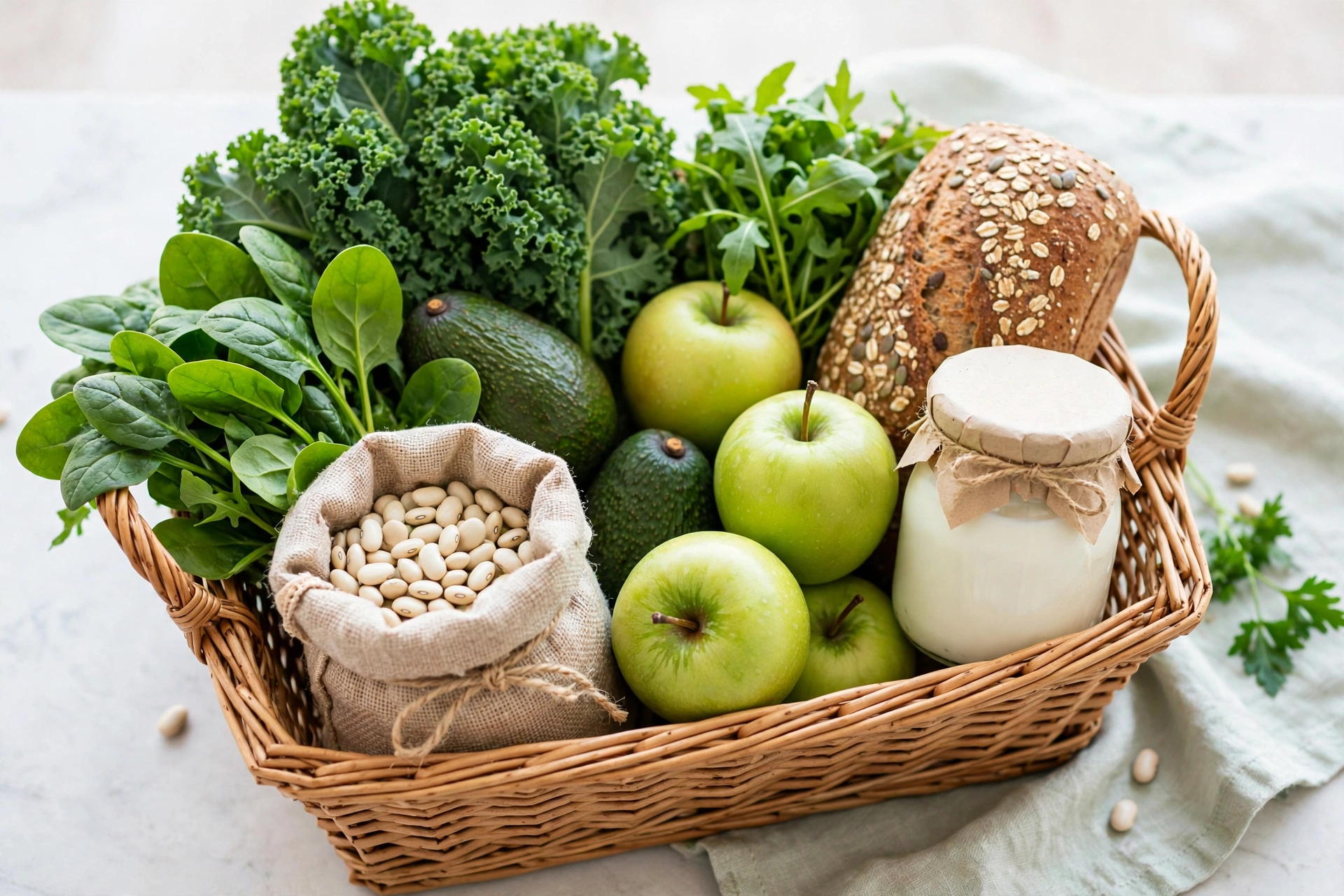
Produce: bananas, berries, apples, lemons, spinach, salad greens, broccoli, carrots, green beans, tomatoes, cucumbers, cabbage, onions, garlic, and fresh herbs. Proteins: eggs, chicken or tofu, salmon or lentils, canned chickpeas and beans, tuna, Greek yogurt, and milk or a fortified alternative. Grains and pantry: oats, brown rice, quinoa, whole-wheat bread and pasta, corn tortillas, olive oil, peanut butter or tahini, hummus, salsa, nuts and seeds, and canned tomatoes or marinara. Adjust quantities to your household, and cross off anything you already own.
Frequently asked questions
Do I have to follow this plan exactly? No. Treat it as a starting template. Keep the plate structure — vegetables, protein, whole grain — and swap ingredients to suit your taste, culture, budget, and allergies. Consistency with the pattern matters more than perfection on any single day.
What if I skip breakfast? You do not have to force breakfast if you genuinely are not hungry in the morning, but many beginners find a small, balanced breakfast — yogurt and fruit, or toast with eggs — steadies their appetite and makes lunch choices easier. Experiment and notice what works for your energy, rather than following a rigid rule.
Can I repeat meals? Absolutely. Repeating a breakfast you like or eating leftovers for lunch twice in a week saves time, money, and decision fatigue. Variety across the week matters more than variety within a single day, so rotate a few favorites rather than cooking something new every meal.
How do I handle eating out or takeout? Look for the same pattern on the menu: a vegetable side, a protein, and a whole grain if available, with water to drink. You do not need a perfect restaurant meal — one balanced choice among the week’s meals still supports the overall pattern.
A gentle way to begin
Start with just three changes this week: one vegetable at every dinner, a whole grain at least once a day, and water as your main drink. Once those feel automatic, add the prep session, then the full week of planning. Small steps that survive a busy month beat a perfect week that collapses by Friday.
By Sunday, take five minutes to notice what worked. Which breakfasts did you actually enjoy? Which dinner felt easiest? Keep those, drop the rest, and build next week’s plan around your winners. That is how a meal plan stops being a document and starts being a habit.
This article is for general information only and is not medical advice. If you have a health condition, food allergy, or specific dietary needs, talk to a qualified health professional or registered dietitian before changing your diet.
Sources