Weekly Meal Planning for Balanced Meals
You already know what dinner looks like when nobody planned it. It’s 7:30 p.m., you’re standing in front of the fridge with the door open, the light humming, and somehow every shelf is full but there’s nothing to eat. So you order takeout, or you make the third bowl of plain instant noodles this week, and you tell yourself you’ll plan ahead next time.
Most of us have been stuck in that loop. The good news is that the gap between “standing in front of the fridge at 7:30” and “dinner is basically ready” is smaller than it feels. You don’t need a color-coded spreadsheet, a weekend-long cooking marathon, or fancy containers. You need one weekly habit that takes about twenty minutes and a way of filling your plate that doesn’t require a nutrition degree.
Why planning meals actually works
Meal planning gets recommended a lot, usually with a wink and a joke about mason jars. But there’s real data behind it. A 2017 study by Ducrot and colleagues in the International Journal of Behavioral Nutrition and Physical Activity looked at meal planning habits and diet quality in a large group of adults. People who planned meals were more likely to follow nutritional guidelines and eat a wider variety of foods — and planning was linked to lower odds of obesity: an odds ratio of 0.79 for women and 0.81 for men.
Those numbers don’t prove planning causes weight loss — the researchers were measuring an association, not running a controlled experiment. But the mechanism makes sense if you think about your own week. When you plan, you decide what to eat in a calm moment with a clear head, not at 7:30 p.m. when you’re starving and the fastest option wins. You shop with a list instead of grabbing whatever looks good. And you end up with vegetables in the house, which turns out to be the single biggest predictor of whether vegetables get eaten.
There’s a quieter benefit, too: less food waste. A plan means you buy the exact bunch of spinach you’ll use by Thursday, not the optimistic second bunch that dies in the crisper drawer. Most people find they throw away less and spend less at the checkout within the first couple of weeks.
The anchor-plate method: your weekly template
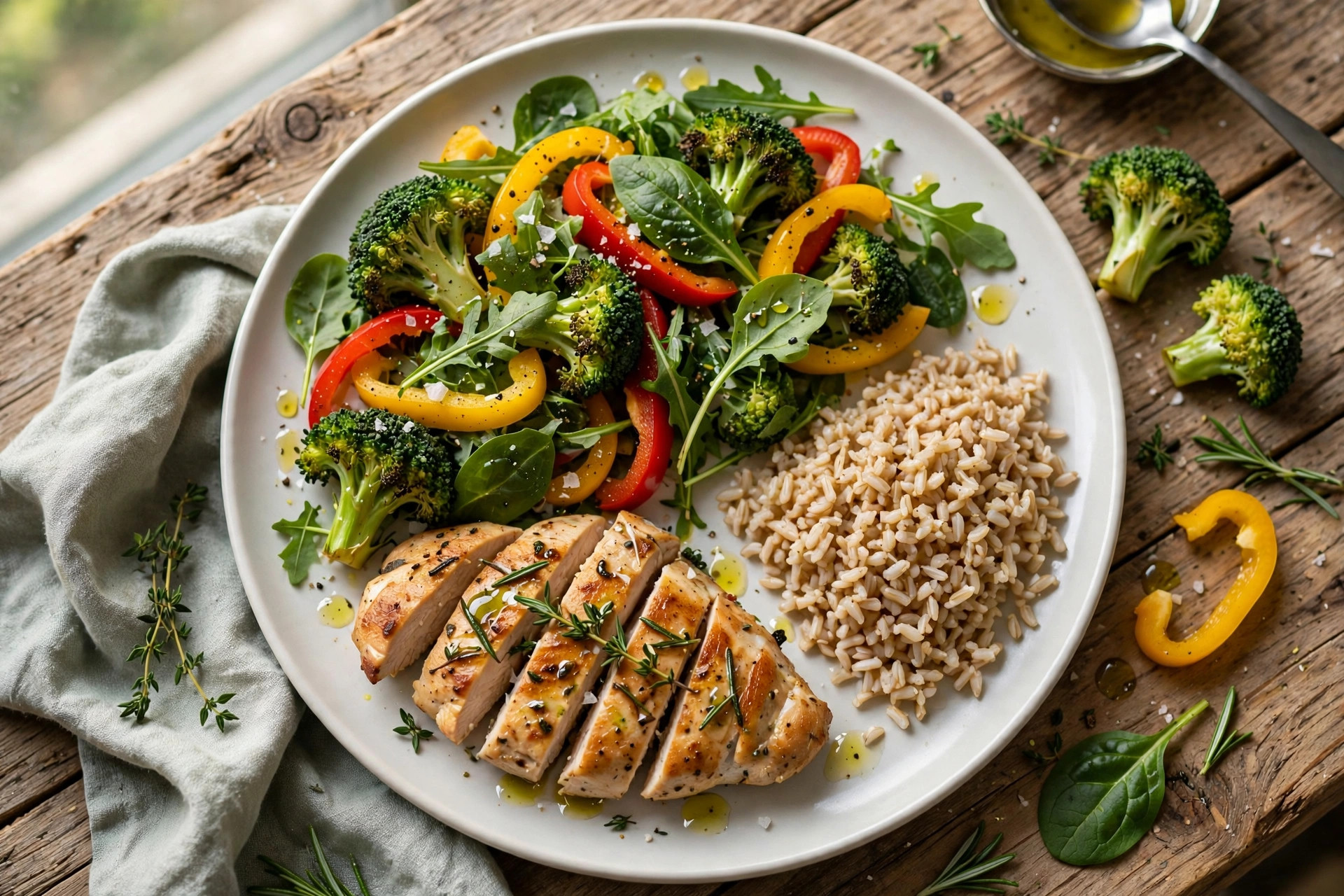
Every weekly plan needs a visual anchor, something you can check against without measuring a thing. Borrow the Harvard Healthy Eating Plate: picture your plate with roughly half covered by vegetables and fruit, one quarter whole grains, and one quarter healthy protein, with healthy oils used in cooking and water as your default drink instead of sugary ones.
That plate is the entire secret. Your job each week isn’t to hit exact percentages — it’s to make sure that across the week, your dinners roughly match that pattern, and that your lunches are built from whatever’s left. Here’s how to run it in four steps.
Step 1: Plan dinners first, then let lunches happen
Dinner is the hardest meal because it’s the one with the most decisions: what to cook, for how many people, with what energy. So plan five dinners. Not seven — give yourself two nights off for takeout, leftovers, or “everybody finds something” night. Five planned dinners is plenty.
Start with proteins you actually like, then fill in the grains and vegetables from the Harvard plate. A sample week could look like this:
- Monday: Chicken and rice stir-fry with frozen mixed vegetables (the anchor plate in its simplest form: veg + rice + chicken).
- Tuesday: Tofu scramble with spinach, served with brown rice and an orange on the side.
- Wednesday: Fried eggs over leftover rice with steamed broccoli and a drizzle of sesame oil.
- Thursday: Pasta with canned tuna, cherry tomatoes, and frozen peas, plus a side salad.
- Friday: Something easy you love — homemade fried rice, say, which conveniently absorbs the week’s leftover bits.
Lunches don’t need their own plan. Cook a little extra at dinner — one or two spare servings — and pack them straight into your work lunchbox while the pot is still out. Tuesday’s lunch is Monday’s stir-fry. Wednesday’s lunch is Tuesday’s tofu scramble. When there’s nothing left over, the fallback is a grain bowl: a scoop of rice, a fried egg, whatever frozen vegetables are on hand, and a sauce. It’s cheap, it’s balanced, and it takes about ten minutes.
Step 2: Use theme nights to kill decision fatigue
If five unique dinners feels like too much creativity, assign themes to the weeknights. The pattern does the thinking for you. For example: Monday is stir-fry night, Tuesday is egg night, Wednesday is noodle night, Thursday is beans-and-grain night, Friday is “clean out the fridge” night. You vary the actual dishes — chicken one week, shrimp the next — but you never have to ask “what kind of dinner is this?” again.
Theme nights also make grocery shopping almost automatic, because you already know the categories you’ll need. And they give kids and partners something to expect, which means fewer “I don’t know, what do you want?” negotiations.
Step 3: Turn the plan into a shopping list
This is the step that makes the whole system work: write your grocery list from the plan, not from memory. Go dinner by dinner, list the ingredients you’ll actually cook, and check what’s already in your pantry. Buy only what the plan needs.
Read also: Quick Balanced Dinners for Weeknights
A short, real-world example based on the week above:
- Produce: broccoli, spinach, cherry tomatoes, oranges, salad greens, one lemon.
- Protein: chicken breast, a block of firm tofu, one dozen eggs, one can of tuna.
- Grains: rice (you probably have this), pasta.
- Freezer/pantry: frozen mixed vegetables, frozen peas, soy sauce, sesame oil.
Notice how small that list is. Planning doesn’t mean more shopping — it usually means less, because you’re not buying “just in case” ingredients anymore. Frozen vegetables deserve special mention: they’re picked and frozen at peak ripeness, they’re nutritionally comparable to fresh, and they wait patiently for the week you don’t feel like chopping anything.
Step 4: One prep session, with food safety rules that matter
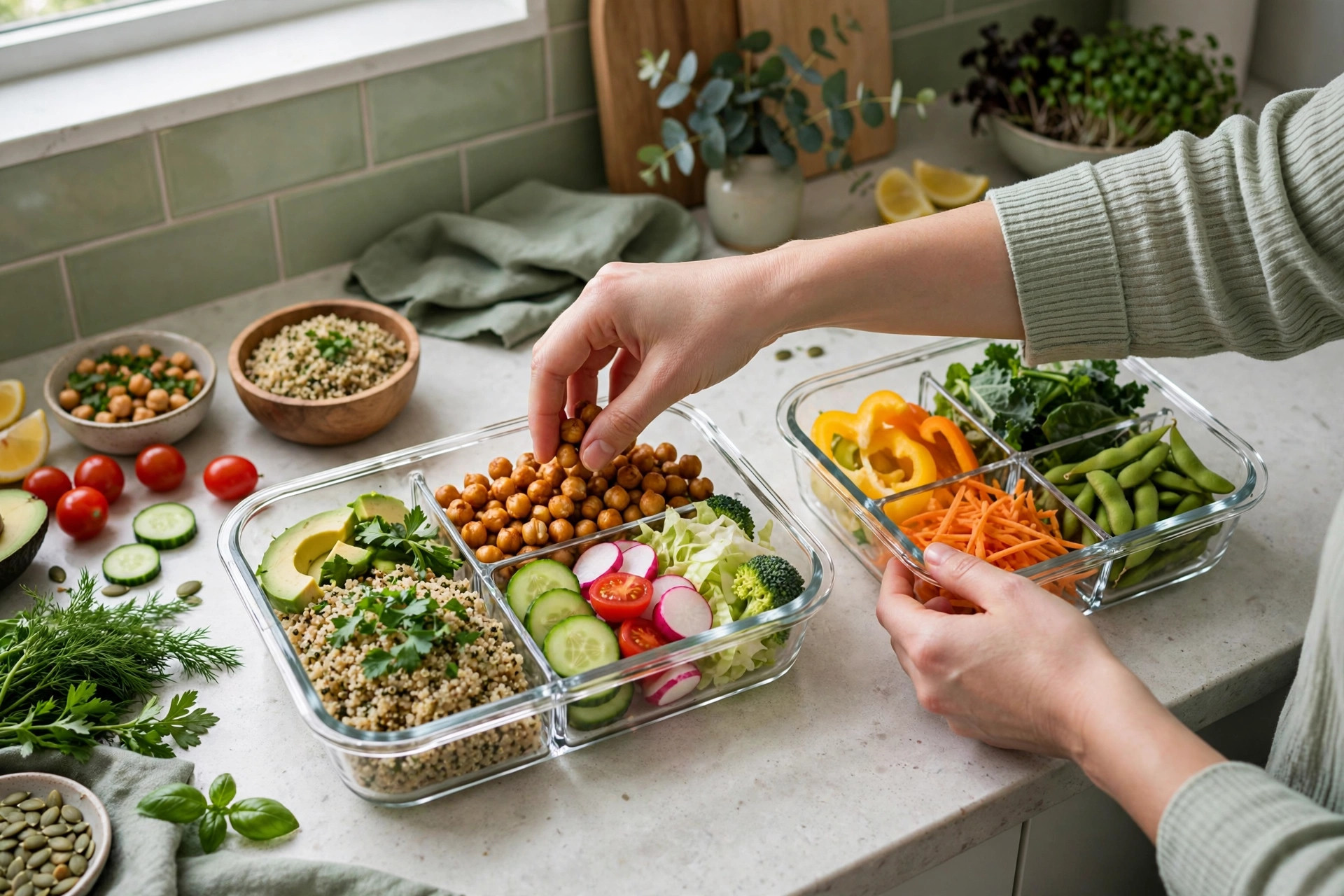
Pick a ninety-minute window — Sunday morning works for most people — and do the boring prep that makes the week smooth: cook a big pot of rice, wash and chop the greens, marinate the chicken, hard-boil a few eggs, and portion the frozen vegetables you’ll need. Nothing fancy. The goal is that on a weeknight, your cooking starts at step three, not step one.
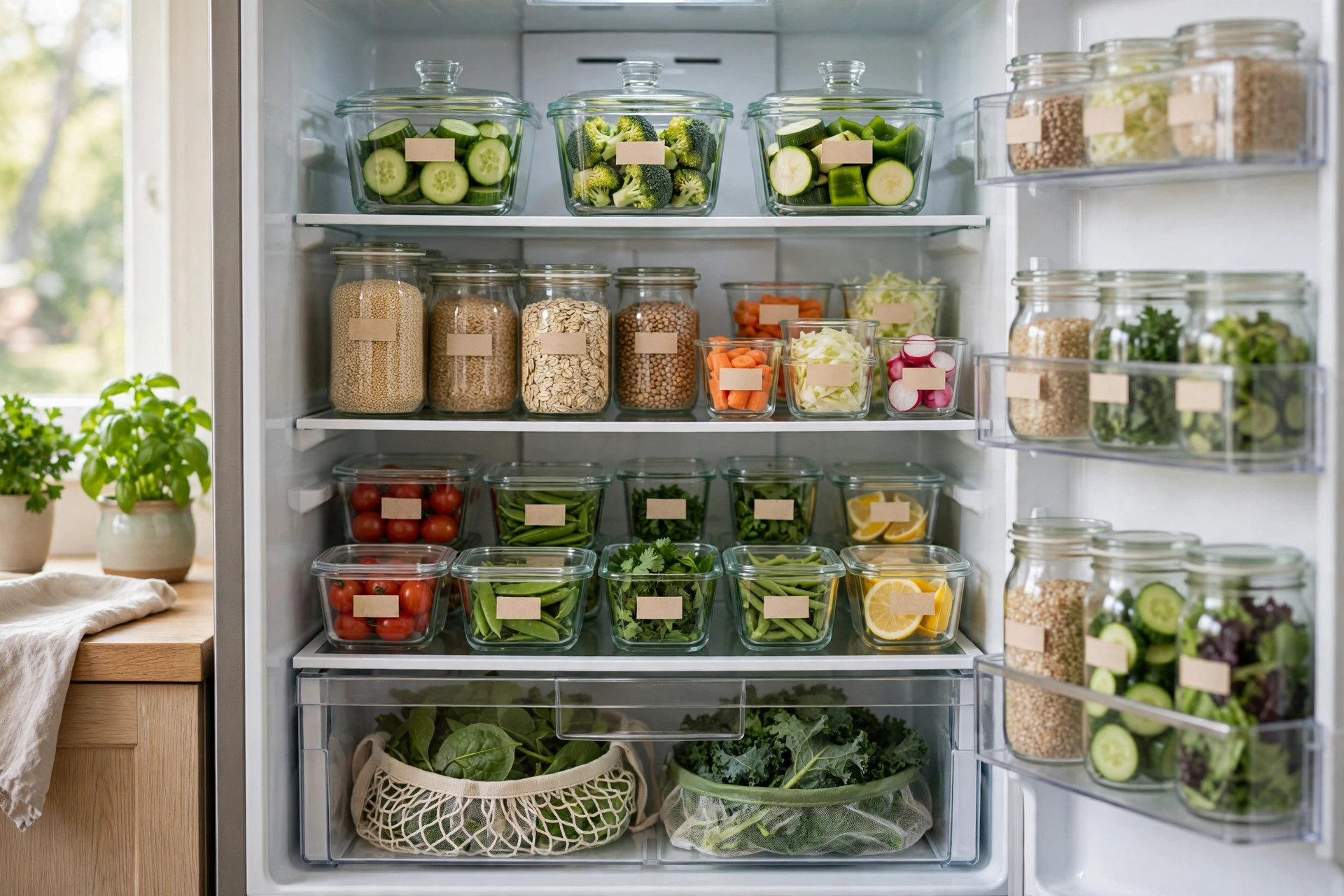
This is also where food safety earns its place, because a week of planned food is only useful if it’s safe to eat. FoodSafety.gov keeps the rules simple: refrigerate cooked food within two hours of cooking, and keep cooked leftovers in the refrigerator for only three to four days.
That 3–4 day limit shapes the whole plan. Anything you’ll eat from Sunday through Wednesday can live in the fridge. Thursday’s and Friday’s food should go straight into the freezer on prep day and move to the fridge the night before you need it — food defrosts fine overnight and stays safe. And when you reheat anything, heat it to a steaming 165°F all the way through. A cheap food thermometer removes the guesswork.
Staying flexible (because weeks have opinions)
No plan survives contact with a real week. Meetings run late, a friend invites you out, the chicken looks suspicious — fine. The plan is a default, not a contract. Swap Thursday and Wednesday. Skip a night. Order pizza when it’s that kind of day and get back on the plan the next one.
Two flexibility habits help more than any rigid rule. First, keep a “safety net” shelf: eggs, rice, frozen vegetables, canned tuna, and a sauce you like. On any night the plan falls apart, that’s a balanced plate in ten minutes. Second, build one wildcard slot into the week — Friday is the classic — so deviations feel like part of the design instead of a failure. People who plan five dinners and nail four of them still eat dramatically better than people who plan nothing.
FAQ
How many meals should I actually plan?
Five dinners is the sweet spot for most people. Lunch handles itself through leftovers, and breakfast is usually the same two or three options on rotation anyway — oatmeal, eggs, or yogurt with fruit don’t need a written plan. If five still feels like a lot, start with three planned dinners and build up.
What if I hate eating the same meal twice?
Then don’t — variety is the whole point of the Harvard plate pattern. But there’s a difference between identical meals and ingredients appearing twice. Monday’s stir-fry chicken can show up Wednesday as fried rice with egg; the tofu from Tuesday can become Thursday’s grain bowl. Same ingredients, different meals. Leftovers work best when you plan the transformation, not just the reheating.
Is meal planning expensive?
It tends to do the opposite. A list stops impulse buys, buying in week-sized quantities cuts waste, and frozen vegetables and eggs are among the cheapest nutritious foods available. If budget is tight, anchor two or three dinners around eggs, tofu, or beans — all excellent protein sources at a fraction of the cost of meat.
What about breakfast — do I need to plan that too?
Not with a written plan. Pick one or two breakfasts you genuinely like and keep the ingredients stocked: eggs and bread, or oats and frozen berries, or yogurt and fruit. Breakfast only needs planning if it’s currently a donut grabbed on the way out the door. Otherwise, let it be boring and automatic.
Sources
- Ducrot P, et al. (2017). Meal planning is associated with food variety, diet quality and body weight status in a large sample of French adults. International Journal of Behavioral Nutrition and Physical Activity. https://link.springer.com/article/10.1186/s12966-017-0461-7
- Harvard Health Publishing. Building a plan for healthy eating: the Harvard Healthy Eating Plate. https://www.health.harvard.edu/healthbeat/building-a-plan-for-healthy-eating-FHIBMYSV
- FoodSafety.gov. Cold Food Storage Charts. https://www.foodsafety.gov/food-safety-charts/cold-food-storage-charts
This article is for general information only and is not medical advice. If you have a health condition or specific dietary needs, check with a doctor or registered dietitian before making big changes to how you eat.