Budget-Friendly Plant-Based Meals
Plant-based eating has a reputation problem. Ask most people what it costs and they will picture pricey meat substitutes, imported superfoods, and a grocery bill that quietly doubles. The reality is almost the opposite. The cheapest foods in the supermarket — dried beans, lentils, oats, rice, cabbage, carrots, frozen peas — are plants. A budget-friendly plant-based meal plan is not a compromise version of eating well. For many households, it is the version that actually fits the budget.
That matters because food prices have not been gentle. The USDA’s Thrifty Food Plan, its lowest-cost healthy eating benchmark, cost $236.30 a week for its reference family of four in September 2026 — about $2.81 per person per meal, assuming every meal is cooked at home. If your grocery bill feels higher than that, you are not imagining it, and you are not alone. The good news is that the foods that bring a bill down are the same foods that make a plate more nutritious: legumes, whole grains, and vegetables.
Why plants are the budget move
Compare proteins by the gram, not by the package, and the ranking is striking. In a 2024 comparison of 41 foods at US Walmart prices, dried pinto beans delivered 30 grams of protein for about $0.34 — roughly 1 cent a gram. Dried lentils came in at about 1.5 cents a gram, while whole eggs, the cheapest animal protein, cost about 2 cents a gram. Chicken breast was closer to 5 cents a gram. A bag of dried lentils looks cheap on the shelf, and it is cheap where it counts too.
Legumes also carry fiber that meat simply does not. One cup of cooked lentils gives you about 18 grams of protein and 15.6 grams of fiber for roughly 230 calories, according to USDA FoodData Central. A cup of cooked black beans lands close behind at about 15 grams of protein and 15 grams of fiber for 227 calories. Fiber is the nutrient most of us fall short on — the World Health Organization recommends at least 25 grams a day — and a single bowl of beans covers more than half of it. None of this means giving up animal foods entirely. When beans, lentils, and tofu do the heavy lifting three or four nights a week, the meat you do buy stretches further, and the grocery bill drops without the meals feeling thin.
Build your pantry around five cheap anchors
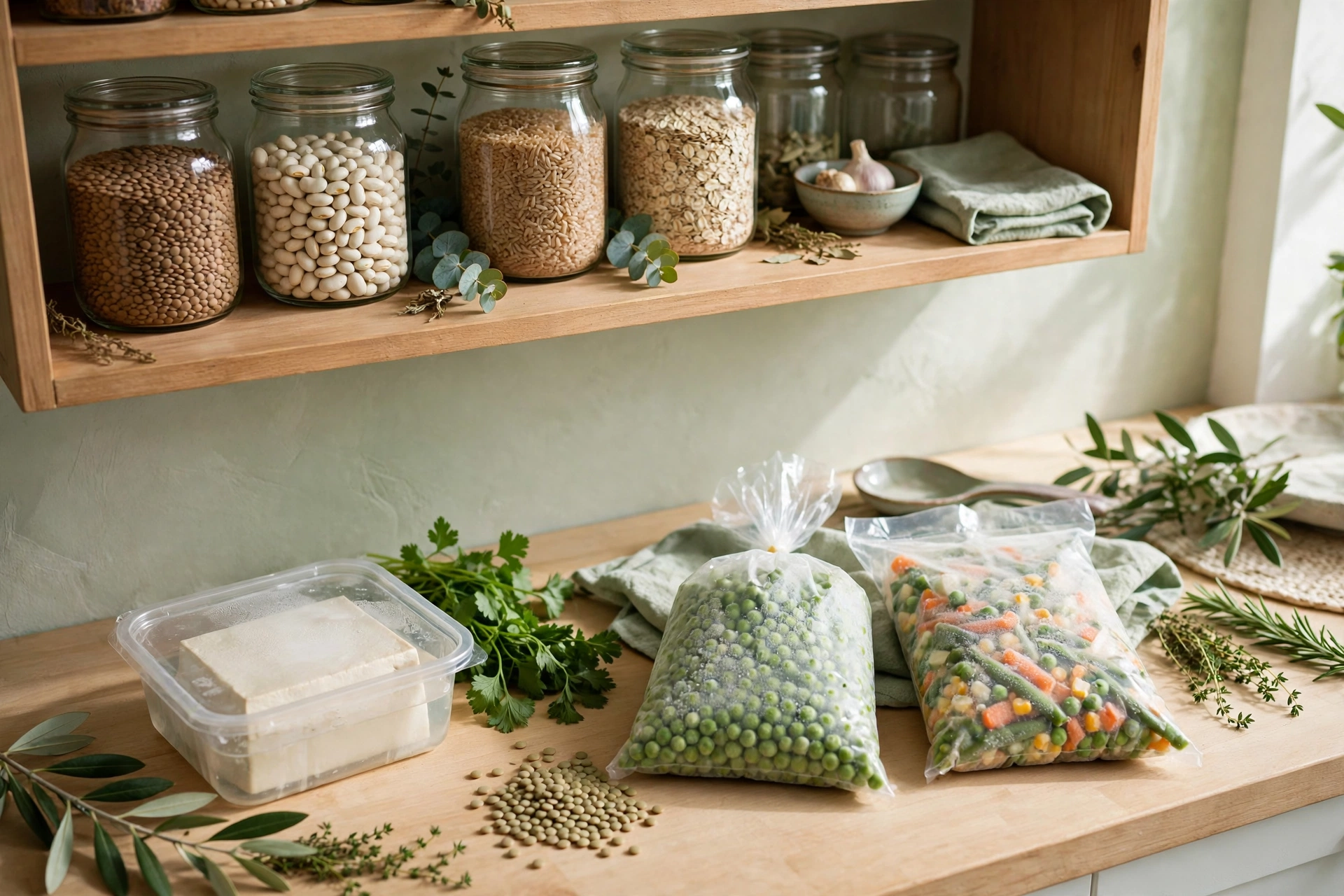
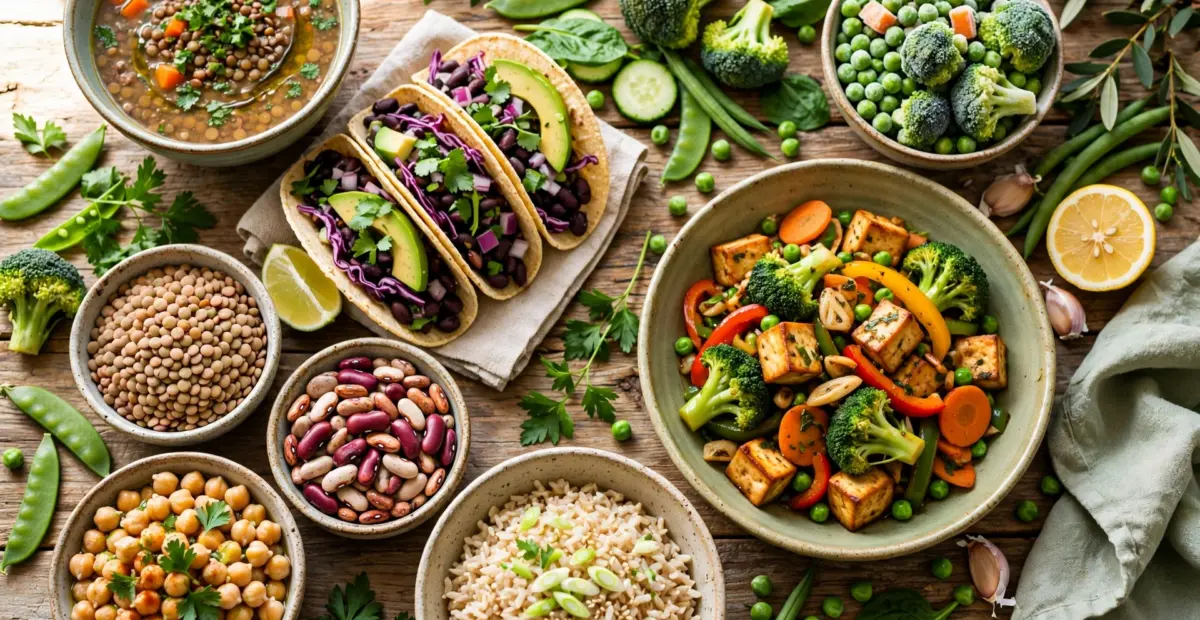
Budget cooking starts before you cook anything. It starts with a pantry that lets you make dinner from what you already own. Five anchors cover most plant-based meals:
Dried lentils. Brown and green lentils hold their shape in soups and stews; red lentils melt into a thick dal in about 20 minutes with no soaking. A cup of dry lentils roughly triples in volume when cooked, so a $2 bag becomes four or five meals.
Dried or canned beans. Black beans, kidney beans, pinto beans, and chickpeas are interchangeable in most recipes. Dried beans are the cheapest per serving, but canned beans are the practical choice on busy nights — just drain and rinse them, which the USDA notes can cut their sodium by roughly 9 to 23 percent.
Whole grains. Brown rice, oats, whole-wheat pasta, and corn tortillas. The 2025–2030 Dietary Guidelines suggest 2 to 4 servings of whole grains a day, and these are among the cheapest foods per calorie in the store.
Tofu and tempeh. Tofu costs a fraction of meat per gram of protein, keeps for weeks in the fridge, and takes on whatever flavor you cook it with. Press it for 15 minutes before frying and it browns instead of steaming.
Frozen vegetables. Frozen peas, broccoli, spinach, and mixed vegetables are picked and frozen at peak ripeness. Research from the University of California, Davis found frozen produce held its own against fresh produce stored in the fridge for five days, and in some cases kept more vitamin C. Frozen vegetables also mean zero waste — no limp spinach at the back of the crisper drawer.
Read also: How to Add Protein to Everyday Meals
Seven dinners that cost less than takeout
You do not need seven new recipes. You need a small rotation you can cook half-asleep. Each of these feeds four for a few dollars a serving, and each one leans on a pantry anchor:
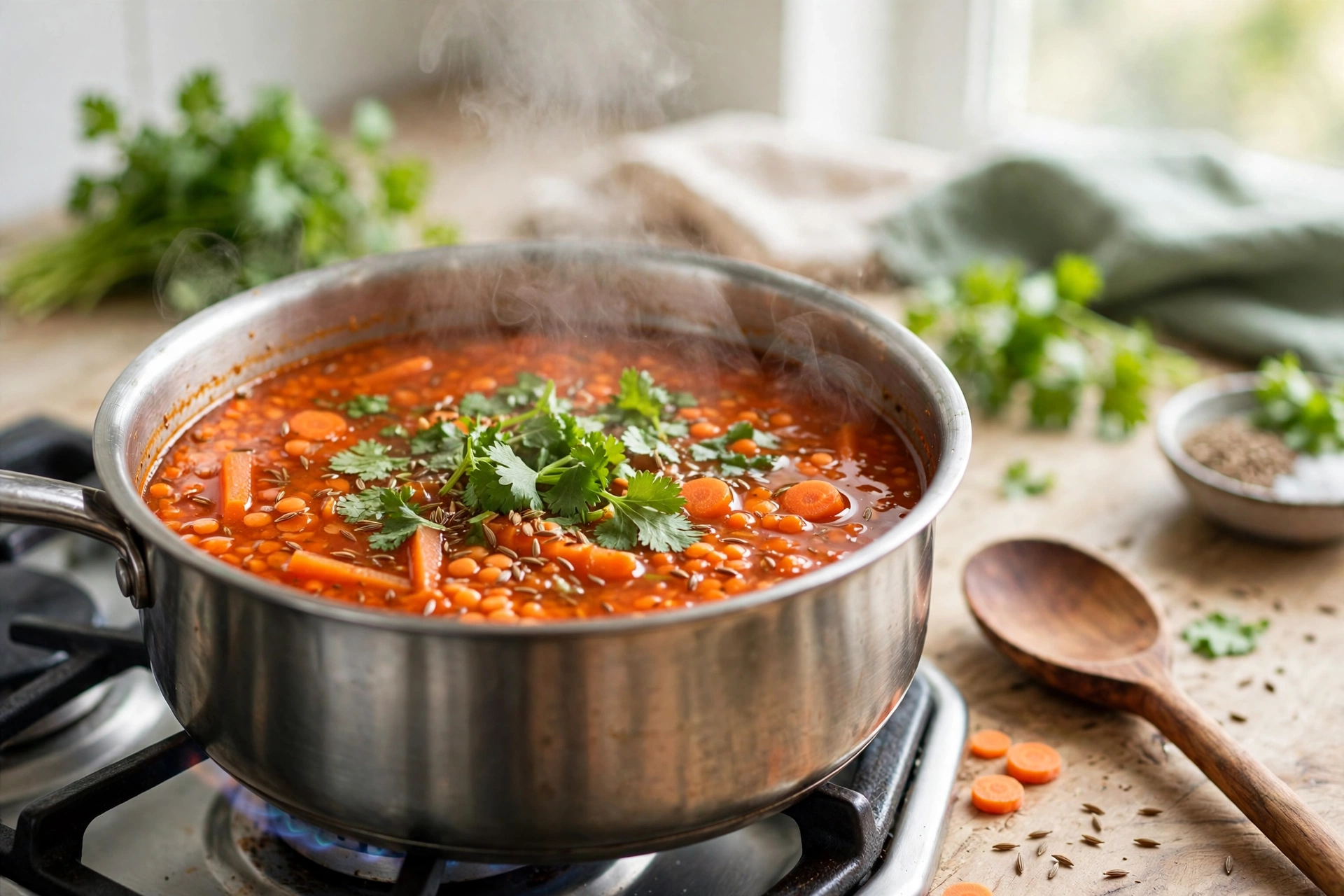
1. Lentil soup with carrots and cumin. Onion, carrots, red lentils, vegetable broth, cumin, and a squeeze of lemon. One pot, 30 minutes, and it tastes better the next day. Serve with crusty bread.
2. Black bean tacos. Canned black beans simmered with garlic, cumin, and smoked paprika, spooned into corn tortillas with shredded cabbage, salsa, and a squeeze of lime. Cabbage costs pennies and stays crisp for two weeks in the fridge.
3. Chickpea and spinach curry. Canned chickpeas, a can of tomatoes, frozen spinach, curry powder, and a spoonful of peanut butter for richness. Serve over rice. The peanut butter sounds odd until you taste it.
4. Tofu stir-fry with frozen vegetables. Cubed tofu, a bag of frozen stir-fry vegetables, soy sauce, garlic, and ginger over rice or noodles. The whole thing takes 15 minutes, and the freezer does the chopping.
5. Bean and rice bowls. Seasoned pinto beans, rice, frozen corn, and whatever vegetables need using up, topped with salsa. This is the meal to cook when the fridge is nearly empty — it forgives almost anything.
6. Pasta with white beans and greens. Whole-wheat pasta, canned white beans, garlic, olive oil, and frozen spinach or kale. A tin of beans turns a plain pasta dinner into a meal with staying power.
7. Vegetable fried rice. Day-old rice, frozen peas and carrots, scrambled egg if you eat eggs, soy sauce, and sesame oil. Cold rice fries better than fresh, so this is the perfect use for leftovers.
Getting enough protein without the meat aisle
The most common worry about plant-based eating is protein, and it is a fair question. The National Academies set the recommended dietary allowance at 0.8 grams per kilogram of body weight per day, while the 2025–2030 Dietary Guidelines suggest 1.2 to 1.6 grams per kilogram for most adults. For a 70-kilogram adult, that works out to roughly 84 to 112 grams a day — very reachable without meat.
The trick is variety across the day, not perfection at every meal. Beans are low in the amino acid methionine and grains are low in lysine, so the classic pairings — beans with rice, lentils with bread, hummus with pita — cover each other’s gaps. You do not need to combine them in the same bite; eating a mix of legumes and grains across the day does the job.
A practical day might look like this: oatmeal with peanut butter for breakfast, a lentil soup lunch, and a tofu stir-fry dinner, plus snacks of yogurt or a handful of nuts. It adds up faster than people expect, and the fiber along the way helps you feel full on fewer calories.
Read also: How to Create a Balanced Vegetarian Plate
The nutrients that need a little attention
A plant-based diet done on a budget still needs a few nutrients watched, because the cheapest version of this way of eating can quietly miss them.
Vitamin B12. B12 comes almost entirely from animal foods or fortified foods and supplements. If you eat few or no animal products, a B12-fortified plant milk, nutritional yeast, or a supplement is the reliable route — the National Institutes of Health puts the adult recommended intake at 2.4 micrograms a day. This is the one nutrient you should not try to get from plants alone.
Iron. Plant iron is absorbed less efficiently than iron from meat, but vitamin C fixes much of that. Pair lentils with tomatoes, beans with bell peppers, or spinach with a squeeze of lemon, and your body absorbs noticeably more iron from the same meal.
Calcium. Fortified plant milks, calcium-set tofu, and leafy greens like kale all contribute. Check the label on plant milks — calcium content varies widely between brands, and the fortified ones are the ones that match dairy.
Omega-3 fats. Ground flaxseed, chia seeds, and walnuts supply ALA, the plant omega-3. A tablespoon of ground flaxseed in oatmeal costs almost nothing and is an easy daily habit.
Shopping tactics that actually save money
Most budget advice is vague — “buy in bulk,” “meal plan” — so here are the moves that make a measurable difference:
Shop the perimeter last, not first. Produce, beans, and grains are cheap; the expensive plant-based items are the processed substitutes in the middle aisles. A block of tofu costs far less than a box of plant-based nuggets with the same protein.
Buy dried legumes and cook a big batch. A pot of beans on Sunday becomes tacos on Monday, soup on Tuesday, and a grain bowl on Wednesday. Cooked beans freeze well for three months, so a double batch is never wasted.
Let frozen produce carry the week. Fresh vegetables are wonderful, but frozen ones cost less per serving, never spoil, and are nutritionally comparable. Keep fresh produce for the things you eat raw — salads, snacking — and frozen for everything cooked.
Plan around what’s on sale, not around a fixed menu. Pick your protein and vegetables from the week’s discounts, then choose the recipe. A meal plan that ignores prices is a wish list. And use the whole vegetable: broccoli stems slice into stir-fries, carrot tops become pesto, stale bread becomes breadcrumbs. Every bit you rescue is money back in your pocket.
Read also: How to Plan Nutritious Meals on a Budget
A sample week, roughly $2.50 a serving
Prices vary by store and region, so treat this as a shape, not a receipt. The pattern is what matters: one batch-cooked pot, one quick stir-fry, one soup, and leftovers doing double duty. A week might run lentil soup on Monday, black bean tacos Tuesday, chickpea curry Wednesday (make a double batch — Thursday is the leftovers, refreshed with lime), tofu stir-fry Friday, pasta with white beans Saturday, and vegetable fried rice Sunday from the week’s leftover rice, plus a fresh pot of beans for the week ahead.
Breakfasts stay simple all week: oatmeal with peanut butter and banana, or toast with beans — a habit in many parts of the world for good reason. Lunches are leftovers, packed the night before. That is the whole system. It is not glamorous, and it works.
Frequently asked questions
Is plant-based eating actually cheaper?
Usually, yes — when it is built on whole plant foods. Dried beans and lentils are among the cheapest sources of protein per gram you can buy, at roughly 1 to 1.5 cents a gram in a 2024 US price comparison, versus about 2 cents for eggs and around 5 cents for chicken breast. It gets expensive only when the diet leans on processed meat substitutes and specialty products.
Do I need to eat beans and rice together at every meal?
No. The old idea that plant proteins must be combined at the same meal has been relaxed by nutrition science. Eating a variety of legumes and grains across the day gives your body the full range of essential amino acids it needs.
How do I get enough protein on a plant-based budget?
Build each meal around a legume, tofu, or whole grain, and the numbers add up: a cup of cooked lentils has about 18 grams of protein, a cup of black beans about 15 grams, and a half-cup of tofu about 11 grams. Aim for a protein source at every meal rather than one big portion at dinner.
Are frozen vegetables as healthy as fresh?
For cooked dishes, yes. Research from the University of California, Davis found frozen vegetables retained nutrients as well as — and sometimes better than — fresh produce stored in the fridge for several days, because freezing happens soon after harvest. They are also cheaper and never go to waste.
Disclaimer: This article is for general information only and is not medical advice. If you have a medical condition, take medication, or are considering a major change to your diet, talk with your doctor or a registered dietitian first.
Sources
- USDA Food and Nutrition Service — USDA Food Plans: Cost of Food Monthly Reports (Thrifty Food Plan, September 2026: $236.30/week for the reference family of four)
- USDA FoodData Central (lentils, cooked, FDC 172421; black beans, cooked, FDC 173735)
- World Health Organization — Healthy Diet fact sheet (at least 400 g of fruit and vegetables and 25 g of fiber a day; free sugars below 10% of energy; salt below 5 g a day)
- National Institutes of Health, Office of Dietary Supplements — Vitamin B12 fact sheet for health professionals (adult RDA 2.4 mcg/day)
- Dietary Guidelines for Americans, 2025–2030 (whole grains 2–4 servings/day; protein 1.2–1.6 g/kg/day)
- Fortis, J. — Cost per Gram of Protein, 41 Foods Compared (2024 Walmart prices)
- Bouzari, Holstege & Barrett (2015) — Vitamin retention in eight fruits and vegetables: refrigerated vs. frozen storage, Journal of Agricultural and Food Chemistry