Plant Sources of Omega-3 Fats
You have probably heard that omega-3 fats are good for your heart and brain — and that fish is the best place to get them. But what if you rarely eat fish, or you eat a mostly plant-based diet? Good news: plants carry their own omega-3, called ALA, and a few everyday foods pack a surprising amount of it. The catch is that your body converts ALA into the long-chain omega-3s found in fish only in small amounts, so it helps to know which plant foods are richest, how much you actually need, and how to use them so the omega-3 you eat is the omega-3 your body can use.
The three omega-3s, and why plants only give you one
Omega-3 is a family of fats, not a single nutrient. The three that matter most are alpha-linolenic acid (ALA), eicosapentaenoic acid (EPA), and docosahexaenoic acid (DHA). ALA is the plant omega-3: it is found in flaxseed, chia seeds, walnuts, and oils such as flaxseed, soybean, and canola. EPA and DHA are the long-chain forms found in oily fish and other seafood, and in algae.
ALA is an essential fatty acid, which means your body cannot make it — you have to get it from food. Your body can convert some ALA into EPA and then into DHA, but only in very small amounts. The National Institutes of Health Office of Dietary Supplements (ODS) puts the conversion at less than 15%, and notes that getting EPA and DHA directly from foods is the only practical way to raise their levels in the body. That does not make ALA useless — it is still an essential nutrient in its own right, and it contributes to the overall omega-3 picture. It just means plant sources and fish play different roles, and a plant-based eater should think about both.
How much ALA do you actually need?
Unlike most nutrients, omega-3s have no Recommended Dietary Allowance — experts have set an Adequate Intake (AI) for ALA only. For adults, the AI is 1.6 grams a day for men and 1.1 grams a day for women. In pregnancy the AI rises to 1.4 grams, and while breastfeeding it is 1.3 grams. No official intake value has been set for EPA or DHA.
For EPA and DHA, guidance is food-based instead. The American Heart Association’s position, based on the evidence reviewed by Kris-Etherton and colleagues, is that about 500 mg a day of EPA and DHA combined supports cardiovascular health, and the practical way to reach that is two servings of oily fish a week. That target is worth keeping in mind if you eat little or no fish: plant ALA covers your ALA needs, but it is not a like-for-like swap for EPA and DHA.
The richest plant sources, ranked
When it comes to ALA per bite, a small group of foods sits far ahead of everything else. The figures below come from USDA FoodData Central, as compiled by the NIH Office of Dietary Supplements.
| Food | Serving | ALA |
|---|---|---|
| Flaxseed oil | 1 tablespoon | ~7.3 g |
| Chia seeds | 1 oz (28 g) | ~5.0 g |
| Ground flaxseed | 2 tablespoons | ~2.7 g |
| Hemp seeds, hulled | 3 tablespoons (30 g) | ~2.6 g |
| Walnuts | 1 oz (about 7 halves) | ~2.5 g |
| Canola oil | 1 tablespoon | ~1.3 g |
| Soybean oil | 1 tablespoon | ~0.9 g |
| Edamame | 1 cup | ~0.6 g |
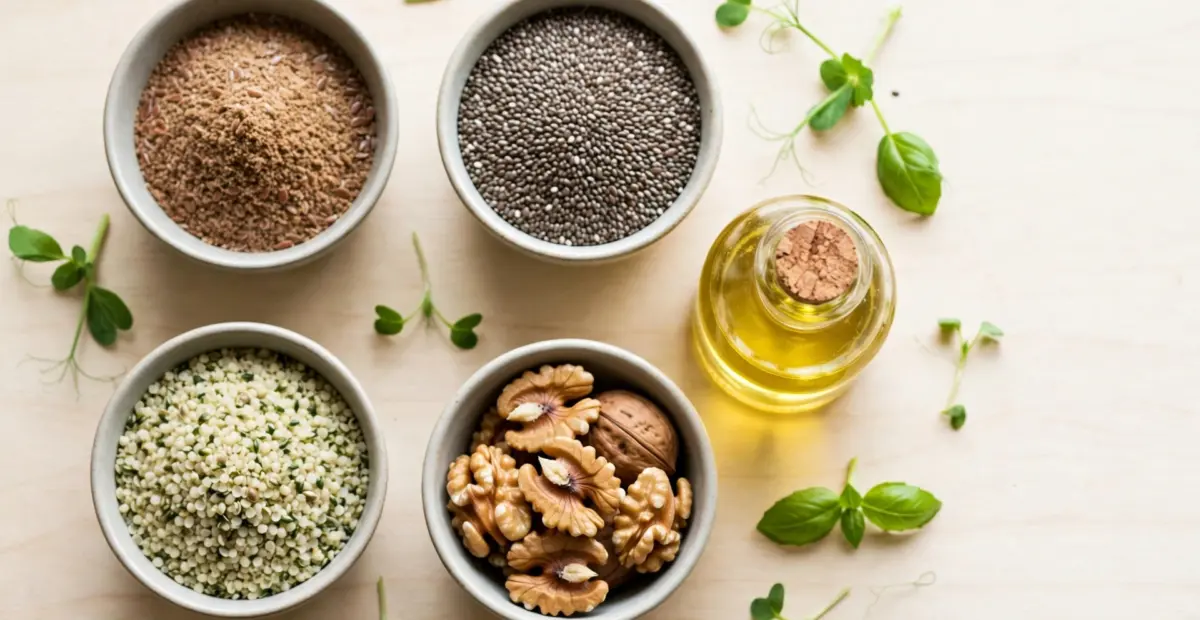
One serving of any of the top four foods covers the full daily AI for ALA — and a single tablespoon of flaxseed oil covers it several times over. The rest of this article looks at each of the big four in turn, plus the everyday foods that quietly add up.
Flaxseed: the most concentrated plant source
Flaxseed is the richest whole-food source of ALA there is. Two tablespoons of ground flaxseed give you roughly 2.7 grams of ALA — more than the daily AI for either sex — plus about 4 grams of fiber and a useful dose of lignans, plant compounds linked in observational research to heart health.
One detail matters: buy it ground, or grind whole seeds yourself. Whole flaxseeds often pass through the digestive tract intact, so the omega-3 inside them never reaches you. Ground flaxseed, stirred into oatmeal, yoghurt, a smoothie, or muffin batter, is absorbed far better. Store ground flaxseed in the fridge or freezer and use it within a few weeks, because the same unsaturated fats that make it valuable also make it go rancid faster than most pantry foods.
Flaxseed oil is even more concentrated — a single tablespoon carries about 7.3 grams of ALA — but it is a supplement-style food rather than an everyday ingredient. It has a low smoke point, so it is for salad dressings and finishing drizzles, never for frying, and it should be kept refrigerated and used quickly once opened.
Read also: How to Include Healthy Fats in Meals
Chia seeds: small seeds, big numbers
Chia seeds are the easiest way to hit your ALA target without thinking about it. A single ounce — about two tablespoons — delivers roughly 5 grams of ALA, along with about 10 grams of fiber and 4–5 grams of protein. Unlike flaxseed, chia does not need to be ground: the seeds soften and release their nutrients when they soak, which is why chia pudding and overnight oats work so well.
Chia’s other talent is texture. Stirred into liquid, the seeds form a gel that thickens smoothies, binds homemade energy balls, and stands in for egg in some baking. A spoonful in a glass of water with a squeeze of lemon is the simplest version of all. Because the seeds are almost flavourless, they disappear into foods you already eat — which is exactly what makes them so practical for a daily habit.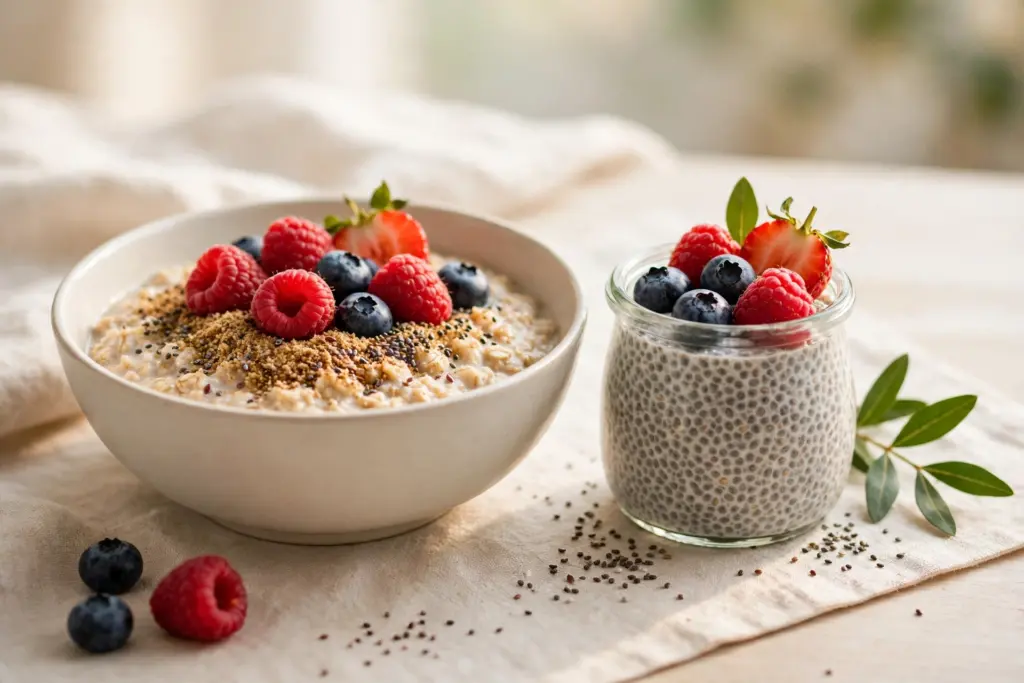
Walnuts: the only nut with meaningful omega-3
Most nuts are rich in healthy fats, but only walnuts carry omega-3 in meaningful amounts. An ounce — about seven walnut halves, or a small handful — provides roughly 2.5 grams of ALA, plus fiber, magnesium, and polyphenols. Almonds, cashews, and peanuts are fine foods, but they contain almost no ALA at all, so if omega-3 is the goal, walnuts are the nut to reach for.
Walnuts are also the most grab-and-go option on this list. No grinding, no soaking, no recipe required. Scatter them over a salad or a grain bowl, blend them into pesto in place of pine nuts, or keep a small bag at your desk for the afternoon. Like flaxseed, walnuts go rancid faster than other nuts because of their high polyunsaturated fat content, so buy them in modest amounts and store them in a sealed container in the fridge.
Read also: Best Plant-Based Protein Sources
Hemp seeds: mild, versatile, and protein-rich
Hemp seeds — sold hulled as “hemp hearts” — are the quiet achiever of the group. Three tablespoons give you about 2.6 grams of ALA, and they bring roughly 10 grams of protein and a soft, nutty flavour that works in almost anything. They need no grinding and no soaking: sprinkle them over salads, stir them into porridge, or blend them into smoothies and dressings.
Because hemp seeds are also a complete protein source, containing all nine essential amino acids, they pull double duty in plant-based meals — a useful combination when you are building a plate around beans, grains, and vegetables. They are more expensive per gram than flaxseed or walnuts, so many people use them as a topper rather than a staple, but even a tablespoon or two a day adds a meaningful amount of ALA.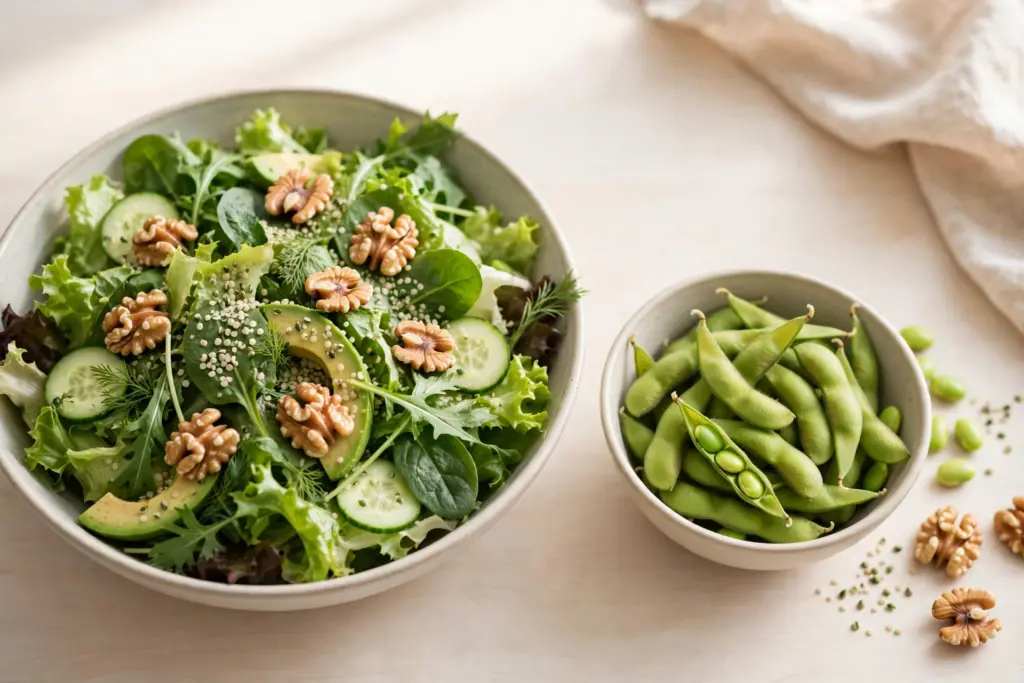
Everyday oils and soy foods: the quiet contributors
Beyond the big four, ordinary cooking oils and soy foods add ALA in the background of a normal day. Canola oil is the standout: a tablespoon carries about 1.3 grams of ALA, which means a salad dressing or a stir-fry made with canola oil can cover a large share of your daily target without any special effort. Soybean oil, the common “vegetable oil” in many kitchens, provides about 0.9 grams per tablespoon.
Soy foods contribute smaller amounts, but they add up across a day. A cup of edamame gives roughly 0.6 grams of ALA alongside about 18 grams of protein and 8 grams of fiber; cooked soybeans and firm tofu add smaller amounts too. Olive oil, by contrast, contains very little ALA — about 0.1 grams per tablespoon — which is worth knowing if you cook with it exclusively. None of this makes olive oil a bad choice; it is simply not an omega-3 source, and the ALA in your diet is more likely to come from canola oil, soy foods, and the seeds and nuts above.
Read also: How to Create a Balanced Vegetarian Plate
The conversion catch: what ALA can and cannot do
Here is the honest part. ALA is essential, and hitting its Adequate Intake matters. But the EPA and DHA that research links most closely to heart and brain health are a different story: your body converts less than 15% of the ALA you eat into EPA and DHA, and often much less. The NIH is blunt about it — eating EPA and DHA directly is the only practical way to raise their levels.
What does that mean in practice? If you eat fish, two servings a week covers the EPA and DHA side, and the plant foods in this article cover the ALA side. If you eat little or no fish, it is worth knowing about algae oil: algae are the original source of the DHA and EPA that fish accumulate by eating them, and algal oil supplements provide DHA (and usually some EPA) directly, without fish. The U.S. Food and Drug Administration advises keeping combined EPA and DHA intake from food and supplements at no more than 3 grams a day, including no more than 2 grams from supplements, and high doses can interact with blood-thinning medication — so if you are considering a supplement, talk it over with your clinician first, especially if you take warfarin or a similar medicine.
A day of plant omega-3, without trying hard
Hitting your ALA target does not require a new diet. It takes one or two small habits, repeated daily:
- Breakfast: two tablespoons of ground flaxseed or chia seeds stirred into oatmeal or yoghurt — about 2.7 to 5 grams of ALA before you leave the house.
- Lunch: a handful of walnuts over a salad or grain bowl — about 2.5 grams — or a dressing made with canola oil, about 1.3 grams per tablespoon.
- Snack: edamame with a pinch of salt, or a smoothie blended with a spoonful of hemp seeds.
- Dinner: a stir-fry in canola oil, or tofu and vegetables with a hemp-seed sprinkle.
Any single one of these covers the daily AI for most adults. Two of them together give you a comfortable margin, which matters on the days when one habit slips. The key is regularity: ALA is a daily nutrient, not something to load up on once a week.
Frequently asked questions
Can I get enough omega-3 without eating fish?
You can meet your ALA needs easily from plants — a spoonful or two of ground flaxseed or chia seeds covers the daily Adequate Intake. EPA and DHA are harder: your body converts less than 15% of ALA into them, so people who eat no fish often consider an algal oil supplement and should discuss it with a clinician.
Do I need to grind flaxseed?
Yes. Whole flaxseeds often pass through undigested, so the ALA inside them is not absorbed. Buy ground flaxseed or grind whole seeds in a coffee grinder, and store the ground meal in the fridge or freezer.
Are walnuts the only nut with omega-3?
Essentially, yes. Walnuts are the only common nut with meaningful ALA — about 2.5 grams per ounce. Almonds, cashews, hazelnuts, and peanuts contain almost none, though they are still nutritious foods for other reasons.
Does cooking destroy the omega-3 in these foods?
Gentle cooking is fine, but high heat and long storage degrade ALA. Use flaxseed oil only for cold dishes, keep ground flaxseed and walnuts refrigerated, and avoid heating chia or hemp seeds at high temperatures for long periods.
Sources
- National Institutes of Health, Office of Dietary Supplements — Omega-3 Fatty Acids: Fact Sheet for Consumers
- National Institutes of Health, Office of Dietary Supplements — Omega-3 (ALA) Content of Foods (USDA National Nutrient Database)
- U.S. Department of Veterans Affairs — Omega-3 Fatty Acids (patient education)
- Kris-Etherton PM, Harris WS, Appel LJ. Fish consumption, fish oil, omega-3 fatty acids, and cardiovascular disease. American Journal of Clinical Nutrition, 2002.
- U.S. Department of Agriculture, FoodData Central — nutrition facts of ALA-containing seeds (via Nutrients, 2020)
This article is for general information only and is not medical advice. If you have a health condition, take blood-thinning medication, or are considering an omega-3 supplement, talk to your clinician or a registered dietitian first.