A Beginner’s Guide to Eating More Plants
You have probably heard that eating more plants is good for you. Maybe a friend swears by it, or your doctor mentioned it at your last check-up, or you simply noticed that the meals that leave you feeling best tend to have a lot of vegetables in them. The idea sounds simple — until you open the fridge and wonder where to start.
Here is the good news: eating more plants is not an all-or-nothing switch. You do not need to give up meat, learn a dozen new recipes, or buy anything exotic. It is a direction, not a destination. A plate with a little more vegetables, a pot of beans simmering on a Sunday, a handful of nuts instead of crisps — those small moves add up, and the research behind them is unusually consistent.
What “eating more plants” actually means
A plant-based pattern is exactly what it sounds like: most of what you eat comes from plants — vegetables, fruit, whole grains, beans, lentils, nuts, and seeds. It is not the same as vegan or vegetarian, though both of those sit under the same umbrella. Plenty of people who eat more plants still eat meat, fish, eggs, or dairy. The plants are simply doing more of the work on the plate.
That distinction matters, because the quality of the plants matters more than the label. A diet of white bread, chips, and sugary drinks is technically plant-based, but nobody would call it healthy. The pattern linked to better health in study after study is built on whole, minimally processed plant foods: the kind your grandmother would recognize as food.
What the research says
One of the largest studies on this question followed more than 200,000 US health professionals for over 20 years. Researchers at Harvard T.H. Chan School of Public Health found that people who followed a healthful plant-based diet — rich in whole grains, fruit, vegetables, nuts, and legumes — had a 34% lower risk of developing type 2 diabetes than those who ate the fewest healthy plant foods. The same research group found a similar pattern for heart disease: the healthful version of the diet was linked to substantially lower risk, while an unhealthful plant-based diet built on refined grains, potatoes, and sugary drinks was not.
The Academy of Nutrition and Dietetics reached a similar conclusion in its 2025 position paper: appropriately planned vegetarian and vegan dietary patterns can be nutritionally adequate and may offer long-term benefits for cardiometabolic health. In plain language, the experts agree that eating mostly plants, done well, is a sound way to eat.
None of this means a single salad will change your health. These are patterns measured over years, built from thousands of small choices. That is actually encouraging — it means every plant-forward choice counts, and you do not need to be perfect to benefit.
Start where you are
The fastest way to fail at eating more plants is to overhaul everything on a Monday. The approach that actually sticks is smaller and duller, which is exactly why it works.
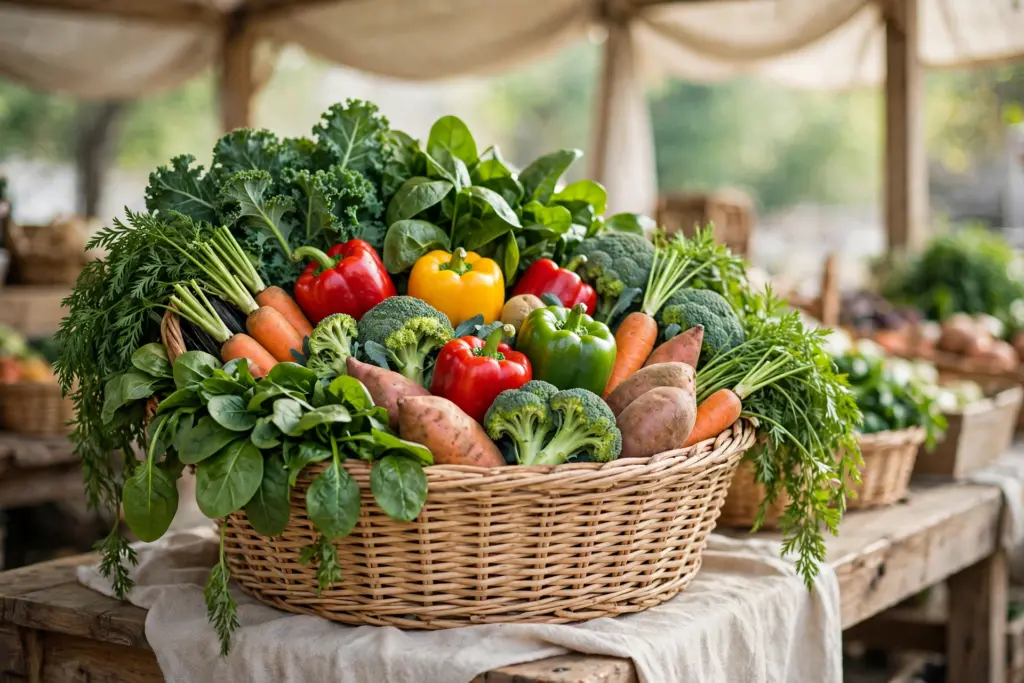
Pick one meal and make it plant-forward. Breakfast is often the easiest: oats with berries and walnuts, or whole-grain toast with peanut butter and sliced banana. Once that feels automatic, move to another meal. Swap half the minced beef in a bolognese for lentils. Add a can of chickpeas to a soup that already exists in your rotation. Keep a bag of frozen mixed vegetables in the freezer for nights when fresh produce runs out — frozen vegetables hold their nutrients well, and they are there when you need them.
The World Health Organization recommends at least 400 grams of fruit and vegetables a day — roughly five portions. If that sounds like a lot, count what you already eat before you try to add more. Many people are closer than they think, and one extra portion a day is a real step forward.
Build a plant-forward plate
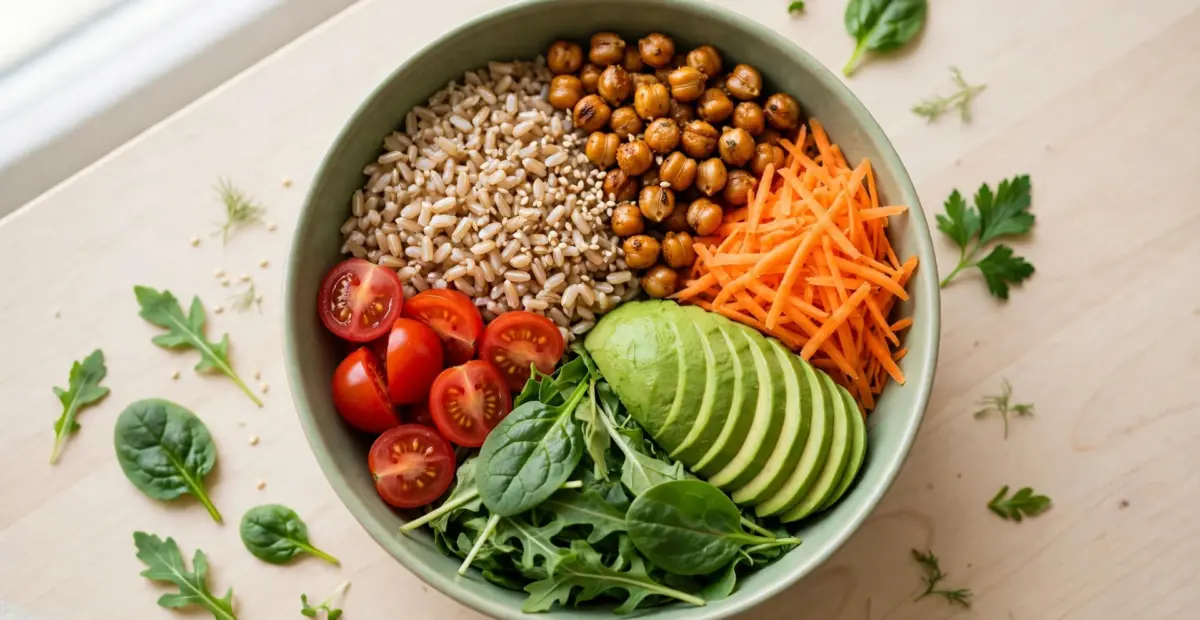
You do not need a calculator to build a good plant-based meal. A simple visual guide works well: picture your plate divided into sections. About half of it holds vegetables and fruit, a quarter holds whole grains, and a quarter holds a protein source. Harvard’s Healthy Eating Plate uses exactly this layout, and the classic plate method it is based on remains a solid, practical guide — the USDA’s MyPlate graphic was retired in January 2026, but the plate idea itself is still nutritionally sound.
That quarter for protein is where beginners usually pause. It is worth pausing on, because the answer is simpler than the internet makes it sound.
Read also: How to Create a Balanced Vegetarian Plate
Protein without the spreadsheet
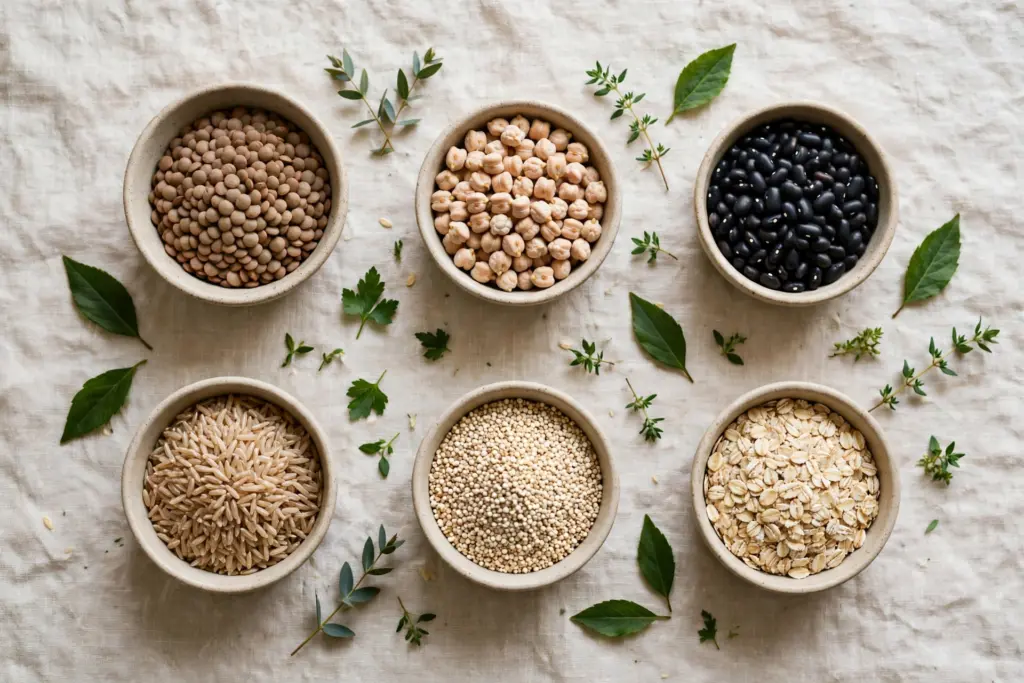
Most plant foods contain some protein, and a varied day of plant foods usually covers your needs. The one detail worth knowing is that most individual plant proteins are “incomplete” — they are low in one or more of the nine essential amino acids your body cannot make. Grains tend to be low in lysine, while legumes tend to be low in methionine. Eat both across the day and they cover each other’s gaps. Rice and beans is the classic example, but the pairing does not have to happen in the same meal; variety across the day is what counts.
The numbers are reassuringly ordinary. A cup of cooked lentils gives you around 18 grams of protein, plus about 15 grams of fiber. A cup of chickpeas lands near 15 grams, firm tofu about 10 grams per half cup, and a cup of edamame roughly 18 grams. For most adults, the recommended dietary allowance for protein is 0.8 grams per kilogram of body weight per day — about 56 grams for a 70-kilogram person — and a day built around beans, grains, nuts, and the odd egg or serving of yogurt clears that bar without much effort.
Soy foods deserve a mention here: tofu, tempeh, and edamame are among the few plant foods that contain all nine essential amino acids in good proportions, which makes them handy anchors for a plant-forward meal.
Read also: How to Add Protein to Everyday Meals
The nutrients worth a second look
A plant-forward diet covers most nutrients easily, but a few deserve deliberate attention — especially if you cut animal foods back sharply.
Vitamin B12 is the big one. It is made by bacteria and found reliably only in animal foods or fortified products, so anyone eating mostly plants should get it from fortified foods (nutritional yeast, some plant milks, breakfast cereals) or a supplement. The recommended dietary allowance for adults is 2.4 micrograms a day. This is not a minor footnote: a B12 shortfall can take years to show up, and by then it can affect nerves and blood cells. If you are eating mostly plants, check your B12 source before anything else.
Iron is plentiful in plants — lentils, beans, tofu, spinach, fortified cereals — but plant iron (non-heme iron) is absorbed less efficiently than the iron in meat. The fix is easy: eat iron-rich plant foods with something high in vitamin C. Lentil soup with a squeeze of lemon, or beans with bell peppers, can more than double how much iron you absorb.
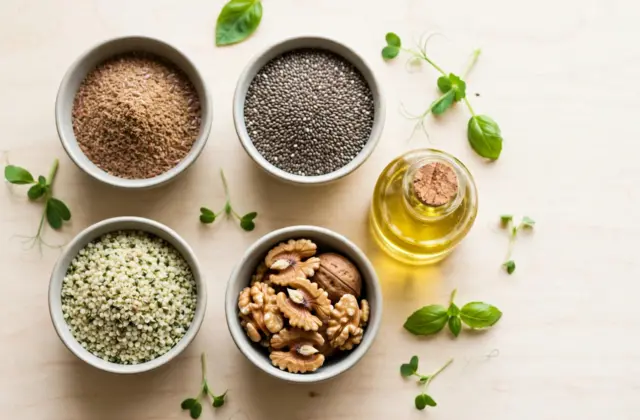
Omega-3 fats come mostly from oily fish, but plants offer alpha-linolenic acid (ALA) in flaxseeds, chia seeds, walnuts, and hemp seeds. A tablespoon of ground flaxseed in your oats or a small handful of walnuts covers the basics for most people.
Calcium does not have to come from dairy. Fortified plant milks, calcium-set tofu, tahini, almonds, and leafy greens like kale all contribute — just check the label on plant milks, since not all of them are fortified.
If you take medication, are pregnant, or are feeding a young child, talk to your clinician or a registered dietitian before making big changes. General advice is a starting point, not a prescription.
A simple week of plant-forward meals
Theory is nice; dinner is tonight. Here is what a plant-forward week can look like without any recipe heroics:
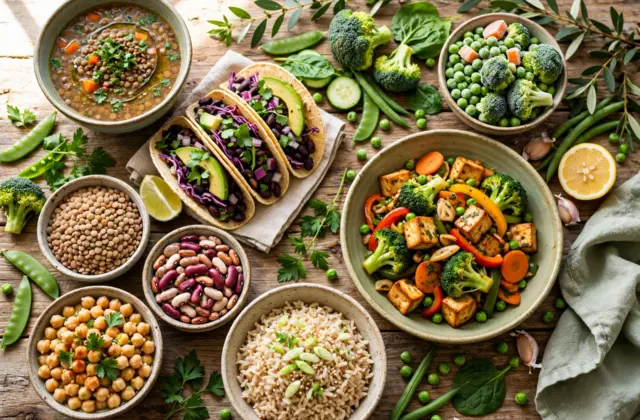
- Monday: Lentil and vegetable soup with whole-grain bread. (Make a double batch — it freezes well.)
- Tuesday: Stir-fried tofu and broccoli with brown rice and a drizzle of soy and sesame.
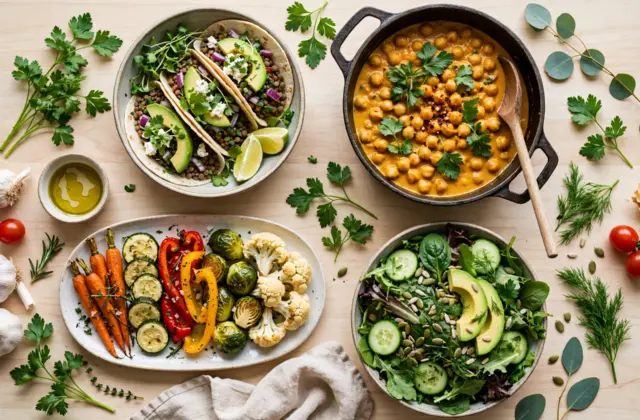
- Wednesday: Chickpea and spinach curry with a side of yogurt or a squeeze of lime.
- Thursday: Whole-wheat pasta with white beans, cherry tomatoes, garlic, and a big handful of rocket.
- Friday: Build-your-own tacos: black beans, corn, avocado, salsa, and shredded cabbage.
- Saturday: A grain bowl — quinoa, roasted sweet potato, chickpeas, and tahini dressing.
- Sunday: Whatever you like, with an extra vegetable on the side. Rest counts too.
Notice what is missing: nothing fancy, nothing you cannot find in a normal supermarket, and nothing that takes more than about half an hour. That is the whole point. A plant-forward diet that fits your actual life beats a perfect one you abandon by Thursday.
Read also: Budget-Friendly Plant-Based Meals
Three stumbles to skip
Going all-in overnight. A sudden jump in fiber can leave you bloated and uncomfortable, which is the opposite of motivating. Add plants gradually and drink enough water — the Institute of Medicine’s adequate intake for fiber is 25 grams a day for women and 38 for men, and most people get there slowly, not in a week.
Swapping meat for plant-based junk. Highly processed meat substitutes, sugary plant milks, and refined snacks are plants in the same way a doughnut is a grain product. They can have a place, but they are not the foods the health research is about.
Forgetting flavor. Plants taste best when they are seasoned like food, not medicine. Salt, acid, heat, and fat are your friends: roast vegetables until the edges crisp, finish beans with lemon and olive oil, toast your spices before they hit the pan. If your plant meals taste flat, the problem is usually seasoning, not the plants.
Frequently asked questions
Do I have to give up meat to eat more plants?
No. Eating more plants is a spectrum, not a membership. People who eat mostly plants but still include some animal foods get most of the same benefits in the research — the Harvard studies found benefits even in people who simply shifted the balance, not just those who cut animal foods out entirely.
Will I get enough protein?
Almost certainly, if you eat a variety of plant proteins across the day and enough food overall. Beans, lentils, tofu, whole grains, nuts, and seeds add up quickly — and if you still eat eggs, dairy, or fish sometimes, the margin is wider still.
Is a plant-based diet expensive?
The cheapest foods in most supermarkets are plants: dried beans, lentils, oats, rice, seasonal vegetables, and frozen produce. The pricey version — imported superfoods and branded meat substitutes — is optional. A bag of lentils costs a fraction of the equivalent meat, and it keeps in the cupboard for months.
How do I start if I don’t like vegetables?
Start with the ones you tolerate and cook them well — roasting transforms most vegetables. Blend spinach into a smoothie, stir grated carrot into pasta sauce, or mash cauliflower into potatoes. Taste changes with exposure: foods you disliked as a child often taste different a decade later, especially cooked a different way.
This article is for general information only and is not medical advice. If you have a health condition, take medication, or are pregnant or breastfeeding, talk to your clinician or a registered dietitian before making major changes to your diet.
Sources
- World Health Organization — Healthy Diet (at least 400 g of fruit and vegetables per day)
- Harvard T.H. Chan School of Public Health — Healthy plant-based diet linked with substantially lower type 2 diabetes risk (Satija et al., PLOS Medicine, 2016)
- Harvard T.H. Chan School of Public Health — Not all plant-based diets are healthy (Satija et al., Journal of the American College of Cardiology, 2017)
- Academy of Nutrition and Dietetics — Vegetarian Dietary Patterns for Adults: A Position Paper (2025)
- Harvard Health Publishing — The right plant-based diet for you
- Harvard T.H. Chan School of Public Health — The Nutrition Source: Protein
- National Institutes of Health, Office of Dietary Supplements — Vitamin B12 Fact Sheet for Health Professionals (RDA 2.4 mcg/day for adults)
- National Academies — Dietary Reference Intakes for Energy, Carbohydrate, Fiber, Fat, Fatty Acids, Cholesterol, Protein, and Amino Acids (fiber AI 25 g women / 38 g men; protein RDA 0.8 g/kg/day)