How to Include Healthy Fats in Meals
For years, fat had a bad reputation, and a lot of us learned to fear it. We picked fat-free dressings, skipped the nuts, and scraped the avocado off the toast. The trouble with that approach is that it treats all fats as if they were the same — and they are not. Some fats genuinely help a meal work better: they carry flavour, they help you absorb certain vitamins, and they keep you full long after a fat-free meal would have left you hunting for a snack.
The goal here is not to add fat on top of everything you already eat. It is to choose the fats that serve you, use them in sensible amounts, and let them replace — not join — the fats that do less for you. Done that way, healthy fats are less a diet rule and more a cooking habit. A drizzle here, a handful there, a swap in the pan. Small moves, repeated daily, add up to a very different plate.
First, a quick map of the fats on your plate
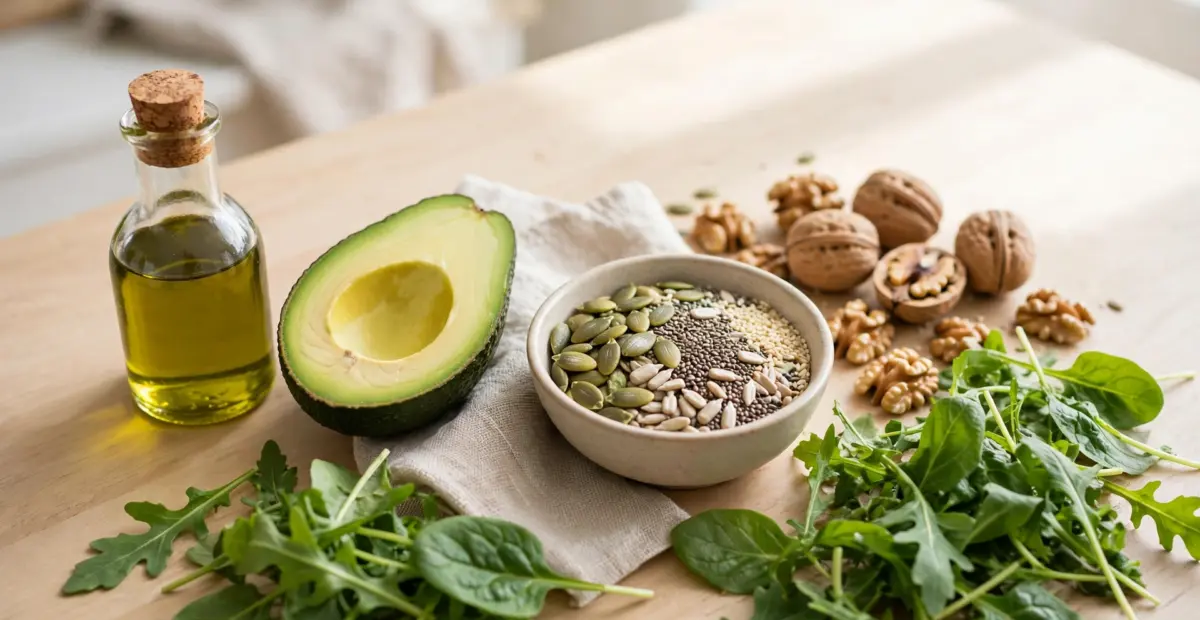
It helps to know what you are dealing with, because the names on labels can sound more complicated than they are. Unsaturated fats are the ones most guidelines point you toward. They come in two main families. Monounsaturated fats show up in olive oil, avocados, most nuts, and peanuts. Polyunsaturated fats include the omega-3 and omega-6 families found in fatty fish, walnuts, flaxseeds, chia seeds, and sunflower and soybean oils.
Saturated fats are the firmer fats at room temperature: butter, lard, fatty cuts of meat, full-fat cheese and cream, and coconut and palm oil. They are not poison, and you do not need to ban them outright, but the evidence consistently links higher intakes with higher LDL cholesterol, the type often called “bad” cholesterol. The World Health Organization advises keeping total fat to less than 30% of daily energy, saturated fat to less than 10%, and trans fat to less than 1%, with a shift away from saturated and trans fats toward unsaturated fats.
The American Heart Association goes a step further for people aiming to lower their LDL cholesterol, suggesting saturated fat below 6% of daily calories — roughly 13 grams on a 2,000-calorie day. For comparison, a single tablespoon of butter holds about 7 grams. That is why the swap matters more than the total: replacing saturated fat with unsaturated fat is where the benefit shows up, not simply cutting fat and replacing it with refined starch or sugar.
Trans fats deserve a special mention. Industrially produced trans fats, once common in margarines, shortenings, and packaged baked goods, are the one type of fat that guidelines agree you should avoid as far as possible. They raise LDL cholesterol and lower HDL cholesterol at the same time. In many countries they have largely been removed from the food supply, but it is still worth checking ingredient lists for “partially hydrogenated oil” on imported or older-style products.
The swap that matters most
If you change one thing, make it this: cook and dress with unsaturated fats instead of solid animal fats. That single habit covers a surprising number of meals. Sauté vegetables in olive oil instead of butter. Dress a salad with an olive-oil vinaigrette instead of a creamy bottled dressing. Spread mashed avocado or hummus on toast instead of butter. None of these changes asks you to give up flavour — in fact, most people find their food tastes better.
A good rule of thumb is to think in teaspoons and tablespoons, not free pours. Fat is energy-dense — about 9 calories per gram — so even a healthy oil adds up quickly if the bottle glugs. Measure for a week or two until your eye learns what a tablespoon looks like in the pan. A tablespoon of olive oil is plenty to sauté a pan of vegetables for two people, especially if you start with a hot pan and add a splash of water or stock to help things along.
Read also: How to Read Food Labels
Breakfast: the easiest place to start
Breakfast is where healthy fats slip in with almost no effort, because so many breakfast foods already pair well with them. Stir a tablespoon of ground flaxseed or chia seeds into oatmeal or yogurt. The seeds add a nutty taste, a little crunch, and omega-3 fats in the plant form known as ALA. Spread peanut butter or another nut butter on whole-grain toast instead of jam alone, and you have a breakfast that will actually hold you until lunch.
Eggs are another easy win. Cook them in a teaspoon of olive oil, and serve them with a side of avocado or a slice of whole-grain toast with a drizzle of oil. You get protein, fat, and fibre in one plate, which is a far steadier start than a pastry eaten on the run. If you usually eat cereal, try adding a small handful of walnuts or almonds on top. A handful — about an ounce, or roughly a small palmful — is the portion to aim for, because nuts are nutritious and also calorie-dense.
Lunch and dinner: build the fat into the meal, not on top of it
The best place for healthy fat is inside the meal, where it is part of the recipe rather than an afterthought. Toss cooked grains with olive oil, lemon, and herbs for a grain bowl base. Add chickpeas, roasted vegetables, and a spoonful of tahini thinned with water and lemon juice. Tahini, made from sesame seeds, gives you the creamy satisfaction of a dressing with unsaturated fats and a little calcium and iron thrown in.
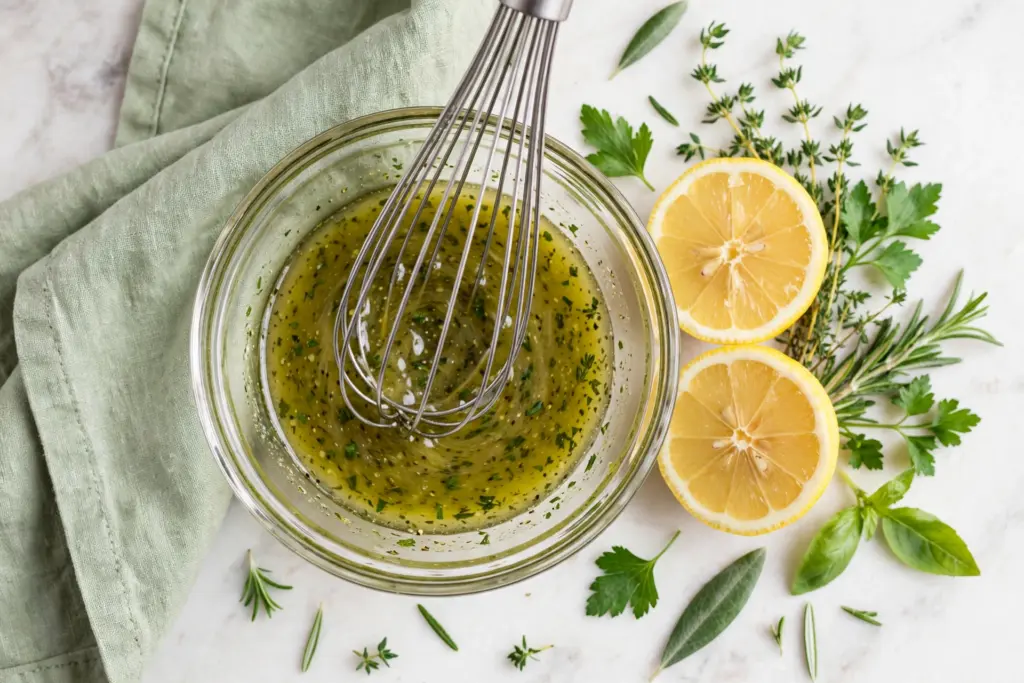
Salads are the obvious candidate, and they reward a little attention. A simple vinaigrette — three parts olive oil to one part lemon juice or vinegar, plus mustard, garlic, and a pinch of salt — beats most bottled dressings on both flavour and fat quality. Add something crunchy and fatty to the salad itself: toasted walnuts, pumpkin seeds, or cubes of avocado. The crunch matters. It makes the salad feel like a meal rather than a side dish you are enduring.
For the main course, think about fish twice a week. The American Heart Association recommends eating fish, especially oily fish rich in omega-3 fats, at least twice a week — two servings of about 3.5 ounces each. Salmon, sardines, mackerel, trout, and herring are the usual stars. If fresh fish feels expensive or fiddly, canned sardines or tuna packed in water are perfectly good options, and they keep in the pantry for months. A tin of sardines on toast with lemon and herbs is one of the quickest genuinely nutritious dinners there is.
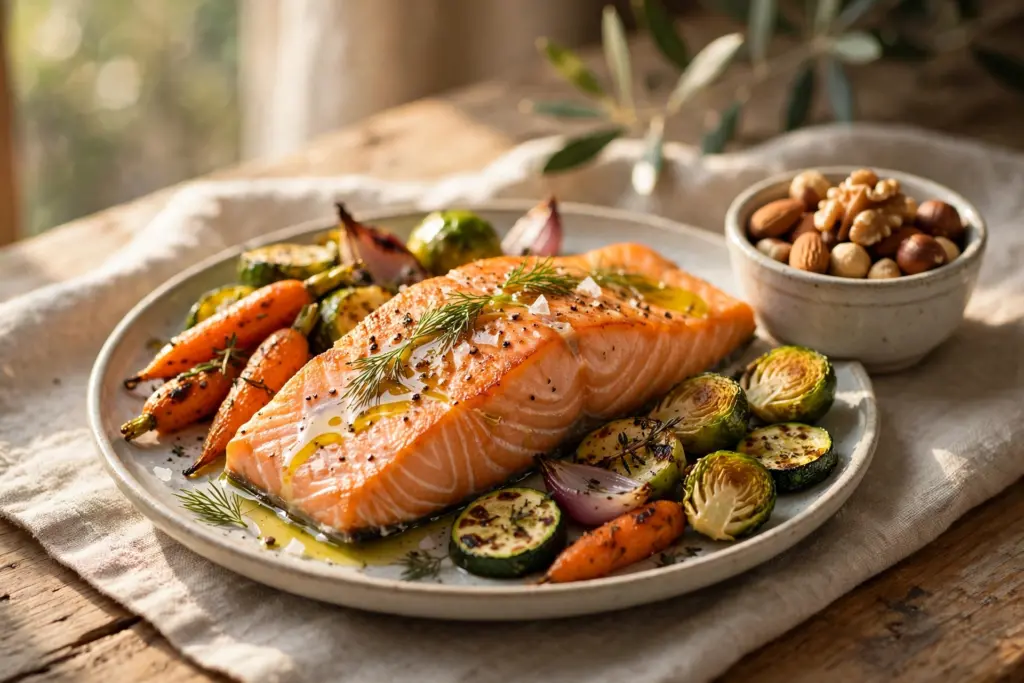
If you do not eat fish, walnuts, flaxseeds, chia seeds, and canola oil all supply plant omega-3s (ALA), though the body converts ALA into the EPA and DHA found in fish only to a limited extent.
Read also: How to Build a Balanced Plate
What about olive oil specifically?
Olive oil gets a lot of attention, and much of it is earned. It is rich in monounsaturated fat, and the U.S. Food and Drug Administration allows a qualified health claim for it: limited and not conclusive evidence suggests that eating about 2 tablespoons (23 grams) of olive oil daily may reduce the risk of coronary heart disease, when it replaces a similar amount of saturated fat without increasing total daily calories. Note the conditions in that sentence — it is a replacement, not an addition. Pouring olive oil over an already butter-heavy meal does not give you the benefit the claim describes.
For everyday cooking, extra-virgin olive oil suits dressings, drizzles, and medium-heat cooking; for high-heat searing, a refined olive oil or canola oil may suit you better. Store oil away from heat and light, and buy smaller bottles if you cook infrequently, since oil goes rancid over time.
Avocados deserve a similar spotlight. A whole avocado is rich in monounsaturated fat, fibre, and potassium, and it works far beyond guacamole. Mash it onto toast, dice it into a grain bowl, blend it into a chocolate mousse with cocoa and a little honey, or simply eat half with a squeeze of lime and a pinch of salt. Because avocados vary so much in size, think in halves or quarters rather than whole fruits when you are keeping an eye on portions.
Reading labels without getting lost
You do not need to memorise fatty-acid chemistry to shop well. On a nutrition label, look at total fat, then saturated fat, then trans fat. A product with most of its fat coming from unsaturated sources — think nuts, seeds, olive oil, or fish — is generally a better bet than one where saturated fat dominates. Compare two similar products side by side: two salad dressings, two spreads, two snack bars. The one with lower saturated fat and no partially hydrogenated oil usually wins, even if its total fat is similar.
Coconut oil deserves a clear-eyed note because it is marketed heavily. It is about 80–90% saturated fat, so nutritionally it behaves much more like butter than like olive oil. A spoonful in a curry for flavour is fine, and some people enjoy it. But as an everyday cooking fat, it does not belong in the same category as olive or canola oil, whatever the jar says.
Read also: How to Choose Whole Grains
A simple week of healthy-fat habits
If a whole overhaul feels like too much, try adding one habit at a time. Week one: switch your cooking fat to olive oil. Week two: add a handful of nuts or seeds to one meal a day. Week three: eat fish twice, or try sardines on toast once. Week four: make your own vinaigrette and keep a jar in the fridge. By the end of the month, your meals will look different without you ever having followed a “diet.”
Portion awareness still matters: healthy fats are not calorie-free, but a meal with good fats tends to satisfy you, so pair fats with fibre — vegetables, whole grains, beans — and protein for the combination that keeps most people fullest for longest. And keep your healthy fats visible: olive oil by the stove, nuts at eye level in the pantry, hummus at the front of the fridge. When the good option is the easy option, you will choose it most days without thinking about it.
Frequently asked questions
Is it okay to eat fat every day?
Yes. Fat is an essential nutrient — your body needs it to absorb vitamins A, D, E, and K, to build cell membranes, and to make hormones. The question is not whether to eat fat, but which fats and how much. Aim for most of your fat to come from unsaturated sources, and keep saturated fat within the guideline range.
How much olive oil should I use per day?
There is no single target, because it depends on your total diet. The FDA’s qualified claim refers to about 2 tablespoons daily as a replacement for saturated fat, not on top of it. In practice, 1–2 tablespoons across cooking and dressings fits comfortably into most balanced diets.
Are nuts fattening?
Nuts are calorie-dense, so portions matter — about a small handful, or an ounce, is a sensible daily snack portion. Research on satiety suggests that nuts tend to be quite filling, and people who eat them regularly do not necessarily gain weight, likely because the nuts displace less nutritious snacks. Enjoy them, just do not eat them by the bagful while watching television.
Do I need fish oil supplements to get omega-3s?
Food first is the usual advice. Eating oily fish twice a week, plus plant sources like walnuts and flaxseeds, covers most people’s needs. Supplements may be appropriate for some people, but that is a conversation for your clinician, especially if you take blood-thinning medication or have a medical condition.
Sources
- World Health Organization — WHO updates guidelines on fats and carbohydrates (total fat ≤30% of energy; saturated fat <10%; trans fat <1%)
- American Family Physician — Reduction in Saturated Fat Intake for Cardiovascular Disease (summarising the American Heart Association’s 5–6% saturated-fat guidance)
- Hooper et al. — Reduction in saturated fat intake for cardiovascular disease, Cochrane Database of Systematic Reviews 2020 (17% reduction in combined cardiovascular events)
- Mayo Clinic — Omega-3 in fish: How eating fish helps your heart (American Heart Association advice: fish at least twice a week)
- IDEA Health & Fitness Association — Olive Oil gets FDA Approval (FDA qualified health claim: about 2 tablespoons / 23 grams of olive oil daily)
Disclaimer: This article is for general information only and is not medical advice. If you have a heart condition, high cholesterol, diabetes, or take medication affected by diet, talk to your clinician or a registered dietitian before making major changes to what you eat.