Best Plant-Based Protein Sources
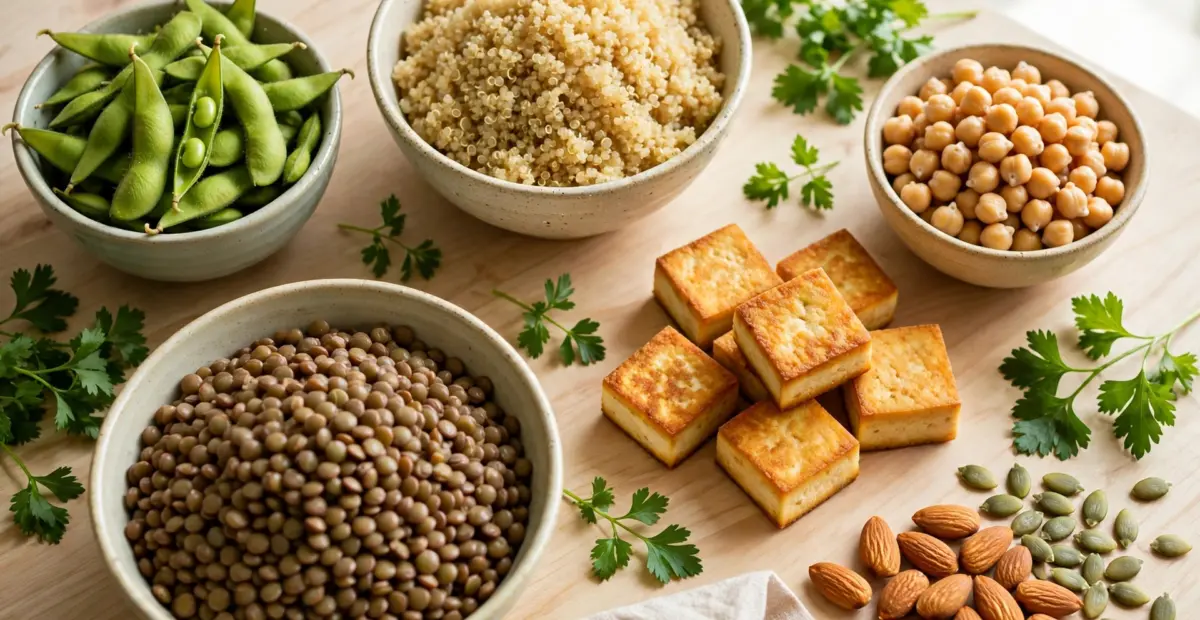
You don’t need meat to hit your protein target. A cup of lentils carries about as much protein as a chicken thigh, a block of tofu can anchor a whole week of dinners, and a spoonful of peanut butter on toast quietly adds up. Plant-based protein isn’t a compromise or a puzzle — it’s a pantry full of foods most of us already buy, used a little more deliberately.
The question that follows any mention of plant protein is usually the same one: is it enough? The honest answer is that it can be, for most people, with a bit of variety. Protein needs are individual, but the general target most adults aim for is 0.8 grams per kilogram of body weight per day — the recommended dietary allowance set by the National Academies. The 2025–2030 Dietary Guidelines for Americans suggest a somewhat higher range of 1.2 to 1.6 grams per kilogram per day for many adults. A 70-kilogram person, for example, is looking at roughly 56 grams at the lower target and 84 to 112 grams at the higher one. Both are reachable from plants alone, and you don’t need protein powder to get there.
What “complete protein” actually means
Protein is built from 20 amino acids, nine of which your body can’t make on its own — the essential amino acids. A “complete” protein supplies all nine in proportions close to what your body needs. Most animal foods qualify. Among plants, soy foods, quinoa, hemp seeds, chia seeds, and nutritional yeast are usually described as complete, because their amino acid balance is closest to what humans need.
Here’s the part that trips people up: every plant food actually contains all 20 amino acids, including all nine essential ones — a 2019 review in the journal Nutrients states this plainly. What differs is proportion. Grains run relatively low in lysine, while legumes run relatively low in methionine. Neither shortfall matters much across a varied diet, because your body keeps a circulating pool of amino acids from recent meals and its own protein turnover. The U.S. Department of Veterans Affairs’ plant-based protein guide makes the same point: you don’t need to combine grains and legumes at the same meal to make a complete protein. Eating a range of plant foods across the day covers it.
So the old rice-and-beans-at-every-meal rule is more of a helpful habit than a requirement. If you eat grains, beans, vegetables, and seeds across a day, you’re covered — no spreadsheet needed.
The heavy hitters: soy foods
If plant protein had a starting lineup, soy would be its captain. Soy is the rare plant food whose protein quality rivals animal protein, and it comes in several forms that behave completely differently in the kitchen.
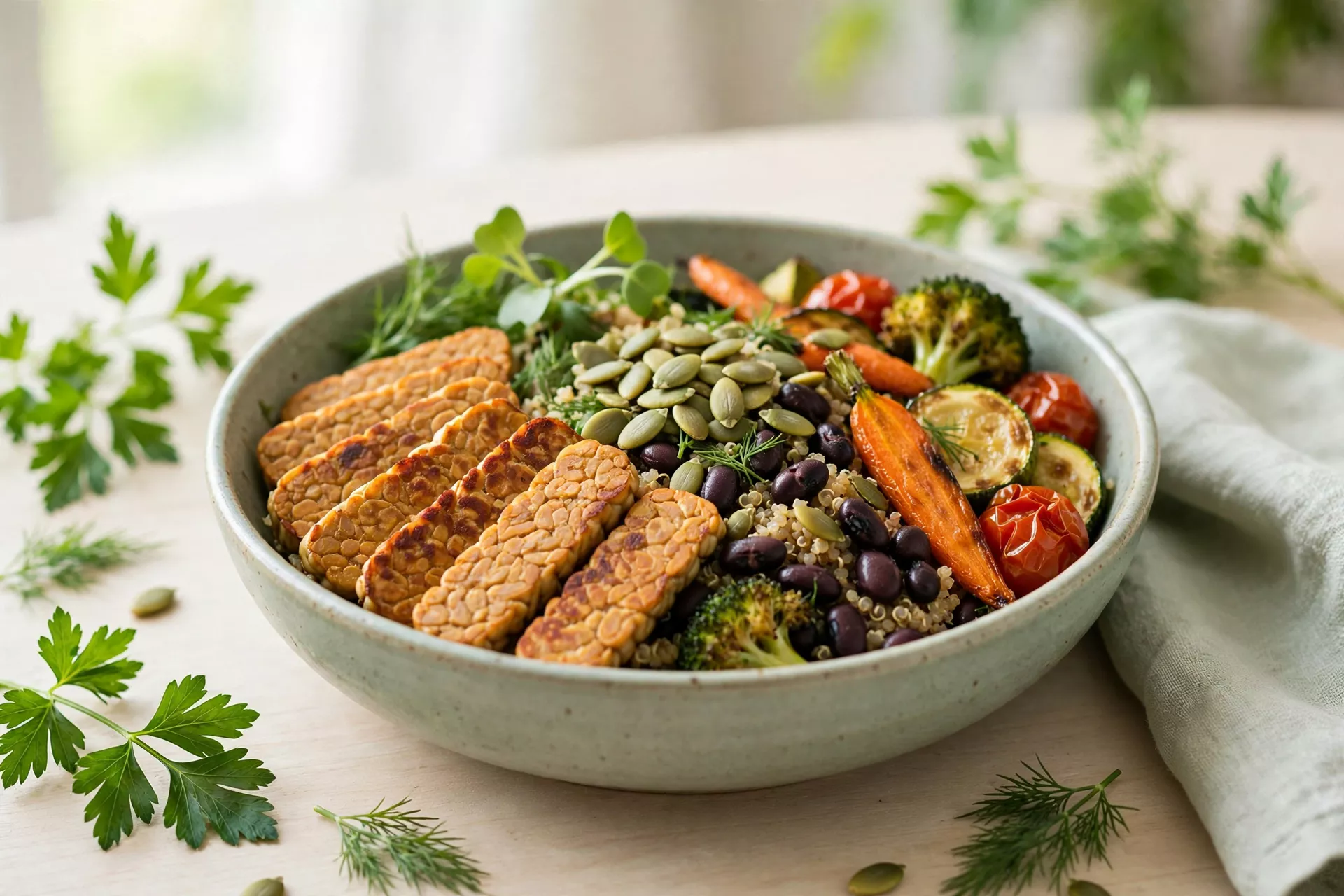
Tempeh is the most protein-dense of the bunch: a cup of cooked tempeh provides about 34 grams of protein. It’s made from fermented whole soybeans pressed into a firm cake, so it’s chewy and nutty, and the fermentation is a bonus for your gut. Slice it, marinate it in soy sauce and a little maple syrup, and pan-fry it — it holds up where tofu would crumble.
Edamame — whole young soybeans, usually eaten straight from the pod — gives you about 18 grams of protein per cup, plus fiber, calcium, iron, and vitamin C. Keep a bag in the freezer and you always have a snack or a stir-fry add-in ready in five minutes.
Tofu is the most flexible of the three. A half cup of firm tofu made with calcium sulfate provides about 22 grams of protein, according to USDA FoodData Central records. Silken tofu blends into smoothies and sauces; extra-firm tofu cubes and crisps in the oven. The protein varies by brand and firmness, so check the label — calcium-set tofu also contributes calcium to your day.
One more soy staple: a cup of unsweetened fortified soy milk provides about 7 grams of protein, roughly in line with dairy milk. It’s the simplest swap in a breakfast routine — pour it over oats and you’ve already banked a meaningful chunk of your daily target.
Read also: How to Add Protein to Everyday Meals
Beans and lentils: the everyday workhorses
Beans and lentils are the least glamorous protein sources on this list and probably the most useful. They’re cheap, they keep for months in the pantry, and they bring fiber along with the protein — something meat never does.
A cup of cooked lentils provides about 18 grams of protein and roughly 16 grams of fiber. Black beans and chickpeas each land around 15 grams per cooked cup. Kidney beans and pinto beans sit in the same range. These numbers come from USDA FoodData Central, the standard reference for nutrient values.
The practical part matters more than the numbers. A pot of lentils cooks in 20 minutes with no soaking. Canned beans are ready in the time it takes to open the tin — drain and rinse them, and you’ll wash away some of the sodium too. Toss chickpeas into a salad, fold black beans into tacos, or stir red lentils into soup, and the protein adds up without any extra cooking project.
One honest note: beans are not a low-carbohydrate food. A cup of cooked lentils also carries about 40 grams of carbohydrate. That’s not a flaw — it’s slow-digesting carbohydrate wrapped in fiber — but if you’re watching carbs closely, soy foods and seeds give you more protein per gram of carbohydrate.
Grains that pull their weight
Grains rarely get credit for protein, but they contribute more than people think — especially because we eat them in generous portions.
Quinoa is the standout: a cup of cooked quinoa provides about 8 grams of protein, and it’s one of the few plant foods described as a complete protein on its own. Use it where you’d use rice — as a base for bowls, in salads, or as a breakfast porridge with fruit.
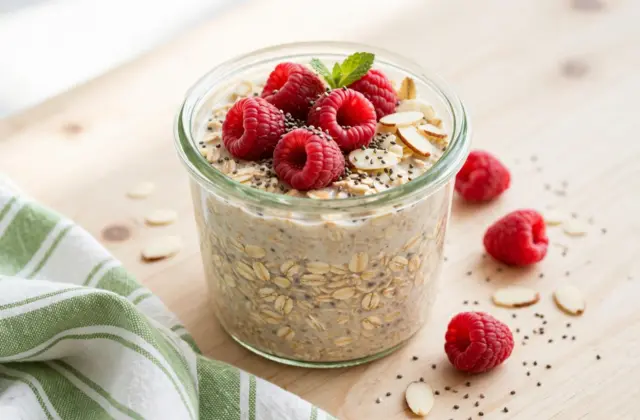
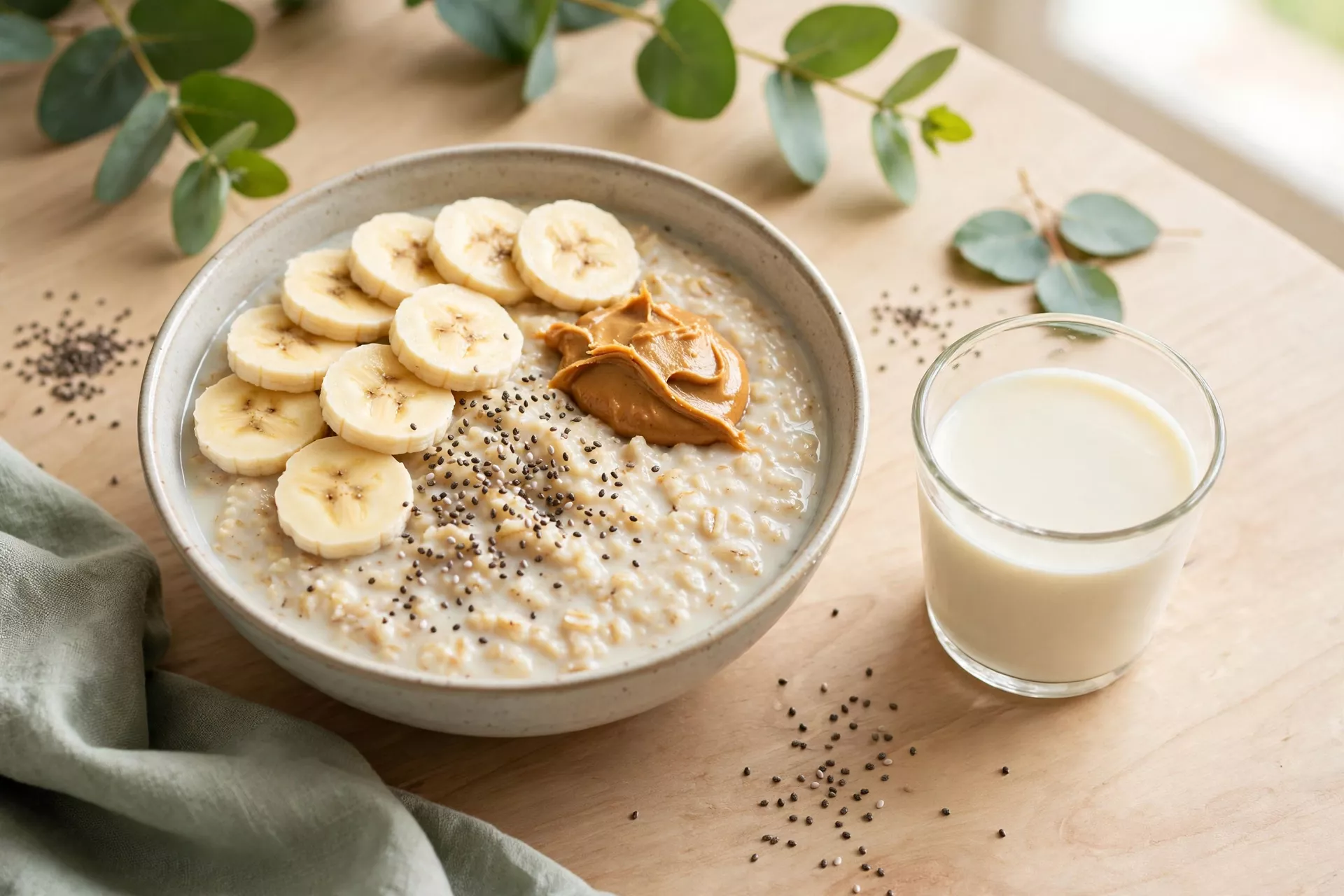
Oats deserve a mention too. A cup of cooked oatmeal provides about 6 grams of protein, and a bowl of oats with soy milk, a spoonful of peanut butter, and a few seeds can quietly reach 15 grams before you’ve left the kitchen. Whole-wheat bread adds about 8 grams across two slices. None of these are protein powerhouses on their own, but across three meals they form the base layer of your daily intake.
Nuts, seeds, and the small-but-mighty extras
Nuts and seeds won’t carry a meal’s protein on their own, but they’re the easiest way to top up. Two tablespoons of peanut butter provide about 7 to 8 grams of protein. An ounce of almonds — a small handful — adds about 6 grams. Three tablespoons of hulled hemp seeds give you about 9.5 grams, and two tablespoons of chia seeds add about 6 grams while also contributing fiber and omega-3 fats.
Think of seeds as seasoning with benefits: sprinkle pumpkin seeds over soup, stir chia into yogurt, or blend hemp seeds into a smoothie. A tablespoon here and there adds up to real grams by the end of the day.
Nutritional yeast is another quiet contributor — the flaky, cheese-flavored seasoning beloved by plant-based cooks. A couple of tablespoons stirred into pasta sauce or popcorn adds several grams of protein plus B vitamins, including B12 when the product is fortified. Check the label if B12 is what you’re after, since not all brands are fortified.
Seitan: powerful, with a catch
Seitan deserves a mention because the numbers are striking: about 21 grams of protein in a 3-ounce serving, according to the VA’s plant-based protein guide. It’s made from wheat gluten, so it has a dense, meaty chew that works well in stir-fries and sandwiches.
The catch is in the name — it’s pure gluten. If you have celiac disease or a wheat allergy, seitan is off the table entirely. For everyone else, it’s a useful option, just not one to build every meal around, since it brings little fiber or micronutrient variety compared with beans and soy.
Read also: How to Create a Balanced Vegetarian Plate
Putting a day together
Abstract numbers are hard to cook with, so here’s what a day of plant protein can actually look like — no powder, no supplements, nothing exotic:
Breakfast: oatmeal made with soy milk, a spoonful of peanut butter, and a sprinkle of chia seeds — roughly 18 grams. Lunch: a quinoa bowl with black beans, roasted vegetables, and pumpkin seeds — roughly 22 grams. Snack: edamame with a pinch of salt — about 9 grams per half cup. Dinner: tempeh stir-fry with brown rice and broccoli — roughly 25 grams. That’s around 74 grams before counting the small contributions from bread, vegetables, and everything else you ate along the way.
The pattern is the point. No single food has to do all the work. A grain here, a legume there, a spoonful of seeds on top — variety does the heavy lifting, and it also spreads out the fiber, iron, magnesium, and other nutrients that come packaged with these foods.
Read also: High-Protein Foods: A Practical Guide
A few things worth knowing
First, the protein in plant foods is digested a little less efficiently than the protein in animal foods, largely because of fiber and plant compounds. The difference is modest, and eating a varied diet with enough total protein covers it — it’s one reason the higher end of the dietary guidelines’ range can be a useful target for people eating mostly plants.
Second, iron and zinc from plant foods are absorbed less readily than the same minerals from meat. Pairing iron-rich plant foods — beans, lentils, tofu — with a vitamin C source at the same meal helps: think lentil soup with tomatoes, or tofu stir-fry with bell peppers. It’s a small habit with a real payoff.
Third, if you’re eating fully plant-based, vitamin B12 needs attention. B12 isn’t reliably found in plant foods, so fortified foods like nutritional yeast and soy milk — or a supplement — are the practical routes. This is worth discussing with your clinician rather than guessing.
Frequently asked questions
Can you get enough protein on a plant-based diet?
Yes, for most people. The recommended dietary allowance is 0.8 grams per kilogram of body weight per day, and the 2025–2030 Dietary Guidelines for Americans suggest 1.2 to 1.6 grams per kilogram for many adults. A varied diet built on soy foods, beans, lentils, whole grains, nuts, and seeds can reach those targets without supplements.
Which plant food has the most protein?
Tempeh leads the everyday options, with about 34 grams per cooked cup. Cooked soybeans are close behind at about 31 grams per cup, followed by seitan at about 21 grams per 3-ounce serving. Lentils and edamame each provide about 18 grams per cup.
Do you need to combine proteins at the same meal?
No. Your body maintains a pool of amino acids from recent meals, so complementary foods don’t need to be eaten in the same sitting — just across the same day. A varied diet of grains, legumes, vegetables, and seeds covers all nine essential amino acids without any pairing rules.
Is soy safe to eat every day?
For most people, yes. Soy foods like tofu, tempeh, and edamame are associated with heart-health benefits when they replace meat, and major health organizations consider moderate daily intake of whole soy foods appropriate. If you have a soy allergy or a specific medical condition, talk with your clinician.
This article is for general information only and is not medical advice. If you have a medical condition, are pregnant, or are considering a major change to your diet, talk with your clinician or a registered dietitian first.
Sources
- USDA FoodData Central — protein values for cooked lentils (FDC 172421), cooked black beans (173735), cooked chickpeas (173757), cooked quinoa (168917), firm tofu (172475), tempeh (174272), hulled hemp seeds (170148), and smooth peanut butter (172470)
- U.S. Department of Veterans Affairs, Plant-Based Protein Guide — complete vs. incomplete protein; protein per serving table; no same-meal combining needed
- Healthline, Vegan Complete Proteins: 13 Plant-Based Options — quinoa, tofu, tempeh, edamame, amaranth, buckwheat, hemp and chia seeds as complete protein sources
- National Academies Press, Dietary Reference Intakes for Energy, Carbohydrate, Fiber, Fat, Fatty Acids, Cholesterol, Protein, and Amino Acids — recommended dietary allowance of 0.8 g/kg/day