Quick Balanced Dinners for Weeknights
It is 6:15 p.m., you are hungry, and the fridge looks like a puzzle with half the pieces missing. That is exactly when dinner decisions tend to go sideways — not because you do not care about eating well, but because you are tired, short on time, and faced with a dozen small choices at once. The fix is not a stricter plan. It is a simpler one: a formula you can repeat on autopilot, plus a short list of dinners that actually fit into a weeknight.
A balanced weeknight dinner does not need to be fancy, and it does not need to take an hour. It needs four things working together: a protein to keep you full, a whole grain or starchy vegetable for steady energy, plenty of vegetables, and a little healthy fat for flavor and satisfaction. When those four show up on the plate, the meal usually takes care of itself — no calorie counting, no separate “diet food,” just a normal dinner that happens to be balanced.
The 30-minute balanced dinner formula
Think of dinner as a plate, not a recipe. Fill about half the plate with vegetables — fresh, frozen, or roasted, it all counts. Add a palm-sized portion of protein, a fist-sized portion of a whole grain or starchy vegetable, and a spoonful or two of something like olive oil, nuts, or avocado. That is the whole formula, and you can swap the parts endlessly without starting from scratch.
This lines up well with what the World Health Organization recommends for adults: at least 400 grams of fruit and vegetables a day, at least 25 grams of naturally occurring dietary fiber from foods, free sugars kept below 10% of daily energy (ideally below 5%), and salt kept below 5 grams a day. You do not need to hit every number at dinner alone. Dinner is simply the easiest place to make a dent in the vegetable and fiber targets, because it is usually the biggest meal of the day.
A practical shortcut: cook the grain in bulk, keep a protein ready, and let the vegetables be the variable. If brown rice is already in the fridge and you have canned beans, tofu, eggs, or frozen fish on hand, you are ten minutes from a balanced plate instead of forty.
Read also: How to Build a Balanced Dinner
Seven quick balanced dinners for weeknights
Each of these takes about 30 minutes or less, uses ordinary supermarket ingredients, and follows the same formula. Pick two or three to rotate, and weeknights get noticeably easier.
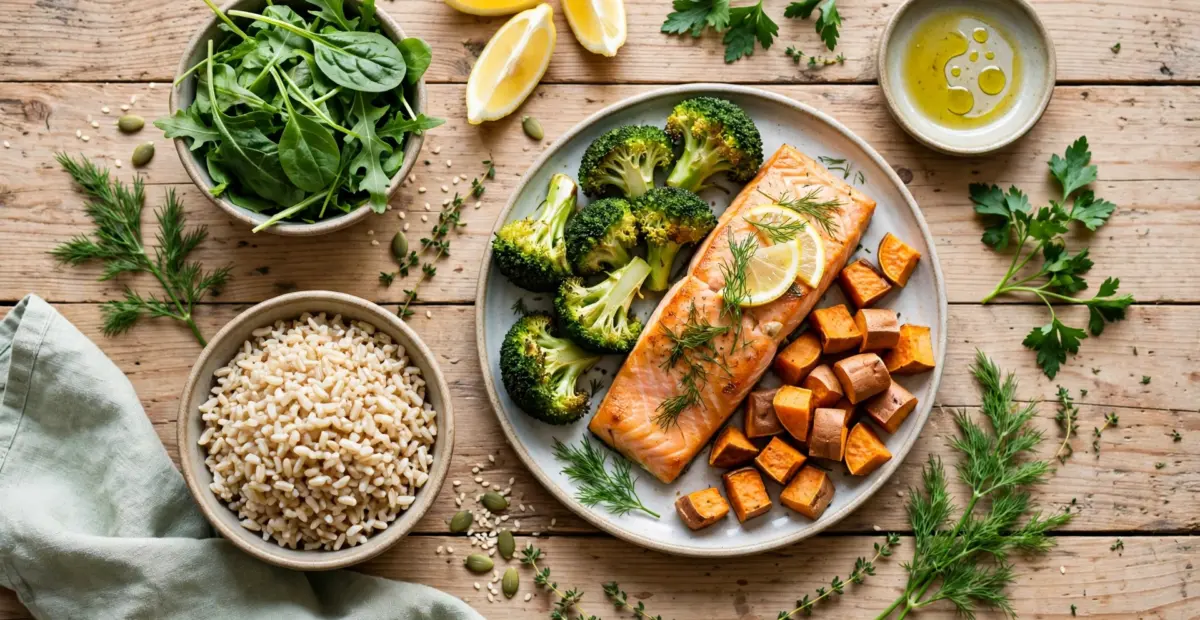
1. Sheet-pan salmon, broccoli, and sweet potato
Toss salmon fillets, broccoli florets, and cubed sweet potato with olive oil, garlic, salt, and pepper, then roast on one tray at a high heat until the fish flakes easily. Sweet potato brings fiber and a starchy base, broccoli covers the vegetable half of the plate, and salmon supplies protein plus unsaturated fats. One tray means one thing to wash, which matters on a Tuesday.
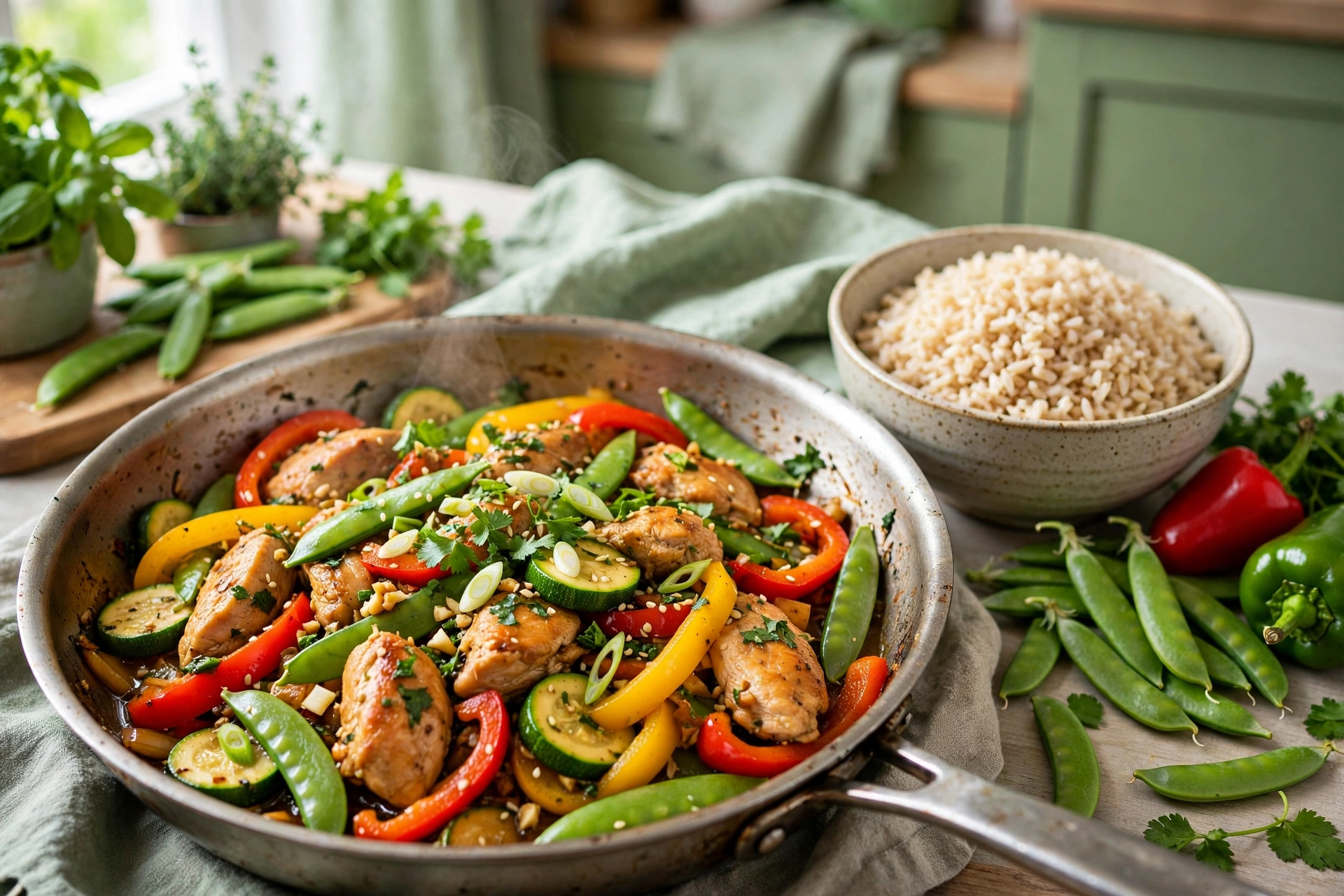
2. Chicken and vegetable stir-fry with brown rice
Stir-fries are weeknight gold because the cooking is fast and the vegetables are flexible. Slice chicken breast thinly so it cooks in minutes, add whatever vegetables you have — peppers, carrots, snap peas, frozen stir-fry mix — and season with garlic, ginger, and a modest splash of soy sauce rather than a sweet sauce. Serve over brown rice you cooked earlier in the week, and you have protein, whole grain, and vegetables in a single bowl.
3. Tofu, edamame, and noodle bowls
Press and cube firm tofu, crisp it in a pan with a little oil, and toss with cooked noodles, shelled edamame, shredded carrot, and cucumber. A dressing of lime juice, a little sesame oil, and grated ginger keeps it bright without loading it with sugar. Tofu and edamame together make the bowl filling without meat, and the raw vegetables add crunch that cooked dinners sometimes lack.
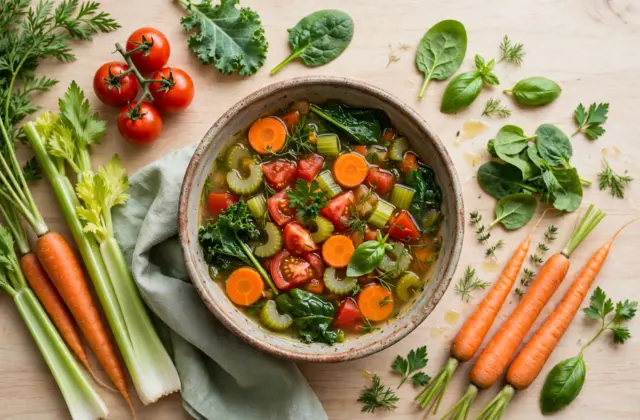
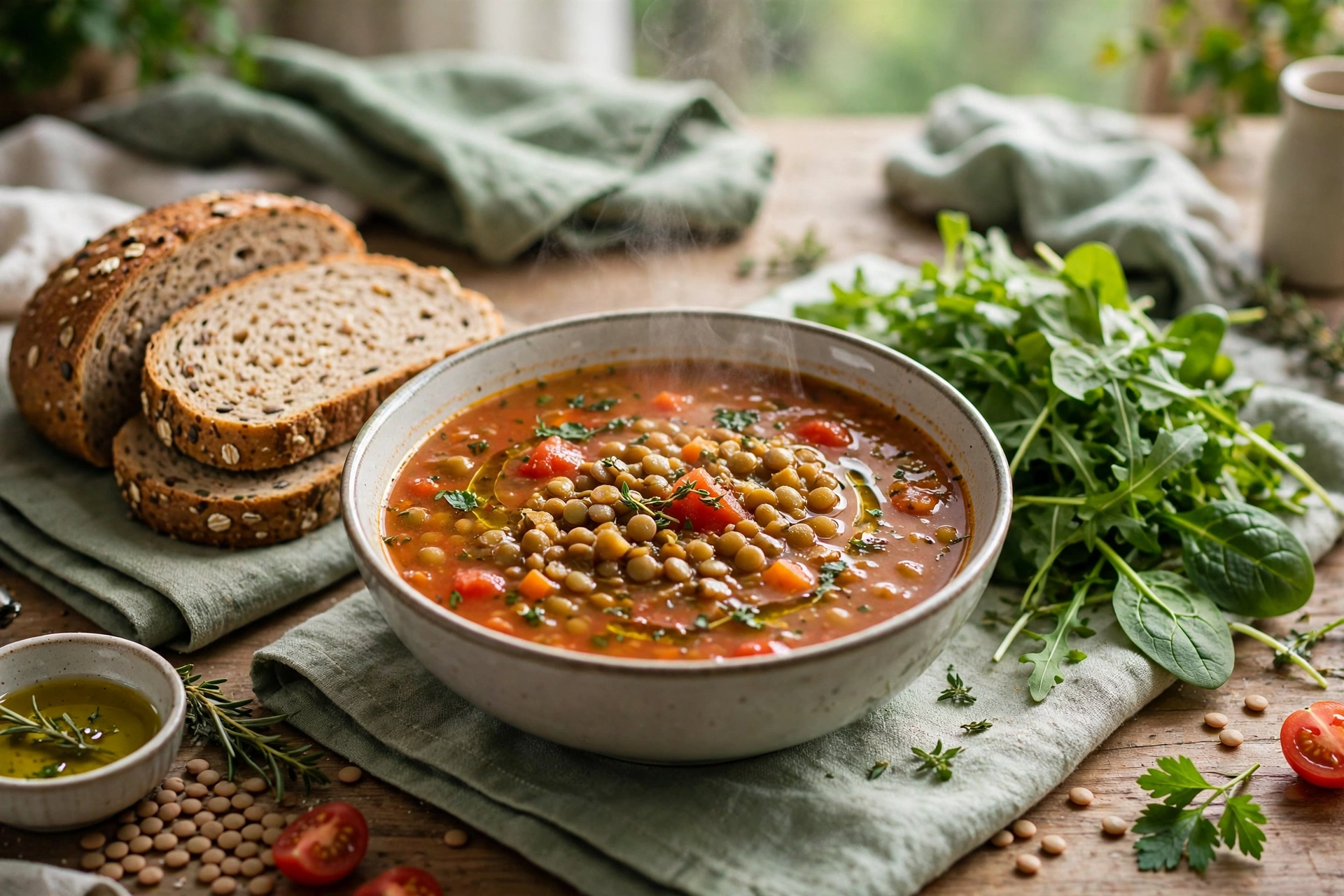
4. Lentil and tomato soup with whole-grain bread
Red lentils are one of the fastest-cooking legumes — no soaking, and they soften in about 20 minutes. Simmer them with onion, carrot, canned tomatoes, garlic, and stock, then blend half the pot for a thicker texture. A cup of cooked lentils provides about 17.9 grams of protein and 15.6 grams of fiber, according to USDA FoodData Central data, so this simple soup is far more substantial than it looks. Serve with whole-grain bread and a handful of leafy greens on the side.
5. Bean and vegetable tacos
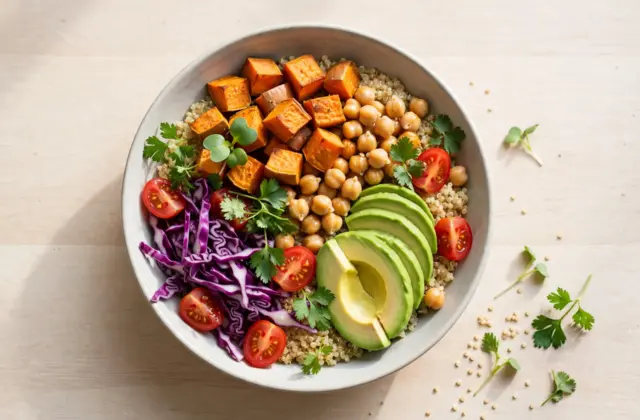
Warm canned black beans with cumin, garlic, and a squeeze of lime, then pile them into corn or whole-wheat tortillas with shredded cabbage, diced tomato, and avocado. Beans bring protein and fiber, cabbage adds crunch and volume for very few calories, and avocado supplies the healthy fat. This is also a good “everyone builds their own” dinner, which helps when family members want different toppings.
6. Egg fried rice with frozen vegetables
Scramble eggs, set them aside, then fry day-old cooked rice with frozen mixed vegetables, spring onions, and a little oil. Stir the eggs back in and season lightly. It is ready in about 15 minutes, it uses up leftovers, and the eggs and vegetables turn plain rice into a complete meal. If you have leftover roast chicken or tofu, toss that in too.
7. Chickpea, spinach, and couscous skillet
Couscous is the fastest grain in this list — it only needs hot water and five minutes under a lid. While it steams, warm canned chickpeas with garlic, spinach, lemon zest, and olive oil in a skillet until the spinach wilts. Spoon the chickpeas over the couscous and finish with a crumble of feta if you like. It is a pantry dinner in the best sense: most of it was already waiting in your cupboard.
Read also: Healthy Dinner Plates: How to Build Them
Pantry shortcuts that keep dinner balanced
Quick dinners are rarely about cooking faster. They are about deciding less. A small set of standbys removes most of the nightly decision-making: frozen vegetables that cook straight from the bag, canned beans and chickpeas, eggs, tofu, canned tuna, whole grains you can batch-cook, and a few sauces that add flavor without much sugar or salt — think olive oil and lemon, salsa, mustard, and herbs.
Frozen vegetables deserve a special mention. They are picked and frozen at peak freshness, they do not wilt in the crisper drawer while you decide what to cook, and they turn a protein-and-grain plate into a balanced one in five minutes. Keep two or three varieties you actually like, not the ones you feel you should like.
Batch-cooking is the other quiet time-saver. A pot of brown rice on Sunday, a tray of roasted vegetables, or a batch of lentil soup can become the base for two or three different dinners. Change the sauce, the protein, or the toppings, and the same base stops feeling like leftovers.
Make one dinner, feed tomorrow’s lunch
Cooking a little extra on purpose is the easiest meal prep there is. If tonight’s stir-fry or grain bowl makes one extra portion, tomorrow’s lunch is already done — no separate cooking session required. Just handle the leftovers safely: the USDA Food Safety and Inspection Service advises refrigerating perishable food within 2 hours of cooking (within 1 hour if the temperature is above 90°F), keeping leftovers in the refrigerator for 3 to 4 days, and reheating them to 165°F, bringing soups, sauces, and gravies to a rolling boil.
Shallow containers help food cool faster, and a quick label with the date saves the “how old is this?” guessing game later in the week. If you will not eat the extra portion within four days, freeze it instead — frozen leftovers keep their best quality for about 3 to 4 months.
Read also: Weekly Meal Planning for Balanced Meals
What to skip when you are tired
On the hardest nights, the goal is a good-enough dinner, not a perfect one. That might mean a simpler version of the formula: eggs on whole-grain toast with a side of cucumber and tomato, or canned soup with added beans and a piece of fruit. A simpler balanced meal beats a skipped meal followed by late-night snacking, and it beats a takeaway habit that leaves you feeling sluggish the next morning.
Watch out for the two traps that quietly unbalance quick dinners: sauces and drinks that add a lot of sugar or salt without you noticing, and portions of refined grains that crowd out the vegetables. You do not need to ban either. Just flip the balance — more vegetables, a smaller mound of rice or pasta, and a sauce used as a seasoning rather than a flood.
Frequently asked questions
How fast can a balanced dinner really be?
Most of the dinners above take 15 to 30 minutes, and the fastest — egg fried rice, chickpea couscous, and bean tacos — can be ready in about 15. The trick is having a cooked grain, a ready protein, and vegetables on hand, so you are assembling rather than starting from zero.
Do frozen vegetables count as part of a balanced dinner?
Yes. Frozen vegetables are a practical way to reach the vegetable half of the plate, especially on nights when fresh produce is running low. Choose plain varieties without added sauces, and cook them just until tender so they keep their texture.
What if I do not eat meat?
The formula works the same way with plant proteins: lentils, beans, chickpeas, tofu, tempeh, and eggs all pair well with whole grains and vegetables. The lentil soup and chickpea skillet above are built around plant proteins and still deliver plenty of protein and fiber.
How do I stop weeknight dinners from getting boring?
Rotate the sauce and the vegetable, not the whole meal. The same chicken, tofu, or beans taste completely different with a lime-and-herb dressing one night and a tomato-and-garlic sauce the next. Two or three sauces you like are often enough to keep a small rotation feeling fresh.
Disclaimer: This article is for general nutrition information only and is not medical advice. If you have a health condition, food allergy, or specific dietary needs, talk with a qualified health professional about what fits you best.
Sources