How to Eat More Vegetables Every Day
Most of us know vegetables are good for us. We have heard it since childhood, we see it on every health poster, and we nod along — and then dinner rolls around and the plate is mostly rice, noodles, or bread, with a small pile of greens pushed to one side. If that sounds familiar, you are in very good company. In the United States, only 10% of adults meet the federal vegetable intake recommendations, according to the CDC’s 2019 survey data published in 2022. The median adult eats vegetables about 1.6 times a day. The gap is not a knowledge problem. It is a habit problem — and habits respond much better to small, practical changes than to grand resolutions.
This guide is about the practical side: how to actually eat more vegetables every day, without turning your kitchen into a project or your meals into a chore. No detox promises, no all-or-nothing rules. Just strategies that fit into the way you already eat.
How Many Vegetables Do You Actually Need?
Before changing anything, it helps to know the target. The World Health Organization recommends at least 400 grams of fruits and vegetables a day — roughly five portions combined. In the United States, the 2025–2030 Dietary Guidelines for Americans suggest about 3 servings of vegetables a day at a 2,000-calorie level, alongside 2 servings of fruit. A serving is not as big as it sounds: one cup of raw leafy greens, half a cup of cooked vegetables, or one medium carrot all count as roughly one serving.
That means the goal is not a mountain of salad at every meal. It is more like a fist-sized portion of vegetables at lunch and dinner, plus one more somewhere in between. Framed that way, it stops feeling impossible.
Read also: Benefits of Eating Many Kinds of Vegetables
Start With Breakfast — Yes, Breakfast
Breakfast is the meal most people write off for vegetables, which is exactly why it is the easiest place to add one. You do not need a green smoothie or a kale omelet if those do not appeal to you. A handful of spinach wilted into scrambled eggs takes about 40 seconds and barely changes the flavor. Sliced tomato or cucumber on toast with eggs adds crunch and color. Leftover roasted vegetables from last night reheat beautifully next to a fried egg.
The point is not to make breakfast a vegetable showcase. It is to stop treating the first meal of the day as a vegetable-free zone. One serving before 9 a.m. means you only need two more for the rest of the day.
Make Vegetables the Default, Not the Side Project
The single most effective change most people can make is also the simplest: put vegetables on the plate first. When you serve dinner, fill half the plate with vegetables before adding the rice, pasta, or protein. This is the classic plate method — half the plate vegetables and fruit, a quarter protein foods, a quarter grains or starchy foods — and it works precisely because it requires no counting, no app, and no willpower at the table. The decision is made once, at serving time.
The same trick works when cooking. Double the vegetables a recipe calls for and keep everything else the same. A stir-fry with two cups of broccoli instead of one does not taste like a different dish; it tastes like the same dish with more to chew on. Pasta sauce with grated carrot and zucchini stirred in is still pasta sauce. Soup with an extra handful of greens is still soup. You are not eating a new diet. You are quietly changing the ratio.
Keep a Few Vegetables That Need No Preparation
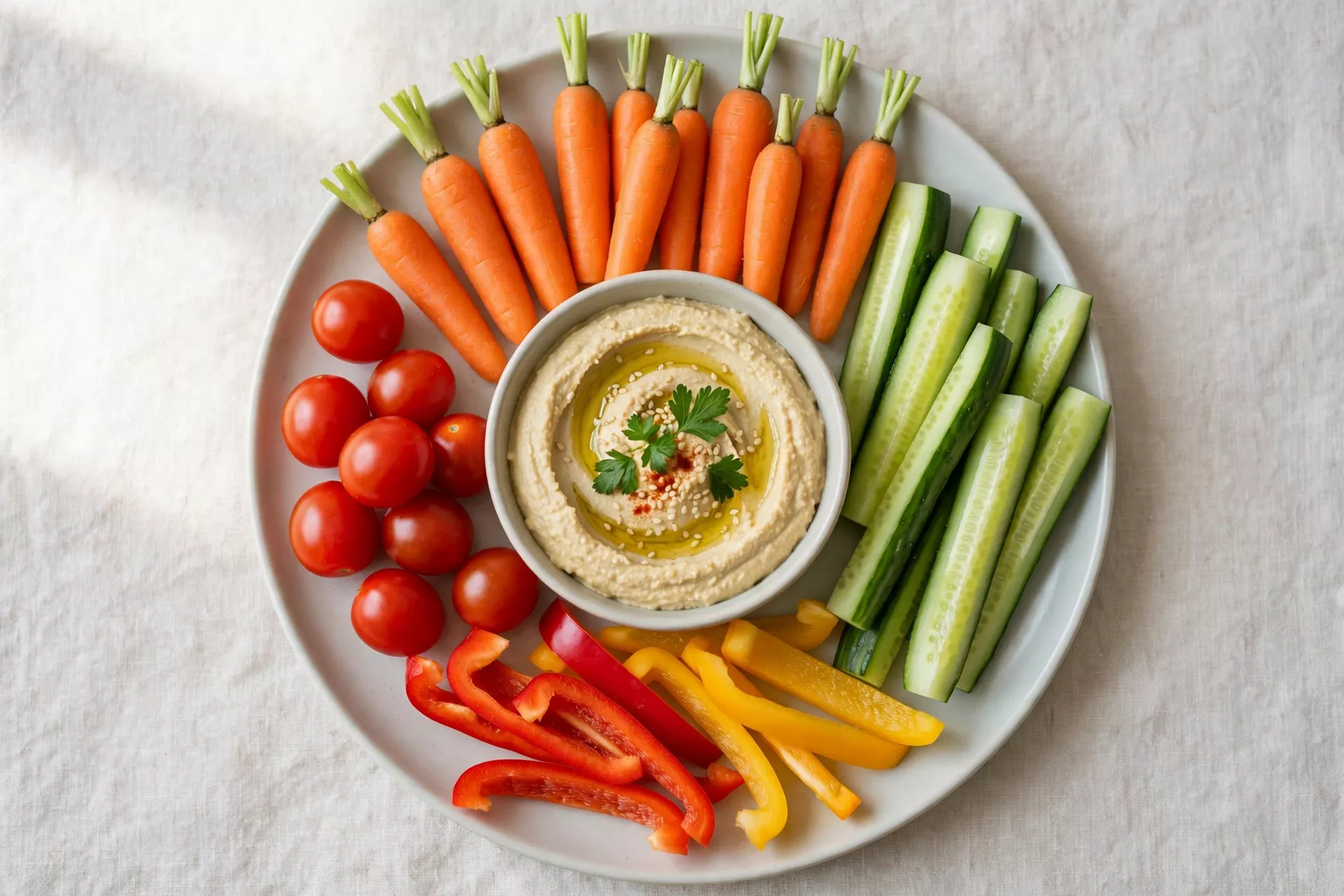
Much of the reason vegetables get skipped is friction. Cooking feels like work when you are tired, and washing and chopping feels like even more work. So keep a small set of vegetables that need nothing at all: baby carrots, cherry tomatoes, cucumber, bell pepper strips, snap peas. Wash them once when you get home from the shop, store them in a container at eye level in the fridge, and they become the easiest snack in the house — easier, in fact, than opening a packet of crackers.
This is also where dips earn their keep. Hummus, yogurt dip, or a simple peanut sauce turns raw vegetables from a chore into something you actually reach for. The dip is not the enemy of the goal; it is the vehicle that gets the vegetables eaten.
Read also: How to Make Vegetables a Bigger Part of Meals
Use Frozen and Canned Vegetables Without Guilt
Fresh produce gets all the praise, but frozen vegetables are often frozen within hours of harvest, which locks in nutrients. Canned vegetables, rinsed to cut the sodium, are perfectly respectable too. The vegetables that count are the ones you actually eat — and a bag of frozen peas you can pour straight into a pan beats the fresh broccoli that wilts in the crisper drawer every single time.
Keep two or three frozen staples on hand: peas, broccoli florets, and a mixed stir-fry bag cover most situations. They turn a plain plate of rice and eggs into a balanced meal in five minutes, with no chopping board involved.
Roast a Big Batch Once a Week
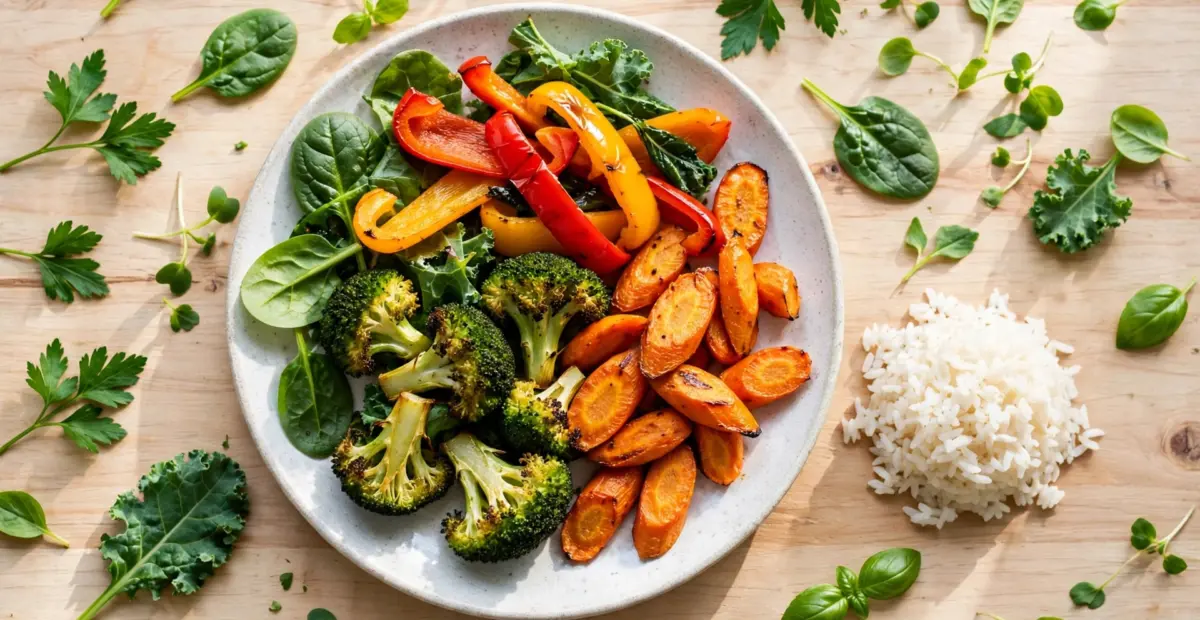
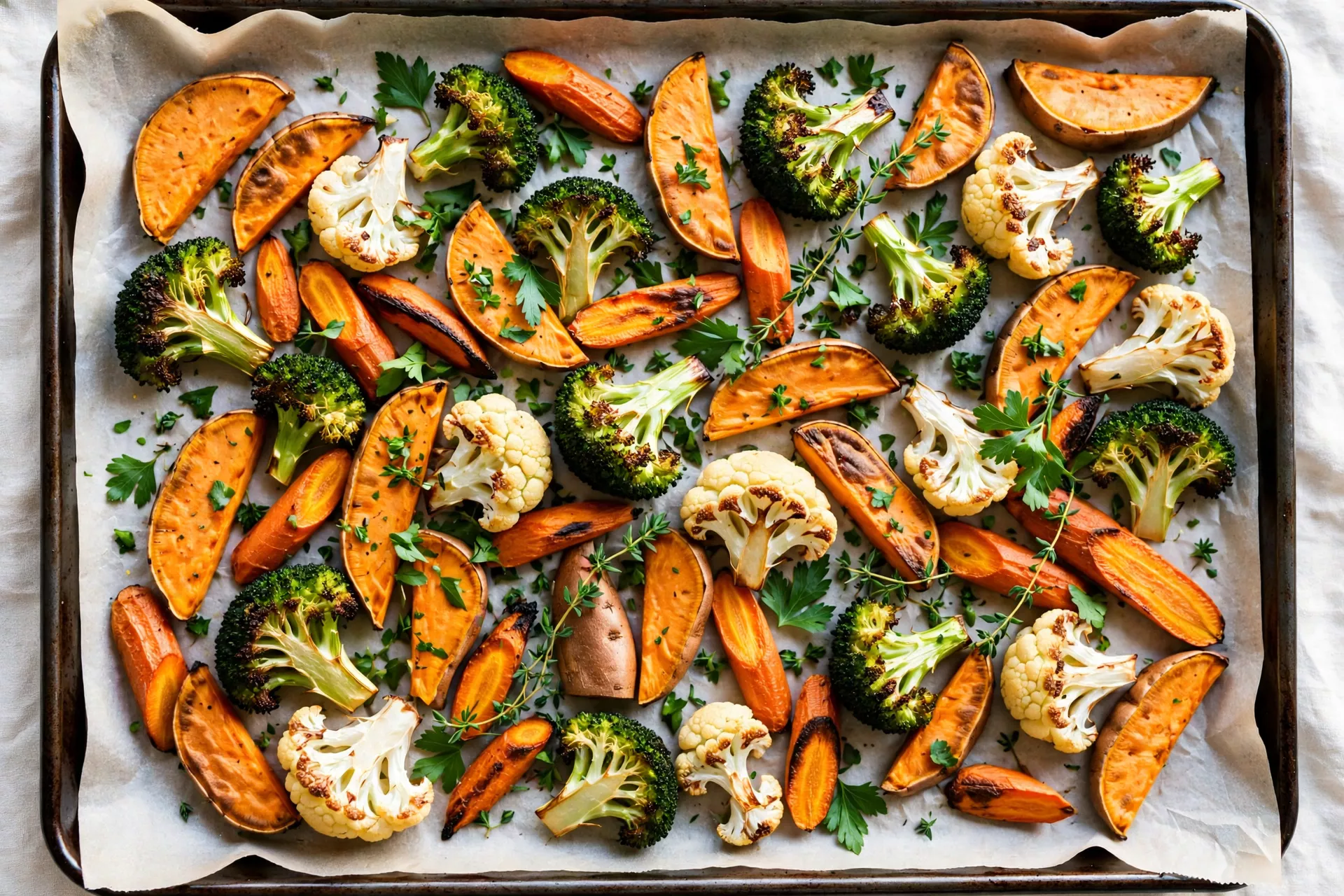
If you do cook, cook in bulk. A tray of roasted sweet potatoes, carrots, cauliflower, and broccoli takes about 30 minutes in the oven, most of it hands-off, and it keeps in the fridge for three to four days. Once it exists, eating vegetables stops being a cooking decision and becomes a serving decision: spoon some onto the plate next to whatever else you are having.
Roasting also solves the taste objection. Raw vegetables can taste bitter or watery to people who grew up on boiled ones. Roasted at a high heat with a little oil and salt, the same vegetables turn sweet at the edges and crisp — genuinely good to eat, not something to endure. If you have ever said you do not like vegetables, it is worth asking whether you have had them roasted. For many people, that is the version that changes their mind.
Hide Them When You Need To — Especially for Kids
There is no rule that vegetables must be visible to count. Blending spinach into a fruit smoothie adds almost no flavor. Grated zucchini disappears into muffins and meatballs. Cauliflower blends into mashed potatoes. Finely chopped mushrooms stretch minced meat in a Bolognese and nobody at the table notices.
This is not cheating. It is a legitimate strategy, especially for children or for adults who genuinely dislike the texture of certain vegetables. Visible vegetables build familiarity over time; hidden ones make sure the nutrients get in today. Use both.
What One Cup of Broccoli Actually Gives You
It is easy to talk about vegetables in the abstract. Here is what a single, ordinary cup of raw broccoli — about 91 grams — actually contains, according to USDA FoodData Central: 31 calories, 2.4 grams of fiber, 81 milligrams of vitamin C (about 90% of the daily value), 92.5 micrograms of vitamin K (about 77% of the daily value), and 288 milligrams of potassium. That is one cup, one vegetable, one serving — and it nearly covers your entire day’s vitamin C.
Fiber is the quieter part of the story. The adequate intake for fiber is about 25 grams a day for women and 38 grams for men, and most people fall well short. Vegetables are one of the easiest ways to close that gap, because they add fiber without adding many calories. A cup of broccoli, a cup of carrots, and a side salad together contribute roughly 7 to 8 grams — a meaningful share of the day’s target from food that also brings vitamins and minerals along for free.
Build the Habit Around Your Existing Meals
The strategies above share one idea: do not build a new eating pattern from scratch. Attach vegetables to meals you already eat. Add spinach to the eggs you already make. Double the vegetables in the stir-fry you already cook. Put the cucumber next to the sandwich you already pack. Roast the tray on the Sunday you already spend at home.
It also helps to shop with the week in mind rather than the day. A short list of vegetables that match the meals you have planned — plus one or two no-prep options for snacking — means the fridge contains what you need when you need it. Running out midweek is one of the most common reasons a good stretch ends.
Read also: How to Build a Weekly Produce Shopping List
A Simple 7-Day Starter Plan
If you like structure, here is one week of small moves. Each day adds one vegetable moment to a meal you already eat:
- Day 1: Add a sliced tomato or cucumber to breakfast.
- Day 2: Fill half your dinner plate with vegetables before adding anything else.
- Day 3: Stir a handful of frozen peas into lunch — rice, noodles, or soup all work.
- Day 4: Snack on baby carrots and hummus instead of crackers.
- Day 5: Roast a tray of vegetables for the next few days.
- Day 6: Blend a handful of spinach into a smoothie or soup.
- Day 7: Try one vegetable you usually skip, cooked a new way — roasted, grilled, or stir-fried.
None of these steps is dramatic on its own. Together, they add up to several extra servings a day — which, for most people, is the difference between falling short and meeting the target.
Frequently Asked Questions
Do frozen vegetables count toward my daily intake?
Yes. Frozen vegetables are typically frozen soon after harvest, which helps preserve their nutrients, and they count the same as fresh toward your daily servings. Canned vegetables count too, though rinsing them first helps reduce sodium.
How many servings of vegetables should I eat per day?
The World Health Organization recommends at least 400 grams of fruits and vegetables combined per day. In the United States, the 2025–2030 Dietary Guidelines suggest about 3 vegetable servings a day at a 2,000-calorie level. One serving is roughly 1 cup of raw leafy greens or half a cup of cooked vegetables.
Is it okay if I don’t like the taste of vegetables?
Yes — taste preferences are common and they can change. Roasting, grilling, and stir-frying transform flavor and texture, and adding dips, sauces, or cheese helps too. Blending vegetables into smoothies, soups, and sauces is a legitimate way to get their nutrients while your palate adjusts.
Can I eat too many vegetables?
For most people, eating more vegetables is not a problem. A sudden large increase in fiber can cause temporary bloating, so it is sensible to add servings gradually and drink enough water. If you take blood-thinning medication, talk to your clinician before sharply increasing foods very high in vitamin K, such as kale and collard greens.
The Bottom Line
Eating more vegetables every day does not require a new identity, a new diet, or a new set of kitchen skills. It requires a few small changes to meals you already eat: one serving at breakfast, half a plate at dinner, a batch roasted on the weekend, and a bag of frozen peas in the freezer for the nights when cooking feels like too much. The research is clear that most of us are falling short — only about 1 in 10 American adults meets the vegetable recommendation — but the fix is measured in handfuls, not overhauls. Start with one extra serving tomorrow. That is already progress.
Disclaimer: This article is for general nutrition information only and is not medical advice. If you have a medical condition or take medication affected by diet, talk to your doctor or a registered dietitian before making significant changes to what you eat.
Sources
- World Health Organization — Healthy Diet
- Centers for Disease Control and Prevention — Adults Meeting Fruit and Vegetable Intake Recommendations, United States, 2019 (MMWR 2022)
- U.S. Department of Agriculture & U.S. Department of Health and Human Services — Dietary Guidelines for Americans, 2025–2030
- USDA FoodData Central — Broccoli, raw (FDC ID 170379)
- Academy of Nutrition and Dietetics — Position on the Health Implications of Dietary Fiber (Adequate Intake: 25 g/day women, 38 g/day men)