How to Build a Weekly Produce Shopping List
You know the scene: it is Thursday, the fridge holds half a cucumber, two tired carrots, and a bag of spinach that has quietly turned to soup. Dinner is twenty minutes away and there is nothing to cook with. The problem usually is not willpower. It is the shopping list — or the lack of one.
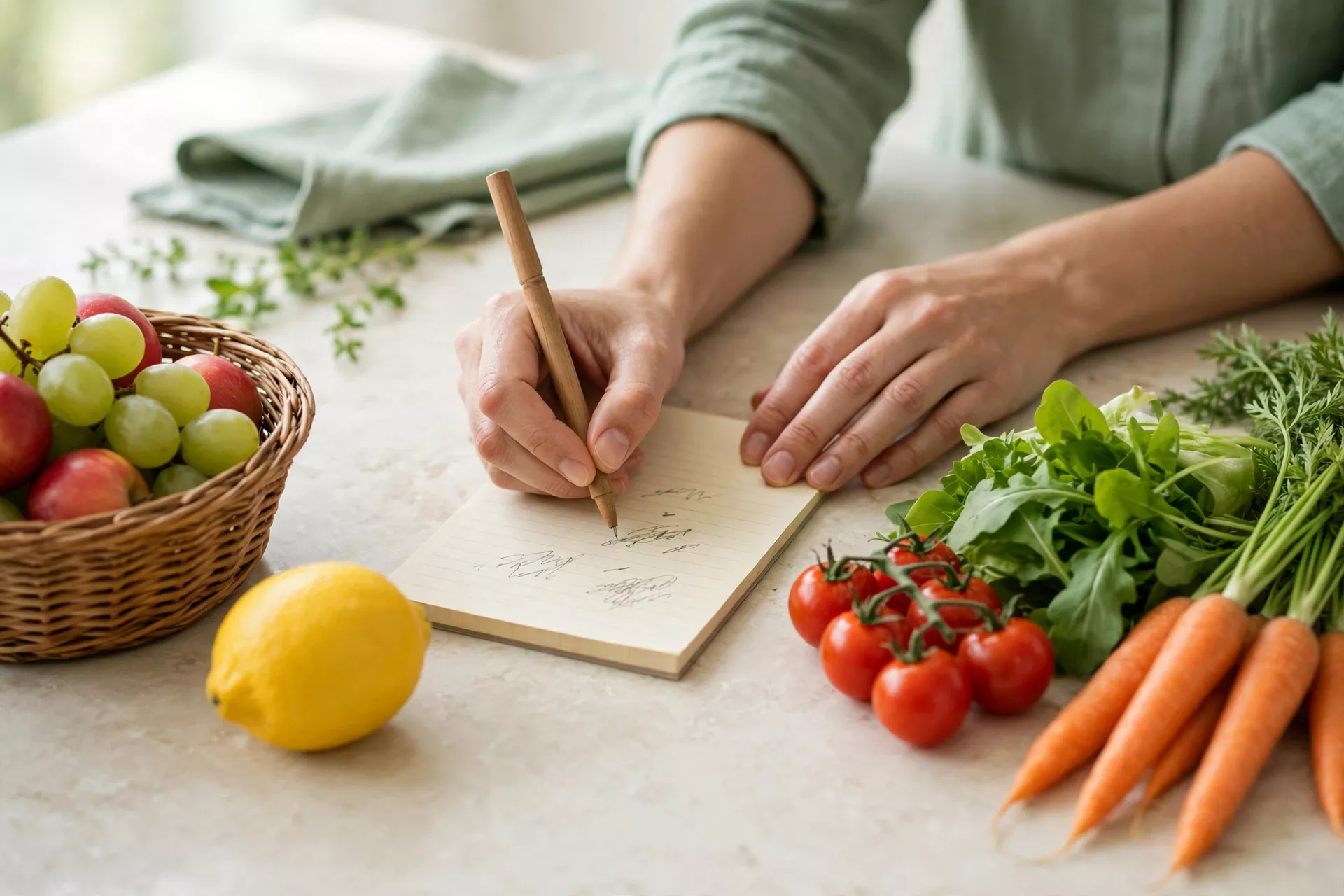
A weekly produce list is a small habit with an outsized payoff. It turns “eat more vegetables” from a vague intention into a concrete plan, it cuts the number of times you wander the store guessing, and it keeps good food from rotting in the crisper drawer. You do not need a spreadsheet or a meal-planning app. You need fifteen minutes, a pen, and a rough idea of what your week actually looks like.
Start with how much produce you actually need
Before you list a single item, it helps to know the target. The current Dietary Guidelines for Americans (2025–2030) recommend three servings of vegetables and two servings of fruit a day as part of a 2,000-calorie eating pattern. One serving of vegetables is a cup of raw or cooked vegetables, or two cups of leafy greens; one serving of fruit is a cup of raw fruit or half a cup of dried fruit.
That sounds like a lot until you spread it across the week: for one person, roughly 21 vegetable servings and 14 fruit servings. For a household of two, double it. Most of us are nowhere near that — a CDC analysis of 2019 survey data found only 12.3% of American adults met the fruit recommendation and only 10.0% met the vegetable recommendation. The median adult ate fruit once a day and vegetables about 1.6 times a day. A weekly list is the simplest way to close that gap, because what gets written down tends to get eaten.
Do not aim for perfection in week one. Aim for a list that is a little more ambitious than last week’s cart, and build from there.
The five parts of a weekly produce list
A list that works has a structure. Think of it in five parts, and fill each one before you shop:
1. Everyday staples. The workhorses you use in almost every meal: onions, garlic, carrots, celery, potatoes or sweet potatoes, lemons, and a bag of salad greens. These keep well, they go with nearly everything, and running out of them is what sends you back to the store midweek.
2. One or two vegetables for each dinner. Look at your week and assign a vegetable to each evening meal you will cook at home. Monday: broccoli for the stir-fry. Tuesday: green beans with the chicken. If a night has no vegetable planned, it probably will not have one on the plate either.
3. Fruit for breakfast and snacks. Bananas, apples, berries, citrus, grapes — whatever your household actually reaches for. Fruit that sits in a bowl on the counter gets eaten; fruit buried at the back of the fridge does not.
4. One thing in season. Seasonal produce is usually cheaper, tastes better, and needs less coaxing to be delicious. In summer that might be tomatoes and stone fruit; in winter, citrus and root vegetables. You do not need a seasonal chart memorised — just notice what is abundant and well-priced when you walk in.
5. One thing new. A vegetable you have never cooked, or a fruit you usually pass by. One new item a week keeps meals interesting and slowly widens the range of foods your household enjoys. Fennel, kohlrabi, persimmons, jicama — pick one and look up a single simple recipe before you shop.
Build the list in fifteen minutes
Here is a routine that works for most households. Do it on the same day each week, before you shop:
Step 1: Check what you already have (3 minutes). Open the fridge and the fruit bowl. Write down what is still good and what needs using up first. Half a cabbage and two bell peppers are the start of a stir-fry, not waste.
Step 2: Sketch the week’s meals (5 minutes). You do not need a full menu. Just note which nights you will cook, which nights are takeout or leftovers, and how many lunches need packing. Count the meals, then count the produce each one needs. Four home-cooked dinners means four vegetables, plus salad greens, plus breakfast fruit.
Step 3: Write the list by store section (5 minutes). Group items the way the store is laid out — leafy greens together, root vegetables together, fruit together. A list ordered like the store means fewer backtracks and fewer forgotten items.
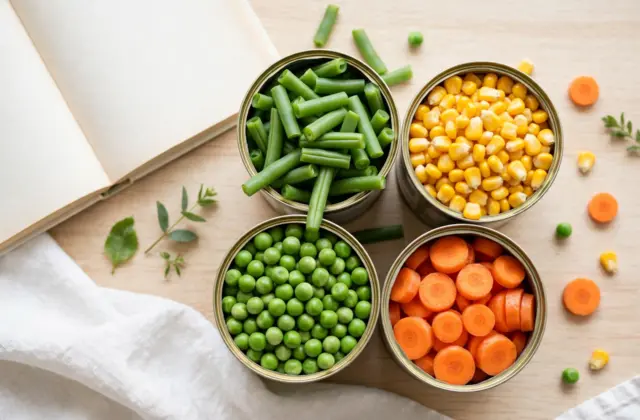
Step 4: Add a frozen backup (2 minutes). Frozen peas, broccoli, spinach, and berries are picked and frozen at peak ripeness, and they keep for months. Put one or two frozen items on every list. They are your insurance for the night the fresh produce runs out or the week goes sideways.
Read also: How to Create a Healthy Grocery List
A sample list for one week
For one adult cooking most dinners at home, a week of produce might look like this:
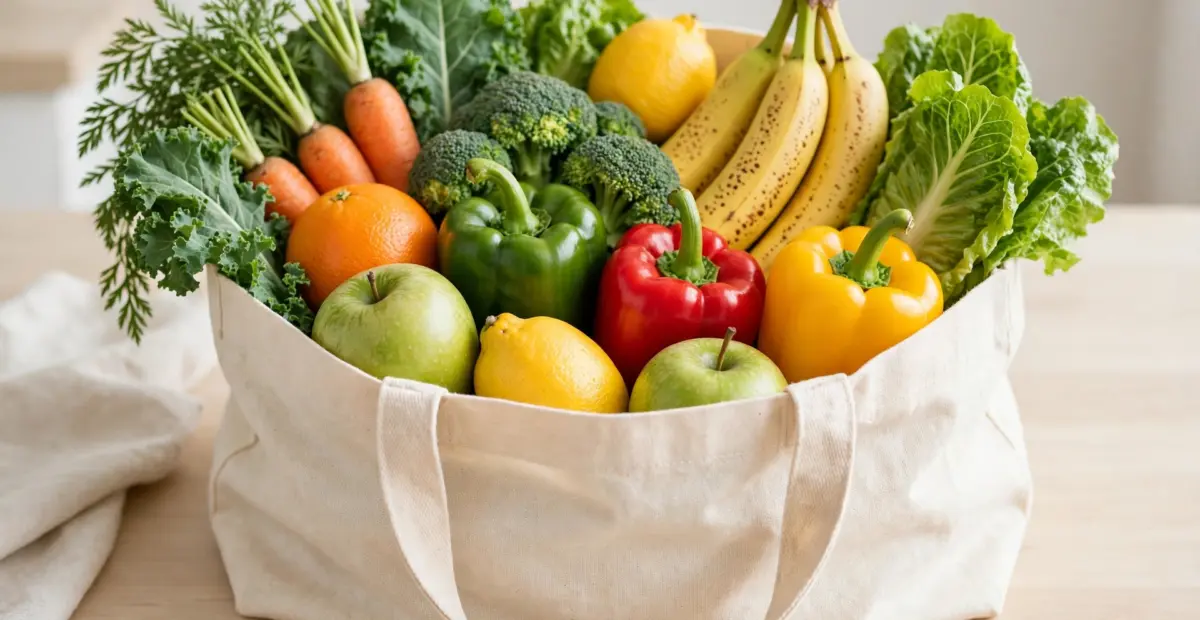
Staples: 1 bag salad greens, 2 onions, 1 head garlic, 1 bag carrots, 1 bunch celery, 3 potatoes, 2 lemons.
Vegetables for dinners: 1 head broccoli, 1 lb green beans, 2 bell peppers, 1 zucchini, 1 cucumber, 1 bunch asparagus, 1 bag frozen peas.
Fruit: 1 bunch bananas, 4 apples, 1 pint berries, 2 oranges, 1 bag frozen berries.
In season: whatever looks best that week — say, 3 tomatoes and a bunch of basil in summer, or a butternut squash in autumn.
Something new: 1 fennel bulb, to shave into a salad.
That is roughly 15 vegetable servings and 14 fruit servings across the week — close to the daily targets, with frozen backups covering the gaps. Scale the quantities up for a family, and keep the same five-part shape.
Fresh, frozen, or canned: let the week decide
Fresh produce is wonderful, but it is not the only way to hit your servings. Frozen vegetables are just as nutritious as fresh ones and they wait patiently in the freezer. Canned beans, tomatoes, and corn are pantry staples that turn a thin week into a full one. The smartest lists mix all three: fresh for salads and snacking, frozen for stir-fries and soups, canned for the nights you have no time at all.
The one thing to watch on canned and frozen items is the label. Choose frozen vegetables without added sauces, and canned items labelled “no salt added” when you can. A quick glance at the sodium line is usually enough.
Read also: Fresh, Frozen, or Canned Produce: How to Compare
Store it so you actually eat it
A good list fails in the fridge. Produce that is stored badly spoils fast, and spoiled food is food you paid for and never ate. A few habits make a real difference:
Do not wash produce until you are about to use it. Extra moisture speeds up spoilage. Wash berries, greens, and mushrooms just before eating.
Keep the fridge cold. Perishable produce belongs in a refrigerator at 40°F (4°C) or below, according to the U.S. Food and Drug Administration. If your fridge feels warm, the produce will tell you first.
Separate the ethylene producers. Apples, bananas, avocados, pears, and tomatoes release ethylene gas, which speeds ripening — and aging — in nearby produce. Keep them away from ethylene-sensitive items like leafy greens, broccoli, and cucumbers, ideally in separate drawers.
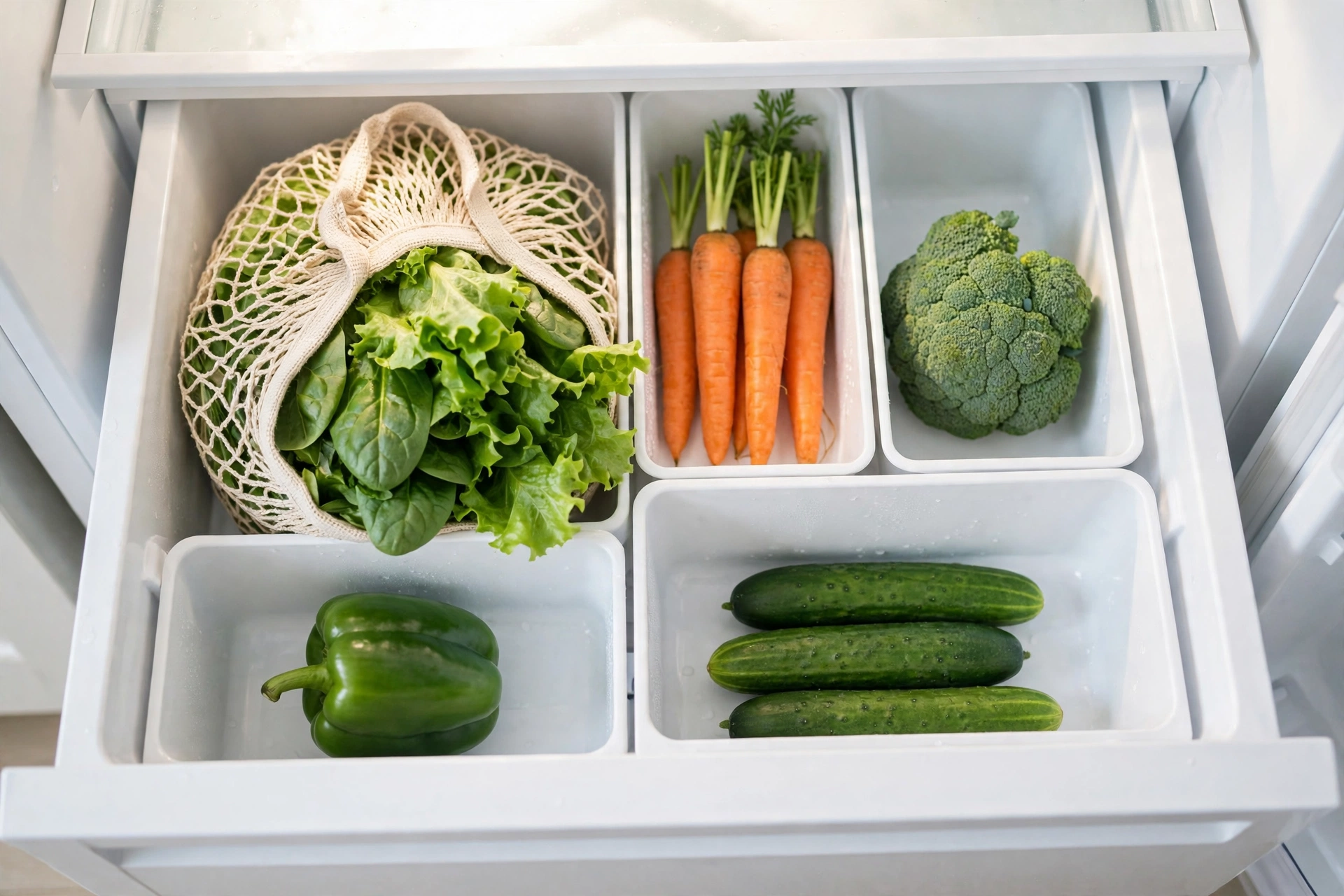
Use the crisper drawers properly. High-humidity drawers (vent closed) suit leafy greens, broccoli, carrots, and peppers. Low-humidity drawers (vent open) suit apples, citrus, and other fruit. Potatoes, onions, and garlic prefer a cool, dark, dry spot outside the fridge — and potatoes and onions should be stored apart.
Put the “eat first” items where you can see them. A small container at eye level holding berries, cut vegetables, or greens opened yesterday gets eaten. The same food at the back of a drawer gets discovered a week later, past saving.
Read also: How to Prep Produce for the Week
Why the list also cuts waste
Food waste is not just an environmental issue; it is money leaving your kitchen in a bin bag. The U.S. Department of Agriculture estimates that 30 to 40 percent of the food supply is lost or wasted, and its Economic Research Service puts the retail and consumer share at about 31 percent — roughly 133 billion pounds of food, worth about $161 billion, in 2010. At home, the biggest causes are buying more than we need and letting fresh food spoil before we use it.
A weekly list attacks both causes at once. You buy what the week needs, you use what you bought because the meals are already planned, and the frozen backup means a skipped cooking night does not turn into a drawer full of wilted greens. If something does start to fade, cook it: soft tomatoes become sauce, wilting spinach goes into soup or eggs, and overripe bananas belong in the freezer for smoothies.
Make it yours
The best produce list is the one you will actually use, so shape it to your life. If you shop twice a week, make two shorter lists. If you cook for one, halve the quantities and lean harder on frozen. If your household is picky, build the list around the five vegetables everyone will eat and add one new item a week, not five.
Keep last week’s list. Cross out what went uneaten, circle what disappeared fast, and adjust. After three or four weeks you will have a list that almost writes itself — and a fridge that finally matches the way you actually eat.
Frequently asked questions
How much produce should one person buy per week?
For one adult, aim for roughly 21 vegetable servings and 14 fruit servings a week — three vegetable servings and two fruit servings a day, as recommended by the Dietary Guidelines for Americans 2025–2030 for a 2,000-calorie pattern. In practical terms that is about 3–4 pounds of vegetables and 2–3 pounds of fruit, plus frozen backups.
Is frozen produce as good as fresh?
Yes. Frozen fruits and vegetables are frozen at peak ripeness, which locks in their nutrients, and they keep for months. They are an excellent backup for nights when fresh produce runs out, and they reduce waste because they do not spoil in the drawer.
How do I keep produce from going bad before I use it?
Store perishables in the fridge at 40°F (4°C) or below, do not wash produce until just before use, keep ethylene-producing fruit away from sensitive vegetables, and put items that need eating first where you can see them. Use the USDA’s FoodKeeper app for storage times for specific foods.
What if my family will not eat many vegetables?
Start with the vegetables they already like and build the list around those. Add one new item a week in a small amount, prepared in a familiar way — roasted with olive oil, blended into soup, or mixed into a dish they enjoy. Variety grows gradually; forcing five new vegetables at once usually backfires.
Sources
- Oklahoma State University Extension — The New Dietary Guidelines for Americans (2025–2030)
- American Heart Association — What Is a Healthy Diet? Recommended Servings
- Centers for Disease Control and Prevention — Adults Meeting Fruit and Vegetable Intake Recommendations, United States, 2019 (MMWR 2022)
- U.S. Department of Agriculture — Food Waste FAQs
- U.S. Food and Drug Administration — Food Loss and Waste
- Wisconsin Department of Natural Resources — Reducing Food Waste at Home
This article is for general information only and is not a substitute for personalised dietary advice. If you have a medical condition or specific dietary needs, talk with your clinician or a registered dietitian.