How to Make Vegetables a Bigger Part of Meals
Most of us know vegetables matter. Few of us eat enough of them. If your plate is mostly rice, noodles, or bread with a small side of greens pushed to the edge, you are in very good company — and the fix is simpler than a diet overhaul. You don’t need a new eating philosophy. You need a few reliable ways to make vegetables a bigger part of meals you already cook and enjoy.
This guide is practical, not preachy. No bland steamed broccoli sermons. Just concrete moves that work at breakfast, lunch, and dinner, plus what the guidelines actually say you should aim for.
How many vegetables do you actually need?
The World Health Organization recommends that everyone over 10 years old eat at least 400 grams of fruits and vegetables a day — roughly five portions of 80 grams each, with at least 25 grams of naturally occurring fiber from food. The current Dietary Guidelines for Americans (2025–2030) put it in servings instead: three servings of vegetables and two of fruit a day as part of a 2,000-calorie pattern. One serving is a cup of raw or cooked vegetables, or two cups of raw leafy greens.
Almost nobody hits the target. A CDC analysis of 2019 survey data from nearly 295,000 American adults found that only 10.0% met the vegetable recommendation, and 12.3% met the fruit recommendation. A large analysis published in Circulation in 2021 (Wang and colleagues) found the lowest risk of early death at around five servings a day — two of fruit and three of vegetables — with no clear extra benefit beyond that. The takeaway is encouraging: you don’t need ten servings. You need a few more than you eat now.
Start with the plate, not the recipe
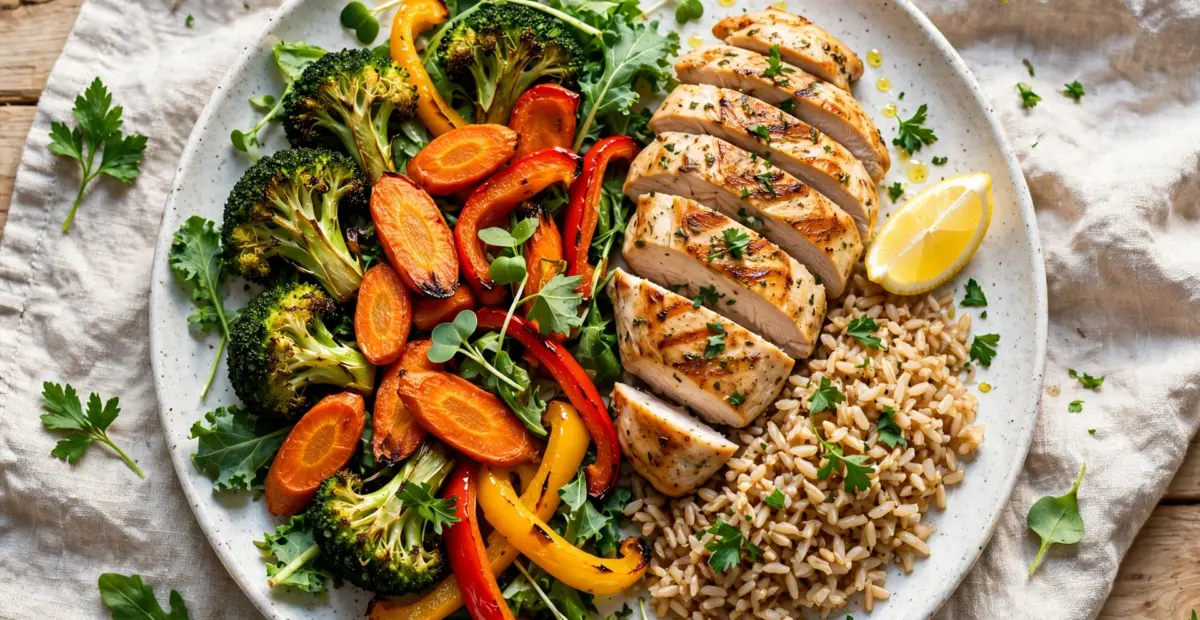
The easiest change is a visual one. Before you cook anything new, change the proportions on the plate you already serve. The classic plate method — half the plate vegetables and fruit, a quarter protein, a quarter starchy foods — gives you a target you can see without weighing anything.
Try it for one week. Serve the same chicken, the same rice, the same noodles. Just shrink the starch portion slightly and fill the freed space with whatever vegetables are in the fridge. Most people find the meal still feels complete, because the plate still looks full. The vegetables do the filling work that the extra rice used to do, and they bring fiber, potassium, and volume for very few calories.
If half a plate feels like too much at once, start with a third. A third is still a real improvement over a garnish, and it gives your taste buds time to adjust.
Read also: How to Build a Balanced Plate
Add vegetables to meals you already make
The fastest way to eat more vegetables is to stop treating them as a separate dish. Fold them into food that is already on the table.
Breakfast. Eggs are the easiest vehicle. A handful of spinach wilts into scrambled eggs in under a minute. Mushrooms, diced peppers, and tomatoes turn an omelet into a full serving of vegetables before 9 a.m. If you eat toast, top it with sliced tomato and cucumber, or mashed avocado with a few leaves of rocket.
Pasta and noodles. This is where most people can add a whole serving without noticing. Stir grated zucchini or carrot into tomato sauce — they soften and disappear into the texture. Toss frozen peas, sweetcorn, or edamame into noodle dishes in the last two minutes of cooking. Add a big handful of baby spinach to hot pasta and let the residual heat wilt it.
Soups and stews. Soup forgives everything. Double the carrots, celery, and onion in any soup base. Add a can of diced tomatoes, a bag of frozen mixed vegetables, or a few handfuls of kale near the end. A soup that started as mostly broth and noodles becomes a genuine vegetable serving.
Sandwiches and wraps. A sandwich with one thin slice of tomato is a missed opportunity. Layer cucumber, shredded carrot, lettuce, and peppers until the filling is taller than the bread. Wraps are even better — the filling is the meal, so vegetables can take up most of the space.
Stir-fries and curries. These dishes are built for vegetables. Keep the protein and sauce the same, but increase the vegetables by half and cut the rice slightly. Broccoli, snap peas, bell peppers, and green beans all cook in the same time as the protein.
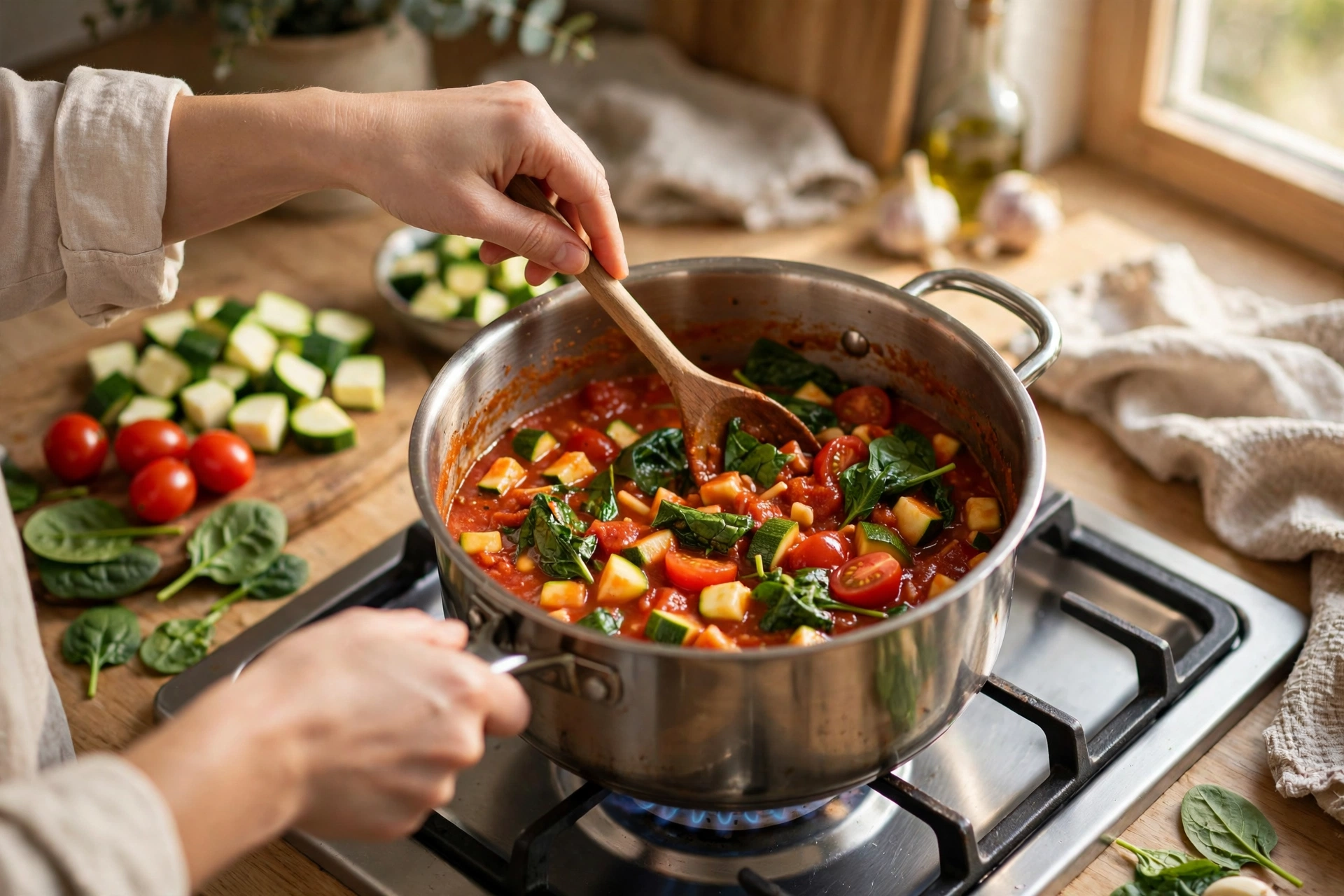
Make vegetables the easy choice
Willpower loses to convenience every time. The trick is to make vegetables easier to grab than the alternatives.
Prep once, eat all week. Spend twenty minutes after the weekly shop washing and chopping: carrot sticks, cucumber rounds, pepper strips, and a box of mixed salad leaves. Store them in clear containers at eye level in the fridge. When vegetables are already cut, they end up in lunchboxes, on sandwiches, and beside dinner without a decision.
Keep frozen vegetables stocked. Frozen peas, broccoli, spinach, and mixed vegetables are nutritionally comparable to fresh — they are frozen at peak ripeness — and they never go limp in the crisper drawer. A bag in the freezer means you always have a vegetable to add to a meal, even on a night when the fridge is nearly empty. The WHO notes that frozen and canned vegetables count toward your daily total, as long as canned options have no added sugar or excess sodium.
Put vegetables where you can see them. A fruit bowl on the counter works because it is visible. Do the same for vegetables: cherry tomatoes on the counter, a jar of pickled carrots in the fridge door, a bag of snap peas at the front of the shelf. Out of sight is out of mind, and out of mind is out of the meal.
Read also: How to Prep Produce for the Week
Flavor first: make vegetables taste good
Let’s be honest about why many people skip vegetables: the way they were served was boring. Steamed, unseasoned, and slightly soggy is a hard sell. Roasting changes the equation entirely.
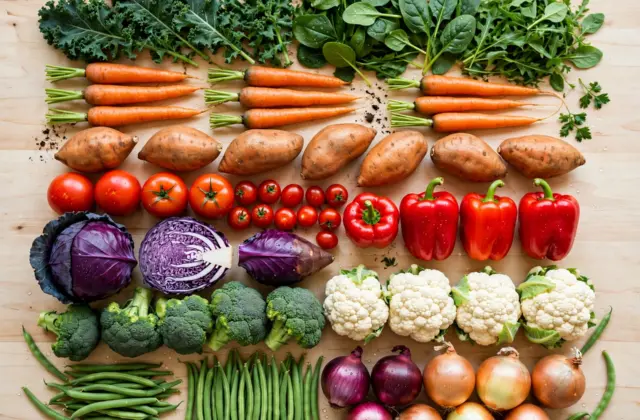
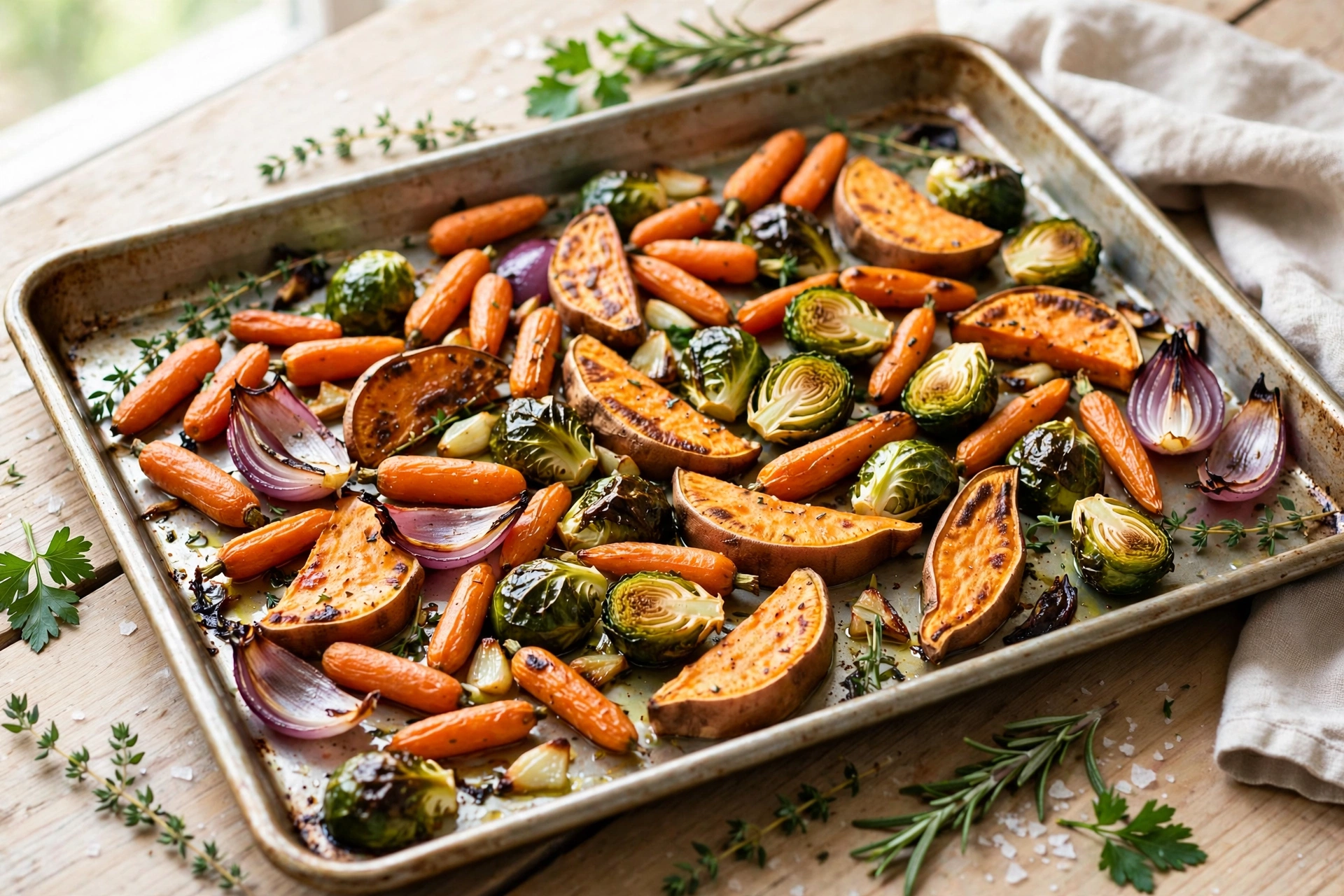
Toss vegetables in a little olive oil, spread them in a single layer on a sheet pan, and roast at 200°C (400°F) until the edges caramelize — about 25 minutes for carrots, sweet potatoes, and Brussels sprouts. The natural sugars brown, the texture turns crisp at the edges and soft inside, and the result tastes like a different food from the boiled version.
Season boldly. Garlic, lemon zest, chili flakes, cumin, smoked paprika, soy sauce, and fresh herbs all belong on vegetables. A squeeze of lemon and a pinch of salt at the end wakes up green beans and broccoli. A spoonful of hummus, yogurt dip, or peanut sauce makes raw vegetables something you actually reach for.
And if one vegetable doesn’t appeal to you, drop it and move on. There are dozens of vegetables, and liking five of them is plenty. Nobody needs to love kale to eat well.
A day of bigger vegetable portions
Here’s what a day looks like when vegetables quietly take up more space — no special recipes, no extra cooking time:
Breakfast: scrambled eggs with spinach and mushrooms, plus a slice of whole-grain toast with tomato.
Lunch: a grain bowl or wrap with chicken, brown rice, and a double portion of cucumber, shredded carrot, and peppers.
Snack: carrot sticks and cucumber with hummus, or a handful of cherry tomatoes.
Dinner: a stir-fry or sheet-pan meal where vegetables fill half the plate, with a smaller portion of rice or noodles beside it.
That day easily clears three servings of vegetables, and none of it required a new skill or a special trip to the store. It required a few extra handfuls at meals you were already eating.
What if fresh vegetables are expensive or hard to find?
Fresh produce is not the only way. Frozen vegetables are often cheaper per serving and waste nothing. Canned tomatoes, beans, and corn are pantry staples that count — just check the label and choose versions with no added sugar and lower sodium, and rinse canned beans before using them. Seasonal vegetables are usually the cheapest fresh option, so let the season choose for you: cabbage and root vegetables in the colder months, tomatoes and zucchini in the warmer ones.
Buying a big bag of carrots, a head of cabbage, and a bag of frozen peas costs less than most single takeout sides, and it covers several days of meals.
Read also: How to Add More Vegetables to Your Meals
Frequently asked questions
Do frozen and canned vegetables count toward the daily target?
Yes. The WHO counts fresh, frozen, and canned vegetables toward the 400-gram daily target, as long as canned versions have no added sugars and are not loaded with sodium. Frozen vegetables are typically frozen soon after harvest, so they keep most of their nutrients.
Does vegetable juice count?
Only partly. Juice lacks the fiber of whole vegetables, and the WHO advises limiting free sugars, which fruit and vegetable juices contain. A small glass of 100% vegetable juice can contribute, but it should not replace whole vegetables.
How do I get kids to eat more vegetables?
Start with vegetables they already tolerate, served in a form they like — roasted carrots with a dip, sweetcorn in pasta, or vegetables blended into a sauce. Let them choose one vegetable at the shop. Repeated, low-pressure exposure works better than bargaining at the table.
Is it okay to eat the same vegetables every day?
Yes — eating any vegetables daily beats eating none. Variety is still worth aiming for over the week, because different vegetables offer different nutrients, but a reliable rotation of five or six favorites is a perfectly good foundation.
The bottom line
You don’t need a new diet to eat more vegetables. You need vegetables to take up more space in the meals you already make: a bigger share of the plate, an extra handful in the pasta, a bag of frozen peas in the freezer, and a sheet pan in a hot oven. Start with one change — the plate, the pasta, or the prep — and let it stick before adding the next. Three servings a day is the goal, and most of us are only one or two handfuls away.
This article is for general information only and is not a substitute for personalized medical or dietary advice. If you have a medical condition or specific dietary needs, talk to your clinician or a registered dietitian.
Sources
- World Health Organization — Healthy diet (at least 400 g of fruits and vegetables per day; at least 25 g of naturally occurring fiber)
- Dietary Guidelines for Americans, 2025–2030 (3 servings of vegetables and 2 servings of fruit per day at a 2,000-calorie pattern)
- Lee SH, Moore LV, Park S, Harris DM, Blanck HM — Adults Meeting Fruit and Vegetable Intake Recommendations, United States, 2019 (MMWR 2022;71:1–9) (10.0% of adults met the vegetable recommendation; 12.3% met the fruit recommendation)
- Wang DD, et al. — Fruit and Vegetable Intake and Mortality (Circulation, 2021) (lowest mortality risk at around five servings per day: two of fruit, three of vegetables)