Common Myths About Hydration

Somewhere between the water bottle on your desk and the advice from your aunt, hydration picked up a lot of folklore. Drink eight glasses a day or your kidneys will quit. Coffee doesn’t count — it actually dehydrates you. Wait until you’re thirsty and it’s already too late. Most of these rules sound confident. Very few of them survive a look at the research.
That’s not to say hydration doesn’t matter. It does — water carries nutrients, regulates temperature, and keeps your joints and digestion working. But the gap between what your body actually needs and what the internet tells you to drink is wide, and closing it mostly means unlearning a few stubborn myths.
Myth 1: Everyone needs eight glasses of water a day
The “8 x 8” rule — eight 8-ounce glasses, about 1.9 litres — is probably the most repeated health number in existence. It also has no study behind it. In 2002, kidney specialist Heinz Valtin reviewed the entire literature looking for the origin of the advice and found no scientific evidence supporting it for healthy adults. The likely source is a 1945 Food and Nutrition Board recommendation of about 1 millilitre of water per calorie of food — roughly 2 to 2.5 litres a day for most adults. The part everyone forgot: the Board said most of that water would come from food.
Modern guidance doesn’t use a glass count at all. The US National Academies set an adequate intake for total water — drinks plus food — of 3.7 litres a day for men and 2.7 litres for women, with roughly 20 percent of that coming from food. That leaves about 3 litres from drinks for men and 2.2 litres for women. Europe’s food safety authority (EFSA) lands lower, at 2.5 litres total for men and 2 litres for women. Neither body claims a single number fits everyone: heat, exercise, illness, pregnancy, and plain body size all shift the target.
So eight glasses isn’t wrong for many people — it’s just not a rule. For some it’s more than needed; for a labourer working outdoors in July, it’s not nearly enough.
Read also: How Much Water Do You Need? a General Guide
Myth 2: Only plain water counts toward hydration
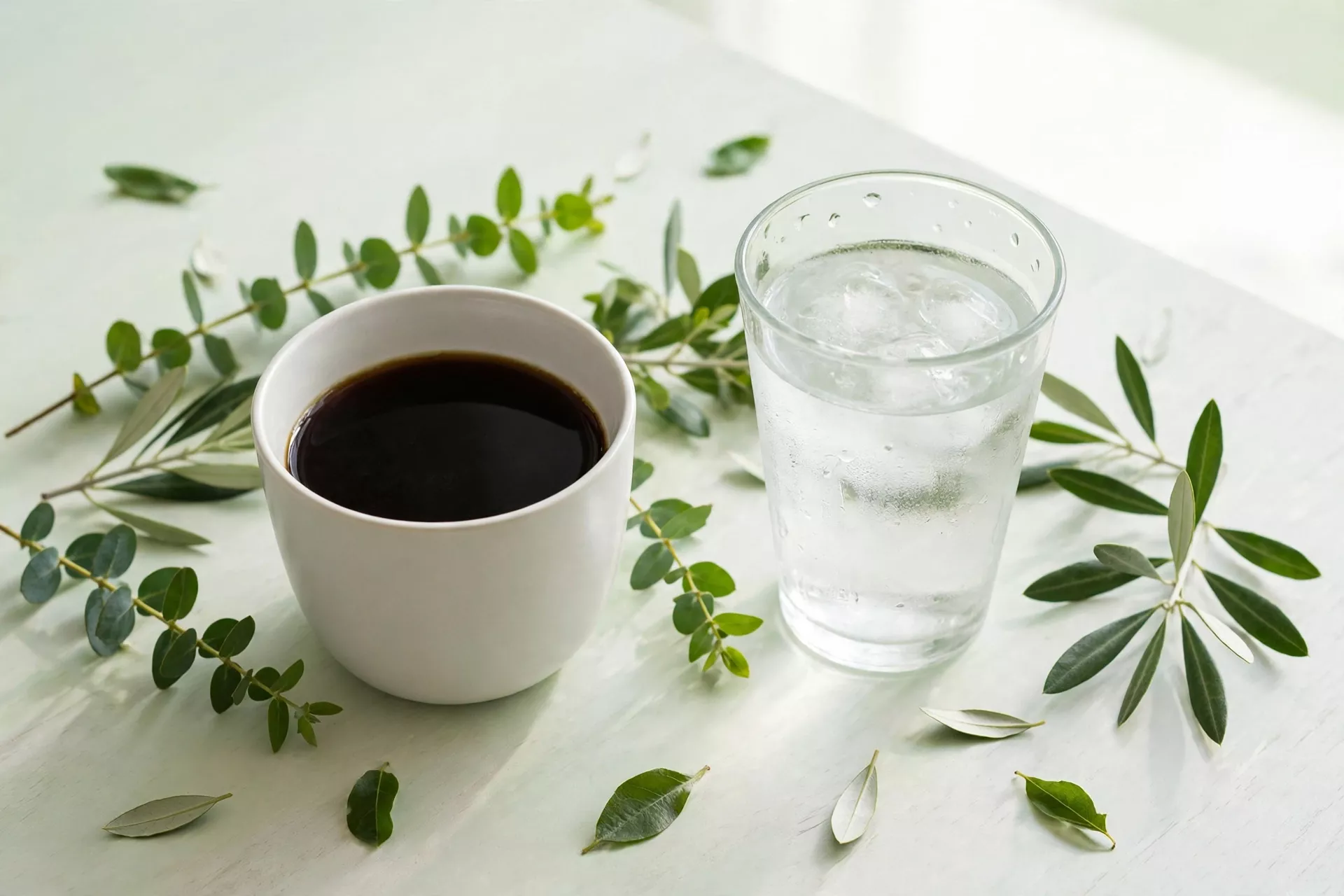
This one has a kernel of truth — water is the simplest choice — but the claim that other drinks “don’t count” falls apart in the lab. In a 2000 study, researchers had 18 healthy men hydrate with different combinations of water, caffeinated colas, non-caffeinated soft drinks, and coffee, then measured body weight, blood, and urine markers. They found no significant differences in hydration status between the combinations, and concluded that advising people to disregard caffeinated beverages as part of daily fluid intake “is not substantiated.”
A tighter test came in 2014: 50 regular coffee drinkers spent three days drinking four cups of coffee a day (about 800 ml, roughly 4 mg of caffeine per kilogram of body weight) and three days drinking the same volume of water. Total body water, 24-hour urine volume, and blood markers of hydration showed no significant differences between the two. Coffee, for habitual drinkers, hydrated essentially like water.
The logic is simple arithmetic. A cup of coffee is about 98 percent water. Caffeine is a mild diuretic, but at normal intakes the fluid in the cup far outweighs the extra urine it triggers — and regular drinkers build tolerance to the diuretic effect within days. Tea behaves the same way. Milk, juice, soup, and sparkling water all count too. The genuine exception is alcohol: it suppresses the hormone that tells your kidneys to conserve water, so a drink can leave you with less fluid than you took in.
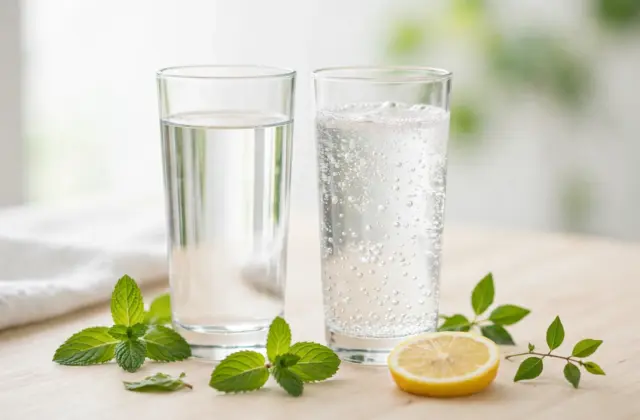
Read also: Water vs. Sparkling Water: Key Differences
Myth 3: If you’re thirsty, you’re already dehydrated
You’ve probably heard this one as a warning: by the time you feel thirsty, your body is already running dry, so you should drink on a schedule instead. It sounds prudent. The evidence points the other way.
Thirst is one of the body’s oldest and most precise control systems. When blood concentration rises even slightly, sensors in the brain trigger thirst long before performance or health suffers. The National Academies’ 2004 review put it plainly: the vast majority of healthy people adequately meet their daily hydration needs by letting thirst be their guide.
That doesn’t mean thirst is perfect for everyone. The thirst signal weakens with age, and some medications and medical conditions blunt it. Older adults, people with kidney or heart conditions, and anyone taking diuretics should drink more deliberately and check with their clinician about a personal target. But for a healthy adult going about a normal day, waiting for thirst is not a failure of discipline — it’s the system working as designed.
Myth 4: Drinking extra water flushes toxins and clears your skin
This is the myth with the best marketing. Detox teas, “water challenges,” and glowing-skin routines all promise that extra litres will wash impurities out of your body and smooth your complexion.
In 2008, two kidney specialists at the University of Pennsylvania reviewed the published evidence for the Journal of the American Society of Nephrology. Their verdict: “There is no clear evidence of benefit from drinking increased amounts of water.” Extra water can slightly change how fast the kidneys clear some substances, but the researchers found no evidence that this translates into any clinical benefit for healthy people. Your liver and kidneys already filter waste continuously — they don’t need a flood to do their job, and flooding them doesn’t make them do it better.
The skin claim fares no better. A 2010 review in Clinics in Dermatology looked for evidence that drinking the recommended eight glasses improves skin hydration and found none. Severe dehydration does make skin less elastic, but going from adequately hydrated to extra hydrated doesn’t show up on your face. Good skin care, sun protection, and sleep do far more than a third litre of water ever will.
There are exceptions where extra fluid genuinely helps — people prone to kidney stones, for example, are routinely advised to drink enough to keep urine pale, because diluting urine lowers the chance of crystals forming. That’s a specific medical situation, though, not a general detox rule.
Myth 5: You can’t drink too much water
You can — and for endurance athletes, it’s a real and occasionally fatal risk. The condition is called exercise-associated hyponatremia: blood sodium drops below 135 mmol/L because someone drank more fluid than they lost in sweat, diluting the sodium in their blood. Early signs include headache, nausea, bloating, and confusion; severe cases can cause seizures.
It happens most often in slow marathoners and first-time endurance athletes who drink at every station out of fear of dehydration. The American College of Sports Medicine’s guidance for distance runners is a starting range of about 0.4 to 0.8 litres per hour, sipped to thirst — and the 2015 international consensus on hyponatremia concluded that drinking to thirst is enough to prevent both dehydration and overdrinking. A practical check: if you weigh more after a long run than before it, you drank too much.
For everyday life, overhydration is hard to achieve accidentally — healthy kidneys excrete roughly 0.8 to 1 litre of excess water per hour. The risk concentrates in long exercise sessions, very hot conditions, and certain medical conditions. The takeaway isn’t to fear water; it’s that “more is always better” is the wrong rule in either direction.
Myth 6: You need a sports drink every time you exercise
Sports drinks earn their keep in a narrow window: sessions longer than about 60 to 90 minutes, especially in heat, where sweat losses of sodium add up and a drink with sodium and a little carbohydrate helps you absorb fluid and keep going. For a 45-minute gym session, a spin class, or a morning jog, plain water replaces what you lost.
Most sports drinks are also 6 to 8 percent sugar. Used when you don’t need them, they’re a sweet drink with a fitness label — a 500 ml bottle can carry 30 grams of sugar or more, which is exactly the kind of added sugar most people are trying to cut back on. If your workout is short, save the sports drink for the long run and drink water instead. If you sweat heavily for hours, the salt matters as much as the water — that’s when an electrolyte drink, or salty food with water, earns its place.
Read also: Electrolytes in Drinks: General Nutrition Basics
What actually works
Strip away the myths and hydration gets simple. Drink when you’re thirsty, and have water available so the answer is easy. Keep a glass or bottle where you work — most people drink more when water is within reach than when it means a trip to the kitchen. Eat water-rich foods: cucumber, watermelon, oranges, lettuce, and soup all count toward your daily total, which is part of why the official numbers include food in the first place. Drink a glass with each meal as a habit, not a rule. And adjust for the day in front of you: a hot afternoon, a long run, or a fever all raise your needs, just as a cool day at a desk lowers them.

Urine colour is a decent rough gauge — pale straw is the usual target, dark yellow suggests you should drink, and completely clear all day may mean you’re overdoing it. It’s not a medical test, but it’s a better guide than counting glasses.
The most useful thing to unlearn is the idea that hydration is a score to hit. Your body already tracks it, second by second, through thirst, kidney function, and hormones refined over millions of years. The myths made it a chore. The evidence says you can mostly trust the system — and spend the mental energy on the parts of eating well that actually need your attention.
Frequently asked questions
How much water should I actually drink per day?
There is no single number. The US National Academies’ adequate intake for total water (drinks plus food) is 3.7 litres for men and 2.7 litres for women; Europe’s EFSA sets it at 2.5 and 2 litres. About 20 percent comes from food, so the drinking part is roughly 3 litres for men and 2.2 litres for women. Heat, exercise, and illness push those numbers up.
Does coffee dehydrate you?
Not at normal intakes. Controlled studies found that moderate coffee — four cups a day in regular drinkers — hydrated as well as the same volume of water, with no significant differences in total body water or urine output. Caffeine is a mild diuretic, but the water in the cup outweighs it, and regular drinkers adapt. Alcohol is the exception: it genuinely increases fluid loss.
Is thirst a reliable signal?
For most healthy adults, yes. The National Academies concluded that the vast majority of healthy people meet their hydration needs by letting thirst guide them. The signal is less reliable in older adults and people on certain medications, who should drink on more of a schedule.
Can drinking too much water be dangerous?
Yes, in specific situations. Drinking far more than you sweat during long endurance exercise can dilute blood sodium — exercise-associated hyponatremia — which can cause headache, nausea, confusion, and in severe cases seizures. Drinking to thirst during exercise, about 0.4 to 0.8 litres per hour for distance runners, avoids both dehydration and overdrinking.
Disclaimer: This article is for general information only and is not medical advice. If you have kidney, heart, or other medical conditions, or take medications that affect fluid balance, talk to your clinician about how much fluid is right for you.
Sources
- Valtin H (2002). “Drink at least eight glasses of water a day.” Really? Is there scientific evidence for “8 x 8”? American Journal of Physiology – Regulatory, Integrative and Comparative Physiology 283(5): R993–R1004. PubMed
- Institute of Medicine (2004). Dietary Reference Intakes for Water, Potassium, Sodium, Chloride, and Sulfate. National Academies Press. National Academies Press
- EFSA Panel on Dietetic Products, Nutrition, and Allergies (2010). Scientific Opinion on Dietary Reference Values for water. EFSA Journal 8(3): 1459. EFSA Journal
- Grandjean AC, Reimers KJ, Bannick KE, Haven MC (2000). The effect of caffeinated, non-caffeinated, caloric and non-caloric beverages on hydration. Journal of the American College of Nutrition 19(5): 591–600. PubMed
- Killer SC, Blannin AK, Jeukendrup AE (2014). No evidence of dehydration with moderate daily coffee intake: a counterbalanced cross-over study in a free-living population. PLOS ONE 9(1): e84154. PubMed
- Negoianu D, Goldfarb S (2008). Just add water. Journal of the American Society of Nephrology 19(6): 1041–1043. Full text (Columbia mirror)
- Wolf R, et al. (2010). Nutrition and water: drinking eight glasses of water a day ensures proper skin hydration — myth or reality? Clinics in Dermatology 28(4): 380–383. PubMed