Easy Ways to Add Berries to Breakfast
Breakfast is the easiest meal of the day to improve, and berries are the easiest upgrade you can make to it. A handful of blueberries in your oatmeal, strawberries sliced over yogurt, or raspberries stirred into a smoothie takes about thirty seconds — and it adds fiber, vitamin C, and color to a meal that too often runs on refined grains and sugar alone. No cooking skills required, no special equipment, no extra dishes.
Berries work so well at breakfast because they solve the exact problems most morning meals have. Cereal, toast, and pastries tend to be low in fiber and quick to leave you hungry again. Berries flip that: they are mostly water and fiber, so they add bulk and staying power for very few calories. A cup of strawberries has about 49 calories. A cup of raspberries has about 64. You would have to work hard to overdo them.
They also bring something most breakfast foods do not: anthocyanins, the deep red and purple pigments that give berries their color. These plant compounds are the reason berries show up again and again in nutrition research, and they are one of the few things that make a bowl of oatmeal genuinely different from a bowl of sugary cereal.
What a serving of berries actually gives you
Not all berries are identical, and the differences are worth knowing — mostly because they let you pick the right berry for the job. Raspberries and blackberries are the fiber champions. Strawberries are the vitamin C champions. Blueberries carry the most anthocyanins. Here is how the four most common berries compare, per 100 grams (about two-thirds of a cup), from the USDA’s FoodData Central database:
| Berry (100 g, raw) | Calories | Fiber | Vitamin C |
|---|---|---|---|
| Strawberries | 32 | 2.0 g | 58.8 mg |
| Blueberries | 57 | 2.4 g | 9.7 mg |
| Raspberries | 52 | 6.5 g | 26.2 mg |
| Blackberries | 43 | 5.3 g | 21.0 mg |
Put those numbers against your daily targets and the picture gets clearer. The recommended daily amount of vitamin C is 75 mg for adult women and 90 mg for adult men, according to the National Institutes of Health. A cup of strawberries — about 150 grams — carries roughly 89 mg, which covers the full daily value on its own. A cup of raspberries adds about 8 grams of fiber, which is nearly a third of the 25-gram daily target for women and a fifth of the 38-gram target for men. Blueberries bring fewer of those two nutrients per bite, but they make up for it with anthocyanins: roughly 150–200 mg per 100 grams, far more than strawberries at 15–20 mg.
The practical takeaway is simple. If you want fiber, reach for raspberries or blackberries. If you want vitamin C, reach for strawberries. If you want the deep-purple compounds, reach for blueberries. And if you mix them, you get a bit of everything — which is exactly what a mixed-berry topping does without you having to think about it.
Read also: Benefits of Eating Many Kinds of Fruit
Fresh, frozen, or dried? What changes and what does not
Fresh berries are wonderful for about three weeks a year per variety, and then they are expensive, soft, or gone. Frozen berries are the quiet hero here. Unsweetened frozen blueberries hold up remarkably well: per 100 grams they have 51 calories, 2.7 grams of fiber, and most of their anthocyanins intact. The main casualty of freezing is vitamin C — frozen blueberries drop to about 2.5 mg per 100 grams, and frozen strawberries to about 41 mg — but the fiber and the pigments survive, and the price drops by half or more.
That makes frozen berries the better default for most breakfasts. They go straight from the freezer into oatmeal, smoothies, and yogurt, where they thaw in minutes and chill the bowl at the same time. Buy the bag that lists one ingredient — “blueberries” — and skip anything that says “sweetened.” Sweetened frozen blueberries jump to 85 calories and nearly 20 grams of sugar per 100 grams, which turns a good choice into a middling one.
Dried berries need more caution. Sweetened dried blueberries pack about 317 calories and 67.5 grams of sugar per 100 grams — closer to candy than to fruit. A small sprinkle over oatmeal is fine, but a dried-berry trail mix is not the same food as a bowl of fresh berries, and your breakfast should not pretend it is.
One more practical note: wash fresh berries just before you eat them, not when you bring them home. Water left on the surface speeds up mold, and a pint of raspberries can turn in a day. A quick rinse in a colander, a gentle pat dry, and they are ready.
10 easy ways to add berries to breakfast
You do not need a new recipe for any of these. Each one takes a food you probably already eat for breakfast and adds berries to it.
1. Stir them into oatmeal. This is the classic for a reason. Add a handful of blueberries or sliced strawberries to hot oatmeal in the last minute of cooking, or scatter frozen berries over the top and let the heat thaw them. The berries soften, release a little juice, and sweeten the bowl enough that many people can skip the brown sugar entirely.
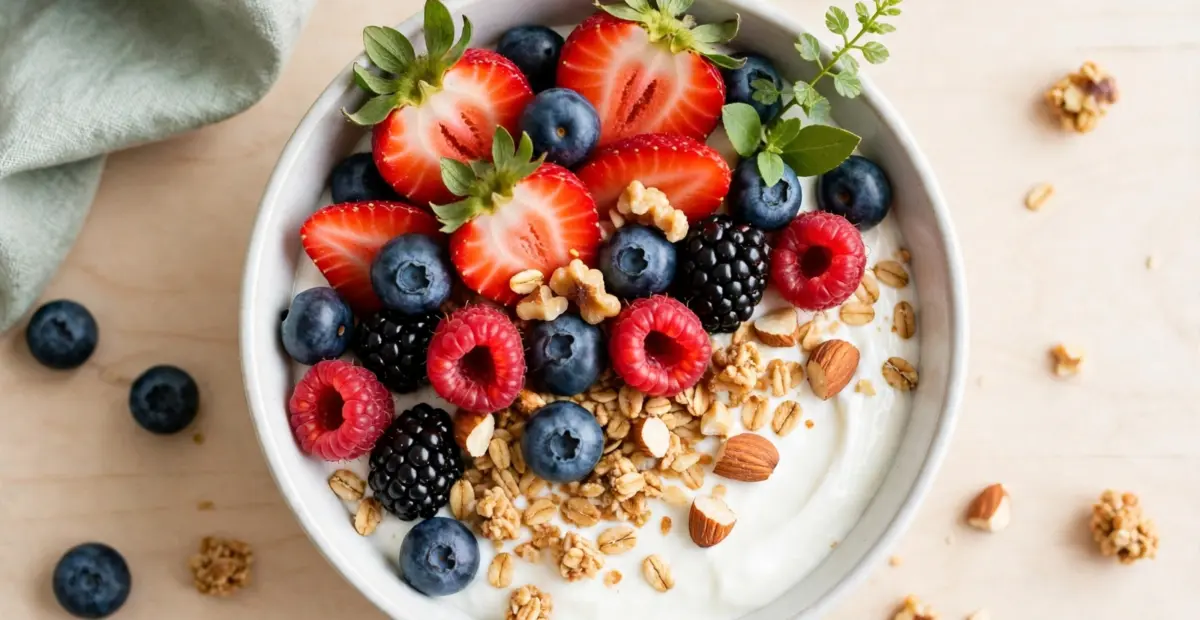
2. Top your yogurt. Plain Greek yogurt with a cup of mixed berries is one of the most balanced quick breakfasts there is: protein from the yogurt, fiber and vitamin C from the fruit. Add a spoonful of nuts or seeds and it keeps you full until lunch. If you usually buy flavored yogurt, switching to plain yogurt plus real berries cuts a surprising amount of added sugar — flavored yogurts often carry 12 grams or more per serving.
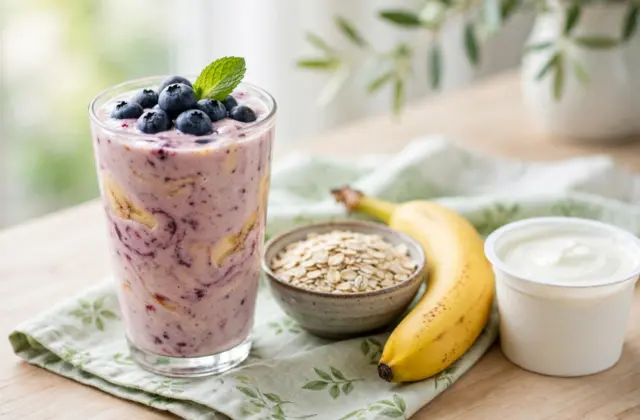
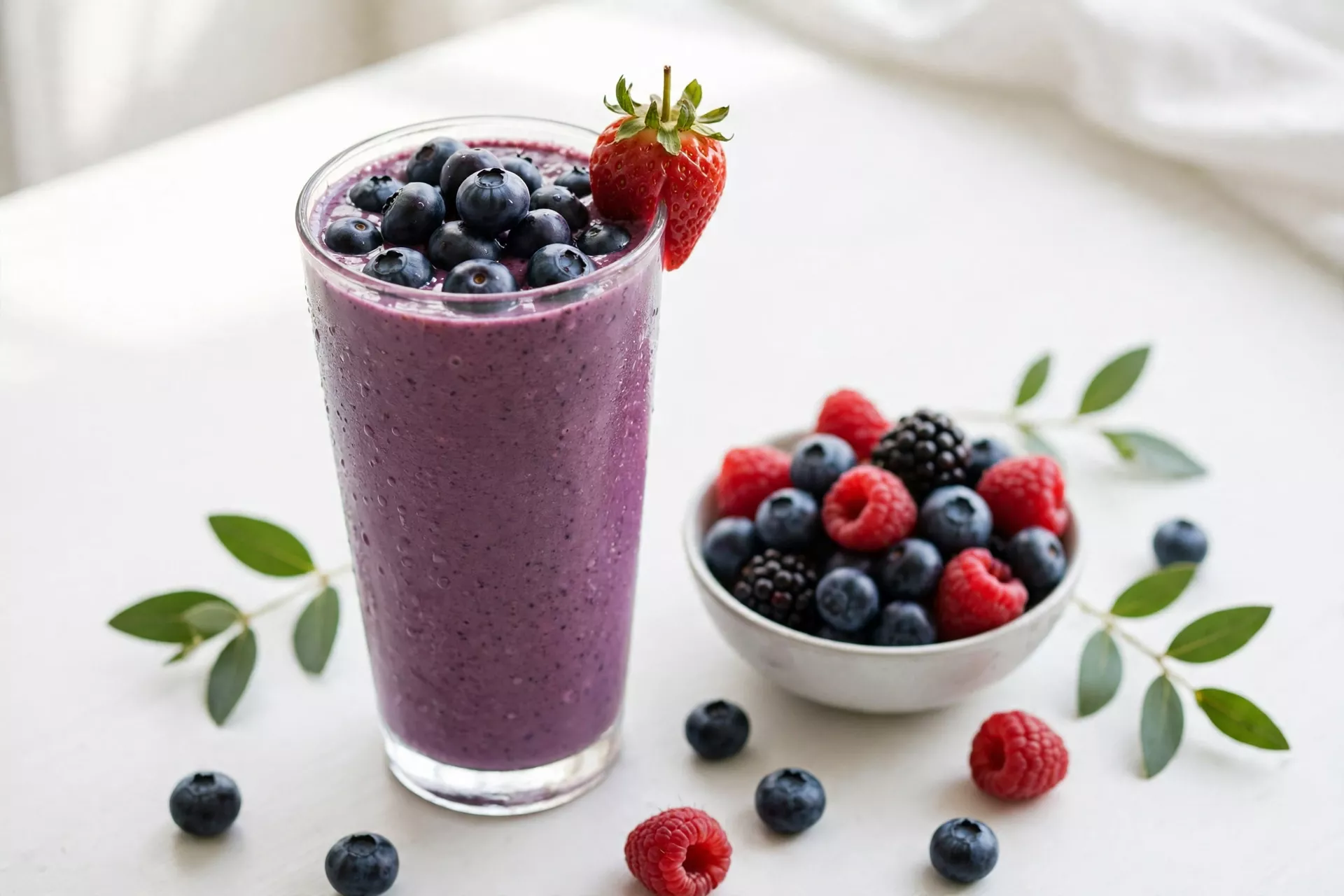
3. Blend them into a smoothie. Frozen berries are made for smoothies. A cup of frozen mixed berries, a banana, a handful of spinach, and milk or yogurt blends into something thick and cold in under a minute. Because the berries are frozen, you can skip the ice, which keeps the flavor from watering down.
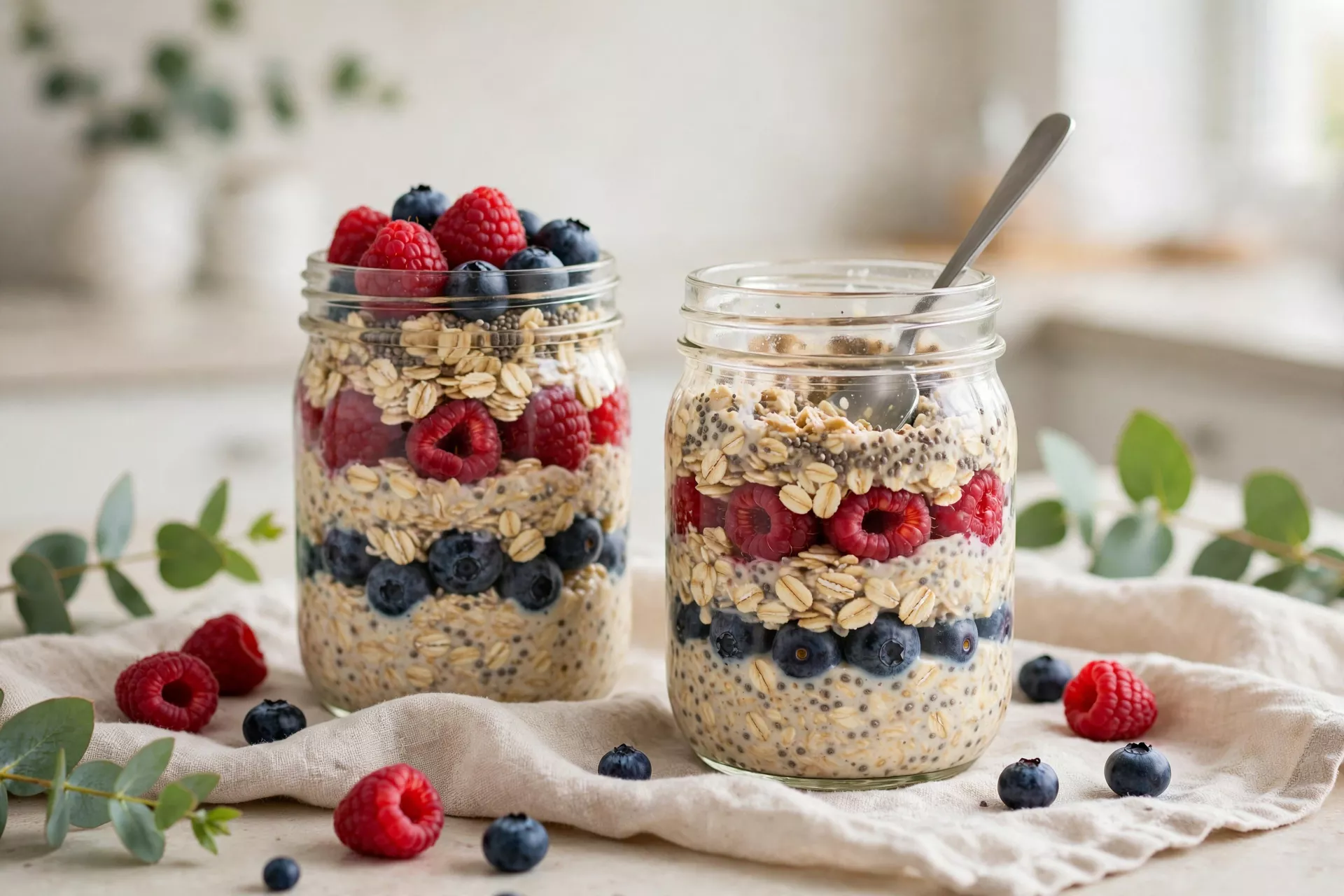
4. Make overnight oats with berries. Stir oats, milk, yogurt, and a handful of berries together in a jar the night before, and breakfast is waiting in the fridge. Raspberries hold their shape well overnight; blueberries bleed a little color into the oats, which looks better than it sounds. Make two or three jars on Sunday and the weekday mornings take care of themselves.
Read also: Make-Ahead Breakfast Ideas for Busy Mornings
5. Scatter them on toast. Peanut butter toast with sliced strawberries, or ricotta toast with raspberries and a drizzle of honey, turns a plain slice of bread into something you actually look forward to. The berries add moisture and acidity that balance the richness of the spread.
6. Fold them into pancake or waffle batter. Drop blueberries into the batter right after you pour it, rather than stirring them in beforehand — they sink less and burst less. For strawberries or raspberries, keep them as a topping instead; they are too soft to survive the pan. Frozen blueberries work here too, straight from the bag.
7. Build a breakfast bowl. Start with a base — oatmeal, yogurt, or cottage cheese — then add berries, a crunchy element like granola or chopped nuts, and something creamy. The formula works because each part does a different job: the base provides protein, the berries provide fiber and freshness, the crunch provides texture.
8. Add them to cereal. If you eat a plain whole-grain cereal, a handful of sliced strawberries or raspberries on top adds sweetness and fiber without the sugar load of a pre-sweetened cereal. It is the fastest upgrade on this list: ten seconds, no cooking.
9. Freeze them into yogurt bark. Spread Greek yogurt on a lined tray, scatter berries and chopped nuts over it, freeze for a few hours, and break it into pieces. It keeps in the freezer for weeks and works as a grab-and-go breakfast on mornings when sitting down is not happening.
10. Eat them on their own, with something. A bowl of mixed berries with a boiled egg, or a handful of berries next to a slice of toast with nut butter, is a complete-enough breakfast for a light morning. Berries do not need a recipe to count — they just need to be there.
How much is enough?
The Dietary Guidelines for Americans, 2025–2030 recommend about two servings of fruit a day on a 2,000-calorie eating pattern, with one cup of raw fruit counting as a serving. A cup of berries at breakfast covers half of that in one move, which leaves the rest of the day easy: an apple with lunch or a pear after dinner and you are done.
For berries specifically, the research points to a modest, regular amount rather than a heroic one. The MIND diet, a pattern built for brain health, calls for berries at least twice a week. In the Nurses’ Health Study II, women with the highest anthocyanin intake — roughly three or more half-cup servings of blueberries or strawberries a week — had a 32% lower risk of heart attack than women with the lowest intake, in a study of more than 93,000 women followed for 18 years. And in a six-month trial of 115 adults with metabolic syndrome, one cup of blueberries a day improved arterial stiffness and raised HDL cholesterol.
A cup a day is the amount most berry trials use, and it is easy to hit at breakfast: a cup of blueberries in a smoothie, a cup of strawberries over yogurt, or a cup of raspberries in oatmeal. You do not need more than that to get the benefit, and eating berries three or four mornings a week still counts as regular.
Read also: How to Eat More Fruit Every Day
What the research does — and does not — say
Berries are one of the most studied fruit groups, and the evidence is encouraging without being magic. Randomized trials link regular blueberry intake to better blood vessel function: the six-month trial above, and a 12-week trial in older adults with early memory decline, where blueberry juice equivalent to about a cup of fresh berries a day improved paired-associate learning and word recall. Reviews of the evidence link regular berry consumption with lower cardiovascular risk and better cognitive function, but most of the strongest findings come from observational studies and small trials — the kind of evidence that supports a habit, not a promise.
That distinction matters. Berries are not medicine, and no single food prevents disease on its own. What they do reliably is improve the overall quality of what you eat: they displace sugar, add fiber, and bring plant compounds that most breakfast foods lack. The benefit comes from the pattern — berries most mornings, as part of a varied diet — not from any one bowl.
One caution is worth stating plainly. If you take a blood thinner such as warfarin, very large amounts of vitamin K–rich foods can interfere with your dose, and while berries are not especially high in vitamin K, any big, sudden change in your diet is worth mentioning to your clinician. For everyone else, the only real risk of berries at breakfast is paying too much for them out of season — which is exactly what the frozen aisle is for.
Frequently asked questions
Are frozen berries as healthy as fresh?
For most purposes, yes. Unsweetened frozen berries keep their fiber and anthocyanins, and they are often frozen within hours of picking. They lose some vitamin C in freezing, but they are usually cheaper and available all year, which matters more than a small nutrient difference if it means you actually eat them.
How many berries should I eat at breakfast?
About a cup — a handful, roughly 150 grams — is a good target and matches the amount used in most research trials. Half a cup still helps, especially if you eat berries most days. There is no benefit to forcing down two or three cups.
Do berries raise blood sugar?
Berries are among the lowest-sugar fruits, and their fiber slows digestion. A cup of strawberries has about 7.7 grams of carbohydrate, and raspberries about 11.9 grams, with 6.5 grams of that as fiber. Paired with protein — yogurt, eggs, nuts — they are a steady choice for most people, including people watching their blood sugar. If you manage diabetes, check with your clinician about your own targets.
Can I eat berries every day?
Yes. There is no downside to daily berries within a varied diet, and rotating between strawberries, blueberries, raspberries, and blackberries gives you a wider mix of nutrients than eating one kind every day. Frozen mixed berries make the rotation effortless.
This article is for general nutrition information only and is not a substitute for personalized medical advice. If you have a medical condition or take medication that interacts with food, talk to your clinician or a registered dietitian before making major changes to your diet.
Sources
- U.S. Department of Agriculture, Agricultural Research Service. FoodData Central. https://fdc.nal.usda.gov/ — nutrient values for raw, frozen, and dried berries per 100 g.
- National Institutes of Health, Office of Dietary Supplements. Vitamin C — Fact Sheet for Health Professionals. https://ods.od.nih.gov/factsheets/VitaminC-HealthProfessional/
- Basu A, et al. Rethinking the Fruit Group in the Dietary Guidelines for Americans. Nutrition Today. https://www.ovid.com/jnls/nutritiontodayonline/fulltext/10.1097/nt.0000000000000831~rethinking-the-fruit-group-in-the-dietary-guidelines-for
- Effect of replacing commonly consumed fruit in the United States with berries in the USDA healthy Dietary Patterns: a modeling analysis. Annals of Medicine, 2025. https://pmc.ncbi.nlm.nih.gov/articles/PMC12164377/
- Oklahoma State University Extension. The New Dietary Guidelines for Americans (2025–2030). https://extension.okstate.edu/fact-sheets/print-publications/fcs/the-new-dietary-guidelines-for-americans-2025-2030-fcs-3629-a.pdf
- Berries Compared: Fresh vs. Frozen vs. Dried, Washing and Storage — USDA FoodData Central figures tabulated. https://healthyeat.net/en/berries-nutrition-frozen-vs-fresh/