Benefits of Eating Many Kinds of Fruit
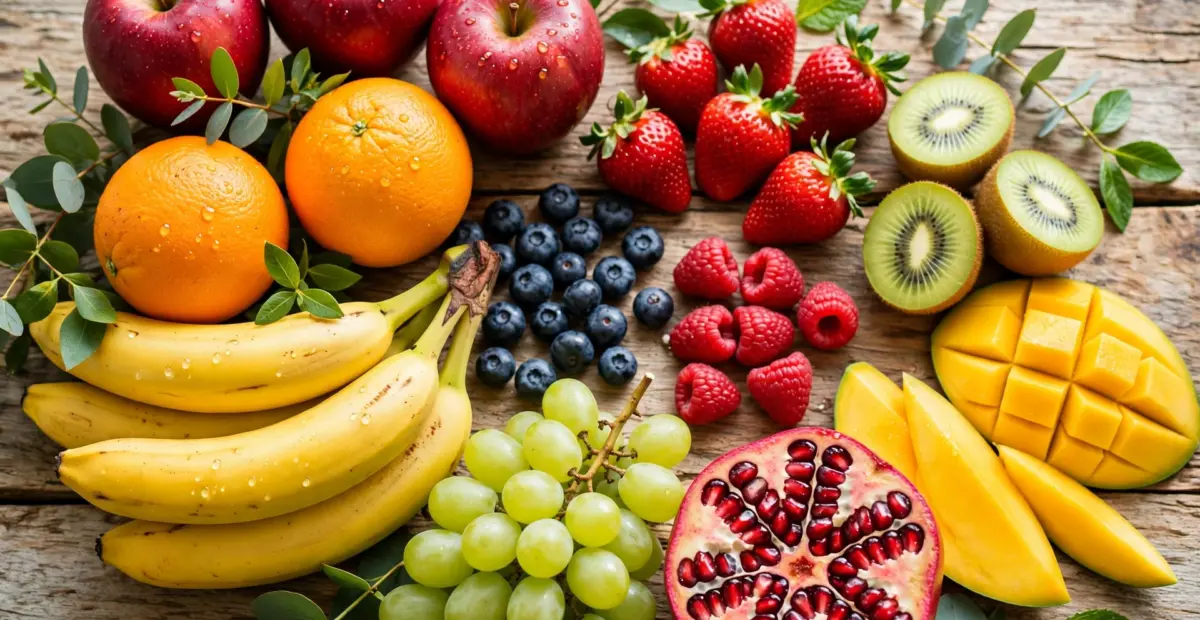
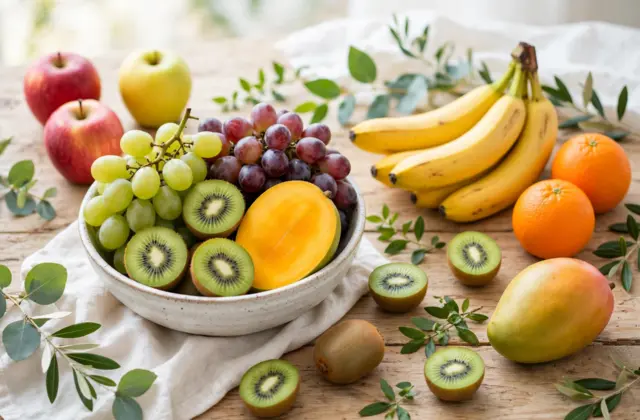
Most of us have a fruit habit — and most of us have a fruit rut. It’s the same banana in the morning, the same apple at lunch, the same handful of grapes if we’re feeling adventurous. Nothing wrong with any of those choices. But if variety is the part of your eating that never changes, you’re leaving a lot on the table. Different fruits carry different nutrients, different kinds of fiber, and different plant compounds, and no single fruit covers them all. Eating many kinds of fruit is one of the simplest upgrades you can make, because it doesn’t ask you to eat more — just to eat wider.
Why variety beats a single favorite
Think of fruit as a team, not a solo act. A banana brings potassium and vitamin B6. An orange brings a full day’s vitamin C in one piece of fruit. A cup of raspberries brings about 8 grams of fiber — more than most breakfast cereals. A handful of blueberries brings anthocyanins, the deep blue-purple pigments linked in a 2026 meta-analysis to lower cardiovascular risk. None of them does the other’s job.
That overlap matters because nutrients work in combination. Vitamin C helps your body absorb iron from plant foods, so citrus alongside beans or leafy greens does more than citrus alone. Potassium helps balance the effects of sodium, and different fruits contribute different amounts. Fiber feeds gut microbes, and different fibers feed different microbes. When you rotate fruits, you rotate the whole package — and the gaps in one fruit get filled by the next.
The research backs the wide-net approach. A large 2017 meta-analysis in the International Journal of Epidemiology pooled 95 prospective studies and found that fruit and vegetable intake was associated with lower risk of heart disease, stroke, and premature death, with benefits continuing up to about 800 grams a day — roughly ten portions. At that level, the authors estimated a 24% lower risk of heart disease, a 33% lower risk of stroke, and a 31% lower risk of premature death compared with eating very little. The World Health Organization sets the floor at a minimum of 400 grams of fruits and vegetables a day, about five 80-gram portions, and notes that more is better.
Variety itself may carry an extra edge. A 2025 study of 4,596 U.S. adults published in the Journal of Nutrition, Health & Aging found that people who ate the widest range of flavonoid-rich foods — tea, apples, berries, peaches, and plums among them — had the lowest risk of death during follow-up, with each additional flavonoid-rich food associated with about an 8% lower risk. The study was observational, so it can’t prove cause and effect, but it lines up with a simple idea: different plant compounds do different jobs, so eating more kinds of them covers more ground.
What different fruits bring to the table
You don’t need a nutrition degree to build a varied fruit habit. It helps to know roughly what each family of fruit is best at, so your rotation actually rotates.
Citrus fruits — oranges, grapefruit, mandarins, lemons — are the vitamin C specialists. A medium orange provides roughly 70 to 83 mg of vitamin C, more than the full daily value, and the flavonoid hesperidin that travels with it has been studied for heart and blood-vessel health. Keep the whole fruit rather than the juice when you can: juice leaves the fiber behind.
Berries — blueberries, strawberries, raspberries, blackberries — pack the most fiber and the deepest pigments per bite. Raspberries lead on fiber at about 8 grams per cup, and the anthocyanins that color berries blue and red were linked in a 2026 meta-analysis of 18 cohort studies and 65 trials to a 26% lower risk of cardiovascular disease among people with the highest intakes. Frozen berries keep most of their anthocyanins and cost far less out of season, so they’re an easy year-round swap.

Bananas and tropical fruits bring potassium and quick energy. A medium banana supplies about 422 mg of potassium — roughly a tenth of the daily value — plus vitamin B6 and about 3 grams of fiber for around 105 calories. Mango and papaya add vitamin A in the form of beta-carotene, and pineapple brings the enzyme bromelain along with vitamin C.
Apples and pears are the steady everyday fiber source. A medium apple with its skin has about 95 calories and roughly 4.4 grams of fiber, and much of that fiber is pectin, a soluble fiber that feeds gut bacteria and has been linked to healthier cholesterol levels. Pears are similar, and both keep well, which makes them the easiest fruit to have on hand every day.
Stone fruits and melons round out the rotation. Peaches, plums, and cherries bring their own mix of flavonoids and potassium, while watermelon and cantaloupe are more than 90% water — useful on hot days and a gentle way to add volume to a meal without many calories. A cup of watermelon has only about 46 calories and still counts toward your fruit intake.
Read also: Simple Ways to Eat More Fruit
How much fruit, and how many kinds?
The WHO’s 400-gram target covers fruits and vegetables together, and the best-studied split in the research is about two servings of fruit and three of vegetables a day. A 2021 Harvard study in Circulation found that combination — two fruit servings plus three vegetable servings — was associated with the lowest mortality, with little extra benefit beyond five total servings. So fruit doesn’t need to dominate your plate. Two servings a day is a solid target, and variety is what makes those two servings count.
A practical way to think about it: aim for at least three different fruits across the week, and change one of them every week. If this week’s lineup is banana, apple, and orange, next week swap in berries, a pear, and a kiwi. Over a month, that’s a dozen different fruits without any extra effort — you’re just buying a different bag at the store.
Color is a decent shortcut for variety, too. Red, orange, yellow, blue, and purple fruits tend to carry different pigment families — lycopene in red, carotenoids in orange and yellow, anthocyanins in blue and purple — and those pigments usually travel with different companion nutrients. You don’t need to hit every color every day. But if everything in your fruit bowl is yellow, that’s a sign to add something red or purple next trip.
Simple ways to widen your fruit habit
Variety fails when it feels like a project. It works when it’s built into routines you already have.

Rotate by the week, not the day. Buy two or three kinds of fruit per shop and switch one each week. A weekly rotation is easier to keep than a daily one, and it still adds up to a wide range over a month.
Pair a familiar fruit with an unfamiliar one. If you always buy bananas, add one fruit you’ve never tried — a persimmon, a dragon fruit, a blood orange — and eat it alongside the banana. Curiosity is easier than overhaul.
Use frozen fruit to fill the gaps. Frozen berries, mango, and cherries are picked ripe and keep their nutrients well. They cost less than fresh out of season, they never go bad in the fridge, and they make smoothies, oatmeal, and yogurt instantly more varied. A 2015 study from UC Davis found frozen produce matched or even exceeded fresh on vitamin C in the foods tested.
Add fruit where it already fits. Berries in oatmeal, sliced pear on a salad, orange segments with lunch, frozen mango blended into a smoothie — these aren’t new meals, they’re the same meals with one more fruit in them. That keeps the habit cheap in time and attention, which is what makes it stick.
Let seasons do the choosing. Seasonal fruit is usually cheaper, riper, and more flavorful, and the seasons change your rotation for you. Summer brings berries and stone fruit, autumn brings apples and pears, winter brings citrus, spring brings the first strawberries. Following the seasons is variety on autopilot.
Read also: How to Include More Colorful Produce in Meals
What about sugar in fruit?
This is the question that stops a lot of people from eating more fruit, so it’s worth answering plainly. Whole fruit contains natural sugars, but it also contains fiber, water, and a package of nutrients that slow digestion and blunt blood-sugar spikes. The World Health Organization’s limit on “free sugars” — under 10% of energy, ideally under 5% — applies to sugars added to foods and drinks, not to the sugars inside whole fruit.
That’s why guidelines treat whole fruit and fruit juice differently. Juice strips out the fiber and concentrates the sugar, so a glass of orange juice behaves more like a sugary drink than like an orange. Whole fruit, eaten as fruit, is associated in large studies with lower — not higher — risk of type 2 diabetes. If you enjoy fruit, the sugar in it is not a reason to stop. If you drink a lot of juice, swapping some of it for whole fruit is one of the easiest improvements you can make.
People with diabetes or blood-sugar concerns don’t need to avoid fruit either, but pairing it with protein or fat — an apple with peanut butter, berries with yogurt — slows digestion further and keeps energy steadier. As always, if you manage a medical condition, check with your clinician about what fits your plan.
Make it easy to keep going
The easiest fruit habit is the one you can see. Keep a bowl on the counter with whatever is in season, wash berries and grapes as soon as you get home so they’re ready to grab, and cut melon into chunks before it goes in the fridge. Fruit that takes effort to reach gets eaten less; fruit that’s already washed and within reach gets eaten without thinking.
And don’t worry about getting it perfect. Eating many kinds of fruit isn’t a test with a passing score. It’s a nudge: when you notice you’ve eaten the same fruit three days running, try a different one. That one small switch, repeated week after week, is how a narrow habit becomes a wide one — and how your diet quietly covers nutrients no single fruit could.
Read also: How to Make Fruit-Infused Water
Frequently asked questions
How many different fruits should I eat each week?
There’s no official number, but three to five different kinds a week is a realistic target that covers a good range of nutrients. Rotate one or two each week so the mix keeps changing over the month.
Is frozen fruit as nutritious as fresh?
Usually, yes. Fruit is frozen at peak ripeness, and studies have found frozen produce matches fresh on nutrients like vitamin C. Frozen berries are a practical way to keep variety up when fresh options are expensive or out of season.
Does fruit juice count as a serving of fruit?
It counts toward intake in some guidelines, but it’s a poor substitute for whole fruit: juice removes the fiber and concentrates the sugar. Whole fruit is the better choice most of the time, and guidelines generally advise limiting juice to a small glass a day at most.
Can I eat fruit if I’m watching my blood sugar?
Whole fruit is generally compatible with blood-sugar management, and large studies link higher whole-fruit intake with lower type 2 diabetes risk. Pairing fruit with protein or healthy fat — like nuts or yogurt — can help steady blood sugar further. If you manage diabetes, discuss your fruit intake with your clinician.
Sources
- World Health Organization — Healthy diet (fact sheet)
- Aune D, et al. — Fruit and vegetable intake and the risk of cardiovascular disease, total cancer and all-cause mortality (International Journal of Epidemiology, 2017)
- Imperial College London — Eating more fruits and vegetables may prevent millions of premature deaths
- USDA FoodData Central — nutrient values for banana, apple, orange, raspberries, watermelon
- U.S. Food and Drug Administration — Raw Fruits nutrition facts poster
- Anthocyanins and cardiovascular health — meta-analysis (2026)
This article is for general information only and is not medical advice. If you have a health condition or take medication, talk to your clinician before making significant dietary changes.