Vitamin K Foods: A Practical Guide
Vitamin K rarely makes the headlines. It doesn’t get the spotlight that vitamin D or vitamin C enjoy, and most people couldn’t name a single food rich in it. Yet this quiet vitamin does work you would notice very quickly if it stopped: it helps your blood clot when you cut yourself, and it plays a role in keeping your bones strong. The good news is that getting enough is straightforward — a salad, a side of broccoli, or a drizzle of the right oil can cover your whole day’s needs, no supplements or exotic foods required.
What vitamin K actually does
Vitamin K isn’t a single compound. It’s a family of fat-soluble compounds that share a chemical structure, and they come in two main forms. Phylloquinone, or vitamin K1, is the form found in plants — mostly green leafy vegetables — and it’s the main form in most diets. Menaquinones, collectively called vitamin K2, are made by bacteria and turn up in fermented foods and, in smaller amounts, in meat, dairy, and eggs. The best-studied menaquinones are MK-4, MK-7, and MK-9.
Both forms act as a coenzyme for an enzyme called vitamin K-dependent carboxylase, which switches on several proteins. The best known is prothrombin, a clotting factor that helps blood form a clot when a vessel is injured — without enough vitamin K, bleeding takes longer to stop. Vitamin K also switches on osteocalcin, a protein in bone that may be involved in bone mineralization, and matrix Gla protein, found in blood vessel walls, bone, and cartilage, which researchers think may help limit abnormal calcification.
Because vitamin K is fat-soluble, your body absorbs it the same way it absorbs dietary fat — packaged into tiny droplets called micelles with the help of bile and pancreatic enzymes. That matters for everyday eating: the vitamin K in a pile of raw spinach is less available to your body than the same amount in oil, and eating greens with a little fat helps you absorb more of it. Your gut bacteria also make menaquinones, which experts believe contribute at least some of your vitamin K. The vitamin is used up and cleared quickly — your body retains only about 30 to 40 percent of a dose taken by mouth — which is one reason a steady supply from food matters more than occasional big doses.
How much vitamin K do you need?
Unlike most vitamins, vitamin K has no Recommended Dietary Allowance (RDA). The Food and Nutrition Board at the National Academies found there wasn’t enough evidence to set one, so instead it set Adequate Intakes (AIs) — levels assumed to cover the needs of healthy people, based on what healthy populations actually eat.
| Age group | Adequate Intake (mcg/day) |
|---|---|
| Adults 19+, men | 120 |
| Adults 19+, women | 90 |
| Teens 14–18 | 75 |
| Children 9–13 | 60 |
| Children 4–8 | 55 |
| Children 1–3 | 30 |
The Daily Value printed on food labels is 120 mcg for adults and children age 4 and older. There is no Tolerable Upper Intake Level for vitamin K, because no adverse effects from food or supplements have been reported in humans or animals — its potential for toxicity is considered low.
Most people already clear the bar. Data from the U.S. National Health and Nutrition Examination Survey (NHANES) show average daily intakes from food of about 122 mcg for women and 138 mcg for men age 20 and older — comfortably above the Adequate Intakes. Deficiency in healthy adults is very rare, and in a healthy person eating a varied diet, it’s almost impossible to eat so little vitamin K that blood clotting is affected.
A few groups do need to pay attention. Newborns are born with low vitamin K stores because very little crosses the placenta, which is why the American Academy of Pediatrics recommends a single vitamin K injection at birth. People with malabsorption conditions — such as celiac disease, cystic fibrosis, ulcerative colitis, or short bowel syndrome — and people who have had bariatric surgery may absorb less vitamin K and sometimes need monitoring. Eating patterns change which vitamins you need to watch, too: for vitamin B12, for example, the best sources depend a lot on how you eat.
Read also: Vitamin B12 Foods for Different Eating Patterns
The richest vitamin K foods
Leafy greens dominate the list. The figures below come from the National Institutes of Health’s Office of Dietary Supplements.
| Food | Serving | Vitamin K (mcg) | % Daily Value |
|---|---|---|---|
| Natto (fermented soybeans) | 3 ounces | 850 | 708% |
| Collard greens, frozen, boiled | ½ cup | 530 | 442% |
| Turnip greens, frozen, boiled | ½ cup | 426 | 355% |
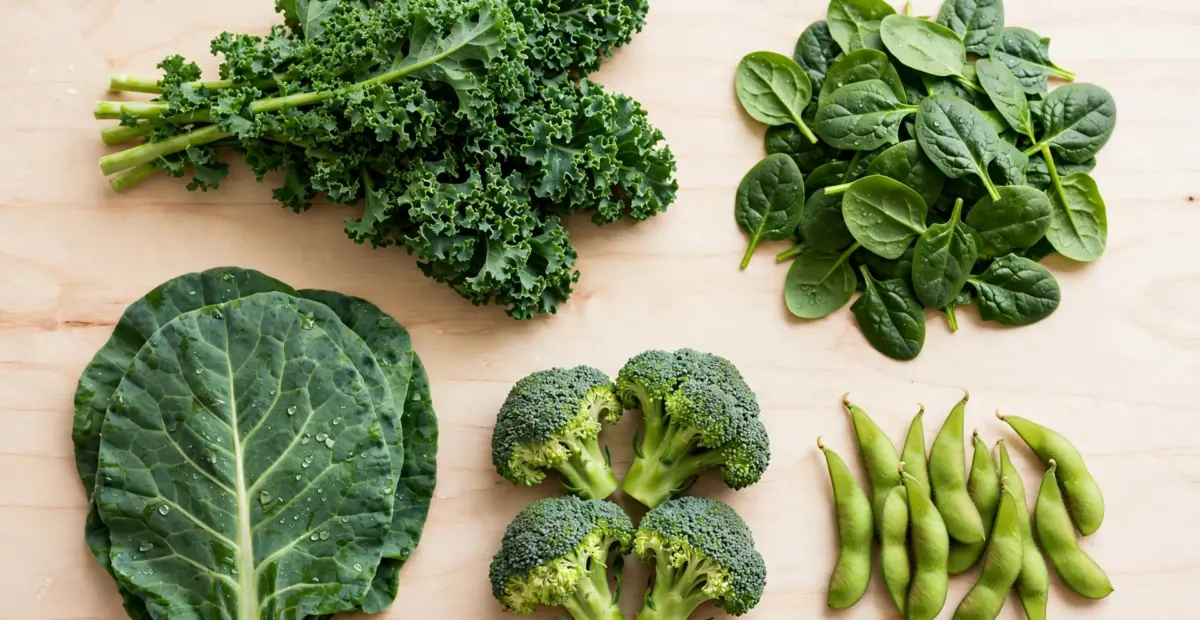
| Spinach, raw | 1 cup | 145 | 121% |
| Kale, raw | 1 cup | 113 | 94% |
| Broccoli, chopped, boiled | ½ cup | 110 | 92% |
| Soybeans, roasted | ½ cup | 43 | 36% |
| Soybean oil | 1 tablespoon | 25 | 21% |
| Edamame, frozen, prepared | ½ cup | 21 | 18% |
| Blueberries, raw | ½ cup | 14 | 12% |
| Iceberg lettuce, raw | 1 cup | 14 | 12% |
| Egg, hard boiled | 1 large | 4 | 3% |
A single cup of raw spinach — about 145 mcg — covers the full day’s Adequate Intake for a woman, and a half cup of cooked collards provides more than four times it. Natto, the traditional Japanese fermented soybean dish, is in a league of its own at 850 mcg per 3-ounce serving, though its strong flavor and sticky texture make it an acquired taste. The most common sources in the American diet are more ordinary: spinach, broccoli, iceberg lettuce, and cooking oils, especially soybean and canola oil.
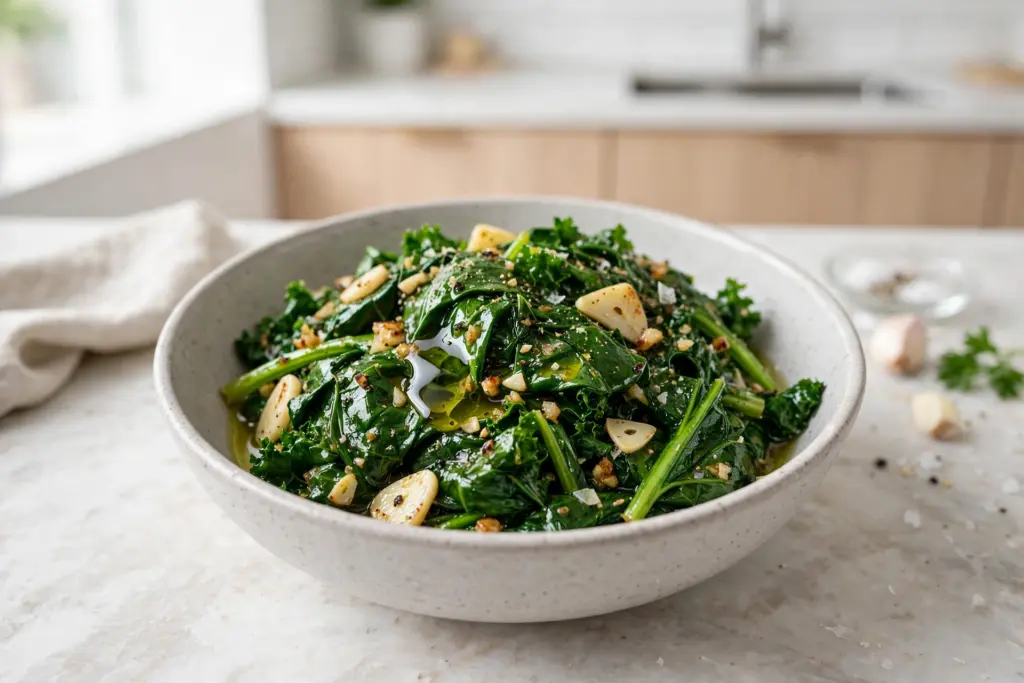
One catch is worth knowing. The phylloquinone in leafy vegetables is tightly bound inside plant cells, so your body absorbs only a fraction of it — research cited by the NIH suggests as little as 4 to 17 percent as much as from a supplement tablet. Eating those vegetables with some fat improves absorption, which is a practical reason to dress your salad with olive oil rather than eating it dry. Oils themselves carry vitamin K in a more absorbable form: a tablespoon of soybean oil adds 25 mcg, and a tablespoon of olive oil adds about 8 mcg.
Read also: Benefits of Eating Many Kinds of Vegetables
Vitamin K1 vs. K2: does the form matter?
If you’ve browsed supplement shelves, you’ve probably seen vitamin K2 marketed as the superior form. The honest answer is that the science hasn’t settled that question.
Some research suggests long-chain menaquinones may be absorbed better than the phylloquinone locked inside leafy greens, and MK-7 from natto stays in the blood longer than K1 from a supplement. But there is no separate intake recommendation for K2, and the studies comparing the two forms for health outcomes are still limited. For most people, the practical takeaway is simple: eat a mix of leafy greens, other vegetables, and some fermented or animal foods, and both forms take care of themselves.
Vitamin K and your bones
The bone connection is real but unsettled. Vitamin K is needed to activate osteocalcin, one of the main proteins in bone, and some studies link higher vitamin K intakes with higher bone mineral density or fewer hip fractures. A 2006 meta-analysis of 13 randomized trials found that supplementation improved bone mineral density and that high-dose MK-4 reduced hip, vertebral, and other fractures — but those trials used pharmacological doses of 45 mg of MK-4 per day, far above anything food provides, and most were conducted in Japan in postmenopausal women.
Later trials have been mixed. One three-year trial found that 180 mcg of MK-7 per day improved bone strength and slowed the loss of vertebral height in postmenopausal women. Other trials found no difference in bone mineral density compared with placebo, even though markers of vitamin K activity improved. The European Food Safety Authority has approved a health claim linking dietary vitamin K to the maintenance of normal bone, while the U.S. Food and Drug Administration has not authorized one.
What this adds up to: vitamin K is part of the bone-health picture, not a standalone fix. Adequate calcium and vitamin D remain the most important dietary factors for building and maintaining bone mass. If your diet already includes leafy greens most days, you’re covering the vitamin K side of that equation.
Vitamin K and your heart
The heart story is even more preliminary. The vitamin K-dependent protein matrix Gla protein is thought to help prevent calcium from building up in artery walls, and observational studies have found that people who eat more menaquinones tend to have less arterial calcification. In one Dutch study of 4,807 men and women age 55 and older, those in the middle and upper thirds of menaquinone intake had 27 percent and 57 percent lower rates of coronary heart disease death, respectively, than those in the lowest third — while phylloquinone intake showed no such association.
Observational findings like these can’t prove cause and effect, and the clinical trials so far have been inconclusive. In one three-year trial, 388 healthy men and postmenopausal women took 500 mcg of phylloquinone daily alongside calcium and vitamin D; overall there was no significant difference in coronary artery calcification, though the subgroup who stuck closely to the protocol showed less progression. The role of vitamin K in heart health remains an active area of research, and no heart-health claim for vitamin K is currently supported by trial evidence.
If you take warfarin, consistency matters more than avoidance
This is the one situation where vitamin K deserves real attention. Warfarin (Coumadin) and similar blood thinners work by blocking vitamin K’s activity, which reduces the clotting factors your liver produces. Sudden changes in how much vitamin K you eat can shift how well the medication works — a sharp increase can make it less effective, and a sharp drop can make its effect stronger.
The advice from the NIH is consistency, not avoidance. People on warfarin should keep their vitamin K intake fairly steady from week to week rather than cutting out leafy greens. A salad every day is fine; a salad every day followed by a week with no greens at all is the pattern to avoid. If you change your eating habits significantly — starting a new diet, for example — tell your clinician so your dose can be checked. A few other medications can also affect vitamin K status, including some antibiotics, bile acid sequestrants used to lower cholesterol, and orlistat.
Easy ways to eat more vitamin K
A few small swaps put vitamin K on the plate:
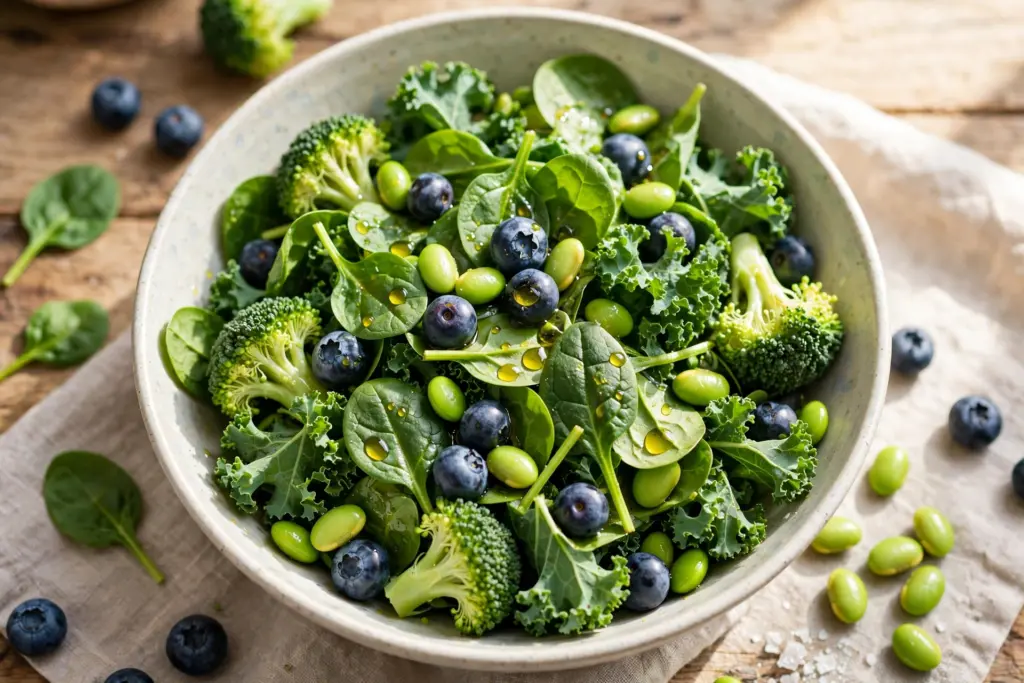
- Build salads on dark greens. Swap iceberg for baby spinach, kale, or romaine. A cup of raw spinach alone covers the day’s Adequate Intake for most women, and a kale-based salad gets you most of the way there too.
- Dress greens with oil. A vinaigrette made with soybean or olive oil adds vitamin K of its own and helps your body absorb the vitamin K already in the leaves.
- Add a cooked green to dinner. A half cup of boiled broccoli or sautéed collards with garlic delivers 110 to 530 mcg — several days’ worth in one side dish.
- Blend spinach into a smoothie. A handful of raw spinach disappears into a fruit smoothie and adds around 100 mcg or more, with no change in flavor worth noticing.
- Snack on edamame or roasted soybeans. A half cup of edamame adds 21 mcg, and roasted soybeans add 43 mcg — an easy, protein-rich snack that also brings vitamin K along.
- Keep frozen greens on hand. Frozen spinach and collards are just as rich in vitamin K as fresh, they last for weeks, and they stir into soups, pasta, and egg dishes in minutes.
Read also: How to Make a Nutrient-Dense Grocery List
Frequently asked questions
Can you get too much vitamin K from food?
No upper limit has been set for vitamin K because no adverse effects from food or supplements have been reported. Even natto, the richest food source, is eaten regularly in Japan without toxicity concerns. Very high-dose supplements are a different matter — talk to a clinician before taking them, especially if you take blood thinners.
Should I take a vitamin K supplement?
Most people don’t need one. A varied diet with leafy greens usually covers the Adequate Intake, and most multivitamins already contain some vitamin K. Supplements may be considered for people with malabsorption conditions or after bariatric surgery — a decision for a clinician, not a shopping aisle.
Do I need to avoid leafy greens if I take warfarin?
No. Cutting out greens entirely isn’t the goal — keeping your intake steady is. Eat a similar amount of vitamin K-rich foods each week, and tell your clinician if your eating pattern changes significantly.
Is vitamin K2 better than vitamin K1?
The evidence doesn’t settle it. K1 from leafy greens is the main dietary form and clearly supports normal clotting and bone maintenance. K2 from fermented foods may be absorbed differently and has shown interesting associations in observational studies, but there is no separate recommendation for it. A varied diet covers both.
This article is for general information only and is not medical advice. If you take blood thinners or have a condition that affects nutrient absorption, talk to your clinician before making significant changes to your diet or supplements.
Sources
- National Institutes of Health, Office of Dietary Supplements — Vitamin K: Fact Sheet for Health Professionals
- National Institutes of Health, Office of Dietary Supplements — Vitamin K: Fact Sheet for Consumers
- MedlinePlus — Vitamin K (Medical Encyclopedia)
- U.S. Department of Agriculture — FoodData Central