Mediterranean-Style Meal Plan for Beginners
If the Mediterranean diet sounds like something you need a passport and a seaside villa to follow, here is the good news: you do not. At its heart, it is a practical way of eating built on foods you can buy in any ordinary supermarket — vegetables, beans, whole grains, olive oil, fish, nuts, and fruit — put together in meals that actually taste good. This guide turns that pattern into a simple, beginner-friendly week of eating, with no calorie counting, no exotic ingredients, and no overhaul of your whole kitchen.
Think of this less as a diet with strict rules and more as a template. You will keep the foods you already like, swap a few fats and proteins, and let vegetables and legumes do more of the work on your plate. By the end of the week, you should have a repeatable routine you can adapt to your budget, your schedule, and your family’s tastes.
What Mediterranean-style eating actually is
The Mediterranean diet takes its name from the traditional eating patterns of countries bordering the Mediterranean Sea, such as Greece, Italy, and Spain. In 2010, UNESCO inscribed the Mediterranean diet on its Representative List of the Intangible Cultural Heritage of Humanity, recognising it as a set of food traditions that runs from the landscape to the table — growing, harvesting, preparing, and sharing food, not just what ends up on a plate.
In everyday terms, the pattern looks like this:
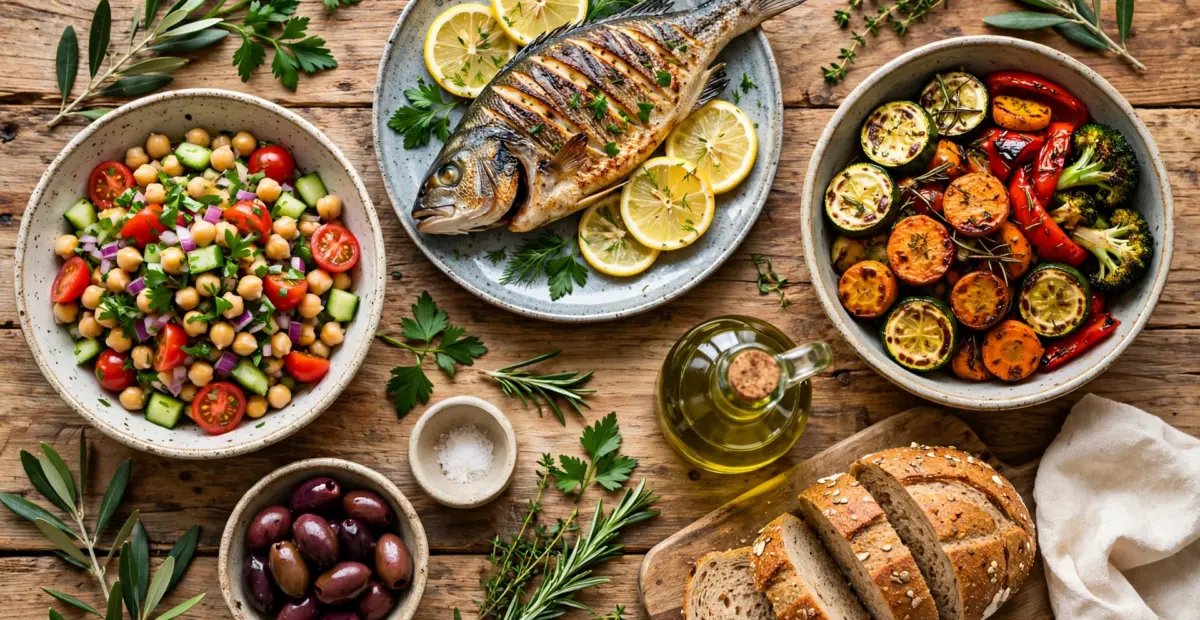
- Every day: plenty of vegetables and fruit, whole grains, beans and lentils, nuts and seeds, herbs and spices, and extra-virgin olive oil as the main added fat.
- A few times a week: fish and seafood, poultry, and eggs.
- In smaller amounts: dairy, especially yogurt and cheese, and red meat only occasionally.
- Rarely: heavily processed foods, sugary drinks, and sweets.
Notice what is missing: there is no banned food group, no fasting window, and no requirement to weigh your portions. The emphasis is on the overall pattern — what you eat most of the time — rather than any single meal. That is one reason many people find it easier to stick with than stricter plans.
Read also: How to Build a Balanced Plate
Why researchers take this pattern seriously
The Mediterranean diet is one of the most studied eating patterns in nutrition science. The strongest evidence comes from the PREDIMED trial, a large Spanish study that enrolled 7,447 adults aged 55 to 80 who were at high cardiovascular risk but did not yet have cardiovascular disease. Participants were assigned to a Mediterranean diet supplemented with extra-virgin olive oil (about 4 tablespoons a day), a Mediterranean diet supplemented with mixed nuts (30 grams a day), or advice to follow a low-fat diet. Over a median follow-up of 4.8 years, both Mediterranean diet groups had roughly a 30% lower rate of major cardiovascular events — heart attack, stroke, or death from cardiovascular causes — than the low-fat advice group.
That result comes with honest limits. The participants were older adults at high risk living in Spain, so the findings may not transfer neatly to every population. But the trial’s message lines up with a much larger body of observational research, and with basic nutrition guidance: diets rich in vegetables, legumes, whole grains, and unsaturated fats, and lower in saturated fat, added sugars, and salt, are consistently linked to better heart health.
The World Health Organization’s general healthy-diet guidance points in the same direction: at least 400 grams (about five portions) of fruit and vegetables a day, free sugars below 10% of daily energy (ideally below 5%, which works out to about 50 grams, or 12 teaspoons, at 2,000 calories a day), salt below 5 grams a day, total fat below 30% of energy, saturated fat below 10%, and trans fat below 1%. A Mediterranean-style week makes those targets easier to hit without turning every meal into a maths exercise, because the foods themselves do much of the work.
The beginner’s Mediterranean plate formula
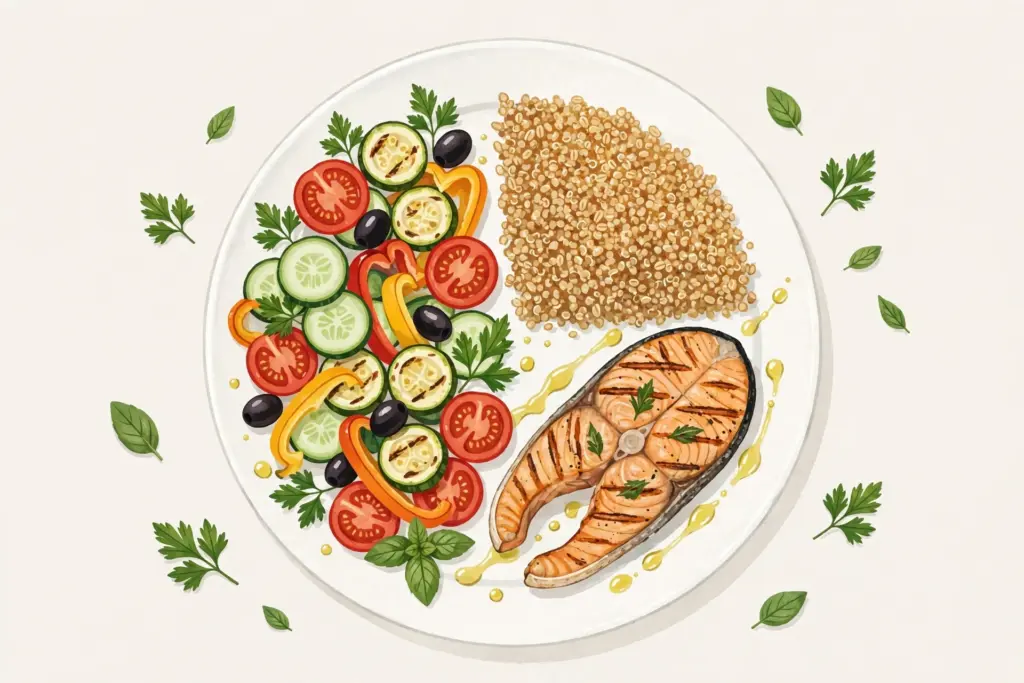
You do not need a new recipe book to start. Use this formula for lunch and dinner, and vary the ingredients through the week:
- Half the plate: vegetables. A big salad, roasted vegetables, or a vegetable soup. Fresh, frozen, or canned (rinsed) all count.
- A quarter: whole grains or starchy vegetables. Brown rice, quinoa, farro, whole-wheat bread or pasta, oats, or potatoes and sweet potatoes.
- A quarter: protein. Beans, lentils, chickpeas, fish, poultry, eggs, tofu, or yogurt. Aim for fish about twice a week, and keep red meat to an occasional guest rather than a daily staple.
- The finishing touch: healthy fat. A drizzle of extra-virgin olive oil, a handful of nuts or seeds, or a few olives. Herbs, garlic, lemon, and spices add flavour so you need less salt.
Breakfast follows the same logic in a smaller package: whole grains plus fruit plus a protein source. Think oatmeal with walnuts and berries, whole-grain toast with eggs and tomato, or Greek yogurt with fruit and a spoonful of seeds.
Read also: How to Include Healthy Fats in Meals
A 7-day Mediterranean-style meal plan for beginners
Use this as a framework, not a prescription. Swap any protein or vegetable for one you prefer, repeat a day you loved, and keep portions guided by your appetite — the pattern matters more than the exact menu.
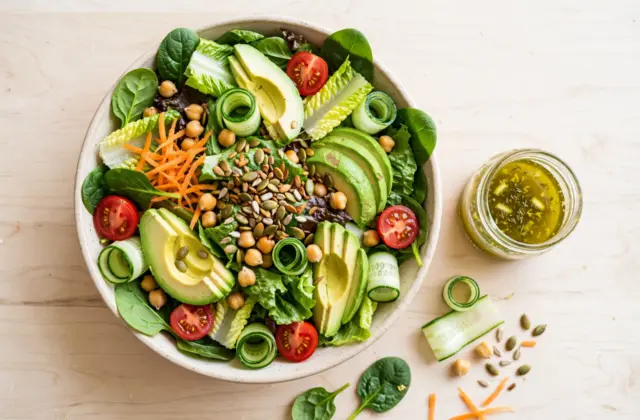
Day 1 — Monday. Breakfast: oatmeal with berries and chopped walnuts. Lunch: chickpea and vegetable salad with olive oil and lemon. Dinner: baked salmon, roasted broccoli, and quinoa.
Day 2 — Tuesday. Breakfast: whole-grain toast with eggs and sliced tomato. Lunch: lentil soup with whole-grain bread and a side salad. Dinner: whole-wheat pasta with white beans, spinach, garlic, and olive oil.
Day 3 — Wednesday. Breakfast: Greek yogurt with fruit and pumpkin seeds. Lunch: tuna and white bean salad with cucumber, tomato, and red onion. Dinner: chicken and vegetable tray bake with potatoes and herbs.
Day 4 — Thursday. Breakfast: oatmeal with sliced banana and a spoonful of peanut butter. Lunch: leftover chicken in a whole-grain wrap with salad and hummus. Dinner: bean and vegetable stew with farro and a drizzle of olive oil.
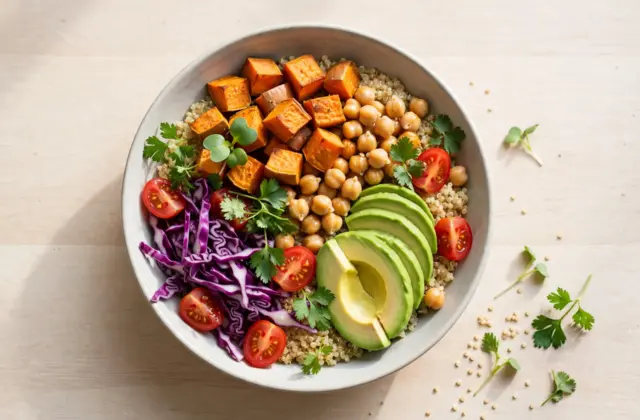
Day 5 — Friday. Breakfast: whole-grain toast with avocado and an egg. Lunch: grain bowl with quinoa, roasted vegetables, chickpeas, and feta. Dinner: baked white fish or shrimp with green beans, tomatoes, and brown rice.
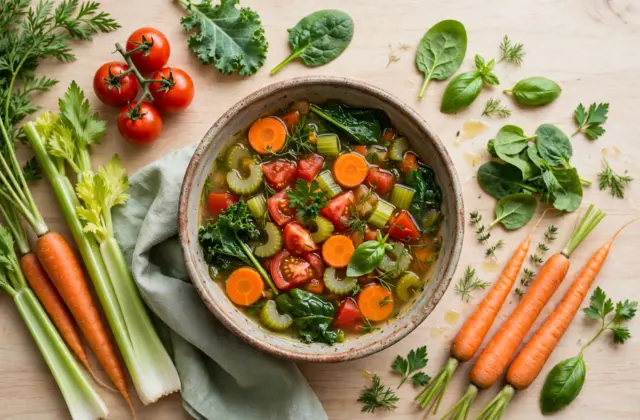
Day 6 — Saturday. Breakfast: yogurt bowl with fruit, oats, and almonds. Lunch: tomato, cucumber, and olive salad with whole-grain bread and cheese. Dinner: homemade vegetable and bean soup, or a simple seafood pasta if you eat out — grilled fish and a big salad is an easy restaurant version of the same pattern.
Day 7 — Sunday. Breakfast: vegetable omelette with whole-grain toast. Lunch: leftovers or a big salad with beans, grains, and nuts. Dinner: roast vegetables, lentils, and whole-grain bread, with fruit for dessert.
Read also: High-Protein Meal Plan for Beginners
If cooking seven different dinners feels like too much, cook three larger batches instead — a soup, a grain, and a tray of roasted vegetables — and mix them across the week. That is exactly how many Mediterranean households actually eat: a few good staples, recombined, rather than a new production every night.
The starter grocery list
Stock these once, and the week’s meals mostly assemble themselves:
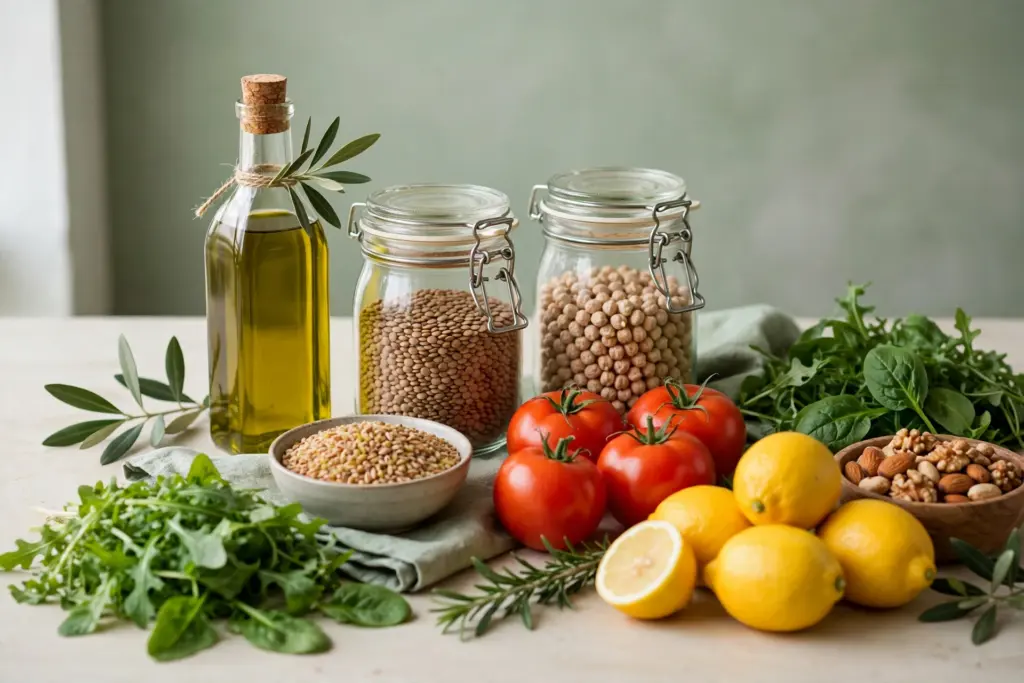
- Pantry: extra-virgin olive oil, canned tomatoes, canned beans and chickpeas, lentils (dried or canned), whole grains (oats, brown rice, quinoa, farro), whole-wheat pasta and bread, nuts and seeds, dried herbs and spices.
- Fridge: eggs, Greek yogurt, feta or another cheese you like, hummus, lemons, garlic, and fresh herbs if you use them.
- Produce: leafy greens, tomatoes, cucumbers, onions, peppers, broccoli, carrots, zucchini, and whatever fruit is in season and affordable.
- Freezer: frozen vegetables, frozen berries, and fish fillets or shrimp for the nights you have no fresh protein planned.
- Protein for the week: fish for two meals, poultry for one or two, and beans, lentils, eggs, or tofu for the rest.
Shopping this way also tends to be kinder to your budget than it first looks. Beans, lentils, oats, and seasonal vegetables are among the cheapest nutritious foods available, and they carry several days of meals. The pricier items — olive oil, nuts, fish — are used in small amounts, a drizzle or a handful at a time, so a bottle or bag lasts a while.
Five habits that make the week work
1. Make olive oil your default fat. Cook with it, dress salads with it, and finish soups and grains with a drizzle. It replaces butter and other saturated fats without requiring a new technique — you are simply swapping the bottle you reach for.
2. Put beans on the menu three or four times a week. Add chickpeas to a salad, lentils to a soup, or black beans to a grain bowl. They add protein and fibre cheaply, and they make a meal filling without meat.
3. Eat fish twice a week, without overthinking it. Canned tuna or sardines count, as do frozen fillets. Grill, bake, or pan-fry rather than deep-frying, and pair fish with vegetables and a grain rather than chips.
4. Keep fruit as the default dessert. Fresh fruit, a yogurt bowl, or fruit with a few nuts closes a meal in the Mediterranean style. Save cakes and pastries for occasions rather than everyday endings.
5. Eat sitting down, and share when you can. The Mediterranean tradition treats meals as social time, not fuel stops. Slowing down will not change the nutrients on your plate, but it often changes how much you enjoy them — and enjoyment is what keeps a pattern going past week one.
Read also: 7-Day Balanced Meal Plan for Beginners
Common beginner mistakes to avoid
Treating olive oil as unlimited. Olive oil is a healthy fat, but it is still about 120 calories per tablespoon. A drizzle is plenty; pouring freely can quietly double a meal’s energy.
Going all-in on pasta and bread. Grains belong in the pattern, but they work best as one quarter of the plate alongside vegetables and protein — not as the whole meal with a little sauce on top.
Buying “Mediterranean” processed foods. A frozen pizza or a jar of creamy sauce with an Italian-sounding name is not Mediterranean eating, however it is marketed. Check the ingredient list: short, recognisable ingredients are a good sign.
Adding wine because the diet “allows” it. Traditional Mediterranean meals sometimes included wine, but alcohol is optional, and no health guidance requires it. If you do not drink, you lose nothing from this pattern — skip it entirely.
Expecting a transformation in a week. The PREDIMED benefits built up over years of a consistent pattern, not seven days. Judge this week by simpler measures: did you enjoy the food, did cooking feel manageable, and can you imagine doing it again next week? If the answer is yes, the plan is working.
Frequently asked questions
Do I need to count calories on a Mediterranean-style plan?
No. The pattern is built on filling foods — vegetables, legumes, whole grains — and on fats used in modest amounts. If weight is a concern, portion awareness still matters, especially with olive oil, nuts, and cheese, but most beginners do better starting with the plate formula than with a calorie tracker.
Can I follow this plan as a vegetarian?
Yes, easily. Replace fish and poultry with beans, lentils, chickpeas, tofu, eggs, and yogurt, and keep the same vegetables, grains, and olive oil base. The pattern’s core is plant foods, so a vegetarian version is very close to the original.
Is the Mediterranean diet expensive?
It can be, if every meal centres on fresh fish and imported cheese. It does not have to be: canned beans, lentils, oats, eggs, frozen vegetables, and seasonal produce keep costs down, and fish twice a week can mean canned sardines or frozen fillets rather than fresh salmon every time.
What if I do not like fish?
Keep the rest of the pattern — vegetables, legumes, whole grains, olive oil, nuts — and get your protein from beans, lentils, eggs, poultry, and yogurt. You will still be eating a Mediterranean-style diet; fish is one component, not the whole pattern.
Sources
- World Health Organization — Healthy diet
- Estruch R, et al. — Mediterranean diet effective for primary prevention of CVD (reporting the 2018 New England Journal of Medicine PREDIMED republication)
- Mayo Clinic Health System — Mediterranean diet eating plan
- Heart UK — The Mediterranean diet
- Journal of Translational Medicine — “Planeterranean” diet: extending worldwide the health benefits of Mediterranean diet (UNESCO 2010 inscription background)
This article is for general information only and is not medical advice. If you have a health condition, take medication, or follow a therapeutic diet, talk to your clinician or a registered dietitian before making major changes to how you eat.