How to Make Lunch More Nutritious
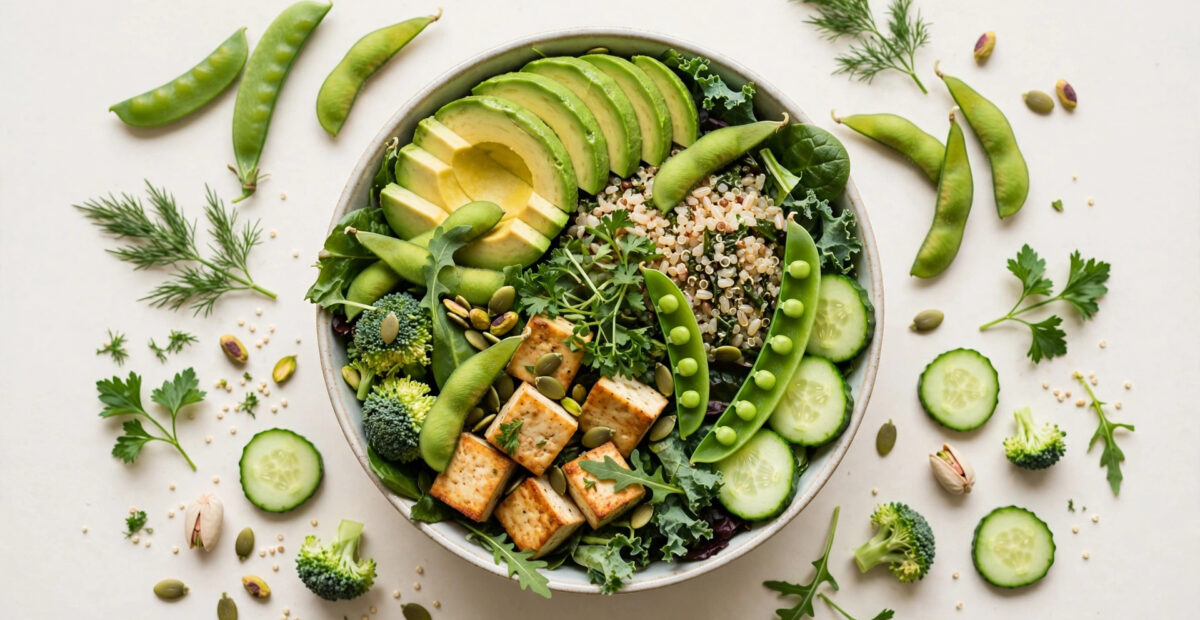
Think about your last week of lunches. A sandwich from the corner shop on Monday. Takeout noodles on Tuesday. Something you don’t quite remember on Wednesday, eaten between meetings while the screen glared at you. For most of us, lunch is the meal with the least planning and the most compromise — and it shows up in the afternoon slump, the snacking at four, the dinner that turns into a feast because you’re running on empty.
Here’s the thing: lunch sits at the exact middle of your waking hours. A well-built midday meal doesn’t just feed you — it steadies your energy, keeps hunger hormones quiet, and makes the second half of your day feel different. And making lunch more nutritious doesn’t require meal-prep Sundays or exotic ingredients. A few smart shifts to what you already eat can do most of the work.
Why lunch decides your afternoon
Two forces shape how you feel after lunch: blood sugar and protein. A meal heavy in refined carbs with little else — white bread, pastries, a sugary drink — sends blood sugar up fast, and the drop that follows is the classic 3 p.m. crash: foggy head, heavy eyes, a hand reaching for the snack drawer.
Protein is the counterweight. It’s the most satiating of the three macronutrients, slowing how quickly your stomach empties and steadying the hormones that control hunger. Research on protein distribution suggests that eating at least 20–30 grams of protein at a given meal delivers anabolic and metabolic benefits beyond simply hitting a daily total — which matters, because the typical lunch is the day’s leanest protein source.
The 2025–2030 Dietary Guidelines for Americans put a number on the daily side of this: 1.2 to 1.6 grams of protein per kilogram of body weight per day, adjusted for your size and activity. Spread across three meals, that naturally lands many people near that 20–30 gram per meal range. Lunch is where most people fall short, so it’s also where the biggest gains live.
The simple lunch formula
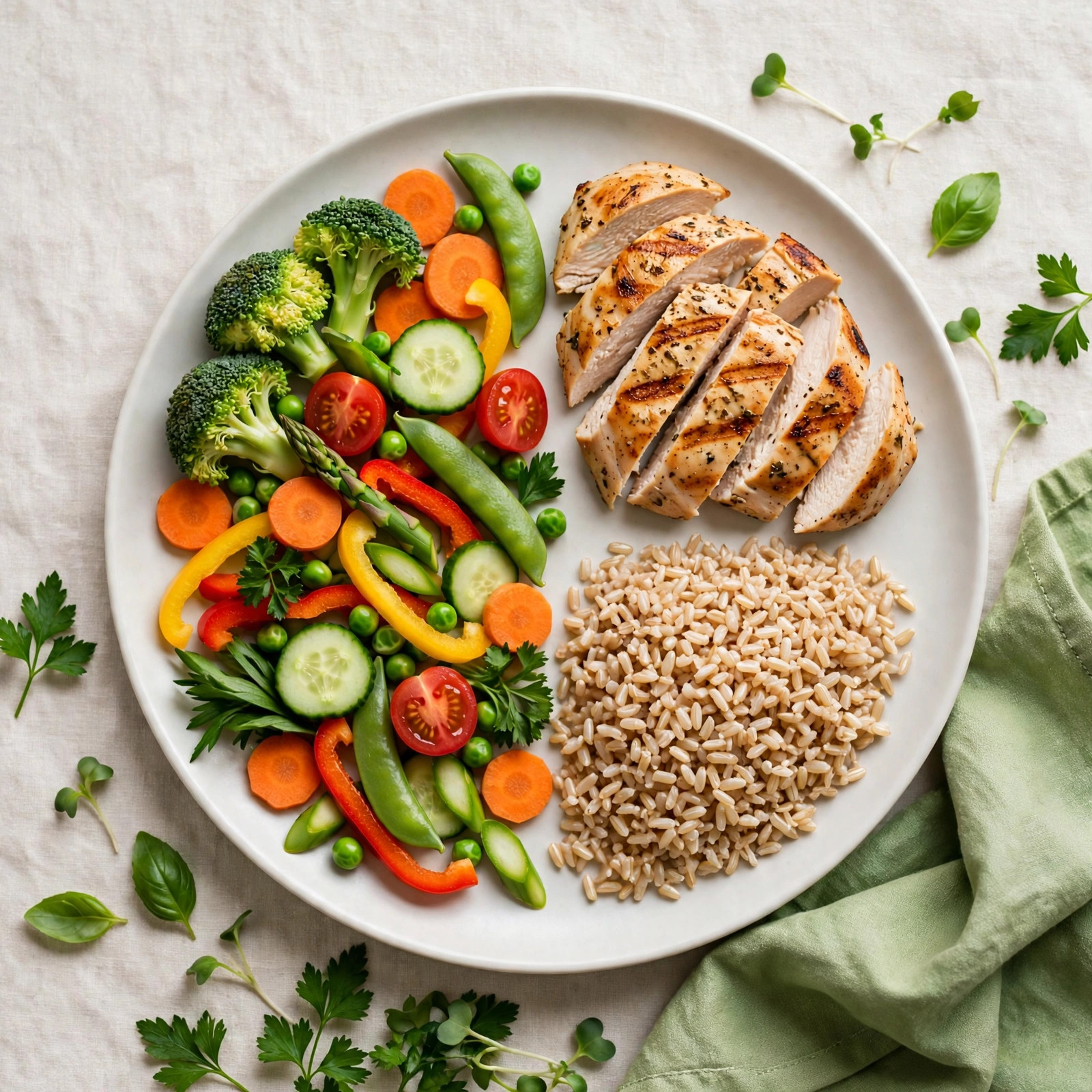
Forget calorie counting at noon. A plate built in roughly these proportions covers most of what your body needs:
- Half the plate: vegetables (plus fruit when it fits). Aim for variety across the week — leafy greens, crunchy carrots, tomatoes, roasted peppers, whatever’s fresh and affordable. The World Health Organization recommends at least 400 grams — about five servings — of fruits and vegetables a day, and lunch is one of only three chances you get to bank a few of those servings.
- A quarter: protein. Think a palm-and-a-half of chicken or fish, a cup of lentils or beans, tofu, tempeh, two eggs, or a couple of tablespoons of nuts worked into the meal.
- A quarter: whole grains. Brown rice, quinoa, whole-wheat pita, oats, or a slice of genuinely whole-grain bread. The 2025–2030 guidelines suggest 2–4 servings of whole grains a day and sharply limiting refined carbs like white bread and pastries.
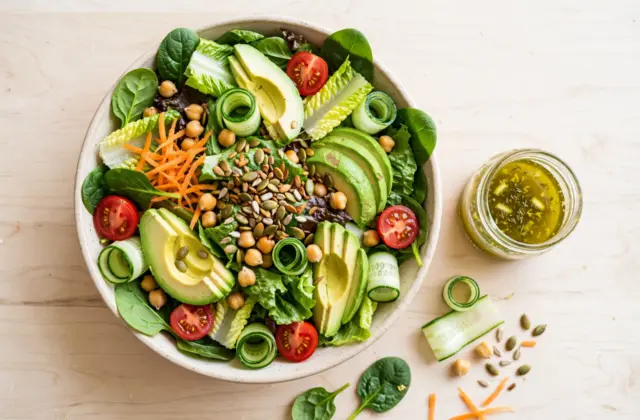
- A small dose of healthy fat: olive oil drizzled over a salad, avocado slices, a spoonful of hummus, or a handful of nuts. Fat carries flavor and slows digestion — it’s what turns “healthy” into “satisfying.”
This plate shape is the classic plate method, and it’s endured because it works: you get fiber, protein, and complex carbs in one visual rule, no app required. It also quietly stacks toward the WHO’s fiber target of at least 25 grams a day for adults — a goal most people miss by nearly half.
Five upgrades that make any lunch healthier
1. Add vegetables to whatever you’re already eating
You don’t need a new menu — just a bigger one. Stuff a handful of spinach into your sandwich. Toss leftover roasted vegetables over your noodles. Order the side salad you usually skip. One extra cup of vegetables at lunch, five days a week, is roughly 1,000 extra grams of produce a month. Vegetables add volume with very few calories, which is exactly why they tame both hunger and blood-sugar spikes.
2. Anchor the meal with 20–30 grams of protein
Do a quick mental audit of your typical lunch. A plain bagel with cream cheese is maybe 5–8 grams. A small tuna sandwich, 15–20. A lentil soup with a whole-grain roll, closer to 25. The upgrades are usually boring in the best way: add a boiled egg, swap plain yogurt in for mayo in a salad dressing, fold canned chickpeas or tuna into pasta, or keep edamame in the freezer for instant topping power. If you eat plant-based, combining foods across the day — beans with rice, hummus with whole-wheat pita, tofu with quinoa — covers the amino acids your muscles need.
3. Trade refined carbs for whole ones
The same lunch on a whole-grain base behaves differently in your body. Whole grains keep the bran and germ, so the fiber slows digestion and stretches out the energy release. Swap white rice for brown or red rice, white bread for a dense whole-wheat loaf (check the ingredients — “whole wheat flour” should lead), or regular pasta for the whole-grain version. You don’t have to go all-in on day one; start with one grain per meal and see what you actually enjoy.
Read also: Weekly Meal Planning for Balanced Meals
4. Fix the drink, not just the food
A single 12-ounce can of regular soda holds about 10 teaspoons of sugar — roughly 160 calories and zero nutrition, according to the American Heart Association. That’s already beyond the AHA’s daily added-sugar cap for most women (about 6 teaspoons) and well into the men’s (about 9 teaspoons) — spent before you’ve eaten a bite. The 2025–2030 guidelines are blunter still: no more than 10 grams of added sugar per meal, and no amount is recommended as part of a healthy diet. Water, sparkling water with lemon, or unsweetened tea are the cheapest lunch upgrade there is.
5. Season smarter, not saltier
Flavor is what makes a nutritious lunch one you’ll repeat. Herbs, citrus, garlic, chili, and vinegar add interest without the sodium load of heavy sauces and seasoning packets. That matters because sodium quietly stacks up at lunch: cured meats, instant noodles, soy sauce, canned soups, and fast-food sides are all heavy hitters, and most adults already exceed recommended sodium levels. Build flavor first with the sodium-free stuff, then add salt deliberately.
Seven five-minute nutritious lunches
Theory is nice; here are plates you can actually assemble:
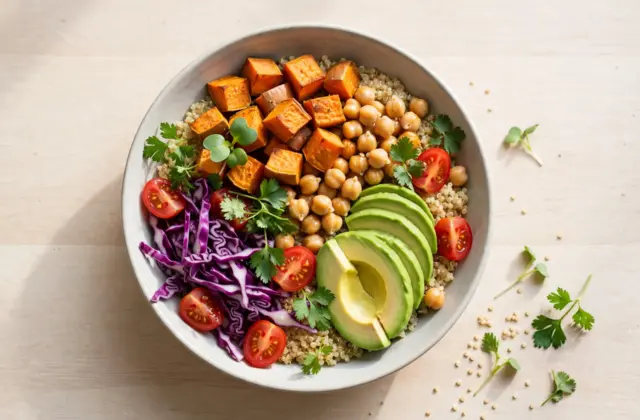
- Grain bowl, desk edition: a cup of cooked brown rice or quinoa, a cup of canned chickpeas (rinsed), two handfuls of pre-washed greens, cherry tomatoes, olive oil, and lemon. Add feta if you like.
- Souped-up soup: a bowl of lentil or minestrone soup with a slice of whole-grain bread and an apple on the side. Frozen soups count — check sodium and fiber per serving.
- Tuna-and-bean salad: one can of tuna, half a can of white beans, diced celery and red onion, a squeeze of lemon, olive oil, over greens. Wrap in a whole-wheat tortilla to travel.
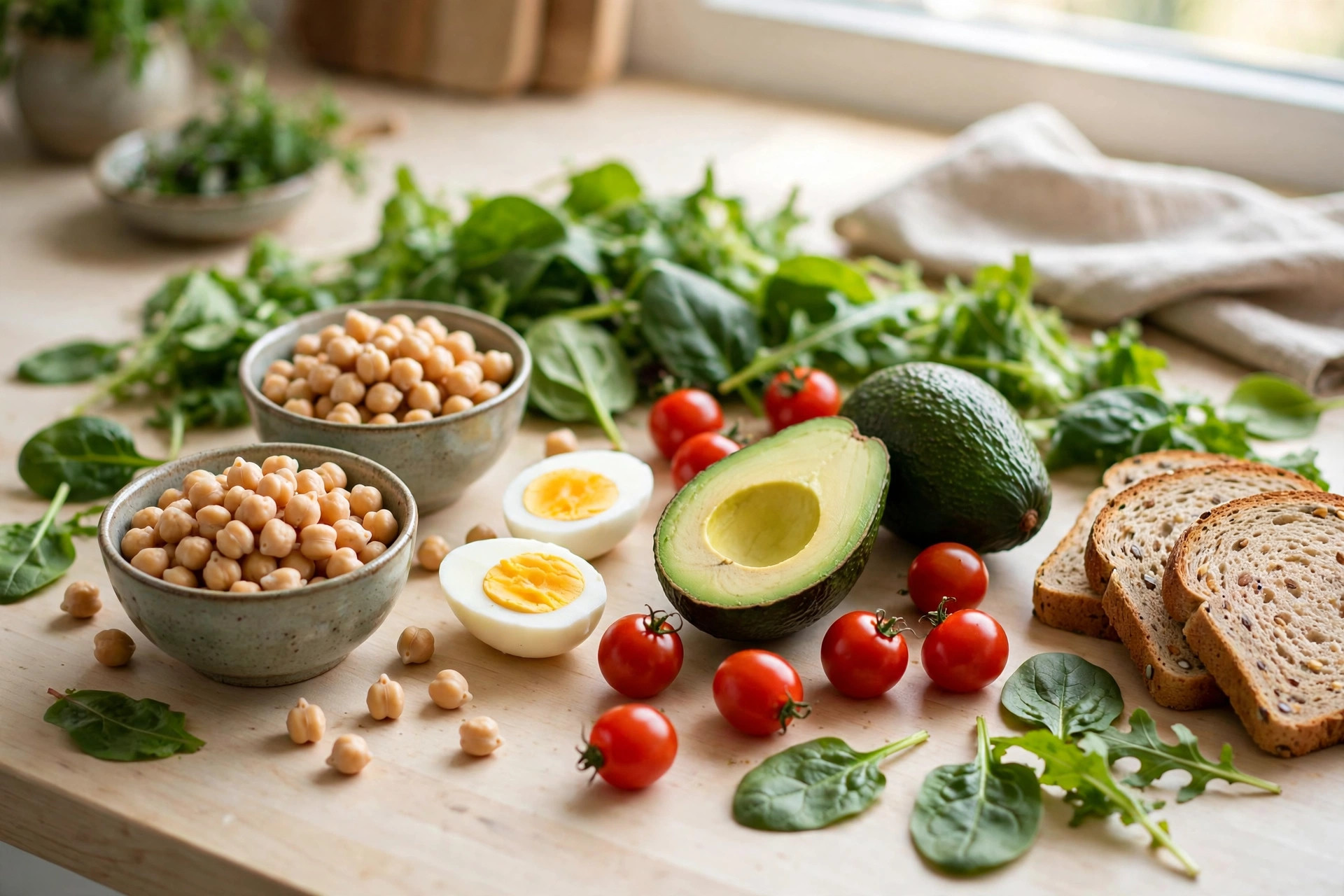
- Egg-and-greens plate: two boiled or fried eggs, a big handful of greens, half an avocado, a slice of whole-grain toast, and a drizzle of olive oil.
- Tofu-and-peanut noodle bowl: whole-grain or buckwheat noodles, baked tofu cubes, shredded cabbage and carrots, and a spoonful of peanut sauce thinned with water.
- Leftovers, upgraded: last night’s dinner plus a handful of raw vegetables and a piece of fruit. Deliberately cook a little extra the night before and you get a free lunch.
- Snack-plate lunch: whole-grain crackers, hummus, a boiled egg, raw vegetables, a handful of nuts, and a piece of fruit. No cooking, no fuss, genuinely balanced.
If you eat out at lunch
Nobody’s quitting takeout, and you don’t need to. A few filters make restaurant lunches work harder for you:
- Ask for sauce on the side. Dressings, glazes, and sweet sauces are where sugar and sodium hide. Taste the food first; you may need less than you think.
- Default to grilled, roasted, or steamed. Fried versions of the same dish add oil without adding satisfaction.
- Pick the vegetable side over fries. Once or twice a week counts as a pattern, and patterns are what nutrition is really about.
- Choose water. It’s free, and it keeps that soda’s 10 teaspoons of sugar out of your afternoon.
- Eat at a table, not your keyboard. Distracted eating is reliably linked to eating more and feeling less full. Even ten undistracted minutes change the meal.
The bottom line
A nutritious lunch isn’t a different life — it’s the same lunch, nudged. Add a vegetable, anchor it with protein, swap in a whole grain, pour water instead of soda, and season with things that grow. Do that most days and the afternoon slump stops being a given. Your future 4 p.m. self will notice.
Frequently Asked Questions
How many grams of protein should lunch have?
Aim for roughly 20–30 grams. That’s enough to support muscle maintenance and keep you full until dinner, according to research on protein distribution across meals. For context, that’s about a palm-and-a-half of chicken, a cup of lentils, or a tuna-and-bean salad with eggs.
Is it bad to skip lunch?
Skipping lunch occasionally is fine, but making it a habit usually backfires: hunger builds, focus dips, and the evening meal turns into compensation. If you genuinely aren’t hungry midday, a smaller balanced snack — yogurt with fruit, or nuts with whole-grain crackers — keeps your energy steadier than nothing.
What’s the healthiest fast-food lunch?
There’s no single winner, but a good rule is: grilled protein, a whole-grain base, double the vegetables, sauce on the side, water to drink. Grilled chicken or bean bowls, salads with the dressing on the side, and whole-grain wraps tend to check the most boxes.
How can I make lunch healthier on a tight budget?
Lentils, beans, eggs, oats, cabbage, carrots, and frozen vegetables are among the cheapest nutritious foods in any grocery store. A bean-and-grain bowl costs a fraction of takeout and hits more of your targets: protein, fiber, and the WHO’s 400-gram daily produce goal all at once.
Sources
- World Health Organization — at least 5 servings (400 g) of fruits and vegetables daily; fiber target of at least 25 g/day for ages 10+ per the 2023 WHO carbohydrate and fiber guidelines
- 2025–2030 Dietary Guidelines for Americans — protein 1.2–1.6 g/kg/day, vegetables 3 servings/day, fruits 2 servings/day, whole grains 2–4 servings/day, ≤10 g added sugar per meal
- American Heart Association — added sugars: a 12-oz soda contains about 10 teaspoons of sugar (~160 calories)
- Paddon-Jones & Rasmussen — Defining meal requirements for protein to optimize metabolic roles of amino acids, The American Journal of Clinical Nutrition (benefits of 20–30 g protein per meal)
Disclaimer: This article is for general information only and isn’t medical advice. If you have a health condition or dietary restrictions, talk to a qualified health professional before changing how you eat.