Whole-Grain Foods to Add to Your Grocery List
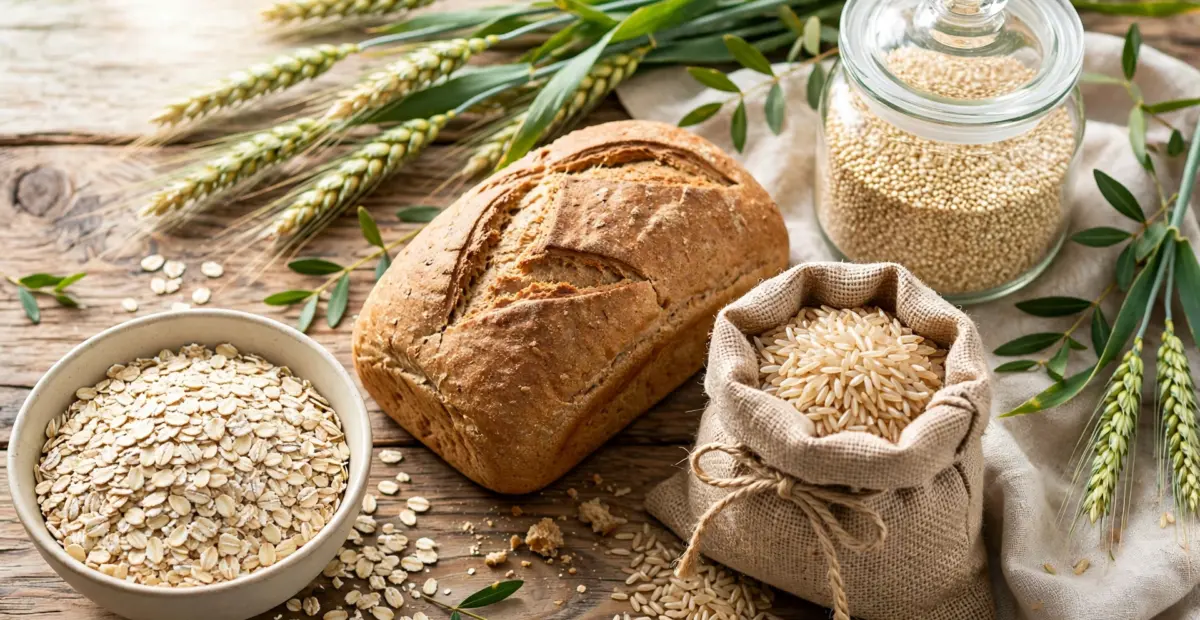
Walk down the bread aisle with a list that just says “whole grains” and you’ll face a wall of brown loaves, “multigrain” crackers, and cereal boxes shouting about fiber. Most of them are fine. Some of them are barely whole grain at all. The difference is worth learning, because swapping refined grains for whole ones is one of the simplest upgrades you can make to a weekly shop — and it doesn’t require a new diet, a specialty store, or a bigger budget.
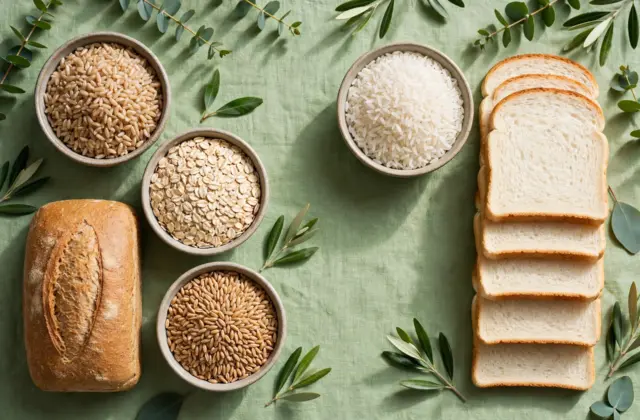
Whole grains are grains that keep all three parts of the kernel: the bran, the germ, and the endosperm. Refining strips away the bran and germ, which is where most of the fiber, B vitamins, magnesium, and other nutrients live. That’s why two slices of bread can look similar and behave very differently in your body. The current Dietary Guidelines for Americans (2025–2030) set a goal of 2–4 servings of whole grains a day for most adults, with one serving equal to half a cup of cooked oats, brown rice, or quinoa, or one slice of bread. Hitting that target starts in the grocery store, not at the dinner table.
This list covers the whole-grain foods worth space in your cart, how to spot the real thing on a label, and how to store everything so it actually gets eaten.
What counts as a whole grain?
A food counts as a whole grain when it contains the entire kernel. That includes the obvious ones — oats, brown rice, whole wheat — and a few you might not think of as grains at all, like popcorn and cornmeal made from whole corn. The U.S. Food and Drug Administration allows foods that contain at least 51% whole-grain ingredients by weight to carry a health claim linking diets rich in whole-grain foods and other plant foods, low in saturated fat and cholesterol, to a lower risk of heart disease. That 51% figure is a useful floor, but for your own shopping, aim higher: the first ingredient on the label should say “whole” — whole wheat, whole oats, whole-grain brown rice — and ideally the product should be mostly or entirely whole grain.
Two words on packages are not what they seem. “Multigrain” only means more than one type of grain went into the product; every one of them could be refined. “Wheat flour” is refined white flour with a rustic-sounding name. “Made with whole grains” can legally describe a product that contains only a small amount. If the label doesn’t lead with a whole grain, put it back.
Start with breakfast: oats, bread, and cereal
Breakfast is the easiest place to lock in a daily serving of whole grains, because the swaps are nearly one-for-one.
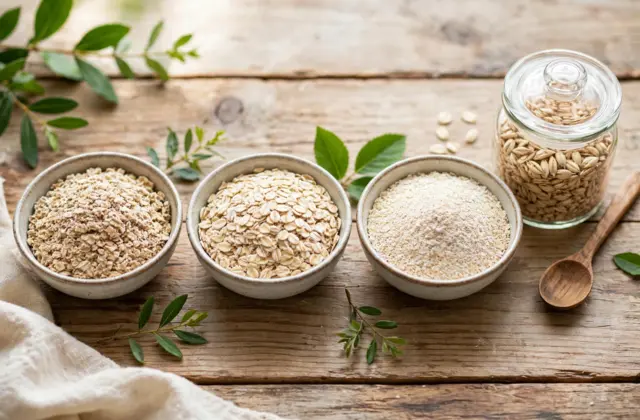
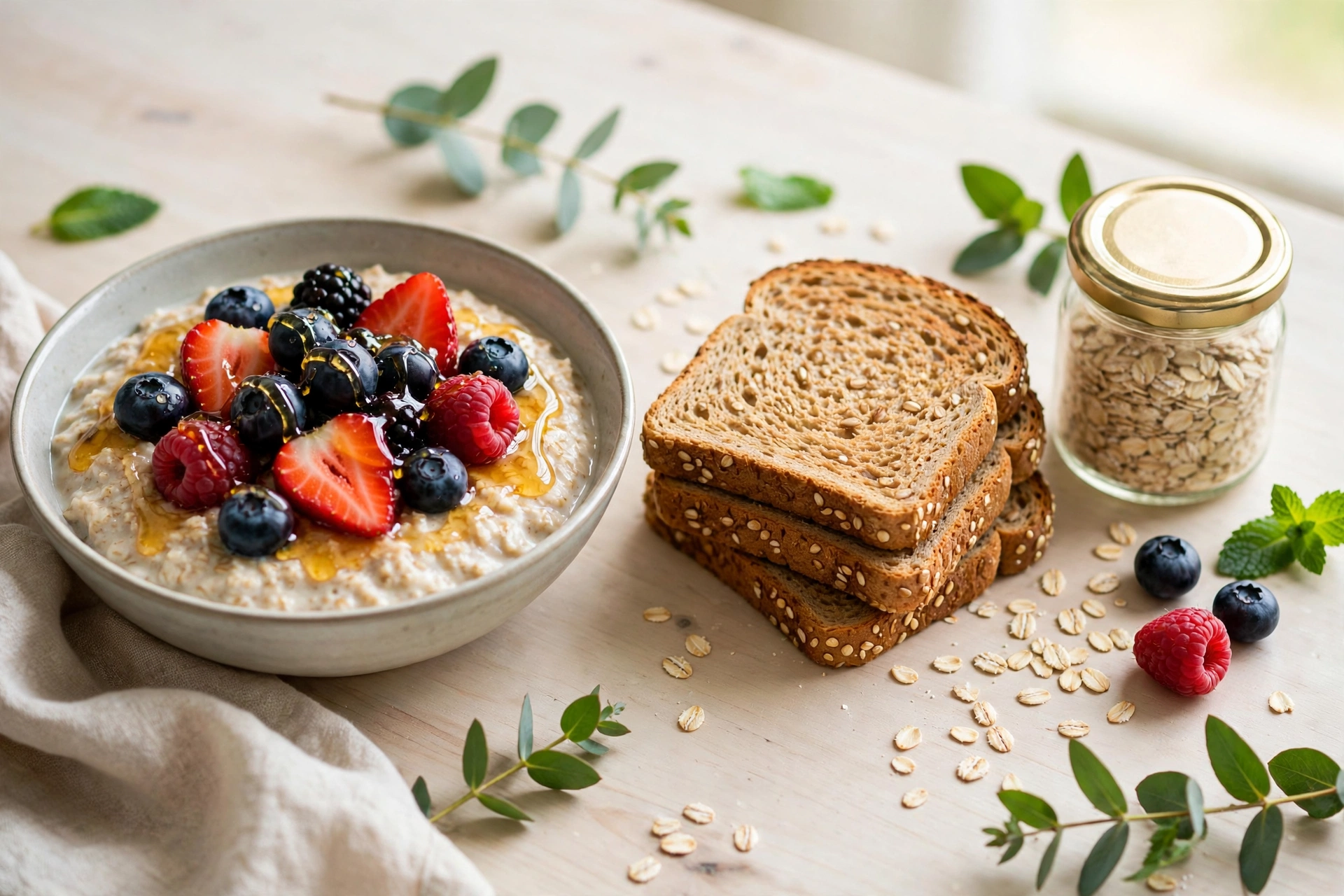
Rolled oats. A half cup of dry rolled oats (about 40 grams) carries roughly 4 grams of fiber and cooks into a full bowl in five minutes. Oats are also one of only two grains — the other is barley — that contain enough beta-glucan, a soluble fiber, to support the FDA-authorized claim that 3 grams a day of soluble fiber from oats may help lower cholesterol as part of a diet low in saturated fat and cholesterol. Steel-cut oats are the same grain with less processing; instant oatmeal works too, but check the packet for added sugar — plain is the better buy.
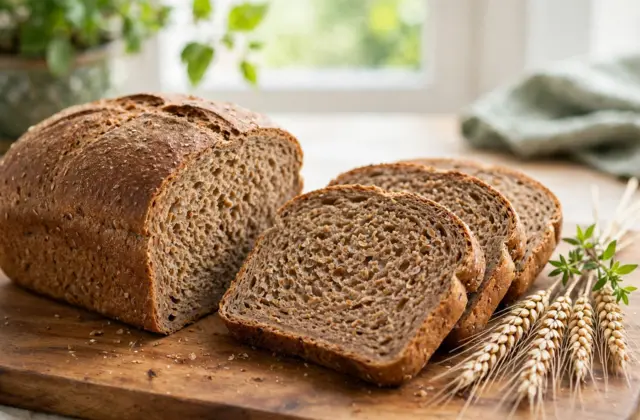
Whole-wheat bread. One slice gives about 2 grams of fiber, compared with less than 1 gram in white bread. Look for “100% whole wheat” as the first ingredient and at least 2 grams of fiber per slice. Bread labeled “wheat bread” or “made with whole grains” without that first-ingredient check is often mostly refined flour tinted brown with molasses.
Whole-grain cereal and bran flakes. A good cereal lists a whole grain first and delivers at least 3 grams of fiber per serving with less than 5 grams of added sugar. Bran flakes, with about 5.5 grams of fiber per three-quarter-cup serving, are one of the highest-fiber breakfast options on the shelf. If the box shows a Whole Grain Stamp, the number on it tells you the grams of whole grain per serving — 16 grams or more is a full serving, and the “100% Stamp” means every grain ingredient in the product is whole grain.
Read also: How to Choose Whole Grains
The cooking grains: brown rice, quinoa, barley, and bulgur
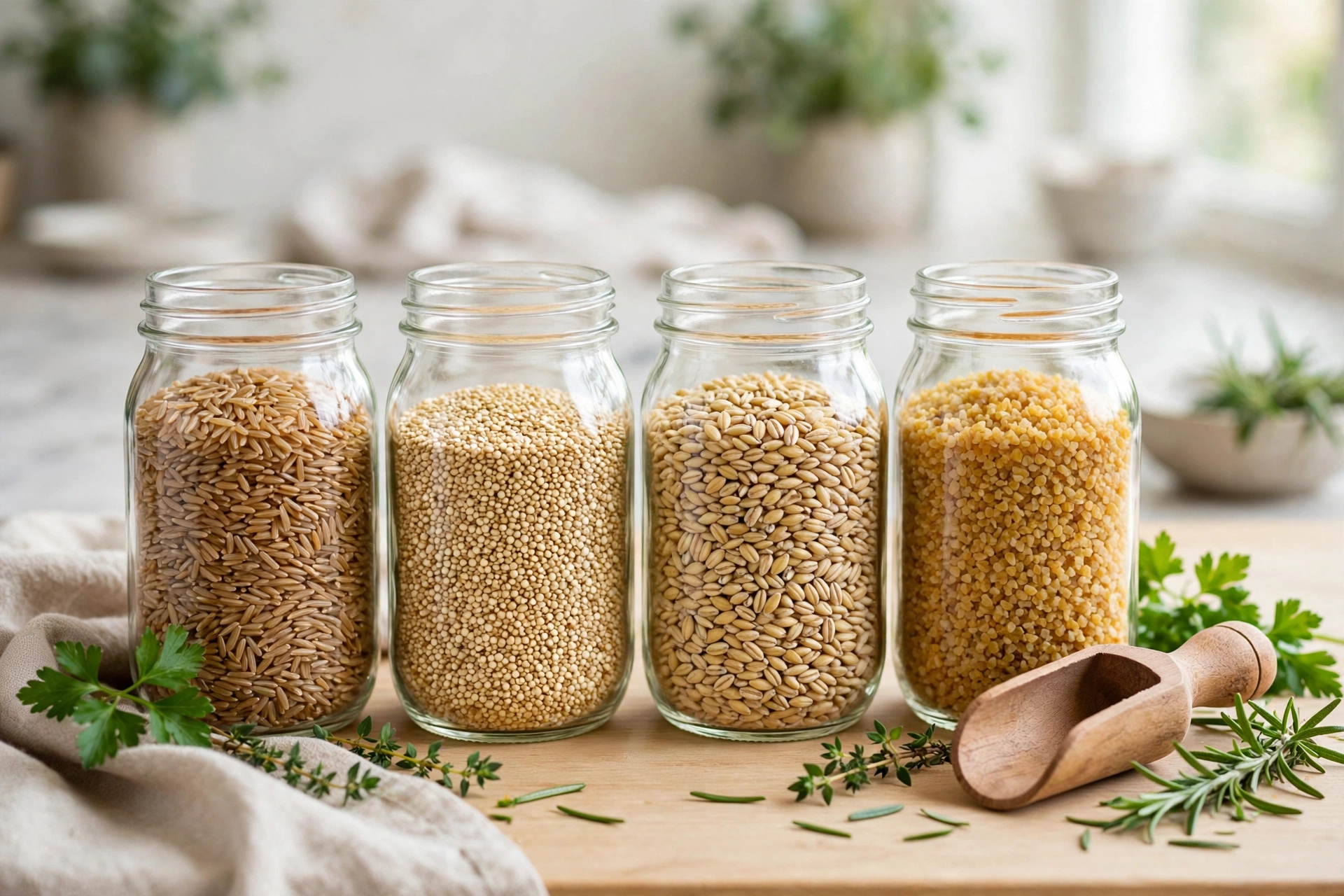
These are the workhorses. Buy them dry in bags or from the bulk bins — they’re cheap, they keep for months, and one pot covers several meals.
Brown rice. A cup of cooked brown rice gives about 3.5 grams of fiber, roughly five times what the same amount of white rice offers, along with more magnesium. It takes 40–45 minutes on the stove, so cook a double batch and refrigerate the extra; cooked rice keeps 3–4 days and reheats well for grain bowls and stir-fries.
Quinoa. Technically a seed, quinoa cooks like a grain and is unusual among plant foods in providing all nine essential amino acids. A cup cooked has about 5 grams of fiber and 8 grams of protein. Rinse it before cooking to wash off the bitter-tasting saponin coating, then simmer one part quinoa to two parts water for about 15 minutes.
Barley. Pearled barley, the kind most stores stock, cooks in about 30 minutes and delivers around 6 grams of fiber per cooked cup — one of the highest of any common grain. Hulled barley keeps the bran intact and has even more fiber, but takes closer to an hour. Like oats, barley is rich in beta-glucan, which is why it shows up in the same cholesterol-related health claim.
Bulgur. Cracked wheat that’s been parboiled and dried, bulgur needs only hot water and ten minutes of soaking — no simmering. A cooked cup packs about 8 grams of fiber, the most of any grain in this list, and it makes a quick base for salads and pilafs. If you already buy instant couscous for speed, bulgur is the whole-grain swap that costs you nothing in time.
Buckwheat and farro. Buckwheat, despite the name, contains no wheat and is naturally gluten-free; a cooked cup has about 5 grams of fiber and a nutty flavor that works in porridge and pancakes. Farro, an ancient wheat, is chewy and hearty with about 5 grams of fiber per cooked cup, and it holds up well in soups and grain salads. Both cost more than rice, so treat them as variety grains rather than staples.
Read also: How to Add Fiber to Your Diet
Pasta, tortillas, and popcorn
Whole-wheat pasta. A cup of cooked whole-wheat spaghetti has about 6 grams of fiber, nearly three times the fiber of regular pasta, and the same cooking time. The texture is firmer and nuttier, which suits tomato and olive-oil sauces especially well. If your family resists a full switch, try a 50–50 blend of whole-wheat and regular pasta for a few weeks.
Whole-wheat and corn tortillas. A whole-wheat tortilla counts as one serving of whole grain; check that “whole wheat flour” is the first ingredient, not “enriched flour.” Corn tortillas made from whole corn are also a whole-grain choice and are usually the cheaper option. Flour tortillas made from refined white flour are not.
Popcorn. Air-popped popcorn is a whole grain, and three cups give about 3.5 grams of fiber for roughly 90 calories. It’s the one snack on this list that needs no cooking skill at all. Buy plain kernels and pop them yourself; microwave bags and movie-theater styles often add a lot of salt, butter flavoring, and oil that undo the point.
How to read a whole-grain label in ten seconds
Labels are where most whole-grain shopping goes wrong, so make this a habit. First, read the ingredient list: the first ingredient should contain the word “whole.” Second, look at fiber — a product with less than 2 grams of fiber per serving probably isn’t carrying much whole grain, whatever the front of the box says. Third, check the Whole Grain Stamp if there is one: 8 grams is the minimum for the basic stamp, 16 grams is a full serving, and the 100% stamp means all the grain is whole grain.
A few traps to watch for: “enriched wheat flour” is refined flour with some nutrients added back; “wheat flour” without “whole” is the same thing. “Multigrain” says nothing about whether the grains are whole. And a dark brown color is no guarantee — some breads get their color from molasses or caramel coloring, not from whole grain.
Read also: How to Read Food Labels
A simple whole-grain shopping list
You don’t need all twelve foods on this list. A good starter cart covers breakfast, one cooking grain, and one snack:
- Breakfast: rolled oats and 100% whole-wheat bread
- Cooking grains: brown rice and quinoa (or bulgur if you want speed)
- Pasta and wraps: whole-wheat pasta and whole-wheat or corn tortillas
- Snacks and cereal: air-pop popcorn kernels and a whole-grain cereal with at least 3 grams of fiber per serving
- Variety: barley or farro, one bag at a time, to keep things interesting
Buy dry grains in the largest bag you can store — the price per serving drops sharply compared with single-serve packets. Whole grains still contain the germ’s natural oils, so they go stale faster than refined grains: keep oats and bread in a cool, dry cupboard and use them within a few weeks, and store whole-wheat flour and brown rice in the fridge or freezer if you won’t finish them within a month or two.
Frequently asked questions
How many servings of whole grains do I need a day?
The Dietary Guidelines for Americans, 2025–2030, recommend 2–4 servings of whole grains a day for most adults, depending on calorie needs. One serving is half a cup of cooked oats, brown rice, quinoa, or barley, one slice of bread, or one tortilla.
Is brown rice really better than white rice?
Yes, for fiber and nutrients. A cup of cooked brown rice has about 3.5 grams of fiber versus less than 1 gram in white rice, plus more magnesium and B vitamins, because the bran and germ are still there. White rice is fine occasionally, but brown rice earns its place as the everyday choice.
What does the Whole Grain Stamp number mean?
The stamp, run by the Whole Grains Council, shows the grams of whole grain in one serving. The basic stamp requires at least 8 grams; 16 grams equals one full serving. The “100% Stamp” means every grain ingredient in the product is whole grain.
Are gluten-free grains whole grains?
Many are. Quinoa, buckwheat, brown rice, millet, sorghum, and certified gluten-free oats are all whole grains and naturally gluten-free. Wheat, barley, rye, and farro contain gluten, so if you avoid gluten, stick to the gluten-free list and check for a certified gluten-free label to avoid cross-contamination.
This article is for general information only and is not medical advice. If you have a digestive condition such as coeliac disease, a wheat allergy, or a medical reason to limit fiber, talk to your doctor or a registered dietitian before changing your diet.
Sources
- Dietary Guidelines for Americans, 2025–2030 — U.S. Department of Agriculture and U.S. Department of Health and Human Services (whole-grain serving goals: 2–4 servings per day)
- Health Claim Notification for Whole Grain Foods — U.S. Food and Drug Administration (51% whole-grain ingredients definition)
- Government Guidance on Whole Grain Labeling — Whole Grains Council (Whole Grain Stamp thresholds: 8 g and 16 g per serving)
- How to Identify Whole Grains: A Guide to Food Labeling — International Food Information Council (whole-grain definition and labeling guidance)
- Chart of High-Fiber Foods — Mayo Clinic, sourced from USDA FoodData Central (fiber values for oats, quinoa, brown rice, barley, bulgur, whole-wheat bread and pasta, popcorn)