Water vs. Sparkling Water: Key Differences
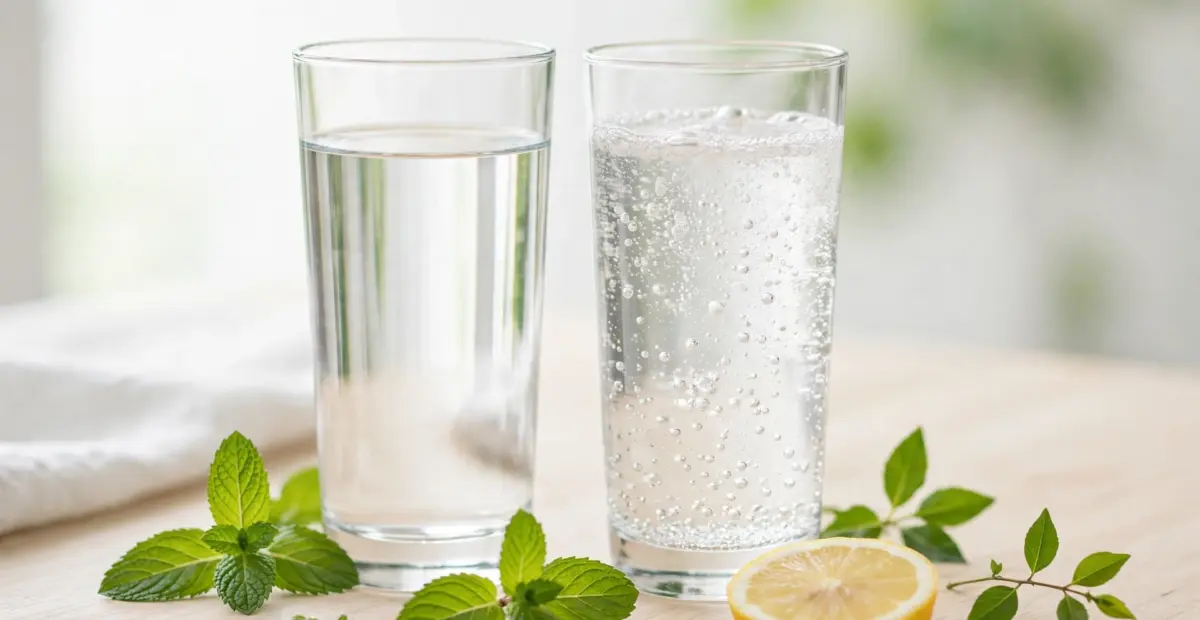
Still water is the plain one. Sparkling water is the same thing with a party trick: carbon dioxide pumped in under pressure, which escapes as bubbles the moment you open the bottle. Same H2O, same zero calories, same job in your body — and yet the two get treated very differently. Sparkling water gets blamed for weak bones, bad teeth, and bloating, while still water gets called boring. Most of that reputation doesn’t survive a look at the research.
The real differences are smaller and more specific than the headlines suggest. They show up in your teeth, your stomach, and the fine print on the label — not in how hydrated you get.
What actually makes them different
Still water is just water. Sparkling water is water with carbon dioxide dissolved in it. When CO2 meets water it forms a small amount of carbonic acid, which is why sparkling water tastes slightly sharp and measures more acidic than still water. Plain sparkling water usually sits around pH 5, while still water is close to neutral at pH 7.
That one chemical change explains almost everything people argue about. The acid is weak — nothing like the phosphoric or citric acid in soda — but it is real, and it matters in some situations and not at all in others.
The words on the bottle matter too. “Seltzer” is usually just carbonated water. “Club soda” adds minerals, often including sodium bicarbonate. “Sparkling mineral water” comes from a natural spring and carries its own dissolved minerals. “Tonic water” is a different drink entirely: it contains sugar and quinine, and a 12-ounce serving can carry around 30 grams of sugar. If the label lists sugar, sweetener, or citric acid, you are no longer comparing water to water.
Hydration: the bubbles change nothing
This is the question most people actually care about, and the answer is settled. In a 2016 randomized trial published in The American Journal of Clinical Nutrition, researchers gave 72 men one liter of one of 13 drinks — still water, sparkling water, cola, coffee, tea, milk, and others — and measured urine output over the next four hours. Sparkling water performed no differently from still water. On the study’s beverage hydration index, where still water scores 1.0, sparkling water scored the same. Only milk and an oral rehydration solution beat water, by about 50 percent.
The reason is straightforward: your body absorbs the water the same way whether or not it arrived with bubbles. The carbon dioxide separates from the water in your stomach and is breathed out or burped away. It never interferes with how fluid moves into your bloodstream.
So yes, sparkling water counts toward your daily fluid intake, glass for glass, just like still water. The U.S. National Academies set the adequate intake for total water — from drinks and food combined — at 3.7 liters a day for men and 2.7 liters for women, with roughly 20 percent typically coming from food. How much of the rest comes from still or sparkling water makes no difference to your hydration.
Read also: How Much Water Do You Need? a General Guide
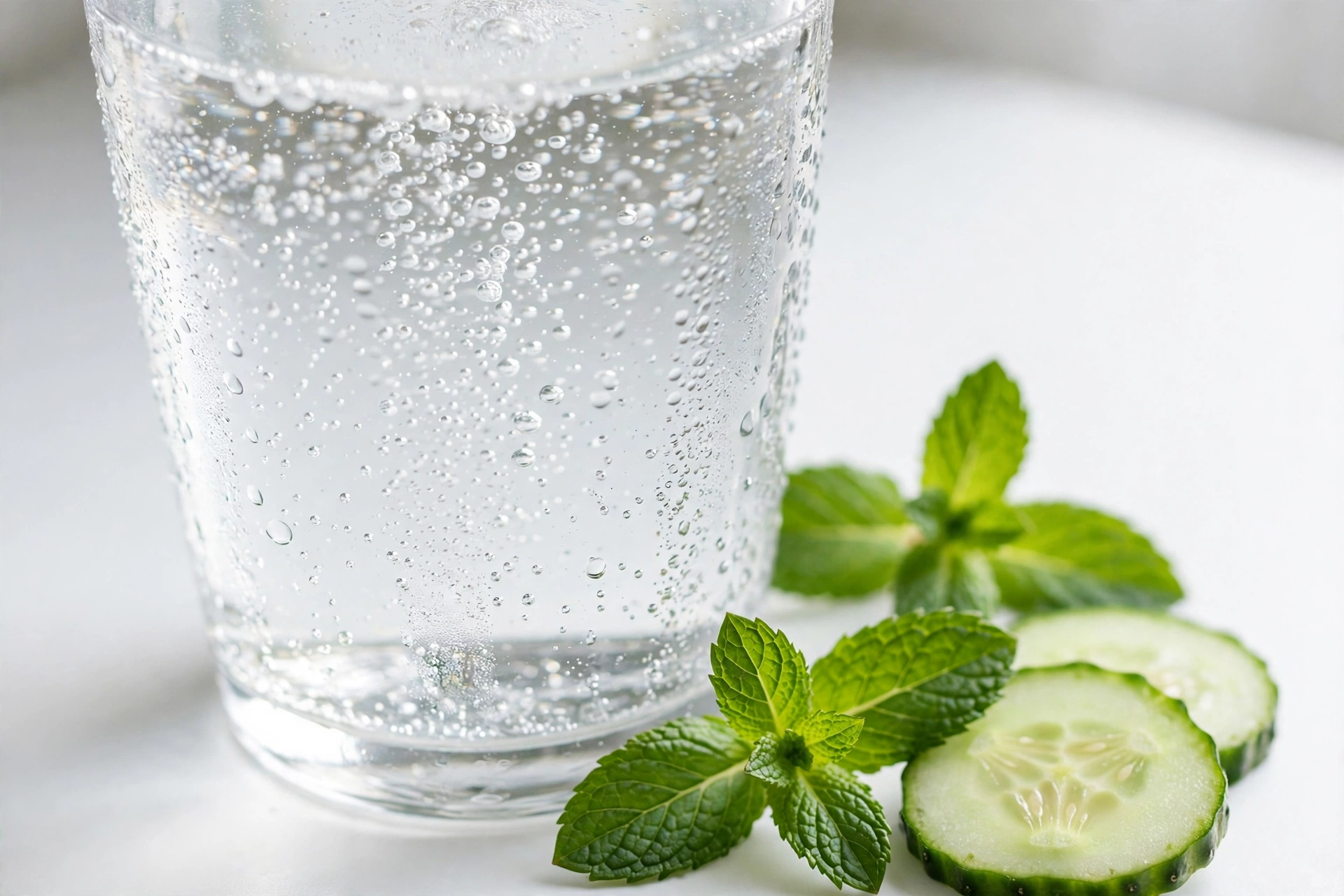
Your teeth: plain is fine, flavored is the catch
Here is where the acid actually matters. Tooth enamel starts to soften when the pH in your mouth drops below about 5.5, and plain sparkling water sits right around that line. That sounds alarming until you look at what the lab studies found.
A 2016 study in the Journal of the American Dental Association measured the pH of nearly 400 beverages. Plain sparkling waters came in around pH 5 — Perrier measured 5.5 — while soda and fruit juice sat far lower. In a separate lab test on donated human teeth, plain sparkling water caused about the same minimal enamel erosion as still water. The American Dental Association’s position is that plain sparkling water is generally safe for teeth in moderation, and far less damaging than soda or sports drinks.
The catch is flavor. Flavored sparkling waters often add citric acid for tartness, and a 2007 lab study measured some flavored varieties at pH 2.7 to 3.3 — acidic enough to dissolve enamel in the lab, and much closer to soda territory. Citrus flavors are the usual suspects. A bottle that says “lemon” or “lime” on the front and lists citric acid in the ingredients is a different drink from plain seltzer, as far as your teeth are concerned.
A few habits keep the risk low. Drink plain, unflavored sparkling water rather than flavored. Have it with a meal, when food and saliva buffer the acid. Don’t sip it slowly all afternoon — that keeps your mouth acidic for hours. Rinse with plain water afterward, and wait at least 30 minutes before brushing so you don’t scrub softened enamel. And don’t let sparkling water replace fluoridated tap water entirely if that’s your main fluoride source.
Digestion and reflux: mostly a comfort question
Bubbles take up space in your stomach, and that space has to go somewhere. For most people that means a burp and nothing more. For some, it means bloating, fullness, or a flare of reflux symptoms — and the research is honest about both sides.
A systematic review published in 2010 in Alimentary Pharmacology & Therapeutics looked at every available study on carbonated beverages and reflux. It found that carbonated drinks cause only a very brief dip in esophageal pH and may briefly lower the pressure of the valve between the stomach and esophagus. But it found no evidence that they directly damage the esophagus, and they have not been consistently shown to cause reflux symptoms. The authors’ conclusion: there is no direct evidence that carbonated beverages promote or worsen reflux disease.
That said, individual experience counts. In a small crossover trial, carbonated cola increased feelings of fullness, heartburn, and belching compared with flat cola and water — the symptoms were real even though no stomach acid reached the mouth. If you have reflux and sparkling water reliably makes it worse, that is enough reason to choose still, whatever the averages say.
On the other side, a small 2002 study found that carbonated water eased symptoms of indigestion and constipation in some participants. The study was tiny — 21 people — so treat it as interesting, not proven. The practical point is that carbonation is not inherently bad for digestion; it is a comfort variable, and your own stomach is the best judge.
Bones: blame the cola, not the fizz
The idea that fizzy drinks weaken bones comes from a real study — but it was about cola, not carbonation. In the Framingham Osteoporosis Study, published in 2006, researchers measured bone mineral density in 1,413 women and 1,125 men. Women who drank cola daily had bone density 3.7 percent lower at the femoral neck and 5.4 percent lower at Ward’s area of the hip than women who drank cola less than once a month.
The key finding is what didn’t show up: there was no association between bone density and non-cola carbonated drinks. The researchers suspected phosphoric acid — an ingredient in cola but not in plain sparkling water — or the way cola displaces milk and other calcium sources in the diet. Plain sparkling water contains neither phosphoric acid nor sugar, and no study has linked it to lower bone density.
What’s on the label: sugar, sodium, and “natural flavors”
Plain sparkling water has no sugar, no calories, and no sweetener. The trouble starts when a bottle looks like sparkling water but behaves like soda. Some flavored sparkling waters add sugar or sweeteners, and a few “sparkling juice” drinks are mostly juice with bubbles. The American Heart Association recommends keeping added sugars to no more than 25 grams a day for women and 36 grams for men, and the World Health Organization suggests keeping free sugars below 10 percent of daily energy — ideally below 5 percent, about 25 grams on a 2,000-calorie diet. A single 12-ounce cola carries about 39 grams of sugar, more than either limit. A flavored sparkling water with added sugar can quietly eat a large share of that budget.
Sodium is the other label item worth a glance. Plain seltzer typically has zero sodium. Club soda and some mineral waters add sodium bicarbonate, which can mean tens of milligrams per serving. That is small compared with a meal, but if you are watching sodium closely, check the label. The U.S. Food and Drug Administration defines “sodium-free” as less than 5 milligrams per serving and “very low sodium” as 35 milligrams or less.
“Natural flavors” on a sparkling water label is usually just that — flavor compounds with no sugar and no calories. It is not a red flag on its own. Citric acid in the ingredients list is the one to notice, because it is what drops the pH and raises the dental risk.
Read also: How to Compare Sugary and Unsweetened Drinks
Still vs. sparkling at a glance
| Still water | Plain sparkling water | |
|---|---|---|
| Hydration | Reference standard | Identical — same score in the beverage hydration index study |
| Calories and sugar | 0 | 0 (plain); check flavored versions |
| pH | ~7, neutral | ~5, mildly acidic from carbonic acid |
| Teeth | No erosion risk | Minimal erosion; flavored versions with citric acid are riskier |
| Digestion | No bloating | Can cause burping or fullness; no proven link to reflux disease |
| Bones | No effect | No effect — the cola link does not apply to plain sparkling water |
| During exercise | Best choice | Bubbles can make it harder to drink enough, quickly |
When still water wins
There are a few situations where plain water is simply the better tool. During a hard workout or on a hot day, you need volume, and a stomach full of gas makes it harder to drink a lot quickly — still water goes down easier. If you have reflux and sparkling water reliably triggers symptoms, still water removes the variable. And if you sip something all day long, still water is kinder to your teeth than any acidic drink, even a mildly acidic one.
None of that makes sparkling water a bad choice the rest of the time. It is a genuinely useful one, in fact: many people drink more water overall when some of it sparkles. If bubbles are what get you to finish the glass, they are doing their job.
How to pick a good sparkling water
Choosing well takes about ten seconds at the shelf. Start with plain, unflavored seltzer or sparkling mineral water — the ingredient list should read “carbonated water” and not much else. Skip anything with sugar, sweetener, or citric acid on the label, especially citrus flavors. If you like flavor, add your own: a squeeze of lemon in the glass gives you the taste without bathing your teeth in acid all afternoon, and you control the amount.
Check sodium if it matters to you — plain seltzer is usually zero, club soda usually isn’t. And treat tonic water as a soft drink, not a water: the sugar and quinine put it in a different category entirely.
Read also: Simple Ways to Drink More Water Every Day
Frequently asked questions
Does sparkling water count as water intake?
Yes. In the 2016 beverage hydration index trial, sparkling water hydrated exactly as well as still water. It counts toward your daily fluid intake, glass for glass.
Is sparkling water bad for your teeth?
Plain sparkling water is generally considered safe for teeth in moderation — lab studies found its effect on enamel was about the same as still water. Flavored sparkling waters with added citric acid are more acidic and carry more erosion risk, especially if sipped over a long time.
Does sparkling water cause acid reflux?
There is no direct evidence that carbonated drinks cause or worsen reflux disease, according to a 2010 systematic review. But carbonation can increase burping, fullness, and heartburn in some people, so if it bothers you, still water is the safer choice.
Does sparkling water weaken bones?
No. The Framingham study linked daily cola drinking — not carbonated water — to lower bone density in women. No association was found for non-cola carbonated drinks, and plain sparkling water contains no phosphoric acid, the suspected culprit in cola.
Sources
- Maughan RJ, Watson P, Cordery PAA, et al. A randomized trial to assess the potential of different beverages to affect hydration status: development of a beverage hydration index. American Journal of Clinical Nutrition. 2016;103(3):717–723. PubMed
- Reddy A, Norris DF, Momeni SS, Waldo B, Ruby JD. The pH of beverages in the United States. Journal of the American Dental Association. 2016;147(4):255–263. American Dental Association
- Johnson T, Gerson L, Hershcovici T, Stave C, Fass R. Systematic review: the effects of carbonated beverages on gastro-oesophageal reflux disease. Alimentary Pharmacology & Therapeutics. 2010;31(6):607–614. PubMed
- Tucker KL, Morita K, Qiao N, Hannan MT, Cupples LA, Kiel DP. Colas, but not other carbonated beverages, are associated with low bone mineral density in older women: The Framingham Osteoporosis Study. American Journal of Clinical Nutrition. 2006;84(4):936–942. EurekAlert / Tufts University
- National Academies of Sciences, Engineering, and Medicine. Dietary Reference Intakes for Water, Potassium, Sodium, Chloride, and Sulfate. 2005. National Academies Press
- American Heart Association. Added sugars. American Heart Association
- World Health Organization. Guideline: Sugars intake for adults and children. 2015. World Health Organization
Disclaimer: This article is for general information only and is not medical or dental advice. If you have reflux, dental erosion, or a medical condition that affects what you can drink, talk to your clinician or dentist about what fits your situation.