Unsweetened vs. Sweetened Tea: What to Know
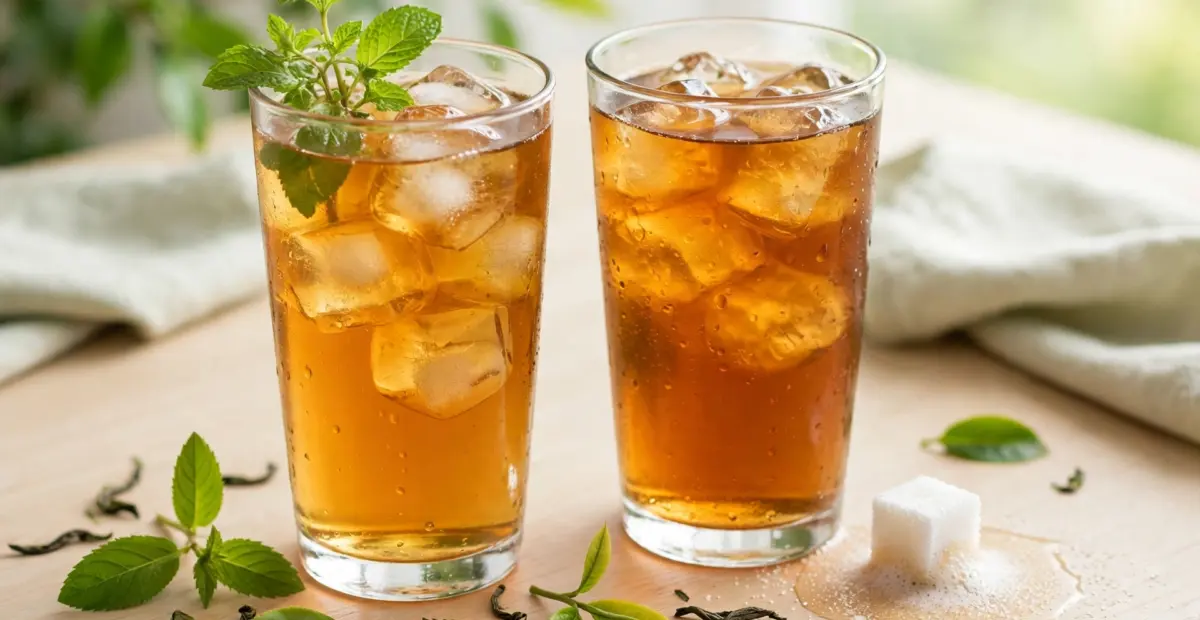
Order a tea at a café, a restaurant, or a drive-through, and you’ll face a question that sounds simple but hides a real nutritional fork in the road: sweetened or unsweetened? The two drinks share the same leaves, the same brewing method, and often the same glass. What changes is a spoonful — or several spoonfuls — of sugar, and that single difference turns a nearly calorie-free drink into something closer to soda.
Tea itself is one of the oldest drinks in the world, and plain brewed tea is genuinely light: an 8-ounce cup of black tea has about 2 calories and no sugar at all, according to the USDA’s FoodData Central. The moment sugar goes in, the drink stops being tea with a little sweetness and starts being a sugary beverage that happens to taste like tea. Understanding where that line falls helps you enjoy tea the way you like it without accidentally drinking a dessert.
What Unsweetened Tea Actually Contains
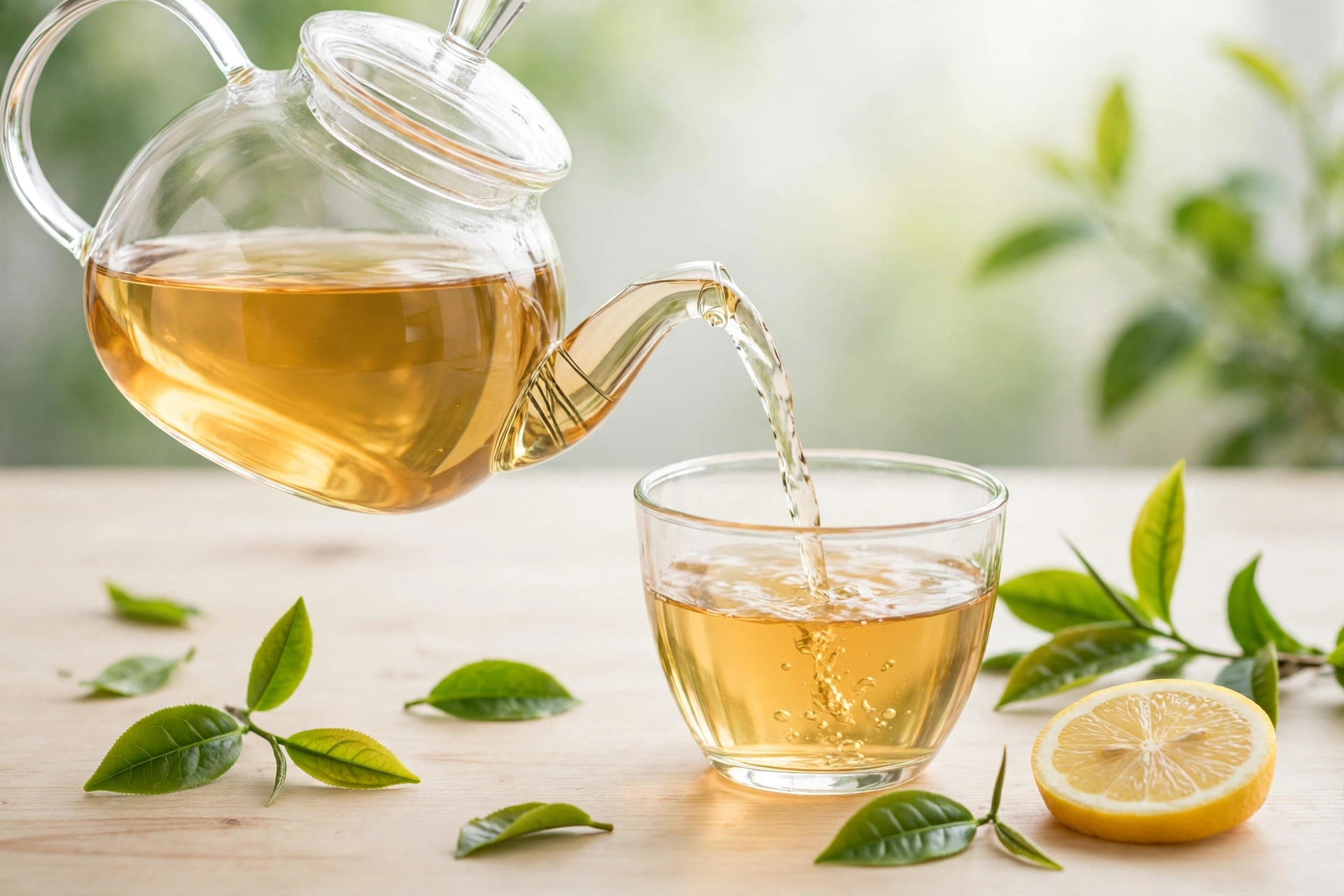
Unsweetened tea is just tea leaves and water. Black, green, white, and oolong teas all come from the same plant, Camellia sinensis, and the differences between them come from how the leaves are processed, not from anything added to the cup.
A standard 8-ounce cup of brewed black tea carries roughly 47 milligrams of caffeine, while green tea has about 28 milligrams, per USDA data. For comparison, the same amount of brewed coffee has around 95 milligrams. Tea also contains flavonoids — plant compounds, especially catechins and epicatechins, that have been linked in large population studies to better heart and blood-vessel health. A 2021 umbrella review of the research concluded that about two cups of unsweet tea a day provides enough flavonoids to potentially lower cardiovascular risk, though the authors stressed that tea works best as part of an overall healthy eating pattern, not as a medicine on its own.
Herbal teas, like chamomile, peppermint, and hibiscus, are caffeine-free by nature since they aren’t made from tea leaves at all. They bring their own flavors and aromas, and — unsweetened — they share the same near-zero calorie profile.
None of this makes unsweetened tea a health drink you need to chase. It makes it a pleasant, hydrating habit that adds almost nothing to your daily calorie or sugar budget. That neutrality is the point: plain tea doesn’t help or hurt much, and that is exactly what makes it such a useful everyday drink.
What Happens When Sugar Enters the Cup
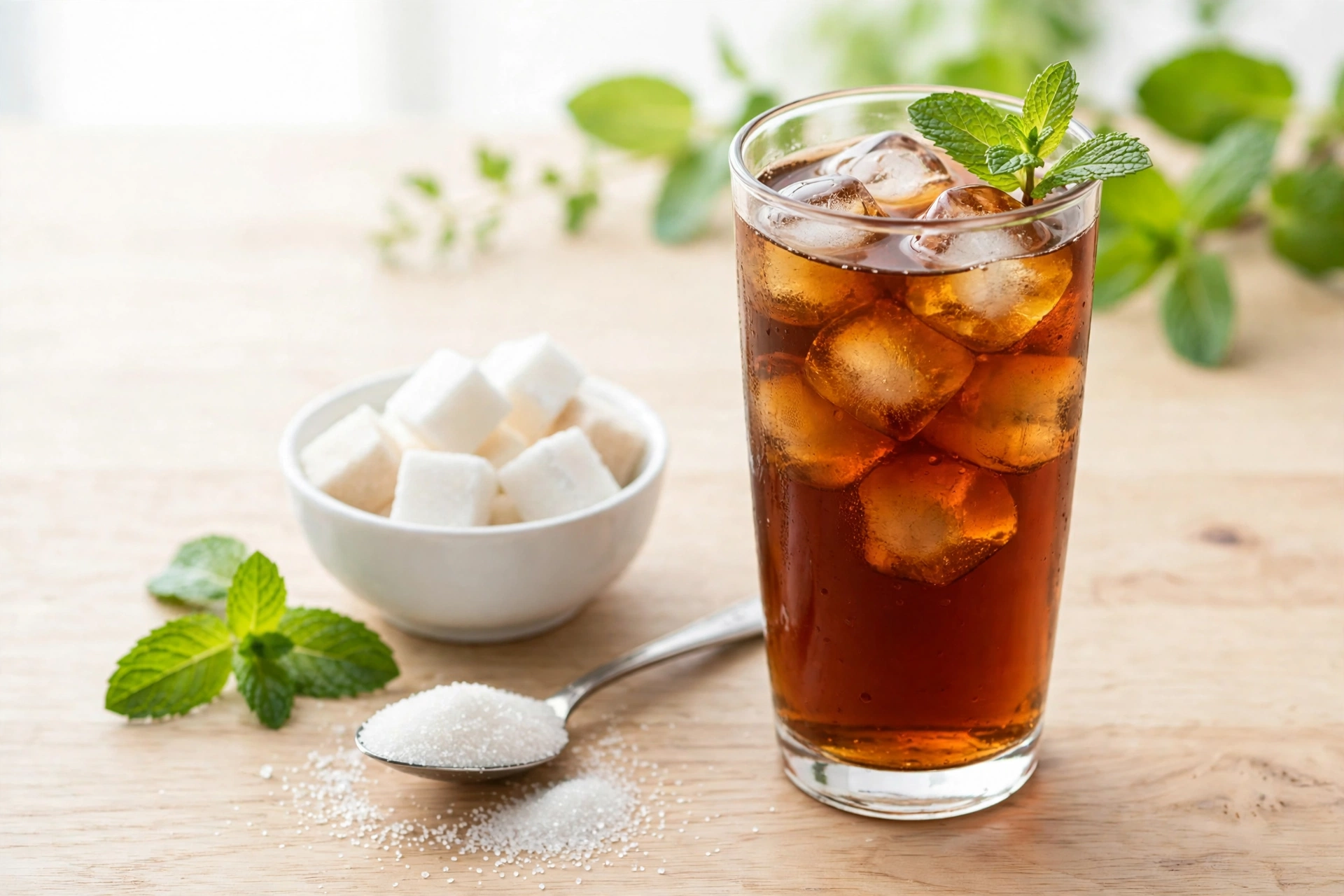
Sweetened tea is a different drink, nutritionally speaking. A teaspoon of sugar adds about 16 calories and 4 grams of sugar. That sounds small until you count how many teaspoons actually go in. A typical homemade sweet tea uses around a quarter cup of sugar per quart — roughly 4 teaspoons per 8-ounce glass, or about 16 grams of sugar and 60-plus calories.
Bottled sweet tea is where the numbers climb fast. A 16.9-ounce bottle of Gold Peak sweet tea contains 170 calories and 44 grams of sugar — more sugar than the American Heart Association recommends for an entire day for most women (25 grams) and more than the daily limit for most men (36 grams), in a single bottle. A lighter option like Lipton Texas Style sweet tea still carries 24 grams of sugar per 16.9-ounce bottle. Harvard Health has warned that some bottled teas pack as much as nine teaspoons of sugar per serving, nearly matching colas.
Read also: Beverage Calories: How to Compare Common Drinks
The sugar also changes how the drink behaves in your body. Plain tea barely registers on blood sugar. Sweet tea, with its load of quickly absorbed sugar, can spike blood glucose in much the same way a soft drink does — a real consideration if you are watching blood sugar or managing prediabetes. And because liquid calories don’t satisfy hunger the way food does, those 90 to 170 calories rarely replace anything else you eat; they simply add on top.
The Sugar Math: How One Glass Fits Your Day
Health authorities give you a useful yardstick. The World Health Organization recommends keeping free sugars — sugars added to foods and drinks, plus those in honey, syrups, and fruit juices — below 10% of your total daily energy, with a further reduction below 5%, roughly 25 grams a day on a 2,000-calorie diet, offering extra benefits for weight and dental health. The American Heart Association’s limits are similar: no more than 25 grams of added sugar a day for most women and 36 grams for most men.
Against those numbers, a single 16-ounce glass of sweet tea made the usual way can use up most of your day’s sugar budget before lunch. Two glasses can blow past it entirely. Unsweetened tea, at zero grams, leaves the whole budget untouched.
That doesn’t mean sweet tea is forbidden. It means it counts. If sweet tea is a drink you genuinely enjoy, the honest way to keep it is as an occasional treat you budget for — the way you would a slice of cake — rather than as your default thirst quencher all day long.
Flavor Without the Sugar Load
If you like sweet tea but want to cut back, you don’t have to jump straight to plain. A gradual taper works better for most people, because your taste buds genuinely adjust. Try these steps:
- Halve it first. Use half the sugar you normally would for a week or two. Most people stop noticing the difference within days.
- Mix the two. Order or brew half sweet, half unsweet — a common trick in the American South that cuts the sugar load by 50% while keeping the flavor you recognize.
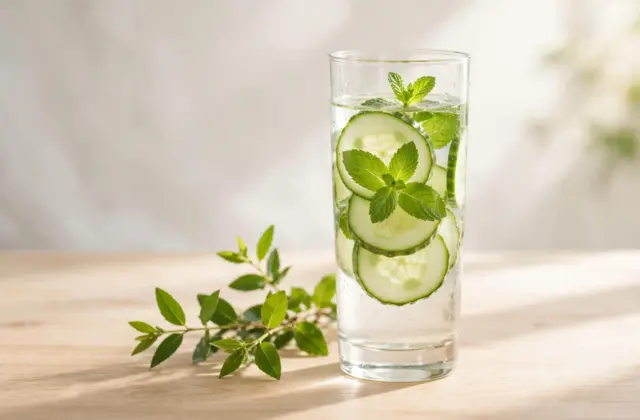
- Add fruit or herbs instead. Fresh mint, lemon, orange slices, or a few muddled berries add aroma and a sense of sweetness without sugar. Cold-brewed tea also tastes naturally smoother and less bitter, so it needs less sweetening.
- Try a splash of juice. A small amount of 100% fruit juice in unsweetened iced tea gives color and sweetness for far fewer grams of sugar than a fully sweetened version.
Read also: How to Make Fruit-Infused Water
If you use a zero-calorie sweetener, that keeps the drink sugar-free, but the evidence on long-term use is still evolving, and some people find that sweeteners keep their sweet tooth switched on. Plain tea with fruit or herbs is the simplest route, and it lets your palate reset over time.
Caffeine, Hydration, and Timing
Sweetened or not, tea counts toward your daily fluid intake. The old idea that tea dehydrates you has been overturned — the water in tea hydrates you, and the modest caffeine in a cup or two doesn’t cancel that out. The U.S. Food and Drug Administration notes that about 400 milligrams of caffeine a day is an amount not generally associated with negative effects for most healthy adults. At roughly 47 milligrams per cup of black tea, you’d need around eight cups to reach that level — far more than most people drink.
That said, timing matters. A strong cup of black tea late in the evening can disturb sleep for sensitive people, so an herbal tea or a decaf version is a better nightcap. And if you drink tea with meals, keep in mind that the tannins in tea can modestly reduce iron absorption from plant foods — a small effect, but worth knowing if you rely on beans, lentils, or leafy greens for iron. Drinking tea between meals rather than with them sidesteps the issue.
Read also: How Much Water Do You Need? A General Guide
Reading the Label on Bottled Tea
The tea aisle is where the sweetened-versus-unsweetened question gets sneaky. Bottles labeled “lightly sweetened,” “just a touch of honey,” or “naturally sweetened” can still carry 15 to 25 grams of sugar per bottle. A few label habits help:
- Check “Added Sugars” first. The Nutrition Facts panel lists added sugars separately — that’s the number that counts against your daily limit.
- Watch the serving size. Some bottles list two servings per container, so the sugar per bottle is double what’s printed for one serving.
- Scan the ingredients. Sugar, cane sugar, honey, agave, and high-fructose corn syrup all count as added sugars, whatever the marketing says.
- Look for the word “unsweetened” on the front. If the front label doesn’t say it, assume the tea is sweetened and check the back.
Which One Should You Choose?
For everyday drinking, unsweetened tea is the clear winner: nearly no calories, no sugar, plus the flavonoids and gentle caffeine that make tea enjoyable in the first place. It hydrates you, pairs with any meal, and never uses up your sugar budget.
Sweet tea still has a place — as a treat. Enjoy it when you really want it, in a sensible portion, and count it honestly as part of your day’s sugar. If you’re easing away from it, the half-and-half trick or a fruit-infused unsweetened brew usually gets you there without feeling deprived.
The choice isn’t really between two teas. It’s between a drink and a dessert that looks like a drink. Once you see it that way, the answer gets a lot easier.
Frequently Asked Questions
Is unsweetened tea actually healthy?
Plain brewed tea is a low-calorie, sugar-free drink that provides hydration and flavonoids linked to heart health in population studies. It’s a good everyday choice, though its benefits are modest and work best as part of an overall healthy diet — not as a cure for anything.
How much sugar is in a typical sweet tea?
A homemade glass (8 ounces) usually has around 16 grams of sugar, while a 16.9-ounce bottle of sweet tea can contain 24 to 44 grams depending on the brand — close to or above the American Heart Association’s full daily added-sugar limit for most adults.
Does sweet tea count as water for hydration?
Yes, the water in sweet tea hydrates you, but the sugar load means it isn’t an ideal everyday thirst quencher. Unsweetened tea or plain water is the better default, with sweet tea kept as an occasional treat.
Can I drink unsweetened tea every day?
For most healthy adults, yes. A few cups a day of unsweetened black, green, or herbal tea fits comfortably within the FDA’s general caffeine guidance of about 400 milligrams a day. If you’re pregnant, sensitive to caffeine, or take medication that interacts with tea, check with your clinician.
Sources
- American Heart Association — How Much Sugar Is Too Much?
- World Health Organization — WHO Calls on Countries to Reduce Sugars Intake Among Adults and Children
- USDA FoodData Central — Tea, Black, Brewed, Prepared with Tap Water
- Harvard Health — Drinking Tea May Benefit the Heart and Blood Vessels
- Keller A, Wallace TC — Tea Intake and Cardiovascular Disease: An Umbrella Review (Annals of Medicine, 2021)
Disclaimer: This article is for general information only and is not medical advice. If you have diabetes, heart disease, or another condition affected by sugar or caffeine, talk to your doctor or a registered dietitian about what fits your needs.