How to Compare Sugary and Unsweetened Drinks
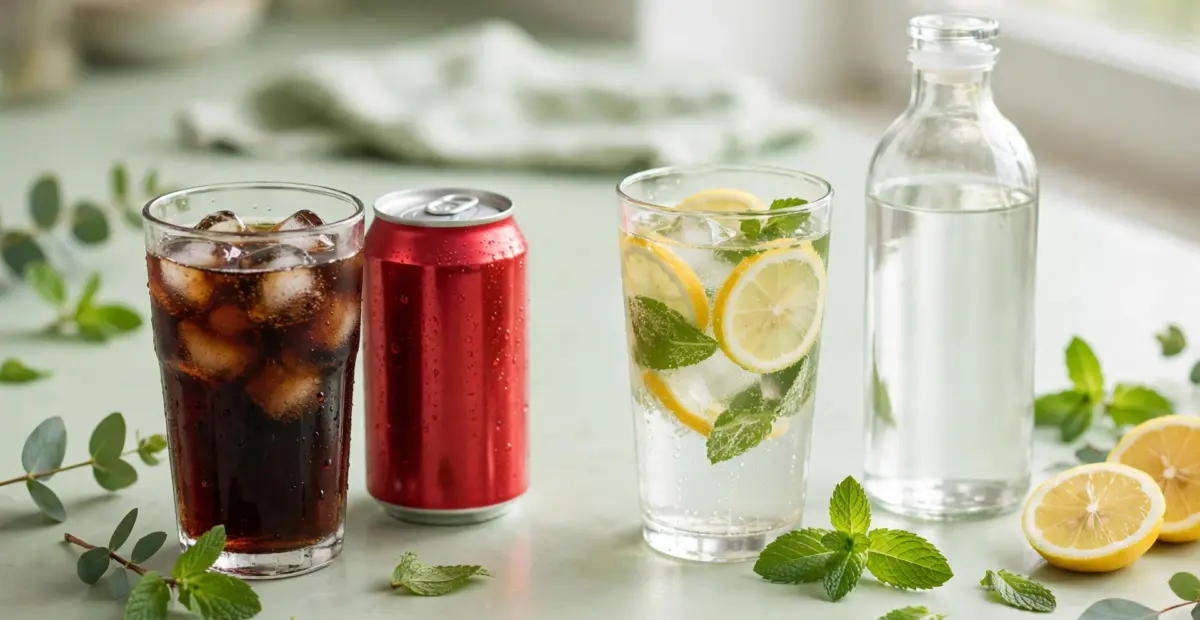
Pick up two bottles from the drinks aisle and they can look like twins: same size, same bright label, same promise of refreshment. Turn them around, though, and the story changes. One may carry ten teaspoons of added sugar; the other, none at all. Learning to spot that difference — quickly, without a nutrition degree — is one of the easiest wins in healthy eating, because drinks are where most of us take in sugar without noticing.
Sugar in a drink behaves differently from sugar in food. You chew an apple; you sip a soda. A glass of juice delivers the sugar of several oranges in under a minute, with almost none of the fiber that would slow you down. That speed matters. It is why health authorities single out drinks when they talk about added sugar, and why comparing sugary and unsweetened drinks side by side is worth five minutes of your time.
What counts as “sugary” — and what counts as “unsweetened”
A sugary drink is any drink with sugar added during production or preparation: soda, sweet tea, energy drinks, sports drinks, flavored milk, sweetened coffee drinks, and most fruit drinks and lemonades. Some also carry sugar that was never “added” in the factory sense — 100% fruit juice, for example — but the World Health Organization still counts juice sugars as free sugars, because the fiber of the whole fruit is gone.
An unsweetened drink has no added sugar and no non-sugar sweetener either: plain water, sparkling water, unsweetened tea, and black coffee. Diet sodas and “zero sugar” drinks sit in a third group of their own — sweetened, but with non-sugar sweeteners instead of sugar. They are worth a separate look, which comes later in this article.
The labels give you the fastest comparison. On a US Nutrition Facts panel, look at the “Added Sugars” line, not just “Total Sugars.” Total sugars include the natural sugars in milk and 100% juice; added sugars tell you what was put in to sweeten the drink. A can of cola shows about 39 grams of added sugar. A glass of 100% orange juice shows about 30 grams of total sugars but zero added sugars — a real difference, even though both drinks are sweet.
Read also: How to Read Food Labels
The numbers: how common drinks compare
Numbers make the comparison concrete. The figures below are approximate, per 12-ounce (355 ml) serving unless noted, taken from product labels and US food composition data. Brands vary, so treat these as a guide and check your own bottle.
| Drink (12 oz unless noted) | Sugar (approx.) | What you are mainly drinking |
|---|---|---|
| Water, sparkling water | 0 g | Water, nothing else |
| Unsweetened tea or black coffee | 0 g | Water plus tea or coffee compounds |
| Sports drink | ~21 g | Water, sugar, salt, flavoring |
| 100% orange juice | ~30 g (no added sugar) | Fruit sugars, vitamin C, potassium — no fiber |
| Sweet tea | ~33 g | Tea plus added sugar |
| Cola | ~39 g | Added sugar, caffeine, flavoring |
| Orange soda | ~44 g | Added sugar, flavoring, color |
| Energy drink (16 oz) | ~54–62 g | Added sugar, caffeine, flavoring |
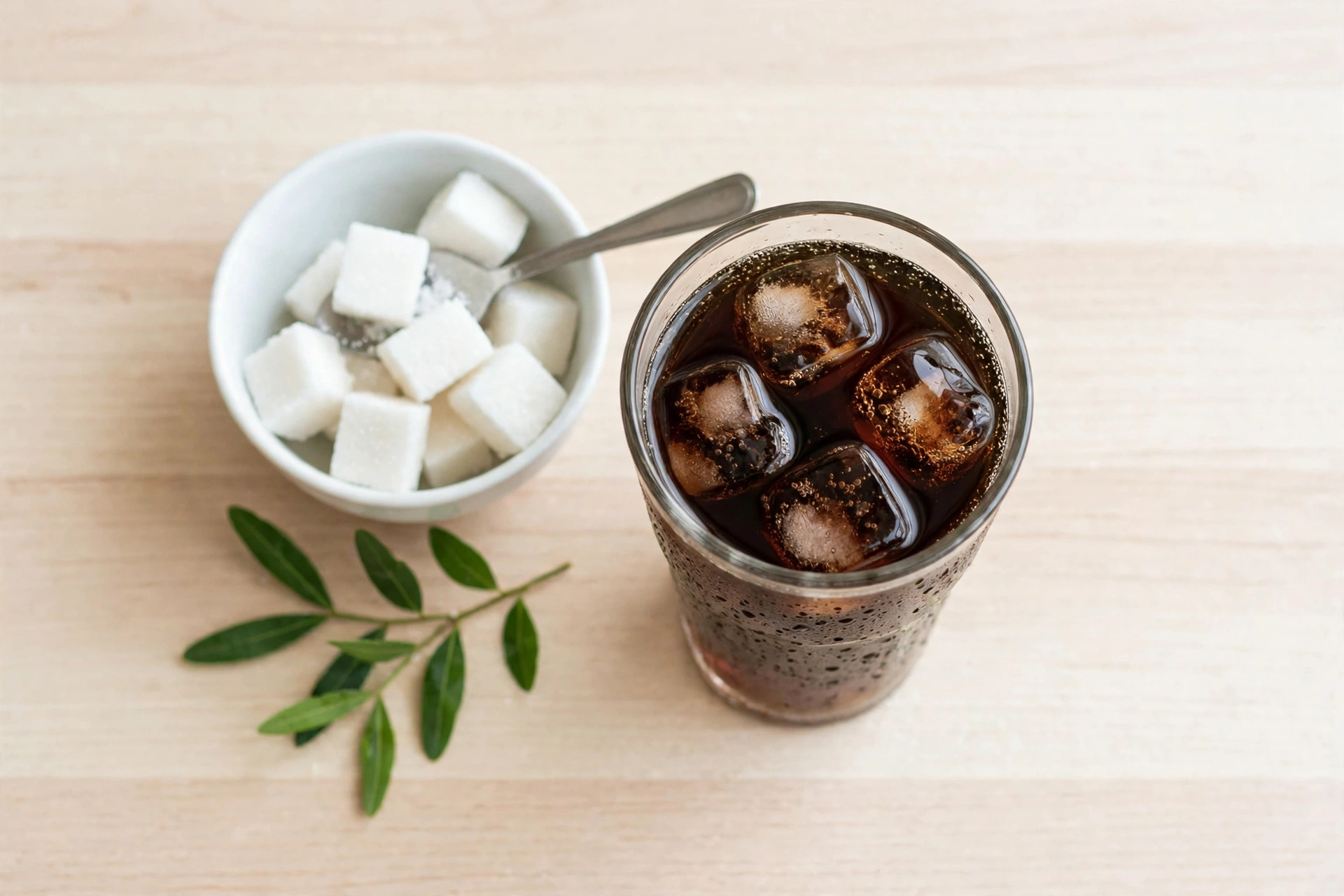
Now put those numbers against the limits. The American Heart Association recommends no more than 25 grams (6 teaspoons) of added sugar a day for most women and 36 grams (9 teaspoons) for most men. One 12-ounce can of soda, at about 42 grams of added sugar by the AHA’s own count, passes a woman’s whole-day limit and most of a man’s — in a single drink. The World Health Organization advises keeping free sugars below 10% of daily energy, about 50 grams on a 2,000-calorie day, with a further cut to below 5%, about 25 grams, for extra benefit. On US labels, 100% of the Daily Value for added sugars equals 50 grams, so a can of cola at 39 grams is already close to 80% of that value.
The gap between the two columns is the point of the comparison. Water and unsweetened tea cost you nothing from your sugar budget. A sports drink costs about half a day’s worth for many women. A cola costs the whole day, and an energy drink can cost more than a day and a half.
Why drinks deserve special attention
It is not just the grams. Liquid sugar is easy to over-consume because it barely registers as food. The evidence on this point is consistent: people who drink one or two sugar-sweetened drinks a day have a measurably higher risk of type 2 diabetes than people who rarely drink them. In a widely cited meta-analysis of 11 prospective studies covering more than 310,000 people, researchers at Harvard found that one to two sugary drinks a day was associated with a 26% greater risk of developing type 2 diabetes and a 20% greater risk of metabolic syndrome, compared with drinking less than one a month.
Three things make drinks a special case. First, they do not fill you up the way solid food does, so the calories tend to add on top of what you already eat rather than replacing anything. Second, they deliver sugar fast, which spikes blood glucose and asks a lot of your insulin response in a short window. Third, they are habitual — the same drink, every lunch, every commute — so a small daily amount compounds into a large weekly one. A single daily can of cola adds up to roughly 270 grams of sugar a week. That is the arithmetic that makes the swap worth doing.
Dental health is the other quiet cost. The WHO’s sugar guideline was built largely on evidence about tooth decay: frequent sips of sugary or acidic drinks keep teeth bathed in sugar and acid all day. Sipping slowly from a bottle at your desk is worse for teeth than drinking the same amount quickly with a meal.
The tricky middle: juice, sports drinks, and flavored waters
Not every sugary drink looks sugary. That is where most people get caught.
100% fruit juice. Juice keeps the vitamin C and potassium of fruit but loses the fiber, and you would rarely eat three oranges in one sitting — yet a glass of juice is exactly that. The WHO counts juice sugars as free sugars for this reason. Juice is not soda — it brings nutrients with it — but it is closer to soda than to whole fruit, and a small glass with a meal is a better pattern than a large glass on an empty stomach.
Sports drinks. These were designed for athletes losing sweat and electrolytes during long, hard exercise — not for a desk, a car, or a light workout. A 12-ounce serving carries about 21 grams of sugar, and a typical 20-ounce bottle carries about 34 grams. For most everyday activity, water replaces what you lost. Save the sports drink for workouts lasting an hour or more in the heat.
Flavored and vitamin waters. Some are just water with flavor; others are sugar water with a vitamin label. The difference is on the back of the bottle, in the added sugars line. A “vitamin water” with 27 grams of added sugar is a soft drink with better marketing. The same goes for sweetened iced teas and lemonade, which often carry 25 to 35 grams per bottle.
Sweetened coffee and tea drinks. Plain coffee and tea have no sugar. The bottled and café versions are a different drink entirely: syrups, sweetened milk, and whipped toppings can push a single cup past 40 grams of sugar. If you buy coffee out, ask how many pumps of syrup go in — each pump is roughly 5 grams — and you will know exactly what you are choosing.
Read also: Added Sugars on Labels: How to Decode Them
What about diet and zero-sugar drinks?
Diet drinks remove the sugar and the calories, which sounds like a clean fix. Short-term trials do show a small weight benefit when people swap sugary drinks for diet ones. The longer picture is less clear. In May 2023, the WHO issued a guideline advising against using non-sugar sweeteners — aspartame, sucralose, saccharin, stevia, and others — to control body weight or reduce the risk of chronic disease. Its review found no long-term benefit in reducing body fat in adults or children, and possible links between long-term use and type 2 diabetes, cardiovascular disease, and mortality. The recommendation is conditional, meaning the evidence is low-certainty and partly explained by the fact that people already at risk tend to switch to diet drinks.
So where does that leave diet soda? As a bridge, not a destination. If a diet drink helps you step away from a daily sugary soda, that swap is a genuine improvement — you have cut the sugar and the calories. But it is not a health drink, and it does not train your palate to want less sweetness. The better long-term move is to let the bridge lead somewhere: sparkling water, unsweetened tea, or plain water most of the time, with a diet drink as the occasional exception rather than the daily default.
How to compare any two drinks in 30 seconds
You do not need a chart once you know the routine. Here is the quick check to run in the aisle:
- Read the added sugars line first. Compare grams per serving, then check the serving size — a bottle may hold two servings.
- Divide grams by four. Four grams of sugar is about one teaspoon, so 40 grams is ten teaspoons. Teaspoons are easier to picture than grams.
- Ask what else the drink brings. Water brings hydration. Juice brings vitamin C and potassium. Milk brings protein and calcium. Soda brings sugar and flavoring, and not much else.
- Check the ingredient list for hidden sweeteners. Sugar, high-fructose corn syrup, honey, agave, fruit juice concentrate, and cane syrup are all added sugars, whatever the front of the bottle claims.
- Consider the role. Thirsty after a run? Water. Want something with lunch? Sparkling water or unsweetened tea. Want a treat? Pick the smaller size and enjoy it — then go back to water.
That last point matters. This is a comparison, not a ban. A sugary drink you genuinely enjoy, in a small serving, on occasion, fits into a balanced diet. What does not fit is a large sugary drink every day by default, simply because it is what you always reach for.
Making the swap stick
The easiest swaps are the ones that keep the ritual and change the contents. If you love the fizz, sparkling water with a squeeze of lemon gives you the bubbles without the sugar. If you love iced tea, brew a big jug at home and keep it unsweetened in the fridge — sweetness is easier to skip when the drink is already cold and ready. If you love juice, try a small glass mixed half and half with sparkling water; you keep the flavor and cut the sugar in half.

Keep the unsweetened option visible. A bottle of water on your desk beats a bottle in the fridge, and a pitcher of iced herbal tea in the fridge beats a trip to the vending machine. And when you do buy a sugary drink, buy the smaller size. A 12-ounce can instead of a 20-ounce bottle saves you about 30 grams of sugar before you change anything else.
Read also: Homemade Low-Sugar Drink Ideas
Frequently asked questions
Is 100% fruit juice healthier than soda?
Yes, but not by as much as most people think. Juice brings vitamin C and potassium that soda does not, but a 12-ounce glass still carries about 30 grams of sugar with almost no fiber. Treat juice as a small serving with a meal, not as a thirst quencher — water does that job better.
Are sports drinks better than soda?
They have less sugar per ounce, but they are still sugary drinks, and they add salt you usually do not need. For workouts under an hour, water is enough. Sports drinks earn their place during long, sweaty exercise, where the electrolytes and quick energy serve a purpose.
Is sparkling water as good as plain water?
For hydration, yes. Unsweetened sparkling water has no sugar and no calories, and it counts toward your fluid intake just like still water. Flavored versions are fine too, as long as the label shows zero added sugars. The carbonation can bother some people with reflux, but for most people it is a straight swap.
Should I switch to diet drinks to cut sugar?
A diet drink can help you step away from sugary soda, and short-term trials show a small weight benefit from that swap. But the WHO’s 2023 guideline advises against relying on non-sugar sweeteners for long-term weight control, because the evidence shows no lasting benefit. Think of diet drinks as a bridge toward unsweetened drinks, not as the final stop.
The bottom line
Comparing sugary and unsweetened drinks comes down to one habit: turn the bottle around. The added sugars line tells you, in grams, what the front label will not. Water, sparkling water, and unsweetened tea cost nothing from your sugar budget; a daily soda can spend the whole budget before lunch. You do not have to give up sweet drinks entirely — but once you can see the difference in plain numbers, the unsweetened option stops feeling like a sacrifice and starts looking like the obvious choice most of the time.
This article is general nutrition information, not medical advice. If you have diabetes, dental problems, or a condition that affects how you handle sugar, talk with your clinician or a registered dietitian about what fits your situation.
Sources
- American Heart Association — How Much Sugar Is Too Much?
- World Health Organization — Guideline: Sugars Intake for Adults and Children (2015)
- Malik VS, Popkin BM, Bray GA, et al. — Sugar-Sweetened Beverages and Risk of Metabolic Syndrome and Type 2 Diabetes: A Meta-Analysis. Diabetes Care, 2010
- World Health Organization — Use of Non-Sugar Sweeteners: WHO Guideline (2023)
- Harvard T.H. Chan School of Public Health — The Nutrition Source: Sugary Drinks