How to Make Fruit-Infused Water
Plain water does the job, but plenty of people find it boring — and boredom is a real reason glasses go untouched. Fruit-infused water is the simplest fix: fresh fruit, herbs, or cucumber steeped in cold water until it tastes like something worth reaching for. No sugar, no sweetener, no packet to tear open. It takes five minutes to make, costs almost nothing, and it can quietly change how much water you drink in a day.
It is not a detox drink, and it is not a vitamin supplement in a glass. What it is, honestly, is flavored water — and for many people, that is exactly what they need. Here is how to make it well, which combinations actually taste good, and how to keep it safe.
Why flavored water helps you drink more
Most of us know we should drink more water. The U.S. National Academies set the adequate intake for total water at about 3.7 liters a day for men and 2.7 liters for women — and that figure counts the water in food, which supplies roughly 20 percent of the total. So the part you actually drink is closer to 3 liters for men and about 2.2 liters for women, spread across the whole day. Thirst is a reasonable guide for most healthy adults, but flavor is a nudge that works: research on drinking habits consistently finds that people drink more when water tastes good, and a pitcher of cucumber-mint water on the counter is a lot more inviting than a plain glass.
Read also: How Much Water Do You Need? A General Guide
That matters because the alternative for many people is not plain water — it is soda, sweet tea, or juice. A 12-ounce can of cola carries roughly 39 grams of sugar, which is more than the American Heart Association’s whole-day added-sugar limit for most women (25 grams) and close to the limit for most men (36 grams). Fruit-infused water gives you the flavor without spending that budget. It is not a health drink in the medicinal sense. It is a swap, and swaps are where most healthy eating actually happens.
How to make fruit-infused water: the basic method
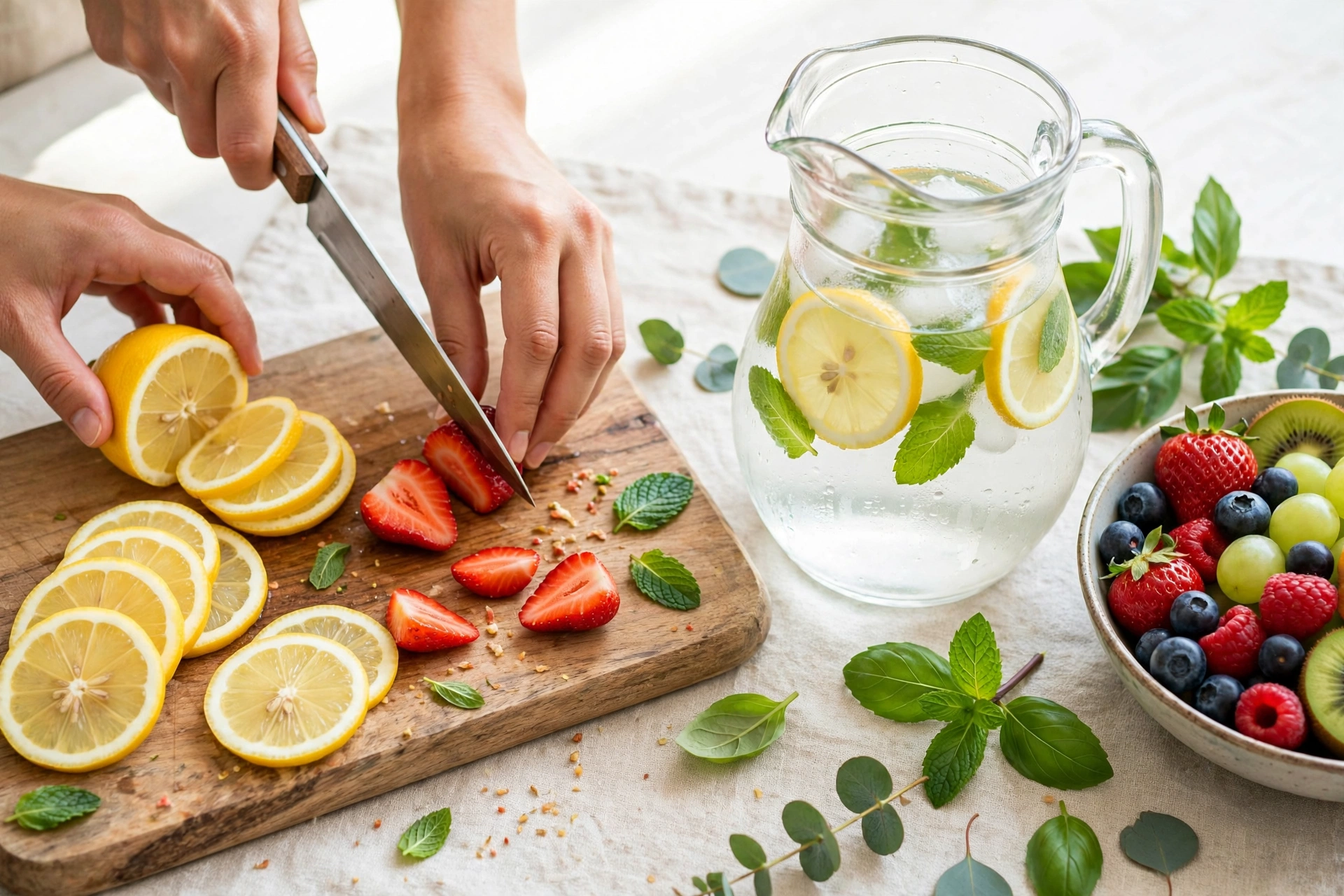
You need a pitcher or a large jar, cold water, and fruit. That is the whole equipment list. An infusion pitcher with a built-in strainer is handy, but a regular jar and a small sieve work just as well.
Step 1: Wash everything. Rinse all fruit under running water before you cut it, even fruit you plan to peel. Cutting through unwashed skin can drag dirt and bacteria from the surface onto the flesh you are about to soak. Cut away any bruised or damaged spots, and skip any piece that looks rotten.
Step 2: Cut for surface area. Thin slices infuse faster than big chunks. Halve or quarter strawberries, slice citrus into thin rounds, and cut cucumber into ribbons or thin coins. A good starting ratio is about 1 cup of fruit per 4 cups (1 liter) of water — use more if you like a stronger flavor.
Step 3: Add cold water and chill. Fill the pitcher with cold, filtered water and put it straight in the refrigerator. Cold infusion takes longer than room-temperature steeping, but it is the safe way to do it: fruit water is a perishable food, and it should be treated like one.
Step 4: Wait. Most combinations need 2 to 4 hours in the fridge before the flavor comes through. Delicate fruits like berries and citrus get there fast; firmer fruit like apples and ingredients like cinnamon sticks or fresh ginger need an overnight soak. Taste it as you go — you can always leave it longer, but you cannot take flavor back out.
Step 5: Strain and serve. If you are not going to finish the pitcher within a day, strain the fruit out after about 24 hours. The strained water keeps better, and the fruit will only get mushy and bitter from there.
Five combinations that actually taste good
Start with these, then improvise. The best combinations pair something sweet with something fresh or sharp.
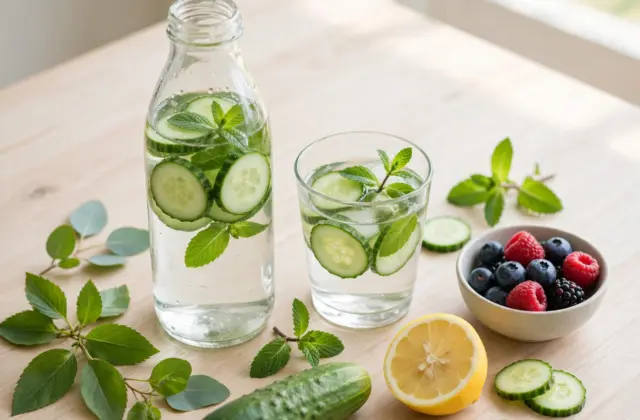
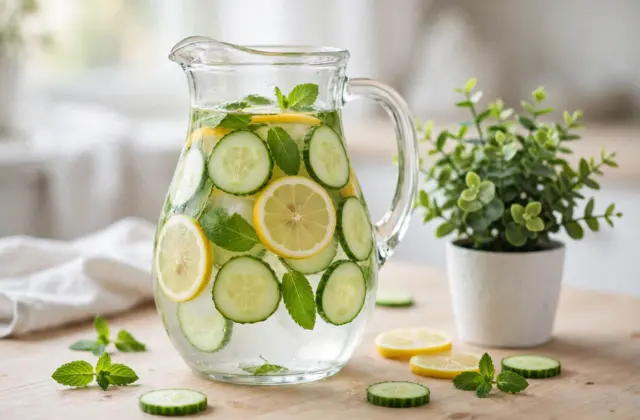
1. Cucumber and mint. The classic for a reason. Cucumber is about 96 percent water, so it adds a clean, cool flavor without sweetness, and mint lifts it. Muddle the mint leaves gently first — a light press with a spoon is enough to release the oils without shredding the leaves.
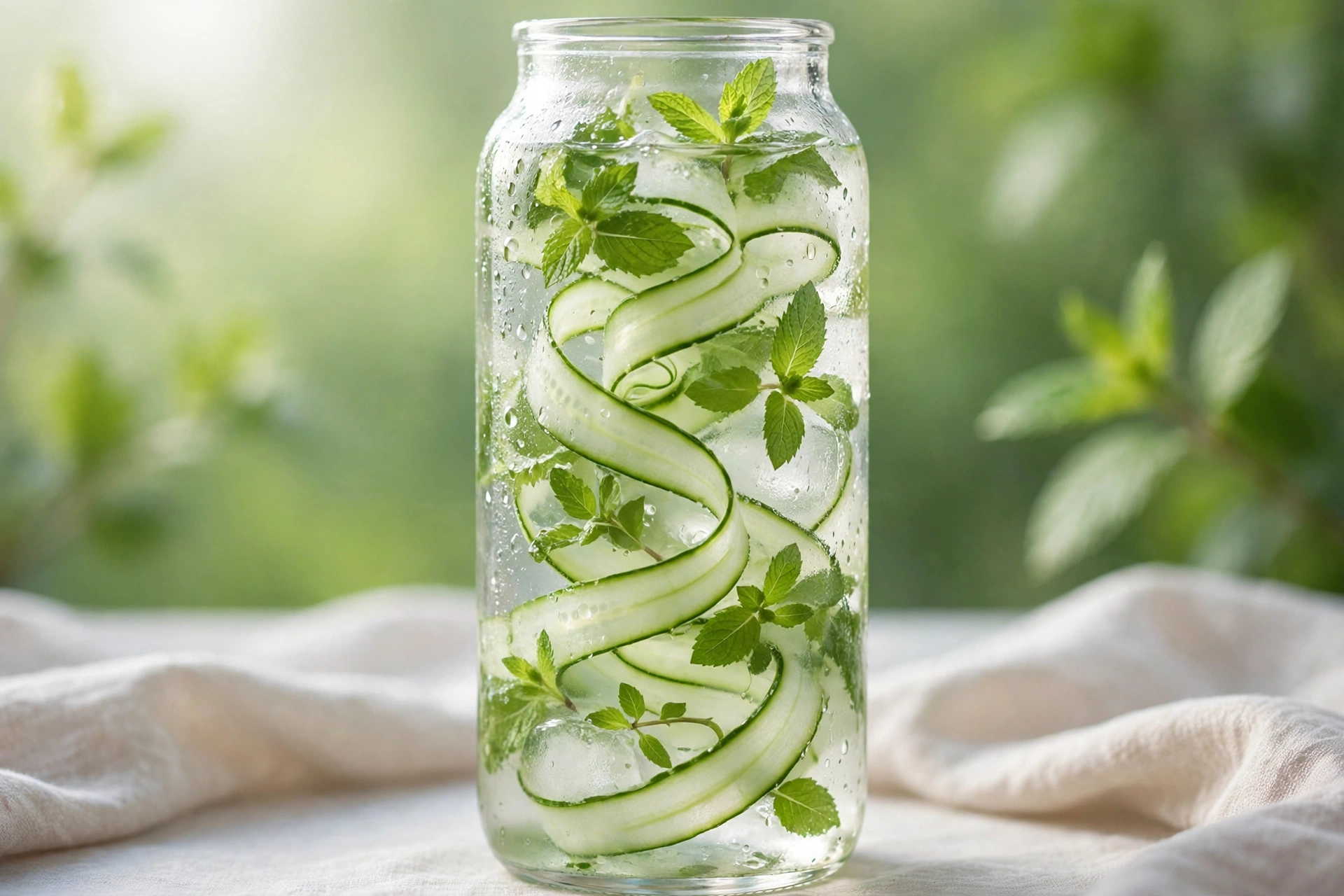
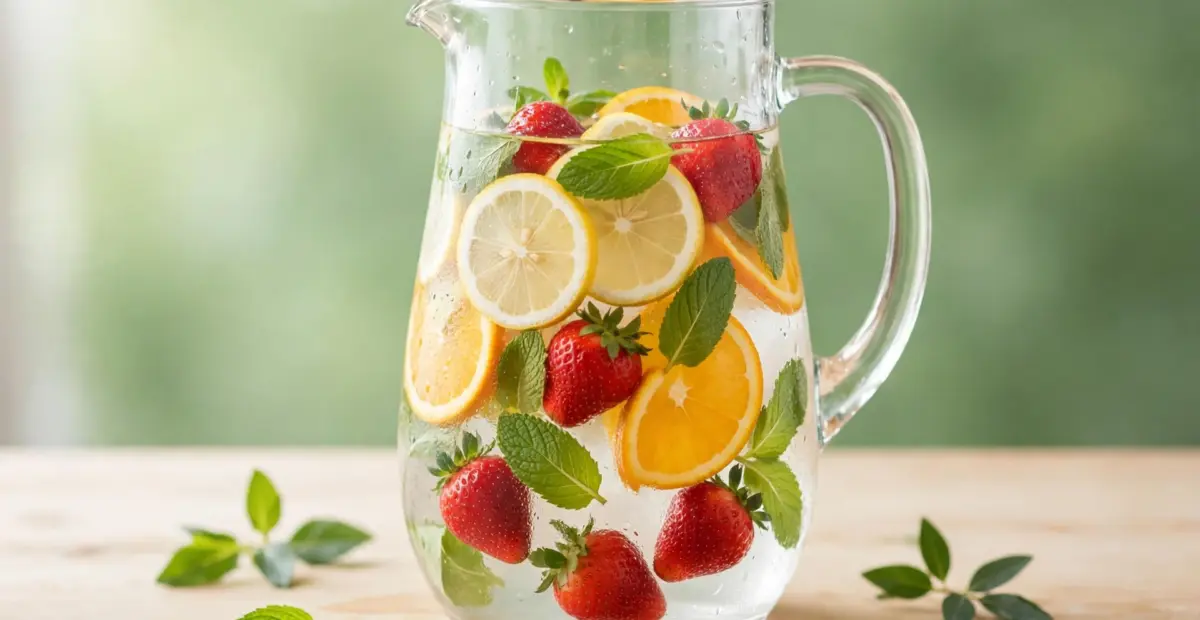
2. Strawberry and lime. Sweet, a little tart, and the pink color makes the pitcher look like a treat. Halve the strawberries so more flesh touches the water, and slice the lime thin.
3. Orange and blueberry. Orange slices give a gentle citrus sweetness, and blueberries add color and a soft berry note. Lightly crush a few of the berries to get the flavor moving faster.
4. Watermelon and basil. Watermelon is about 92 percent water and brings its own sweetness, so this one tastes almost like a light juice — with a fraction of the sugar. Basil adds an unexpected herbal edge that keeps it from tasting like dessert.
5. Apple and cinnamon. The slowest of the five, and the most rewarding in cooler weather. Thin apple slices and one cinnamon stick, left overnight in the fridge, taste like a lighter version of cider with no added sugar at all.
Read also: Homemade Low-Sugar Drink Ideas
Two practical notes: peel citrus if you plan to infuse it for more than about four hours, because the white pith turns bitter with time. And sparkling water works too — just add the fruit to still water first, then top up with sparkling water right before serving, since the bubbles fade fast once fruit starts breaking down.
How long does it keep? The food-safety rules
This is the part most recipes skip, and it matters. Once you cut fruit and put it in water, you have made a perishable food. Ohio State University Extension puts it plainly: handle infused water the way you would any perishable food.
- Refrigerate it. Keep the pitcher at 40°F (4°C) or below, and get it into the fridge right after you make it. Do not leave a pitcher steeping on the counter for hours.
- The two-hour rule. Do not leave infused water at room temperature for more than two hours — one hour if it is above 90°F (32°C), like at a summer picnic. Bacteria grow fastest between 40°F and 140°F, and fruit sitting in water gives them an easy path to spread.
- Drink it within a day or two. For the best flavor, finish the pitcher within 24 hours. Strained water can last a little longer in the fridge, but the nearest official benchmark — cut fruit — keeps about 3 to 4 days refrigerated, and fruit soaking in water breaks down faster than that. When in doubt, throw it out and make a fresh batch.
- Refill once, not forever. You can top up the same fruit with fresh water once and get a second, lighter round. After that, the flavor is gone and the fruit is spent — compost it and start over.
These rules are simple, and they are the difference between a refreshing habit and a stomach ache. A pitcher made in the morning and finished by dinner is the sweet spot.
Fruit-infused water vs. soda and juice
The comparison is not close, and it is worth seeing in numbers. A 12-ounce glass of orange juice holds about 21 grams of sugar and 90 calories. A 12-ounce soda holds around 39 grams of sugar and about 140 calories. A glass of fruit-infused water made with lemon, cucumber, or berries holds almost none of either — a few calories at most, and usually less than a gram of sugar per glass, because only a small amount leaches out of the fruit.
That is also why infused water is not juice. Juice squeezes the sugar out of the fruit and leaves most of the fiber behind; infused water leaves the sugar in the fruit and takes only the flavor. The World Health Organization recommends keeping free sugars below 10 percent of daily energy, and ideally below 5 percent — about 25 grams on a 2,000-calorie day. One soda can use up that whole budget. A pitcher of fruit water uses up none of it.
It is fair to say infused water is a better choice than soda or juice for everyday drinking. It is not fair to say it is healthier than plain water. Plain water is still the gold standard: zero calories, zero sugar, zero acid. Infused water earns its place because it helps people who would otherwise reach for something sugary actually drink water.
What it will not do
Two myths deserve a straight answer. First, the vitamins. A whole lemon holds roughly 30 milligrams of vitamin C, but only a small fraction of that leaches into the water. A glass of lemon water is not a meaningful source of vitamin C, and no combination of fruit in a pitcher replaces eating the fruit itself. If you want the nutrients, eat the strawberries after you drink the water.
Second, the “detox” claim. Your liver and kidneys already handle detoxification, and no drink speeds that up. What infused water does is support the system that does the work: staying hydrated helps your kidneys do their job. That is a real benefit, just a quieter one than the label on a detox bottle promises.
A note on citrus and your teeth
There is one genuine downside, and it belongs to citrus. Lemon juice has a pH of about 2.0 to 2.6, which is acidic enough to soften tooth enamel if your teeth sit in it often. That does not mean you should skip lemon water — it means you should drink it sensibly. Use a straw, drink it with a meal or finish it in one sitting rather than sipping it all afternoon, and rinse your mouth with plain water afterward. The American Dental Association advises waiting about an hour before brushing, because brushing softened enamel can wear it away. If citrus water is an all-day habit for you, rotate in non-citrus combinations like cucumber-mint or strawberry-basil to give your teeth a break.
Make it a habit, not a project
The reason fruit-infused water works is that it is easy enough to do every day. Pick one combination you like, make it the night before so it is ready in the morning, and keep the pitcher where you can see it. If you fill a bottle to take to work, keep it cold and finish it the same day.
Read also: Simple Ways to Drink More Water Every Day
Start with cucumber and mint if you are unsure. It is the most forgiving combination, it tastes good within two hours, and it is the one most people come back to. Once the habit sticks, the pitcher starts making itself — and the soda in the fridge starts lasting a lot longer.
Frequently asked questions
How long should fruit sit in water before drinking it?
Most combinations need 2 to 4 hours in the refrigerator. Berries and citrus infuse quickly; apples, cinnamon, and ginger need an overnight soak. Taste it after a couple of hours and leave it longer if you want a stronger flavor.
Can I eat the fruit after drinking the water?
Yes — the fruit is still perfectly good to eat, though it will be softer and milder than fresh fruit. Eating it also means you get the fiber and nutrients that stayed in the fruit instead of leaching into the water.
Does fruit-infused water count toward my daily water intake?
Yes. It is water with flavor, and it hydrates you the same way plain water does. The National Academies’ adequate intake figures — about 3.7 liters of total water a day for men and 2.7 liters for women, including water from food — count all beverages, not just plain water.
Is it safe to leave infused water out overnight?
No. Infused water is a perishable food: keep it refrigerated at 40°F (4°C) or below, and do not leave it at room temperature for more than two hours. If a pitcher sat out overnight, throw it out and make a fresh one.
This article is for general information only and is not a substitute for advice from a qualified health professional. If you have a medical condition, take medication, or have concerns about your diet, talk to your clinician or a registered dietitian.
Sources
- National Academies of Sciences, Engineering, and Medicine — Dietary Reference Intakes for Water, Potassium, Sodium, Chloride, and Sulfate (2004)
- American Heart Association — How Much Sugar Is Too Much?
- World Health Organization — Healthy Diet (free sugars below 10% of total energy, ideally below 5%)
- Ohio State University Extension — Food Safety and Homemade Fruit- or Vegetable-Infused Water
- University of California, Berkeley — Infused Water (steeping times and storage guidance)
- U.S. Department of Agriculture — FoodData Central (water content and vitamin C values for fruits)
- Reddy A, et al. — Damage from Carbonated Soft Drinks on Enamel: A Systematic Review, on acid erosion of tooth enamel