Simple Ways to Drink More Water Every Day
Most of us know we should drink more water. The advice is everywhere — on bottles, in apps, from well-meaning friends. Yet by mid-afternoon, the glass on your desk is still full, your head feels foggy, and you realise you have barely had anything since breakfast. Drinking more water is rarely a knowledge problem. It is a habit problem, and habits change faster when the fix is small and fits into a day you already live.
This guide keeps things practical: how much water you actually need (less rigid than the old “eight glasses” rule), why thirst alone is not always a reliable guide, and six simple strategies that fit a real schedule — no gallon jugs, no hourly alarms, no forcing down water you do not want.
How Much Water Do You Actually Need?
There is no single number that fits everyone, and the official figures are ranges, not daily quotas. The European Food Safety Authority (EFSA) sets an adequate intake of total water at about 2.0 litres a day for women and 2.5 litres for men. The US National Academies put the figures higher — 2.7 litres for women and 3.7 litres for men. Both numbers describe total water, which includes the water in your food and in every drink, not just plain water.
Food covers roughly a fifth of that total, so the part you actually need to drink is smaller than the headline number — typically around 1.5 to 2 litres for women and 2 to 3 litres for men on an ordinary day. Heat, exercise, body size and illness all push the number up. A sweaty afternoon workout or a hot day can easily add half a litre or more to what you need.
As for the famous “eight glasses a day” rule: a kidney physiologist named Heinz Valtin went looking for the evidence behind it in 2002 and found none. It likely grew out of a 1945 recommendation of about 1 millilitre of water per calorie eaten, with the part about food supplying much of that water quietly dropped along the way. Two litres of drinks a day is a decent rough guide for many adults, but it was never a rule carved in stone.
Why Drinking Enough Water Feels Harder Than It Sounds
Thirst is supposed to be the body’s built-in reminder, and for most healthy adults it works well enough. But it is not foolproof. The Mayo Clinic notes that many people — older adults in particular — do not feel thirsty until they are already dehydrated. A busy day makes it worse: meetings run over, errands pile up, and the body’s quiet signals get ignored until a headache or that heavy, tired feeling shows up in the afternoon.
Mild dehydration is common and easy to fix. The NHS lists the early signs: feeling thirsty, dark yellow and strong-smelling urine, peeing less often than usual, dizziness or light-headedness, tiredness, and a dry mouth. Dark yellow or amber urine means your kidneys are concentrating urine to hold on to water — a nudge to drink now, not later.
The simplest daily check is colour: the NHS advises drinking enough during the day so that your urine is a pale colour. Pale straw is the goal. There is no need to chase perfectly clear urine — that can mean you are drinking more than you need.
Read also: How Much Water Do You Need? A General Guide
1. Start the Day With a Glass
You wake up mildly dehydrated every morning — you have gone seven or eight hours without a sip. A glass of water before coffee, before breakfast, before the phone, is the easiest win in this whole article. It does not need to be a ritual with lemon and ceremony. Fill a glass the night before and leave it on the kitchen counter or your bedside table, and drink it while the kettle boils.
It works because mornings are predictable. Once it is automatic, it quietly covers a quarter or more of your daily drinks before the day has properly started.
2. Keep Water Where You Can See It
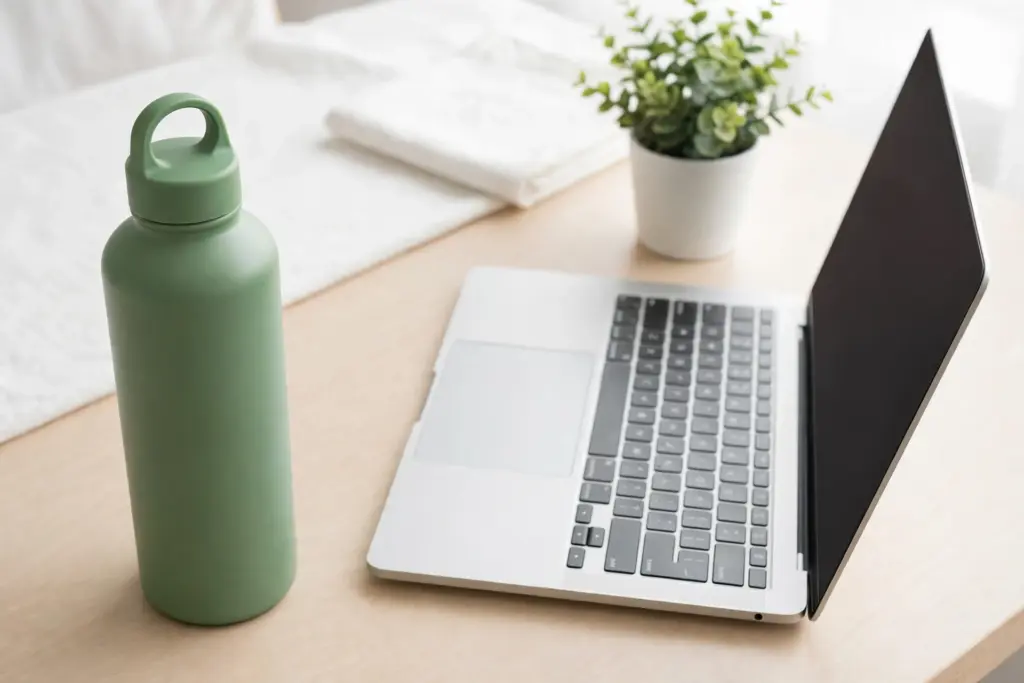
Out of sight really does mean out of mind. A bottle on your desk gets finished; a bottle in another room does not. Pick one bottle you actually like carrying — one that fits your bag and your car’s cup holder — and make it your default. Fill it in the morning and keep it within arm’s reach while you work.
If you drive a lot, keep a bottle in the car. If you work from home, put a jug on the kitchen counter where you pass it a dozen times a day. You do not need a smart bottle that glows or an app that nags you — you need water closer than the walk to the tap feels.
3. Tie Sips to Things You Already Do
Habit researchers call this habit stacking: attach a new behaviour to one that is already automatic. A glass of water with each meal is the classic version, and it works because you eat three times a day without thinking about it. Add a glass before your morning coffee, one with lunch, one while dinner cooks, and you have covered most of your day without a single reminder.
Other anchors work just as well: a few sips every time you check your email, a glass after every bathroom break, one when you sit down in the evening. Pick two or three that fit your routine and let them carry the habit — the point is to stop relying on memory and thirst alone.
4. Make Plain Water Taste Better
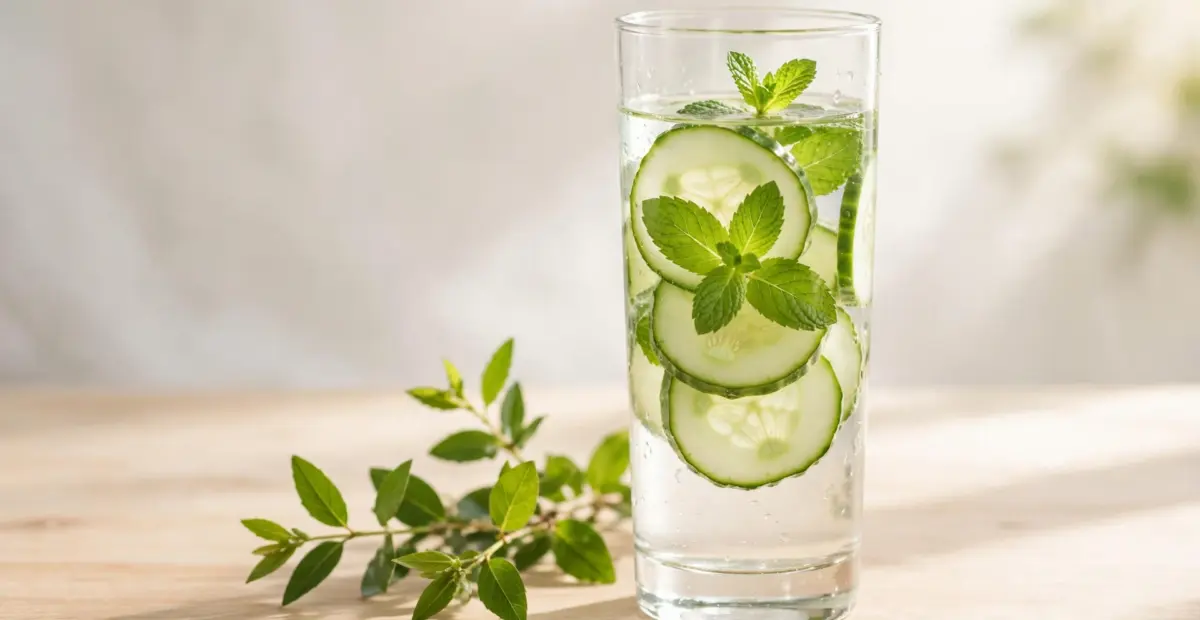
Some people do not drink enough water simply because they find plain water boring. That is a fair complaint, and it is easy to fix without reaching for a sugary drink. A jug of water with cucumber slices, orange wedges or mint leaves in the fridge tastes like something you actually want, and it costs almost nothing. Frozen berries double as ice cubes and turn a glass pink by lunchtime.
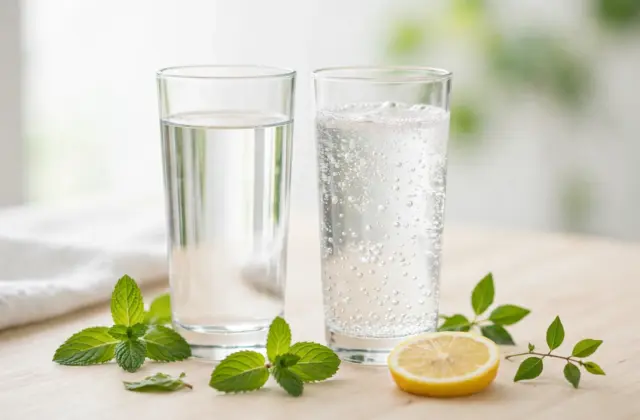
Sparkling water counts too, and for some people the fizz makes all the difference. Unsweetened flavoured sparkling water, a splash of 100% juice in still water, or a cup of herbal tea all add variety without much sugar. The best-tasting water is the one you will actually drink.
Read also: Homemade Low-Sugar Drink Ideas
5. Eat Your Water
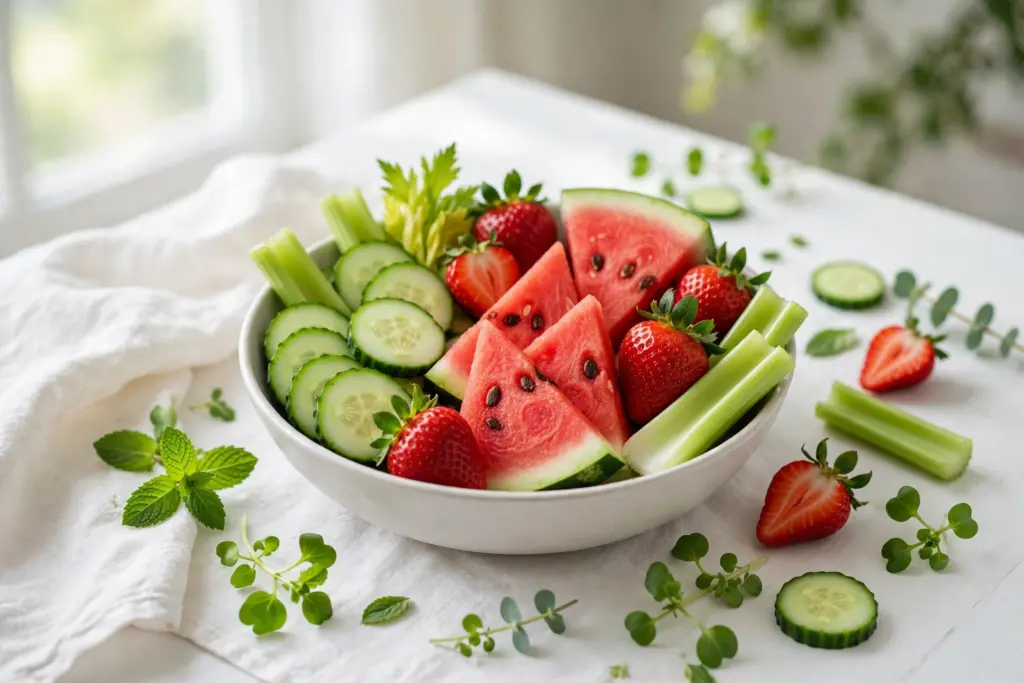
About a fifth of your daily water comes from food, and you can push that share higher without trying very hard. Some fruits and vegetables are mostly water: cucumber is about 96% water, celery around 95%, tomato about 94%, watermelon about 92% and strawberries about 91%, according to USDA FoodData Central values. A salad with lunch, a bowl of soup, a piece of fruit as a snack — all of it quietly adds up.
Soups, smoothies, yoghurt and porridge count as well. Eating your water is not a replacement for drinking it, but it is a genuine contribution — and one more reason a diet rich in fruit and vegetables is easier on the body in every direction.
6. Let Other Drinks Count Too
Tea and coffee count toward your fluid intake. The old idea that caffeine cancels out hydration has been overstated — a normal cup of tea or coffee still adds more fluid than it takes away. Milk, herbal tea and diluted juice count as well.
What deserves more caution is the sugary end of the drinks shelf. A 12-ounce can of soda contains about 42 grams of added sugar, and the American Heart Association recommends limiting added sugars to about 25 grams a day for women and 36 grams for men — so one can of soda can use up the whole day’s budget and then some. Sugary drinks can still hydrate you, but they bring a lot of sugar with the water. If soda is your main drink, swapping even one can a day for water or unsweetened sparkling water is a bigger health win than any hydration trick in this article.
Read also: Healthy Drinks to Pair With Everyday Meals
How to Tell If You Are Drinking Enough
Forget the apps and the tally charts for a moment. Three everyday checks tell you most of what you need to know:
- Urine colour: pale straw most of the day means you are keeping up. Dark yellow or amber means drink a glass or two now.
- How often you go: peeing noticeably less often than usual is an early sign you are running low.
- How you feel: a dry mouth, a dull headache, tiredness or light-headedness in the afternoon can all be your body’s way of asking for fluid — especially if you have not had much to drink.
Hot or humid weather, sweaty exercise, fever, vomiting or diarrhoea, and air travel all call for more water than usual. In those cases, drink before you feel thirsty and keep sipping regularly rather than trying to catch up in one big gulp later.
Severe dehydration needs medical care, not a glass of water. The Mayo Clinic advises calling a healthcare professional if you cannot keep fluids down, have had diarrhoea for 24 hours or more, feel confused or unusually sleepy, or have not urinated for many hours. Babies, young children and older adults are at higher risk and should be checked sooner.
When More Water Is Not the Answer
More is not always better. Drinking far more water than your body needs can dilute the sodium in your blood, a rare but serious condition called hyponatraemia. It is mostly a risk for endurance athletes who drink large volumes in a short time, or for people with certain heart, kidney or liver conditions. If a doctor has given you a daily fluid limit — for heart failure, kidney disease or a medication that affects fluid balance — follow that limit rather than any general advice in this article.
For most healthy adults, though, the risk runs the other way: not quite enough, day after day. The fix does not need to be dramatic — a glass in the morning, a bottle in sight, water with meals, a few water-rich foods, and a drink you actually enjoy. Start with the easiest of these six ideas and let it settle before adding another. Small changes that stick beat perfect plans that last a week.
Frequently Asked Questions
How many glasses of water should I drink a day?
There is no universal number. EFSA suggests about 2.0 litres of total water a day for women and 2.5 litres for men, while the US National Academies suggest 2.7 and 3.7 litres — and both figures include water from food, so the amount you need to drink is lower, roughly 1.5 to 3 litres depending on your size, activity and climate. Pale straw-coloured urine is a better personal guide than any fixed glass count.
Does coffee count toward my daily water intake?
Yes. Tea and coffee both contribute fluid, and the mild diuretic effect of caffeine does not cancel out the water in the cup. They count toward your daily total, though plain water remains the simplest choice, and sugary coffee drinks are a different matter — the sugar and calories add up fast.
Is it possible to drink too much water?
Yes, though it is uncommon in everyday life. Drinking very large volumes in a short time can dilute blood sodium, a condition called hyponatraemia. It is mainly a concern for endurance athletes and for people with heart, kidney or liver conditions. If your doctor has set a fluid limit for you, follow it.
What are the first signs I am not drinking enough?
The earliest signs are usually thirst, dark yellow urine, peeing less often than usual, a dry mouth, tiredness or a mild headache. Older adults may not feel thirsty until they are already dehydrated, so a regular drinking routine matters more than waiting for thirst.
Sources
- EFSA Panel on Dietetic Products, Nutrition and Allergies (NDA). Scientific Opinion on Dietary Reference Values for water. EFSA Journal. 2010;8(3):1459.
- Institute of Medicine. Dietary Reference Intakes for Water, Potassium, Sodium, Chloride, and Sulfate. National Academies Press, 2005.
- NHS. Dehydration — symptoms, causes and treatment.
- Mayo Clinic. Dehydration — Symptoms and causes.
- U.S. Department of Agriculture. FoodData Central — food composition data, including water content of fruits and vegetables.
- American Heart Association. How Much Sugar Is Too Much?
Disclaimer: This article is for general information only and is not medical advice. If you have a health condition, take medication that affects fluid balance, or have been given a daily fluid limit by your doctor, ask your healthcare professional how much you should drink.