Easy One-Pan Healthy Meals
One pan, one dinner, one wash-up. That is the whole promise of a one-pan meal, and on a busy weeknight it can feel like a small miracle. The catch is that a single tray can just as easily turn into a plate of overcooked chicken and sad, soggy vegetables. The difference is not talent. It is a simple formula: a protein, plenty of vegetables, something starchy or whole-grain to fill you up, and a flavour boost that does not rely on a pile of salt.
Done well, a one-pan dinner also makes balanced eating easier, because you can see the whole meal at a glance. If the tray looks mostly vegetables with a sensible portion of protein and grains beside them, the plate usually follows the same pattern. No separate pots, no last-minute side dish, no guessing.
Why one-pan cooking works so well
Roasting and skillet cooking do a lot of the flavour work for you. High, dry heat browns the edges of vegetables, crisps up chickpeas, and gives chicken skin and tofu a texture that steaming never will. Because everything shares the pan, the juices mingle: the oil from a salmon fillet seasons the green beans next to it, and the spices on your chickpeas drift onto the sweet potato.
There is a practical bonus, too. When dinner comes from one pan, you cook once and clean once. That matters more than it sounds. Many people do not skip healthy meals because they dislike cooking; they skip them because the evening already feels full. Cutting the washing up in half removes one real reason to reach for takeout.
Read also: How to Build a Balanced Dinner
The one-pan formula: protein, vegetables, and a base
Start with this loose template, then swap in whatever you have:
- Protein (about a quarter of the plate): chicken thighs or breast, salmon, tofu, eggs, chickpeas, or beans. Protein helps a meal keep you full for longer than vegetables alone.
- Vegetables (about half the plate): broccoli, green beans, peppers, zucchini, carrots, red onion, or cauliflower. The World Health Organization recommends at least 400 grams of fruit and vegetables a day for adults, roughly five portions, and a vegetable-heavy tray is one of the fastest ways to get there.
- A filling base (about a quarter): baby potatoes, sweet potato cubes, cooked quinoa, brown rice, or whole-grain couscous. Starchy vegetables count here, so a tray of chicken and potatoes still needs a non-starchy vegetable alongside it.
- Fat and flavour: a tablespoon or two of olive oil for the whole tray, plus garlic, lemon, herbs, smoked paprika, cumin, or chilli flakes. Fat carries flavour and helps your body absorb some vitamins from the vegetables, so a little oil is part of the meal, not a flaw in it.
Keep an eye on salt while you season. The American Heart Association recommends no more than 2,300 mg of sodium a day, moving toward an ideal of no more than 1,500 mg for most adults. Herbs, citrus, vinegar, and spices add punch without using up that budget, which is handy when sauces and marinades are doing the seasoning for you.
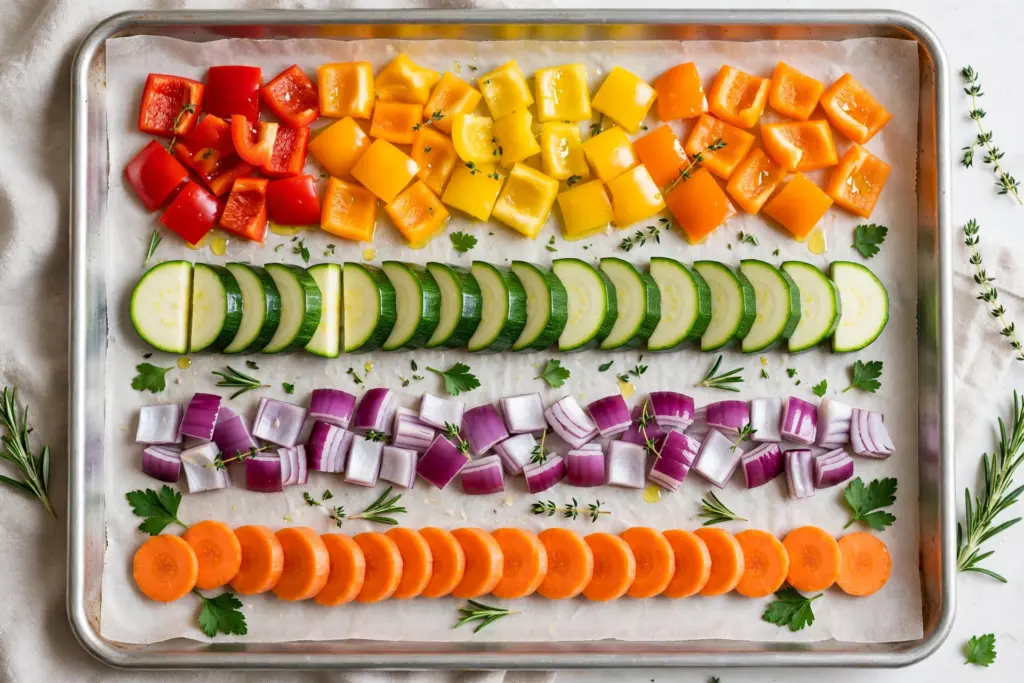
Five one-pan combinations that actually work
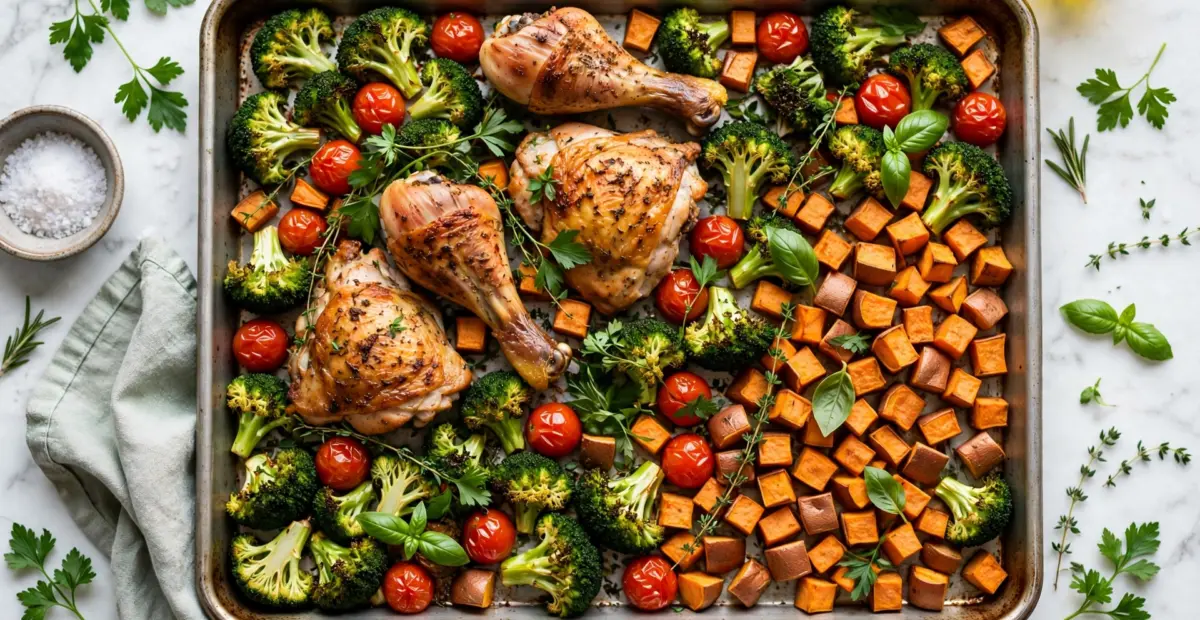
1. Sheet-pan chicken with broccoli and sweet potato
Toss chicken thighs, sweet potato cubes, and broccoli florets with olive oil, garlic, and smoked paprika. Spread everything in a single layer so it roasts instead of steaming, and give the tray space: crowded vegetables release steam and never crisp. This is the weeknight classic for a reason, and it reheats well for lunch the next day.
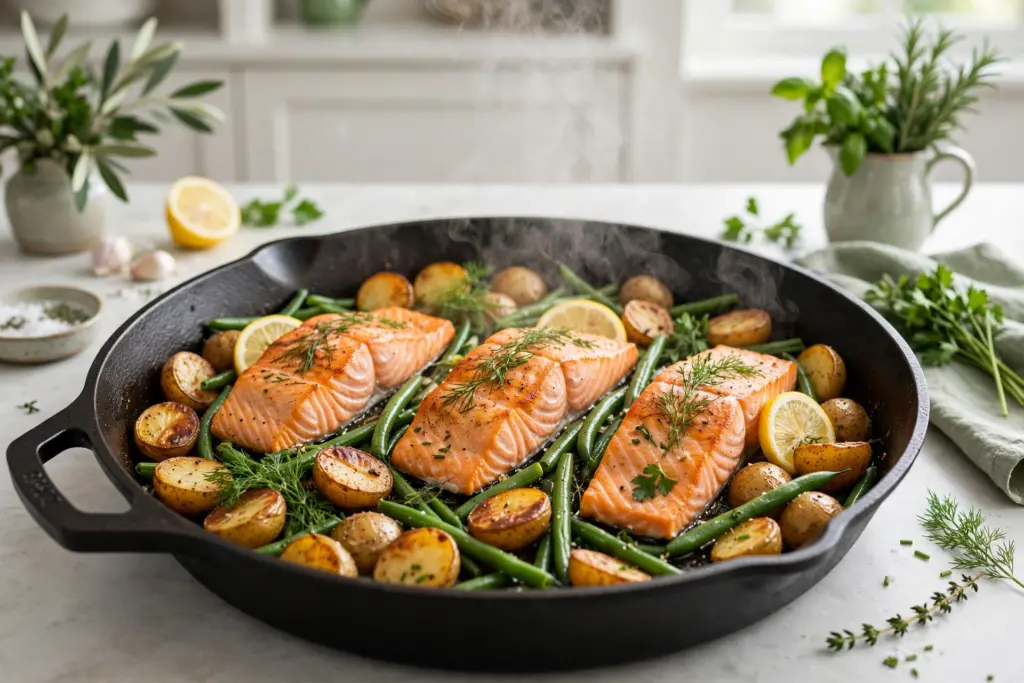
2. Salmon skillet with green beans and baby potatoes
Parboil halved baby potatoes for about ten minutes first, then tip them into a hot, oven-safe skillet with green beans and salmon fillets. The potatoes finish crisping in the pan while the salmon cooks through. A squeeze of lemon and a handful of dill at the end lifts the whole dish.
3. Crispy tofu and vegetable tray bake
Press firm tofu, cube it, and toss it with a little cornstarch, oil, and soy sauce before roasting with peppers, zucchini, and red onion. Tofu needs a hot oven and room on the tray to crisp up, so do not crowd it. Serve over cooked quinoa or brown rice, with sesame seeds and spring onions on top.
4. Chickpea and cauliflower sheet pan with couscous
Chickpeas, cauliflower florets, and carrots roasted with cumin and olive oil make a filling meat-free dinner, especially with whole-grain couscous and a spoonful of yogurt on the side. Rinsed canned chickpeas keep the sodium down and the prep time short.
5. One-pan eggs with peppers, spinach, and beans
For a fast dinner, soften peppers and onion in a skillet, add canned tomatoes and rinsed beans, then make wells and crack in eggs. Cover and cook until the whites set. It is ready in about twenty minutes, uses mostly pantry staples, and works just as well for brunch.
Read also: Healthy Dinner Plates: How to Build Them
Timing tricks that save a tray
Most one-pan failures are timing failures. Dense foods need longer than tender ones, so stagger them. Potatoes, carrots, and sweet potato go in first; broccoli, green beans, and peppers join later; fish and eggs go in last. Cutting everything to a similar size helps even more than any fancy technique: a thick chunk of sweet potato next to a thin green bean will never finish at the same time.
Two more habits make a real difference. First, preheat the tray itself for a few minutes when you want crisp edges; food that hits hot metal starts browning right away. Second, resist stirring every five minutes. Vegetables need undisturbed contact with the heat to brown, so let them sit, then flip once.
Food safety basics for one-pan meals
One pan also means raw meat juices can reach your vegetables, so a little care goes a long way. Keep raw chicken or fish apart from ready-to-eat foods while you prep, wash your hands and boards after handling raw meat, and use a food thermometer rather than guessing from colour. The U.S. FoodSafety.gov chart sets the safe minimum internal temperature for all poultry at 165°F (74°C), measured in the thickest part, and 145°F (63°C) for fish, with a three-minute rest for whole cuts of meat.
Leftovers deserve the same attention. Refrigerate them within two hours of cooking, and use refrigerated leftovers within three to four days, according to USDA Food Safety and Inspection Service guidance. Reheat leftovers to 165°F throughout. A one-pan dinner that becomes two lunches is a win only if the second lunch is still safe to eat.
Make it your own without breaking the formula
The formula is forgiving. Swap salmon for chicken thighs, swap quinoa for potatoes, swap cumin for Italian herbs, and the meal still holds together. That flexibility is the point: you can build a one-pan dinner from what is already in the fridge instead of shopping for a long list of specific ingredients.
A few swaps are worth keeping in mind. Choose whole grains over refined ones when you can, pick low-sodium canned beans and tomatoes and rinse them, and let vegetables take up the most space on the tray. None of these changes makes a meal perfect, and perfection is not the goal. A home-cooked tray of real food, eaten at the table, beats a skipped dinner or a drive-through run most nights of the week.
Start with one combination from this article, cook it twice, and tweak the seasoning the second time. By the third tray, you will have a house recipe — and a weeknight dinner that practically cooks itself.
Frequently asked questions
Can I cook everything at the same temperature?
Yes, in most cases. A hot oven around 200°C (400°F) suits roasting vegetables, chicken, and tofu. Fish and eggs cook faster, so add them later rather than lowering the temperature for the whole tray.
Why do my vegetables turn out soggy?
Usually the tray is too crowded or the pieces are too small and uneven. Spread vegetables in a single layer with space between them, cut them to similar sizes, and avoid stirring too often.
Are one-pan meals healthy?
They can be, when the tray follows the formula in this article: plenty of vegetables, a sensible protein portion, a whole-grain or starchy base, and seasoning built on herbs and citrus rather than heavy salt. A tray of only sausage and potatoes would not meet that pattern.
How do I store one-pan leftovers?
Cool them quickly, refrigerate within two hours, and eat them within three to four days. Reheat to 165°F throughout, and freeze anything you will not eat in that window.
Sources
- World Health Organization — Healthy diet fact sheet
- American Heart Association — How much sodium should I eat per day?
- FoodSafety.gov — Safe minimum internal temperatures
- USDA Food Safety and Inspection Service — Leftovers and food safety
This article is for general information only and is not medical advice. If you have a health condition or specific dietary needs, talk to a qualified health professional about what suits you.