Vitamin C Foods: Everyday Sources
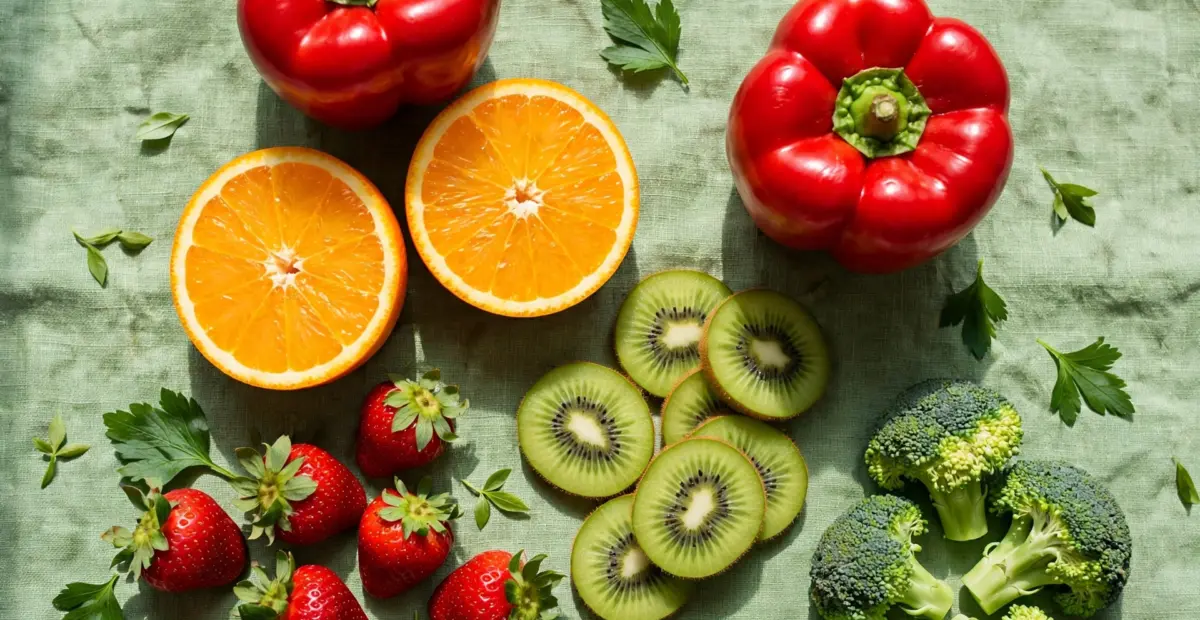
Ask most people to name a vitamin C food and they’ll say orange before you’ve finished the question. It’s a fair answer — a medium orange gives you about 70 mg, which covers most of a day’s needs. But oranges aren’t even the best source in the produce aisle. Half a cup of raw red pepper packs about 95 mg, and a single kiwi lands at 64 mg. The truth is, vitamin C is hiding in plain sight all over your kitchen, and once you know where to look, hitting your daily target stops being something you think about and starts being something your normal meals just do.
That’s worth knowing, because vitamin C does more quiet work in your body than its cold-season reputation suggests. It’s needed to build collagen, the protein that holds skin, blood vessels, and connective tissue together. It supports immune function. And it helps your body absorb nonheme iron — the kind found in plant foods like beans and leafy greens — which is why a squeeze of lemon over lentils or peppers in a bean salad is more than a flavour choice. The National Institutes of Health’s Office of Dietary Supplements (ODS) lists all three roles in its vitamin C fact sheet, and none of them require a supplement. Food does the job.
How much vitamin C do you actually need?
For adults, the recommended dietary allowance (RDA) is 90 mg a day for men and 75 mg a day for women, according to the National Academies and the NIH ODS. Pregnancy raises the target to 85 mg, breastfeeding to 120 mg. People who smoke need an extra 35 mg a day on top of their usual target, because smoking increases oxidative stress and uses up vitamin C faster.
Those numbers are lower than many people expect. The daily value printed on food labels is 90 mg, and foods that provide 20% or more of that — 18 mg or so — count as high sources. The tolerable upper intake level for adults is 2,000 mg a day from all sources combined, food and supplements together. Above that, stomach cramps and diarrhoea become common, and people prone to kidney stones should be cautious, since the body breaks some vitamin C down into oxalate.
One more thing worth knowing: your body absorbs vitamin C best at ordinary food-level intakes. At moderate intakes of 30 to 180 mg a day, absorption runs at roughly 70 to 90%. Once a single dose passes about 1 gram, absorption drops below 50% and the rest is simply excreted. Megadoses, in other words, mostly buy you expensive urine.
The everyday foods that deliver the most
The figures below come from the NIH ODS food table, which draws on USDA data. Servings are the everyday amounts you’d actually eat, not 100-gram lab portions.
| Food | Serving | Vitamin C | % of daily value |
|---|---|---|---|
| Red pepper, sweet, raw | ½ cup | 95 mg | 106% |
| Orange juice | ¾ cup | 93 mg | 103% |
| Orange | 1 medium | 70 mg | 78% |
| Grapefruit juice | ¾ cup | 70 mg | 78% |
| Kiwifruit | 1 medium | 64 mg | 71% |
| Green pepper, sweet, raw | ½ cup | 60 mg | 67% |
| Broccoli, cooked | ½ cup | 51 mg | 57% |
| Strawberries, sliced | ½ cup | 49 mg | 54% |
| Brussels sprouts, cooked | ½ cup | 48 mg | 53% |
| Grapefruit | ½ medium | 39 mg | 43% |
| Broccoli, raw | ½ cup | 39 mg | 43% |
| Tomato juice | ¾ cup | 33 mg | 37% |
| Cantaloupe | ½ cup | 29 mg | 32% |
| Cauliflower, raw | ½ cup | 26 mg | 29% |
| Potato, baked | 1 medium | 17 mg | 19% |
| Tomato, raw | 1 medium | 17 mg | 19% |
Two things jump out. First, the pepper beats the orange by a clear margin — about a third more vitamin C in half the volume. Second, you don’t need exotic fruit. Potatoes, tomatoes, and cabbage all contribute, and they add up across a day of ordinary eating. The NIH notes that five varied servings of fruits and vegetables a day can provide more than 200 mg of vitamin C — well over double the RDA.
Beyond oranges: the quiet heavyweights
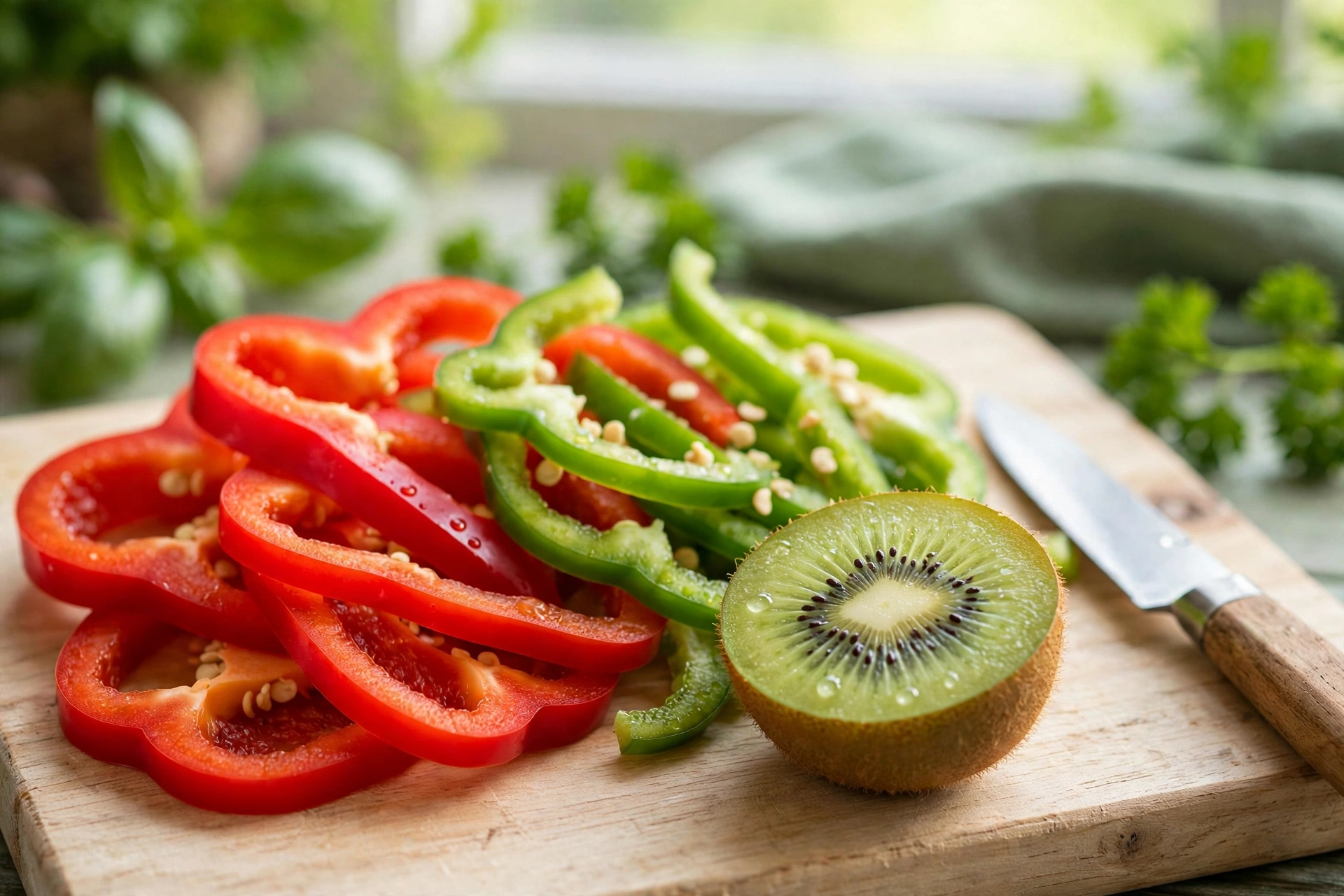
Red peppers deserve the headline. They’re sweet, crunchy, and happy raw, which matters because vitamin C is water-soluble and sensitive to heat. A pepper sliced into strips for dipping, or diced into a salad, keeps nearly all of its vitamin C intact. Green peppers are a step behind at 60 mg per half cup, but still a strong source — and cheaper most of the year.
Kiwi is the small fruit that punches above its weight. One medium kiwi at 64 mg covers most of a woman’s daily target on its own, and two of them pass the men’s RDA. Eat it with a spoon straight from the skin and you’ve added a snack that needs no preparation at all.
Broccoli and Brussels sprouts are the cooked contenders. Half a cup of cooked broccoli gives you 51 mg, and Brussels sprouts are close behind at 48 mg. Both are usually eaten cooked, so the numbers above already account for some cooking loss — which brings us to the practical question of how much vitamin C survives the stove.
Read also: How to Add More Vegetables to Your Meals
What vitamin C actually does for you
Start with collagen. Vitamin C is required for the biosynthesis of collagen, the structural protein in skin, tendons, ligaments, and blood vessel walls. That’s why severe deficiency — scurvy — shows up as bleeding gums, poor wound healing, and fragile capillaries. Scurvy is rare today in developed countries, and symptoms generally appear only after weeks of intake below about 10 mg a day. But the collagen connection explains why vitamin C is often talked about alongside skin health: it’s a building block, not a cosmetic extra.
Then there’s iron. Vitamin C improves the absorption of nonheme iron, the form found in plant foods. This is a practical detail, not trivia. If your lunch is lentils, beans, or spinach, pairing it with a vitamin C food — peppers in the salad, a tomato-based sauce, a citrus dressing — helps your body take in more of the iron that’s already on the plate. It’s one of the easiest nutritional upgrades there is, and it costs nothing.
Vitamin C also acts as an antioxidant, helping to limit damage from free radicals, and it plays a role in immune function. Researchers have studied whether it might help prevent or delay diseases where oxidative stress plays a part, such as certain cancers and cardiovascular disease, but the NIH is careful here: that work is ongoing, and food sources are the sensible way to cover your bases while the evidence builds.
The cold question, honestly answered
No vitamin C article is complete without the cold question, and the answer is more modest than the supplement aisle suggests. A 2013 Cochrane review by Hemilä and Chalker pooled 29 trial comparisons covering 11,306 people and found that taking vitamin C regularly did not reduce how often people in the general population caught colds. The one clear exception was people under short bursts of extreme physical stress — marathon runners, skiers, soldiers — where regular vitamin C roughly halved cold risk.
What regular vitamin C did do, consistently, was shorten colds once they arrived: by about 8% in adults and 14% in children across 31 comparisons and 9,745 cold episodes. That’s roughly half a day off a week-long cold for an adult. Starting vitamin C after symptoms appear, even at high doses, showed no consistent benefit. The honest summary: eating vitamin C foods every day may make your next cold a little shorter, but it won’t build a wall around you — and no food can promise that.
How to keep more of it in your food
Vitamin C is fragile. It’s water-soluble and destroyed by heat, so prolonged storage and long cooking both cut the amount left on your plate. A few habits protect it:
- Eat some of it raw. Peppers, kiwi, strawberries, and citrus need no cooking at all. A salad that includes one raw vitamin C food covers a surprising share of the day.
- Steam or microwave instead of boiling. The NIH notes that steaming or microwaving may lessen cooking losses, since less vitamin C leaches into cooking water. If you do boil vegetables, use the cooking liquid in a soup or sauce rather than pouring it away.
- Keep cooking times short. Broccoli steamed until just tender keeps more vitamin C than broccoli boiled soft. The same goes for Brussels sprouts and cabbage.
- Don’t store cut fruit for days. Cut produce loses vitamin C gradually in the fridge and in air. Slice what you’ll eat, and eat it soon.
- Buy whole fruit over juice when you can. Orange juice is a strong source at 93 mg per three-quarter cup, but whole fruit adds fibre that juice leaves behind. Juice is fine as a backup, not as the default.
Read also: Simple Ways to Eat More Fruit
A day of vitamin C without trying
Here’s what a normal day can look like, using the NIH figures above:
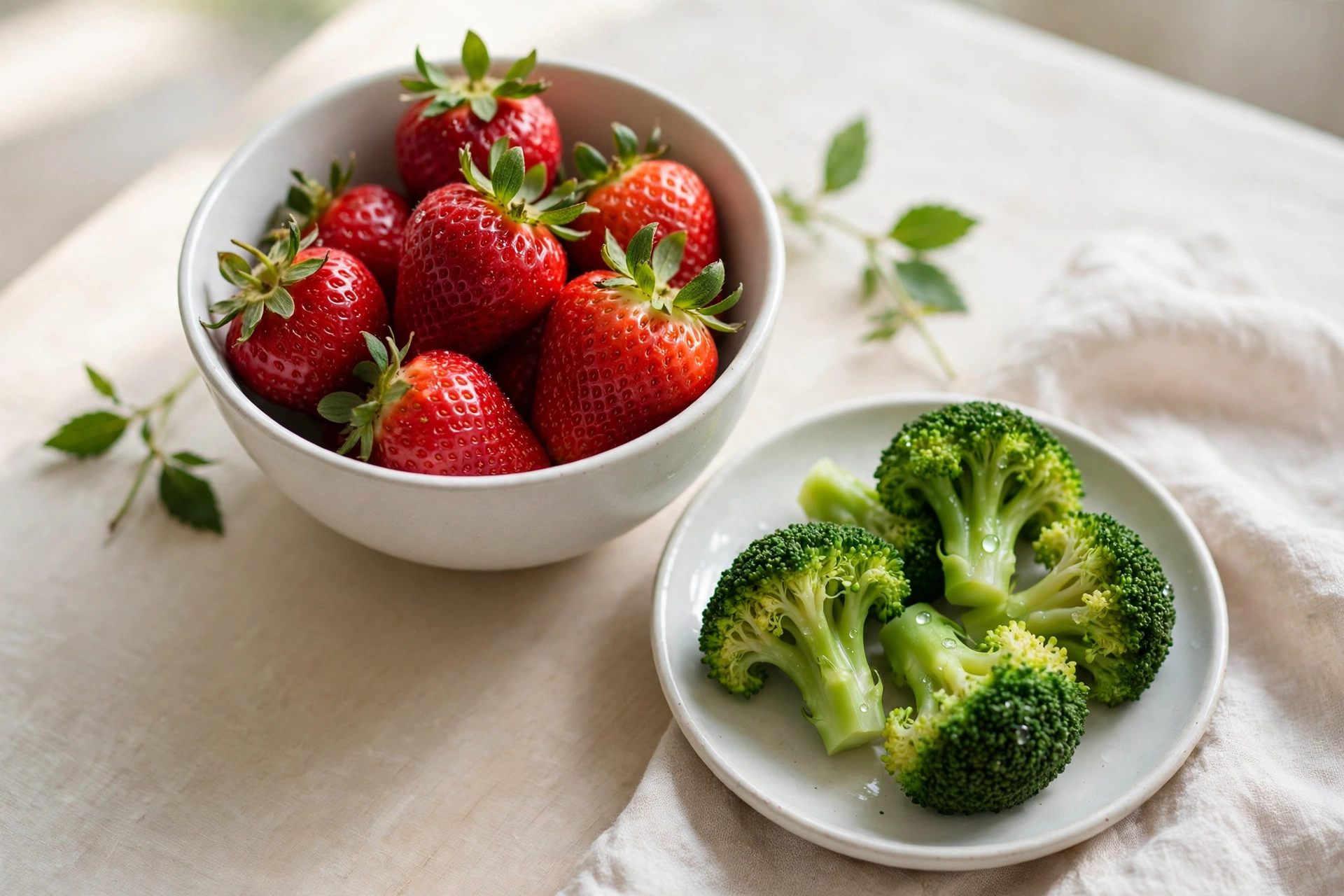
- Breakfast: half a cup of sliced strawberries (49 mg) over yoghurt or oats, plus a kiwi (64 mg). Running total: about 113 mg — already past the RDA for most adults.
- Lunch: a sandwich or salad with half a cup of raw red pepper (95 mg). Running total: about 208 mg.
- Dinner: half a cup of cooked broccoli (51 mg) beside whatever you’re already making. Day’s total: about 259 mg.
No supplements, no special shopping trip, no exotic ingredients. That’s the real point of knowing your vitamin C foods: the target is small, the sources are common, and variety does the work for you. Eat a few different fruits and vegetables across the day — some raw, some lightly cooked — and the numbers take care of themselves.
Read also: How to Build a Balanced Plate
Frequently asked questions
Do I need a vitamin C supplement?
Most people don’t. Average intakes from food already meet the RDA for most non-smoking adults, according to national survey data cited by the NIH, and food sources are absorbed just as well as supplements. Supplements make sense mainly when a clinician recommends them — for example, for people with very limited diets or certain medical conditions. If you do take one, remember the upper limit is 2,000 mg a day from all sources combined.
Is it possible to get too much vitamin C from food alone?
Practically speaking, no. You’d have to eat an enormous amount of fruit and vegetables to approach 2,000 mg from food. The upper limit matters mostly for high-dose supplements, which can cause diarrhoea, nausea, and stomach cramps, and may raise kidney-stone risk in susceptible people.
Does cooking destroy all the vitamin C in vegetables?
No — it reduces it, but doesn’t wipe it out. The cooked values in the table above (broccoli 51 mg, Brussels sprouts 48 mg per half cup) already reflect normal cooking. Steaming, microwaving, and short cooking times preserve more, while long boiling in lots of water loses the most.
Are frozen fruits and vegetables good vitamin C sources?
Yes. Produce is usually frozen soon after harvest, which locks in vitamin C, and frozen berries or broccoli hold up well in cooking. They’re a practical backup when fresh options are out of season or expensive.
Sources
- National Institutes of Health, Office of Dietary Supplements — Vitamin C: Fact Sheet for Health Professionals
- National Institutes of Health, Office of Dietary Supplements — Vitamin C: Fact Sheet for Consumers
- Hemilä H, Chalker E. Vitamin C for preventing and treating the common cold. Cochrane Database of Systematic Reviews 2013, Issue 1. Art. No.: CD000980.
- U.S. Department of Agriculture — FoodData Central
This article is for general information only and is not medical advice. If you have a health condition, take regular medication, or are considering a supplement, talk to your clinician or a registered dietitian first.