High-Fiber Meal Plan for Everyday Eating
If you have ever tried to eat more fiber, you probably know how it usually goes. You buy a bag of bran cereal, eat a heroic bowl on Monday, feel uncomfortably full, and quietly give up by Wednesday. The problem is rarely willpower. It is the plan — or rather, the lack of one. Fiber works best when it is spread through the day, tucked into foods you already enjoy, and increased gradually instead of all at once.
A high-fiber meal plan does not need to be a special diet, a cleanse, or a week of unfamiliar ingredients. At its simplest, it is an everyday way of eating that leans on beans, lentils, whole grains, vegetables, fruit, nuts, and seeds. Those foods bring fiber along with protein, vitamins, minerals, and staying power, which is why a fiber-rich day tends to feel more satisfying than a day built on refined, low-fiber foods.
This guide gives you a practical framework: how much fiber to aim for, which foods actually move the number, a sample day, a flexible seven-day outline, and the small habits that keep the plan comfortable.
How much fiber do you actually need?
The World Health Organization recommends that adults consume at least 25 grams of naturally occurring dietary fiber per day, alongside at least 400 grams of vegetables and fruit. In the United States, the Dietary Reference Intakes set a higher planning benchmark: about 14 grams of fiber per 1,000 calories, which works out to roughly 25 grams per day for women and 38 grams per day for men aged 19 to 50. Older adults have slightly lower targets — about 21 grams for women and 30 grams for men over 50.
On a packaged food label, you will see a different number again: the U.S. Food and Drug Administration sets the Daily Value for dietary fiber at 28 grams, based on a 2,000-calorie diet. That is the figure behind the % Daily Value column, not a personal prescription. Think of these numbers as a range to work toward, not a pass-or-fail test at every meal. If you currently eat around 15 grams a day — a common intake in the U.S. — moving to 22 or 25 grams is already a meaningful step.
One more point matters: the guidance is for fiber that occurs naturally in foods. Fiber added to a highly processed product is not automatically the same as fiber from beans, oats, or an apple with its skin on. Build the plan around whole foods first, and let packaged foods fill gaps rather than carry the whole strategy.
Soluble and insoluble fiber: why you want both
You may have heard fiber described as soluble or insoluble. Soluble fiber dissolves in water and forms a gel-like substance during digestion; it is found in oats, barley, beans, lentils, apples, and citrus fruit, and it is linked to steadier blood sugar and healthier cholesterol levels. Insoluble fiber does not dissolve; it adds bulk and helps keep digestion moving. Whole wheat, bran, vegetables, and the skins of fruit are good sources.
Most plant foods contain a mix of both, so you do not need to track the two types separately. A day that includes a grain, a legume, several vegetables, and a piece of fruit will usually cover both without any extra bookkeeping. Variety is the shortcut: different plants bring different fibers, and a varied plate is more interesting to eat anyway.
The fiber anchors: foods that do the heavy lifting
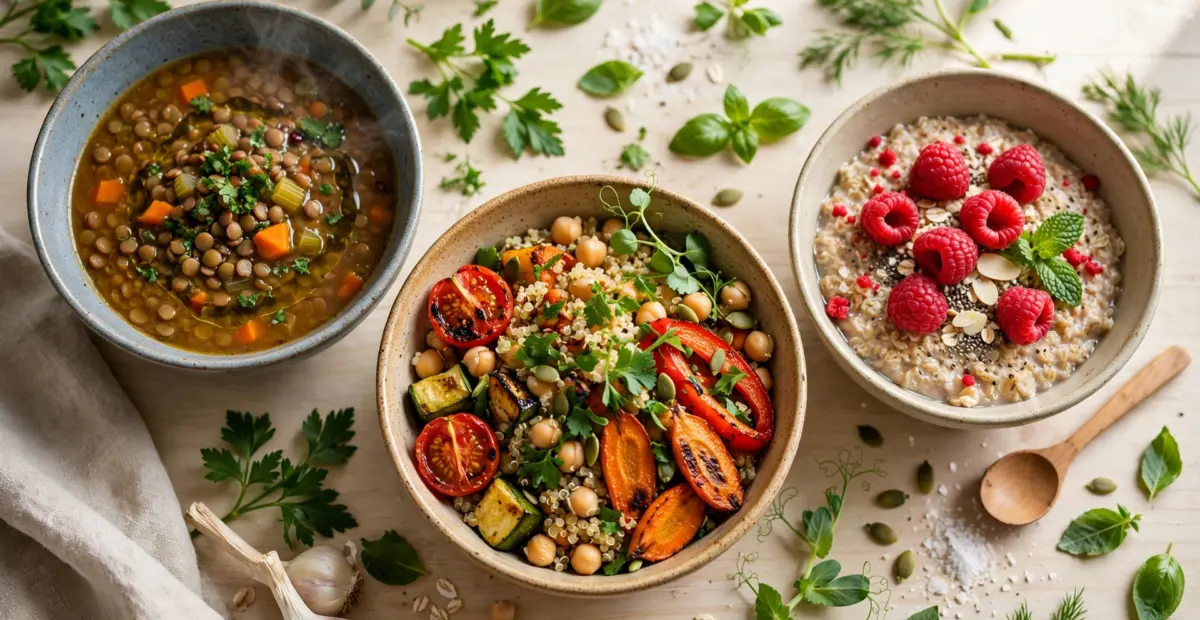
A few foods are so fiber-dense that one serving changes the whole day. According to USDA FoodData Central, a cup of cooked lentils provides about 15.6 grams of fiber, a cup of cooked black beans about 15 grams, and a cup of cooked chickpeas about 12.5 grams. A cup of raspberries adds about 8 grams, a cup of cooked quinoa about 5.2 grams, and a cup of cooked oatmeal about 4 grams.
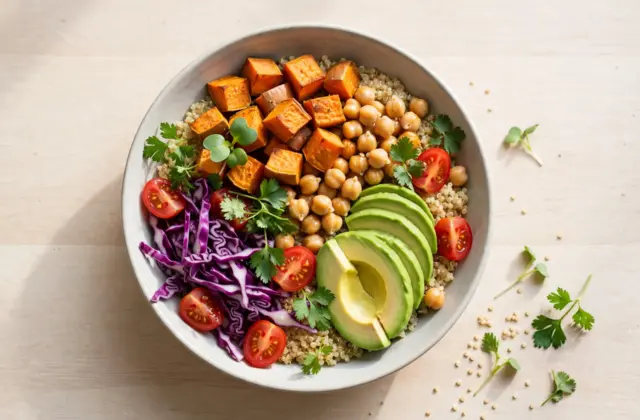
That list explains the whole strategy. You do not need exotic ingredients. One legume-based meal, a whole-grain base, and fruit or vegetables at most meals will get most people close to their target. Keep a few anchors on hand at all times — canned beans (rinsed to reduce sodium), dried or canned lentils, oats, quinoa or brown rice, frozen berries, and frozen mixed vegetables — and the plan almost builds itself.
Read also: How to Add Fiber to Your Diet
A sample high-fiber day (about 32 grams)
Here is what a realistic day can look like, using the foods above. The grams are approximate — brands and cooking methods shift them a little — but the pattern is what counts.
Breakfast (about 12 grams): a bowl of cooked oatmeal topped with a cup of raspberries and a spoonful of chopped walnuts. It takes five minutes, it travels well, and it starts the day already nearly halfway to 25 grams.
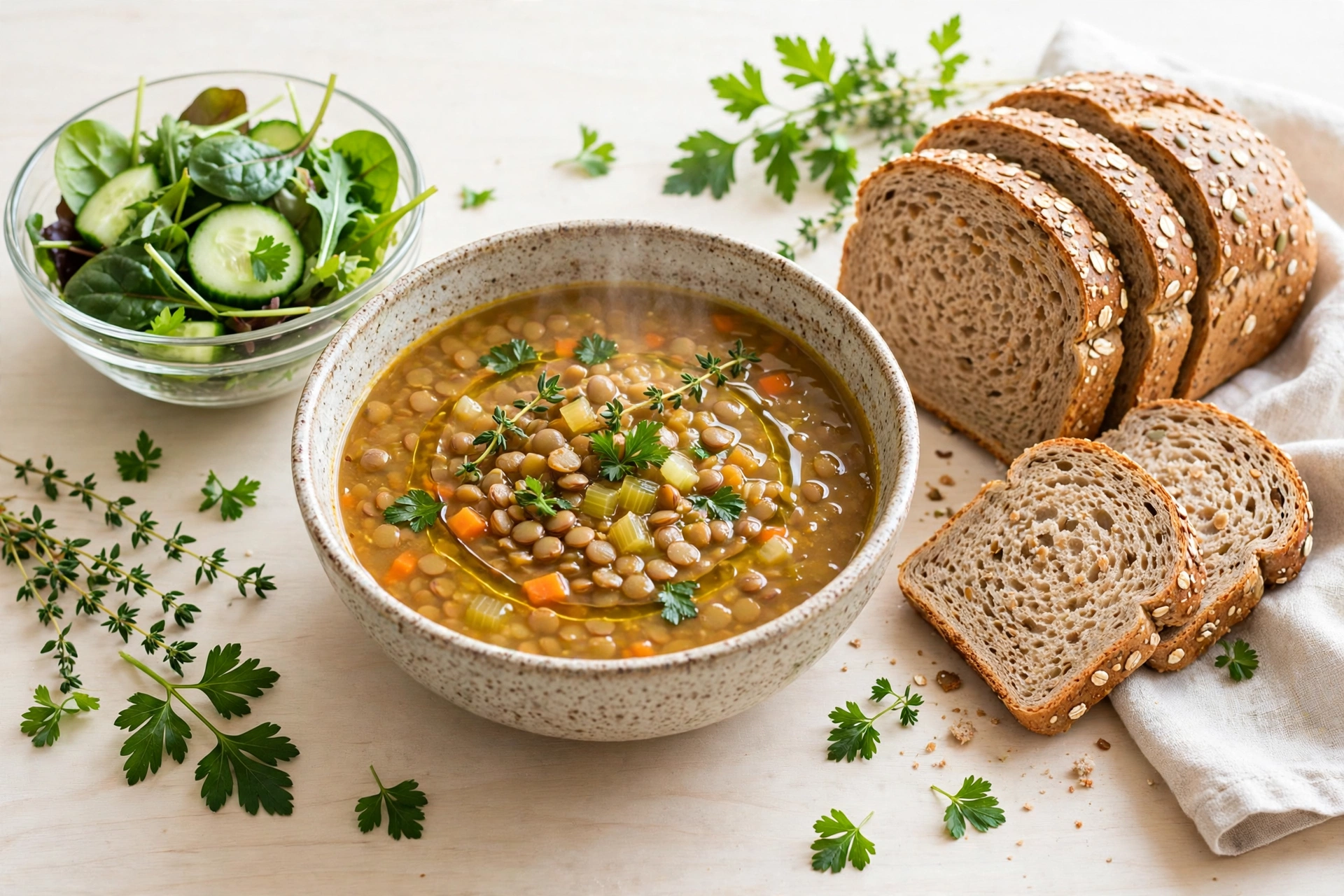
Lunch (about 10 grams): lentil soup made with about half a cup of cooked lentils per serving, served with a slice of whole-grain bread and a simple side salad. If you are packing lunch, the same soup holds up beautifully in a jar or container for the next day.
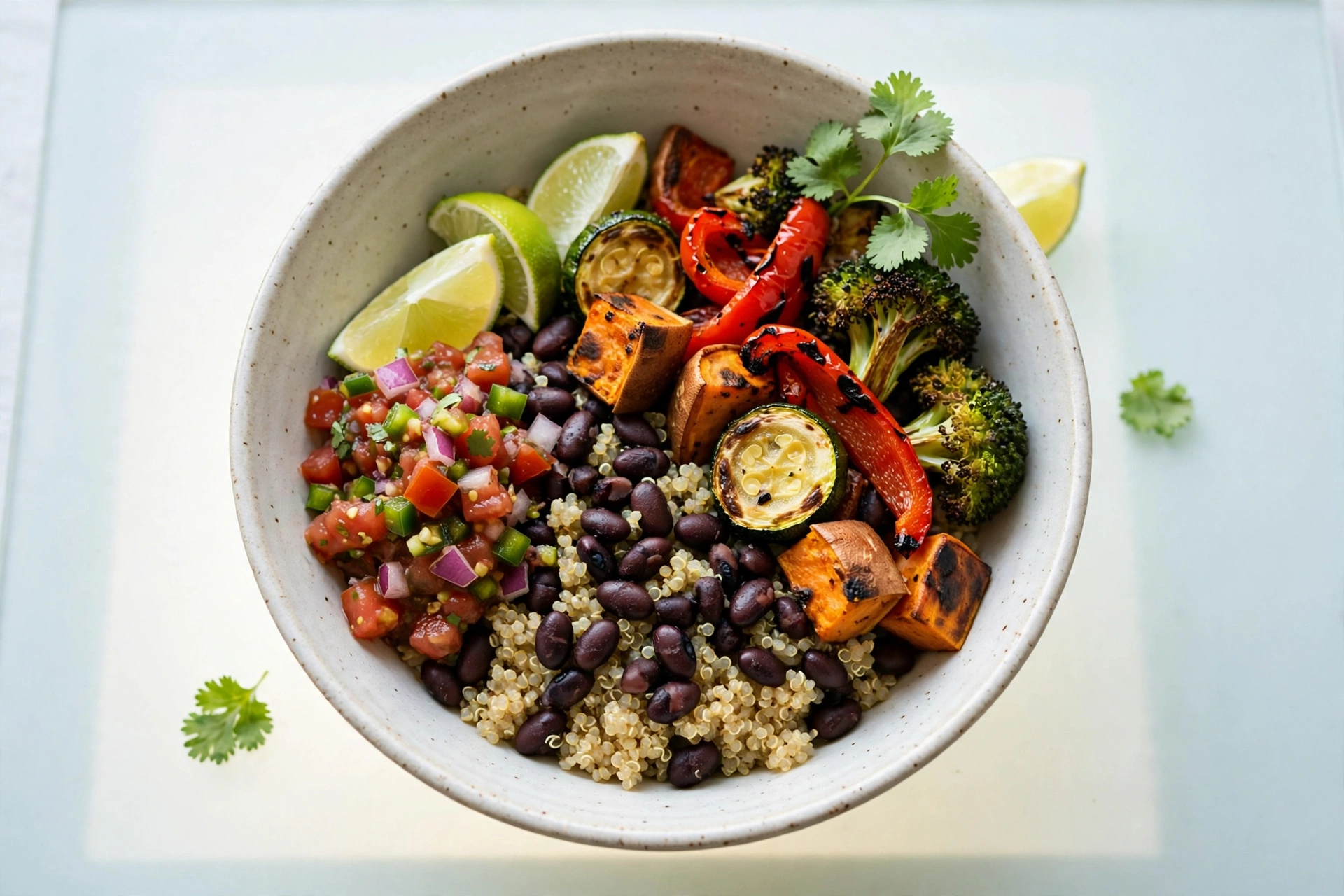
Dinner (about 10 grams): a black bean and quinoa bowl — about half a cup of cooked black beans, half a cup of cooked quinoa, roasted vegetables, salsa, and a squeeze of lime. Add a protein you enjoy, from grilled chicken to tofu, and the meal stays balanced rather than turning into a fiber-only project.
Notice what is missing: no supplements, no special powders, no separate “fiber meal.” Each plate looks like normal food, because it is.
A flexible 7-day framework
Rather than a rigid menu, use this rotation. Swap any meal for something you prefer, as long as the anchor stays in place.
Day 1 — Lentil day: lentil soup for lunch, whole-grain toast, and a vegetable stir-fry with brown rice for dinner.
Day 2 — Bean tacos: black bean tacos with cabbage slaw, plus oatmeal and berries for breakfast.
Day 3 — Grain bowl: quinoa, chickpeas, roasted vegetables, and a tahini-lemon dressing.
Day 4 — Soup and salad: vegetable and white bean soup, a big salad with seeds, and fruit for dessert.
Day 5 — Pasta, upgraded: whole-grain pasta with lentil Bolognese or chickpeas, plus a side of broccoli or green beans.
Day 6 — Breakfast-for-dinner: savory oats or whole-grain toast with beans, eggs, and sautéed greens.
Day 7 — Leftovers and pantry: use what remains — bean bowls, grain salads, and frozen vegetables — and plan the next week’s anchors.
The framework works because it repeats a small set of skills: cook a pot of beans or lentils, cook a grain, roast a tray of vegetables. Once those three are in your routine, a high-fiber week stops feeling like a project.
Read also: How to Build a Balanced Plate
Five swaps that add fiber without changing dinner
If a full plan feels like too much, start with swaps. Each one adds a few grams, and together they add up fast.
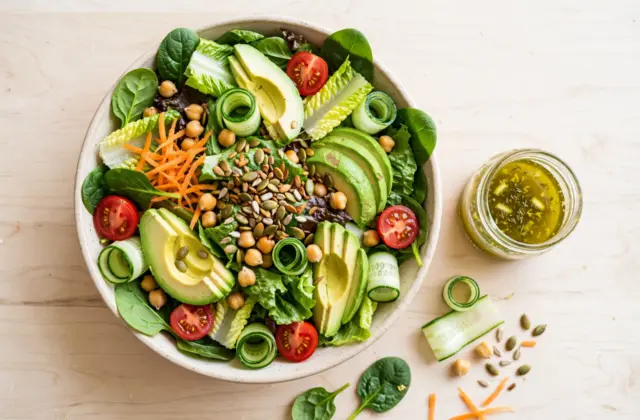
First, choose whole grains over refined ones most of the time: brown rice instead of white rice, whole-wheat bread instead of white, whole-grain pasta instead of regular. Second, keep the skin on fruit and vegetables where it is edible and washed — a lot of fiber lives there. Third, add half a cup of beans to a soup, salad, or pasta sauce you already make; you will barely notice them, but your fiber total will. Fourth, start the day with oats or a whole-grain cereal instead of a low-fiber pastry. Fifth, make fruit the default snack and dessert a few days a week: raspberries, a pear, or an apple beats a fiber-free snack on both fullness and nutrition.
A practical tip for shopping: check the Dietary Fiber line on the Nutrition Facts label and compare similar products. A bread with 3 or 4 grams per slice is a very different choice from one with less than 1 gram, and the label makes that comparison in seconds.
Increase gradually, and drink water
This is the part most plans skip, and it is the reason many fiber attempts fail. If your gut is used to 15 grams a day, jumping straight to 35 grams can leave you bloated and gassy. Add about 5 grams at a time — an extra serving of beans, a cup of berries, a switch to whole-grain bread — and give your body a few days to adjust before adding more.
Water helps too. Fiber absorbs water as it moves through the digestive system, so pairing a higher-fiber day with regular fluids, mostly water, keeps things comfortable. You do not need a special hydration formula; a glass of water with meals and a bottle nearby through the day is enough for most people. If you have a digestive condition, take fiber supplements, or are unsure how quickly to increase your intake, check with your clinician or a registered dietitian first — this guide is general information, not personal medical advice.
Read also: How to Stock a Healthy Pantry
Make it stick: prep once, eat fiber all week
The easiest high-fiber plan is the one you do not have to think about at 6 p.m. Cook a large pot of lentils or beans on Sunday and use it across three meals. Cook a grain in bulk and refrigerate it for bowls and salads. Wash and cut vegetables ahead of time, and keep frozen vegetables for nights when fresh ones run out — frozen produce counts, and it keeps a fiber plan alive on busy weeks.
Stock the pantry with the anchors, keep a short list of five go-to high-fiber meals you actually like, and let repetition do the work. Eating well is rarely about finding the perfect new recipe. It is about making the good choice the easy choice, most days, with foods you enjoy eating again next week.
Frequently asked questions
How quickly should I increase my fiber intake?
Gradually. Add roughly 5 grams at a time, wait a few days, and then add more if you feel comfortable. A sudden large jump is the most common cause of bloating when people start eating more fiber.
Do I need a fiber supplement to reach 25 grams?
Most people do not. One cup of lentils or black beans already provides more than half of the 25-gram WHO floor, and a day built on whole grains, vegetables, and fruit can reach the target from food alone. Supplements can help in specific situations, but discuss them with a clinician first.
Does cooking reduce fiber?
Cooking softens plant foods but does not remove most of their fiber. Cooked beans, lentils, and oats remain excellent sources, and cooking often makes larger portions easier to eat.
Is frozen or canned produce as good as fresh for fiber?
For fiber, yes. Frozen vegetables and fruit, and canned beans that are rinsed, retain their fiber. Check canned products for added sugars and sodium, and rinse beans to reduce sodium.
Disclaimer: This article is for general information only and is not medical advice. If you have a digestive condition or specific dietary needs, talk to your clinician or a registered dietitian before making major changes to your diet.
Sources
- World Health Organization — WHO updates guidelines on fats and carbohydrates (adults: at least 400 g of vegetables and fruit and 25 g of naturally occurring dietary fiber per day)
- National Academies Dietary Reference Intakes, via Slavin (2008), Journal of the American Dietetic Association (14 g fiber per 1,000 kcal; 25 g/day for women, 38 g/day for men)
- U.S. Food and Drug Administration — Daily Value on the Nutrition and Supplement Facts Labels (Daily Value for dietary fiber: 28 g)
- USDA FoodData Central (fiber values for lentils, black beans, chickpeas, raspberries, quinoa, and oatmeal)