Healthy Dinner Plates: How to Build Them
Dinner is the meal most likely to go sideways. You get home tired, the fridge looks uninspiring, and suddenly a bag of chips counts as a plan. A healthy dinner plate does not need a recipe book or a spreadsheet. It needs a simple shape you can repeat on ordinary weeknights, with food you actually like.
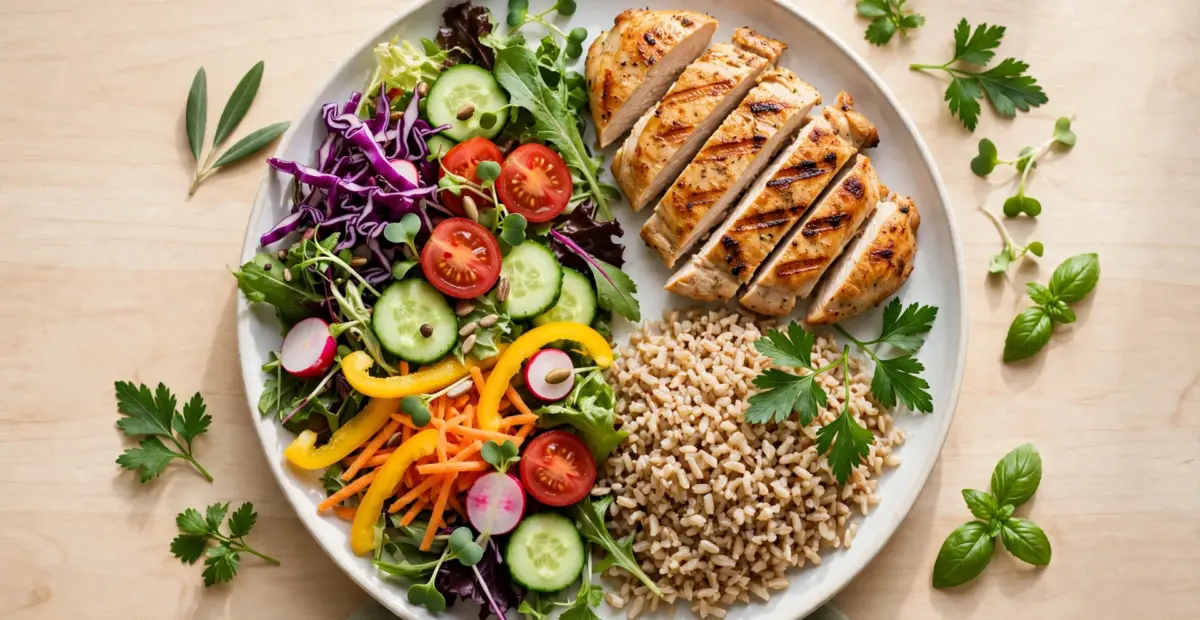
Think of your plate in three parts. Fill about half with vegetables and fruit, about a quarter with protein, and about a quarter with whole grains or another starchy food. Add a small amount of healthy fat — olive oil, nuts, seeds, or avocado — and a glass of water. That is the whole system. The rest is just choosing foods that fit it.
The classic plate method works because it keeps proportions visible. You do not have to weigh anything or count every calorie. You can see, at a glance, whether vegetables are doing the heavy lifting or whether a mound of pasta has quietly taken over the plate.
Start with the half plate of vegetables
Vegetables are the easiest place to win at dinner. They add color, crunch, fiber, and volume without adding much energy, which means you can eat a satisfying plate and still feel comfortable afterward. The World Health Organization recommends at least 400 grams — about five portions — of fruit and vegetables a day, and dinner is a natural place to get two of those portions in one sitting.
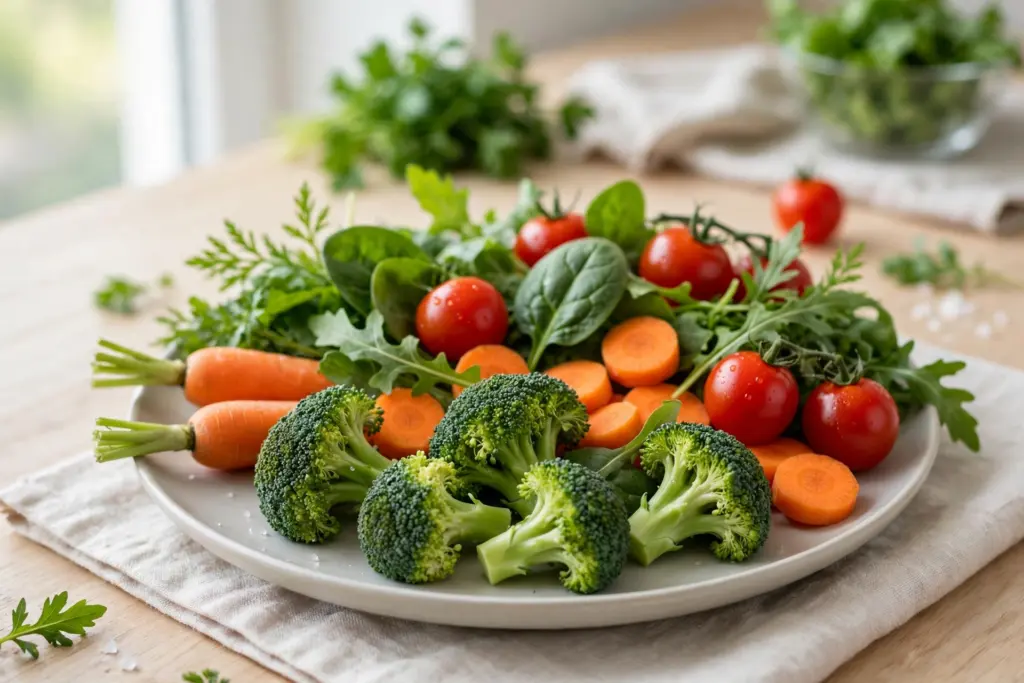
You do not need anything fancy. Roasted carrots, steamed broccoli, a big handful of salad leaves, stir-fried green beans, or a tray of mixed peppers all count. Frozen vegetables count too, and they are a lifesaver on nights when fresh produce is running low. Aim for variety across the week rather than perfection on any single night: dark greens one evening, orange vegetables the next, beans or peas another time.
A practical trick is to put vegetables on the plate first. Fill that half before anything else goes on, and the rest of the plate tends to sort itself out. If raw salad feels boring, dress it with lemon juice, olive oil, and a pinch of salt, or toss warm vegetables with garlic and herbs so they taste like something you chose, not something you endured.
Choose a protein you will actually eat
Protein is what keeps dinner satisfying until bedtime. Without enough of it, a vegetable-heavy plate can leave you raiding the pantry an hour later. With it, the same plate feels like a real meal.
Good weeknight options include chicken, fish, eggs, tofu, tempeh, beans, and lentils. A palm-sized portion — roughly the size and thickness of your palm — is a useful visual guide for most adults, though needs vary with body size and activity. Fish twice a week, beans and lentils a few times a week, and a mix of animal and plant proteins across the week all keep things varied without any complicated planning.
Keep preparation simple. Grill, roast, or pan-fry with a little oil and seasoning, and let the protein share the plate rather than dominate it. If you are cooking for a family with mixed tastes, a build-your-own setup works well: one protein, a few vegetable sides, and grains on the table so everyone assembles their own version of the same balanced plate.
Read also: How to Build a Balanced Dinner
Add a quarter plate of whole grains or starchy food
The starchy quarter is where dinner gets its staying power. Brown rice, quinoa, whole-wheat pasta, whole-grain bread, potatoes, and sweet potatoes all fit here. Whole grains also contribute fiber: the World Health Organization recommends at least 25 grams of dietary fiber a day for adults, and a dinner built around vegetables, beans, and whole grains can cover a good share of that in one meal.
A fist-sized portion of cooked grains is a reasonable starting point for most people — about one cup cooked. If you are very active, you may need more; if dinner is your lightest meal, a little less is fine. The point is proportion, not precision. A plate that is mostly grains with a token vegetable on the side is a different meal from one where grains play a supporting role.
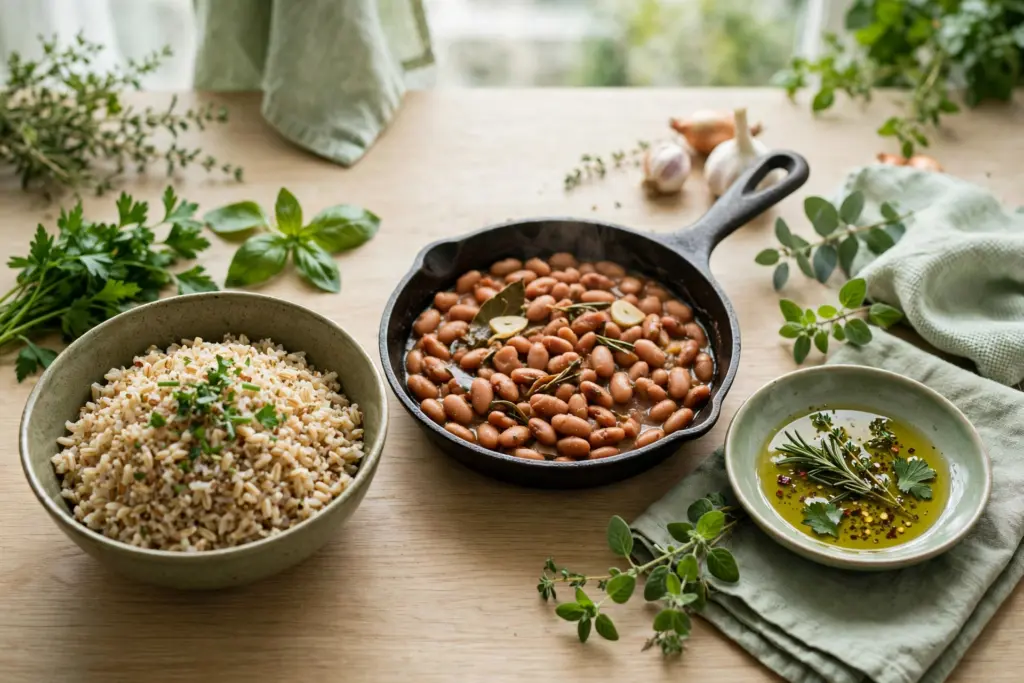
Batch cooking helps here more than anywhere else. Cook a pot of brown rice or quinoa on Sunday, refrigerate it, and you have the starchy quarter ready for three or four dinners. Reheat it with a splash of water, stir in herbs or lemon zest, and it tastes freshly made rather than leftover.
Finish with healthy fat and flavor
Fat is not the enemy of a healthy dinner plate — the type and amount matter. A drizzle of olive oil over vegetables, a spoonful of nuts or seeds over a salad, or a few slices of avocado adds flavor and helps your body absorb fat-soluble vitamins from the vegetables on the plate.
Keep the fat portion small and intentional: roughly a thumb-sized amount of oil, or a small handful of nuts. That is enough to make food taste good without drowning it. Herbs, spices, citrus, vinegar, garlic, and chili do the rest of the flavor work for almost no extra energy, which is why a well-seasoned vegetable plate rarely needs a heavy sauce.
Watch the sauces and salty extras, though. Soy sauce, bottled dressings, and processed meats can quietly load a plate with sodium. The American Heart Association recommends no more than 2,300 milligrams of sodium a day, moving toward an ideal limit of 1,500 milligrams for most adults, so tasting before adding extra salt — and choosing low-sodium versions where you can — keeps a good plate from becoming a salty one.
Five dinner plates you can build tonight
Here are five combinations that follow the same shape, so you can rotate them without rethinking dinner every night:
- Roast chicken plate: roasted chicken thigh, half a plate of broccoli and carrots, and a fist-sized scoop of brown rice with lemon and herbs.
- Bean taco plate: seasoned black beans, sautéed peppers and onions, shredded cabbage, a small whole-grain tortilla, and avocado.
- Salmon and greens plate: baked salmon, a big salad with cucumber and tomatoes, and boiled new potatoes with olive oil and dill.
- Tofu stir-fry plate: tofu with mixed stir-fry vegetables and a scoop of quinoa, finished with sesame seeds and a squeeze of lime.
- Lentil soup plate: a generous bowl of lentil and vegetable soup with a slice of whole-grain bread and a simple side salad.
Notice that none of these requires a special ingredient or a long cooking time. They are ordinary foods arranged in a balanced way, and that is exactly why they are repeatable.
Read also: How to Plan Nutritious Meals on a Budget
Make it work on busy nights
Some nights, cooking from scratch is not realistic, and a healthy dinner plate still has to work. That is where shortcuts earn their place: frozen vegetables, canned beans (rinsed to cut sodium), pre-cooked grains, rotisserie chicken, and eggs. A plate of scrambled eggs, frozen stir-fry vegetables, and toast is a balanced dinner, not a failure of one.
Another busy-night strategy is to cook once and eat twice. Make extra roasted vegetables or grains at dinner, and tomorrow’s plate is already half built. Leftovers also cut food waste and grocery costs, which makes the habit easier to keep.
If takeout is the plan, the plate method still applies. Choose a dish with plenty of vegetables, a clear protein, and a grain on the side, and ask for sauce on the side when you can. You are not aiming for a perfect restaurant meal — you are aiming for a plate that roughly matches the shape you use at home.
Read also: How to Build a Balanced Plate
Common dinner-plate mistakes
Three mistakes show up again and again. The first is the disappearing vegetable: a plate that is mostly meat and grains with a small garnish of salad. The fix is mechanical — vegetables go on first, and they take up half the plate before anything else is served.
The second is the oversized starch portion. Pasta and rice are easy to over-serve because they look modest in the pot and generous on the plate. Serving grains with a measuring cup for a week or two trains your eye, and after that you can portion by sight.
The third is skipping dinner entirely and then snacking all evening. A skipped dinner rarely saves energy; it usually moves it later, in less satisfying form. A small balanced plate — soup and bread, or eggs and vegetables — beats no dinner followed by a pantry raid.
Frequently asked questions
Do I need to eat salad at every dinner?
No. Salad is one way to fill half the plate, but roasted, steamed, stir-fried, or soup vegetables all count. Choose the form you enjoy most, because the version you will repeat is the one that works.
Can a healthy dinner plate include dessert?
Yes. Dessert is not part of the plate itself, and an occasional small dessert after a balanced meal is very different from a dinner made of dessert alone. Fruit, yogurt, or a small sweet you enjoy can finish the meal without undoing it.
What if I eat dinner late?
A late dinner is still better than no dinner. Keep it lighter if a heavy meal disturbs your sleep — soup, eggs and vegetables, or a smaller version of your usual plate — and give yourself a little time between eating and bed when you can.
Does the plate method work for vegetarian dinners?
Yes. Beans, lentils, tofu, tempeh, and eggs all work as the protein quarter, and pairing grains with legumes across the day gives you a wide range of amino acids. The vegetable half and grain quarter stay exactly the same.
Sources
- World Health Organization — Nutrition for a healthy life
- American Heart Association — How Much Sodium Should I Eat Per Day?
- Dietary Guidelines for Americans — fruit and vegetable recommendations (via Scripps Health summary)
Disclaimer: This article is for general information only and is not medical advice. If you have a health condition or specific dietary needs, talk to a qualified health professional before changing your diet.