Healthy Lunch Plates: How to Build Them
Lunch has a way of going sideways. Breakfast gets a plan, dinner gets a recipe, and lunch gets whatever is closest — a sandwich grabbed between meetings, a noodle cup at your desk, or nothing at all until the vending machine starts looking reasonable. None of that makes you a bad eater. It just means lunch needs a simpler system than most advice gives it.
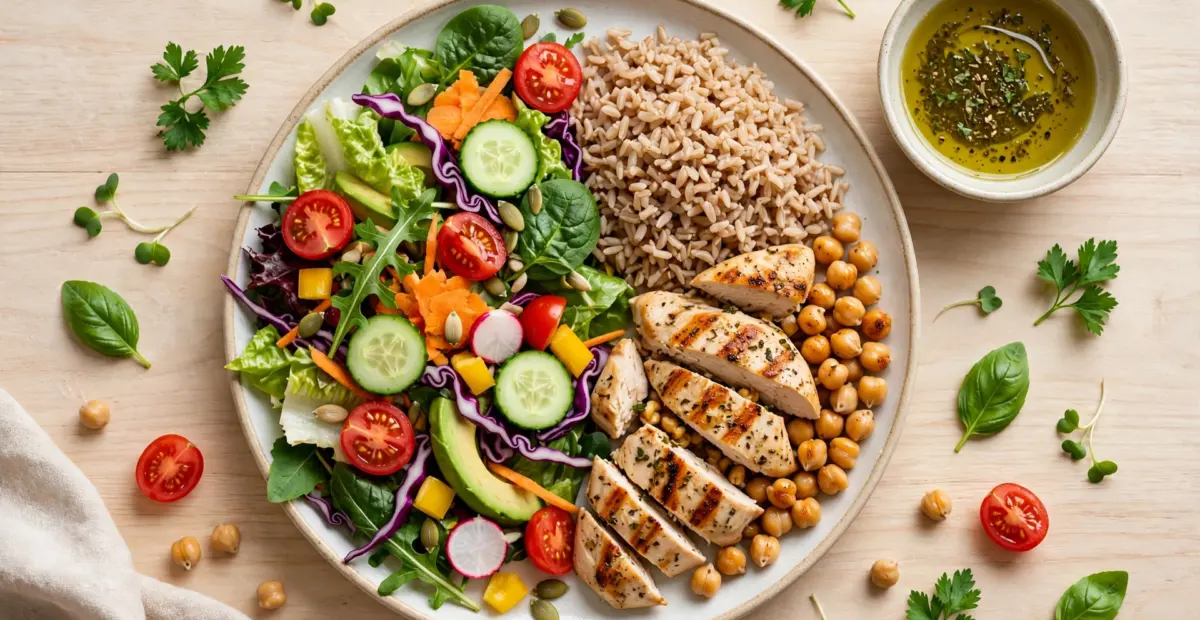
A healthy lunch plate is not a strict formula or a weigh-everything project. It is a visual shortcut: fill about half your plate with vegetables and fruit, a quarter with whole grains or another starchy food, and a quarter with a protein food, then add a little healthy fat and something to drink. That pattern, used by Harvard’s Healthy Eating Plate, works for a sit-down meal at home, a packed lunchbox, and a plate you assemble from a buffet or a takeaway counter. You do not need to count a thing. You just need to see the proportions.
Why does lunch deserve this much attention? For many people it is the meal most likely to be skipped, rushed, or built around a single food group — usually refined grains plus salt. A plate with vegetables, protein, and whole grains tends to keep you fuller through the afternoon than a plate of mostly white bread or white rice alone, and it gives you a natural place to fit in foods you might otherwise miss all day. The World Health Organization recommends at least 400 grams of fruit and vegetables a day, roughly five portions, and lunch is an easy place to cover two or three of them.
The simple lunch plate formula
Start with the plate itself. A regular dinner plate works fine; a very large plate makes every portion look small and tempts you to overfill it. Then build in this order:
Half vegetables and fruit. Aim for mostly vegetables, with fruit as a smaller part of that half. A big handful of salad leaves, a scoop of roasted carrots, cucumber and tomato slices, or a cup of vegetable soup all count. Frozen vegetables count too, and they are often the difference between a balanced lunch and a skipped one on a busy week. Variety matters more than perfection: different colours tend to bring different nutrients, so rotate what you buy rather than eating the same two vegetables every day.
A quarter whole grains or starchy foods. Brown rice, quinoa, whole-wheat bread, whole-wheat pasta, oats, barley, and potatoes all sit here. Whole grains keep more fibre than refined versions, which helps a meal feel satisfying for longer. If you usually eat white rice or white bread, you do not have to give them up — try mixing half white and half brown rice, or choosing whole-wheat bread a few days a week, and see whether you notice the difference in how full you feel.
A quarter protein foods. Fish, poultry, eggs, tofu, tempeh, beans, lentils, chickpeas, and nuts all qualify, and you can mix them: half chicken and half beans in a wrap, for example, stretches the meat and adds fibre. Protein is the part of lunch that most often gets squeezed out when a meal is rushed, yet it is the part that helps you avoid the 4 p.m. crash-and-snack cycle. A palm-sized portion is a useful rough guide for most adults, but your hand, your appetite, and your activity level are better guides than any single number.
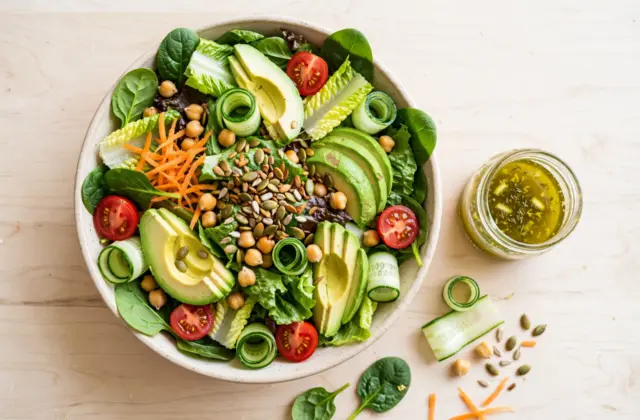
A little healthy fat, on the side. A drizzle of olive oil over salad, a spoonful of tahini, a small handful of nuts, or a quarter of an avocado adds flavour and helps your body absorb some vitamins from the vegetables. Fat is not the enemy of a healthy plate; it is a seasoning and a nutrient, and a small amount goes a long way.
Water first. Keep water as the default drink with lunch. Sweetened drinks can quietly add a large share of your day’s free sugars — the World Health Organization advises keeping free sugars below 10% of daily energy, ideally below 5%, which works out to about 50 grams, or 12 teaspoons, at the 10% level on a 2,000-calorie day, and about 25 grams, or 6 teaspoons, at 5%. A single sweetened drink can use up much of that budget before you have eaten anything.
Read also: How to Build a Balanced Plate
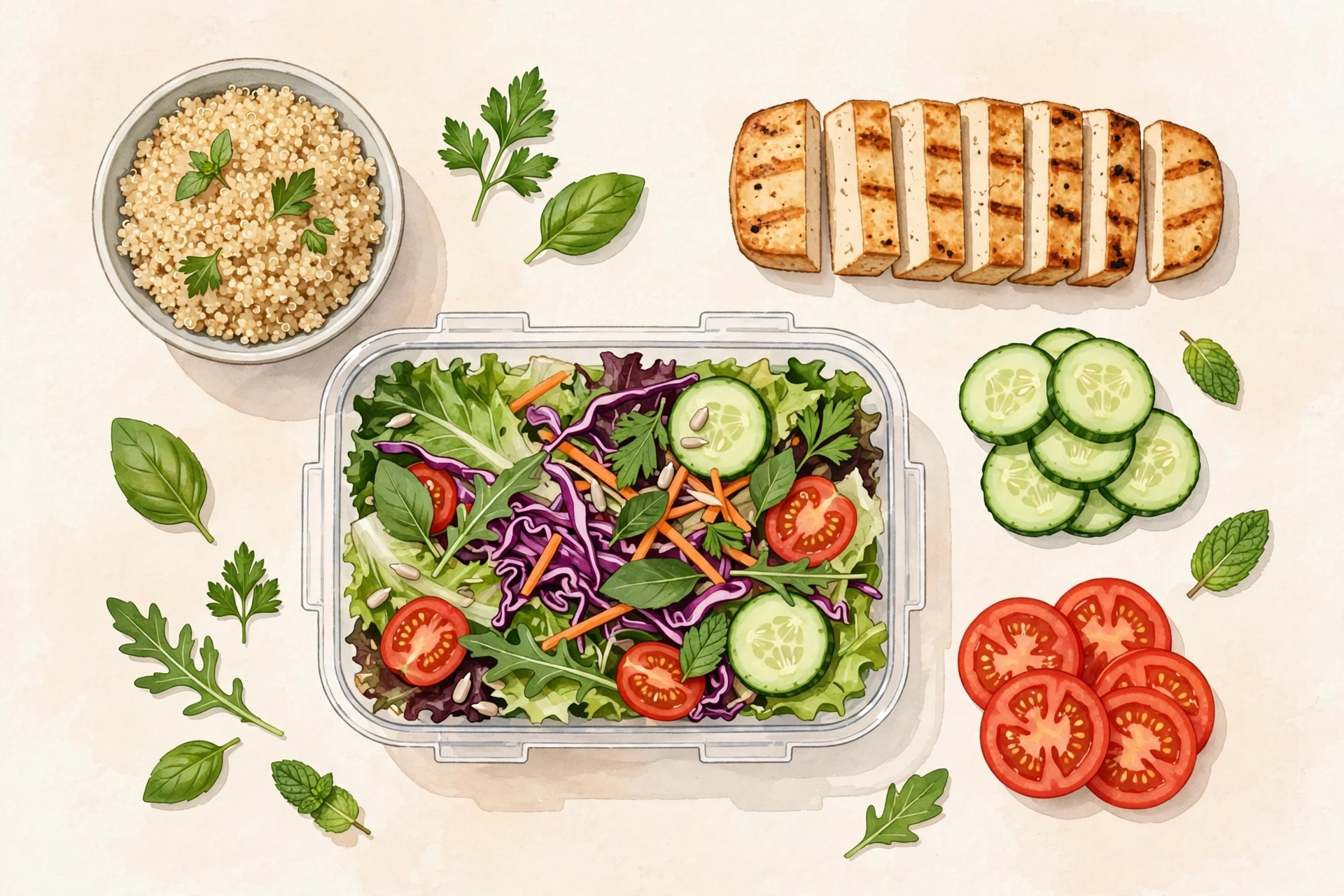
Five lunch plates you can build this week
Formulas are only useful if they turn into actual food. Here are five plates that follow the same pattern with very different ingredients, so you can pick the one that matches what is already in your kitchen.
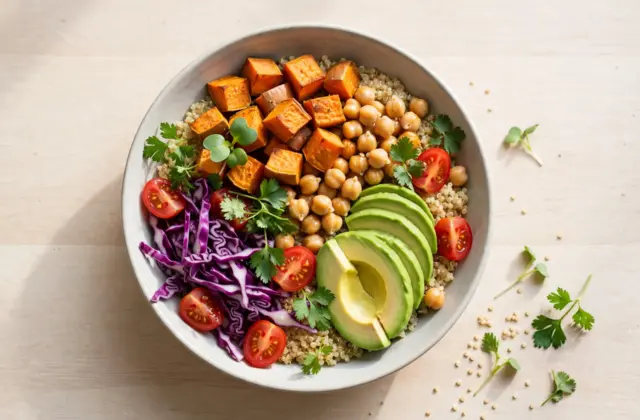
1. The grain bowl. Half roasted broccoli, carrots, and red cabbage; a quarter quinoa; a quarter chickpeas and a boiled egg. Dress with lemon, olive oil, and a pinch of salt. This one travels well and tastes just as good cold.
2. The sandwich plate. A whole-wheat sandwich with chicken or tofu, lettuce, tomato, and cucumber, plus a side salad or a piece of fruit and a small handful of nuts. The sandwich alone is rarely half vegetables — the side is what balances the plate.
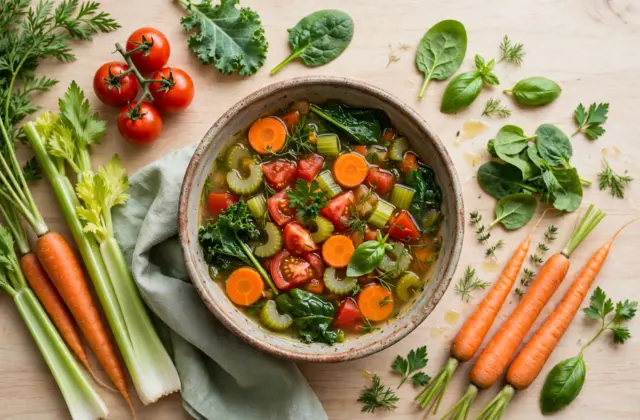
3. The soup-and-bread lunch. A large bowl of lentil or vegetable soup, a slice of whole-grain bread with olive oil, and a fruit for afterwards. Soup is an underrated lunch: it packs vegetables and legumes into one bowl, and it is easy to batch-cook on Sunday.
4. The rice plate. Half stir-fried mixed vegetables, a quarter brown rice, a quarter fish, tofu, or tempeh, with a drizzle of sesame oil and a squeeze of lime. Frozen stir-fry vegetable mixes make this a ten-minute meal.
5. The leftover plate. Last night’s roasted vegetables and chicken, reheated, plus a fresh salad and a slice of bread. Leftovers are the fastest route to a balanced lunch — just rebuild the proportions instead of eating the same ratios as dinner, which may have been heavier on grains or meat.
Read also: How to Prep Produce for the Week
Building a healthy lunch away from home
Eating out or ordering in does not break the formula; it just asks you to scan the menu in a different order. Look for the vegetable first, not the main dish. A salad, a vegetable side, or a soup starter can supply the half-plate before you choose anything else. Then pick a protein you actually enjoy, and a grain or starchy food that will keep you full — rice, noodles, bread, or potatoes are all fine in the quarter-plate slot.
Watch the two things that most often push a restaurant lunch off balance: salt and portion size. The American Heart Association recommends no more than 2,300 milligrams of sodium a day for most adults, with an ideal goal of no more than 1,500 milligrams, and a single takeaway meal can use up most of that. Asking for sauce on the side, skipping the extra salty soup or pickled side, and drinking water instead of a salty-sweet drink all help without turning lunch into a negotiation. And if the portion is generous, eating half now and saving half for tomorrow is a perfectly reasonable lunch plan, not a waste.
For packaged lunches — a ready meal, a wrap from a shop, a canned soup — the Nutrition Facts label is your shortcut. The U.S. Food and Drug Administration’s general guide treats 5% of the Daily Value or less per serving as low and 20% or more as high, so you can quickly spot a product that is high in sodium or added sugars and balance it with a vegetable side or a piece of fruit. You do not need to memorise the label; one glance at sodium and added sugars tells you most of what you need.
Packing lunch without the morning scramble
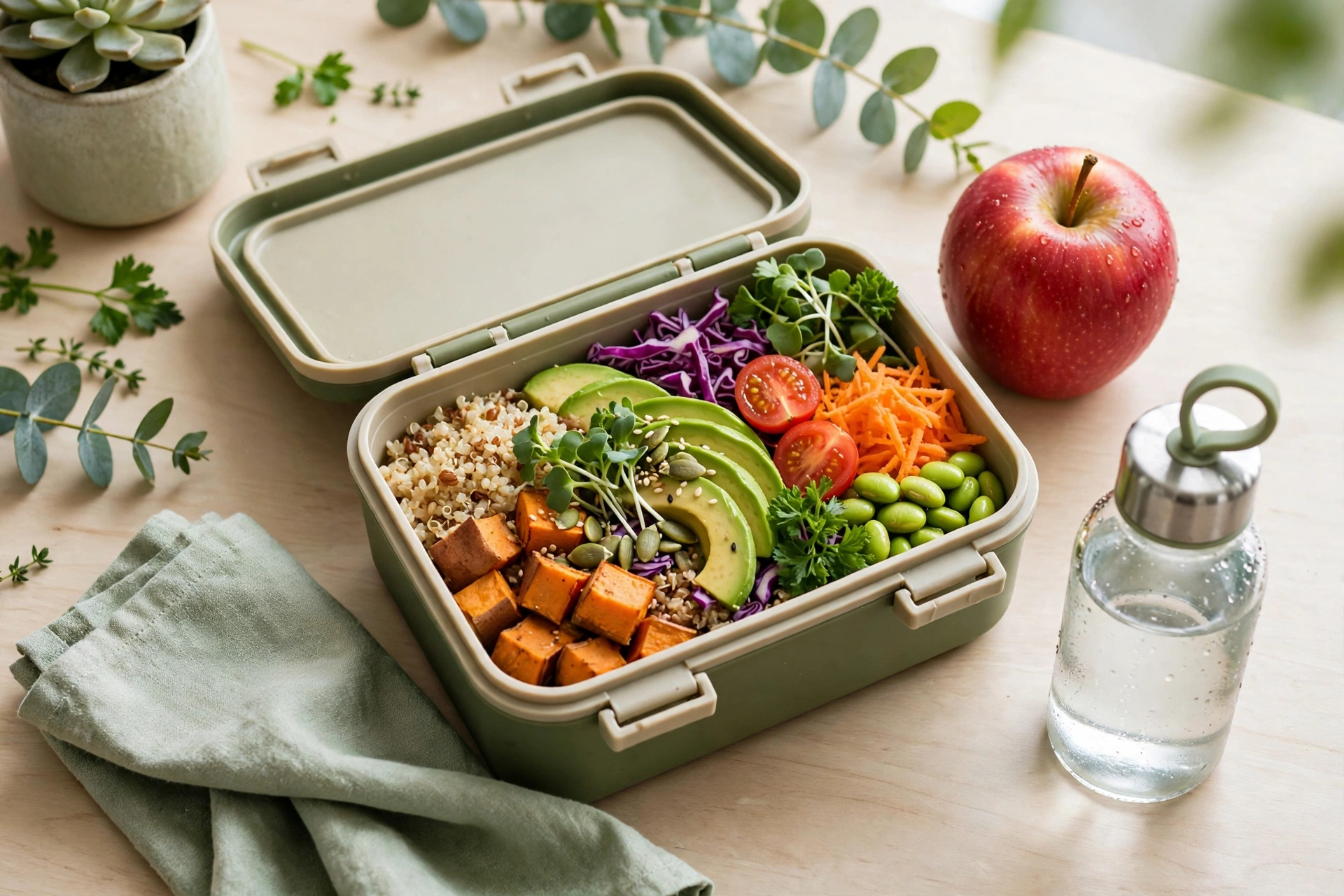
Packed lunches fail in the morning, not at noon. If packing takes more than five minutes, it will not happen on a busy day. The fix is to pack the night before, or to keep a few lunchbox staples ready: washed salad leaves, a cooked grain in the fridge, a tin of beans or chickpeas, eggs, and a dressing in a small jar. With those five things, you can assemble a balanced box in minutes, and you can vary it by swapping the grain, the protein, or the dressing.
Food safety matters as much as nutrition here. FoodSafety.gov advises refrigerating leftovers within two hours of cooking and eating refrigerated leftovers within three to four days, and the same clock applies to a packed lunch: keep it cold with an ice pack until you eat it, rather than leaving it on a warm desk all morning. If you are unsure how long something has been sitting out, it is safer to throw it away than to guess.
Read also: How to Build a Balanced Dinner
Three mistakes that quietly unbalance lunch
All grain, no vegetables. A big bowl of pasta or a large white-bread sandwich can be filling, but without vegetables it misses fibre, colour, and volume. Adding even one vegetable side — a salad, carrot sticks, a cup of soup — changes the plate more than any single swap.
Protein as an afterthought. A salad with only leaves and dressing, or a fruit-only lunch, rarely carries you to dinner. If you are hungry an hour after lunch every day, the missing piece is usually protein, not willpower.
Skipping lunch, then overeating later. Missing lunch does not save calories so much as move them. Most people who skip lunch end up snacking harder in the afternoon or eating a much larger dinner, and they enjoy both less. A small balanced lunch — even soup and bread — beats a skipped one.
A one-week lunch experiment
Instead of overhauling every lunch at once, try one change for a week. Pick the step that feels easiest: add a vegetable side to whatever you already eat, swap one refined grain for a whole grain, or add a protein food to a lunch that usually lacks one. Keep the rest of your routine exactly the same. At the end of the week, notice two things: how hungry you feel at 4 p.m., and how much you enjoy lunch itself. If both improve, keep the change and add another the following week. Small, kept changes beat grand plans that last three days.
Lunch does not need to be impressive. It needs to be balanced enough, often enough, and easy enough to repeat on an ordinary Tuesday. Build the plate — half vegetables and fruit, a quarter whole grains, a quarter protein, a little healthy fat, water to drink — and let the rest of the day take care of itself.
Frequently asked questions
Do I need to measure portions for a healthy lunch plate? No. The plate proportions are a visual guide, not a measuring exercise. If half the plate looks like vegetables and fruit, and the other half is roughly split between grains and protein, you are close enough. Your appetite and activity level will shift the details day to day.
Can a sandwich count as a healthy lunch plate? Yes, with a side. A sandwich on whole-grain bread with a protein filling and vegetables inside is a good start, but it is usually short on vegetables overall. Add a salad, a piece of fruit, or vegetable sticks and the plate balances out.
What if I don’t eat meat? Beans, lentils, chickpeas, tofu, tempeh, eggs, and dairy foods all supply the protein quarter. Combining a grain with a legume — rice and beans, bread and lentil soup — also gives you a satisfying, fibre-rich plate without meat.
Is it okay to eat the same lunch every day? It is okay, but variety helps. Rotating vegetables, grains, and proteins across the week gives you a wider range of nutrients and keeps lunch interesting. Even swapping one ingredient — a different dressing, a different grain — is enough to break the monotony.
This article is for general information only and is not medical advice. If you have a health condition, food allergy, or specific dietary needs, talk to a qualified health professional about what suits you.
Sources
- Harvard T.H. Chan School of Public Health — Healthy Eating Plate
- World Health Organization — Nutrition for a healthy life
- American Heart Association — How Much Sodium Should I Eat Per Day?
- U.S. Food and Drug Administration — How to Understand and Use the Nutrition Facts Label
- FoodSafety.gov — Food Safety Tips (leftovers: refrigerate within 2 hours, eat within 3–4 days)