How to Build a Balanced Dinner
Dinner is the meal where the best intentions go to die. Breakfast gets planned, lunch gets packed, and then by 6:30 p.m. you’re standing in front of the fridge, tired and hungry, negotiating with a jar of pasta sauce. Here’s the good news: a balanced dinner doesn’t require a recipe, a plan, or a second wind. It needs one simple visual formula and a few forgiving habits.
Think of dinner as your recovery meal — the one that tops up what the day took out of you. The current Dietary Guidelines for Americans (2025–2030) put it plainly: prioritize protein at every meal, eat vegetables and fruits throughout the day in whole forms, favor whole grains, and keep added sugars and highly processed foods to a minimum. Dinner is simply where you get the biggest shot at doing all of that in one sitting.
The one formula every balanced dinner follows
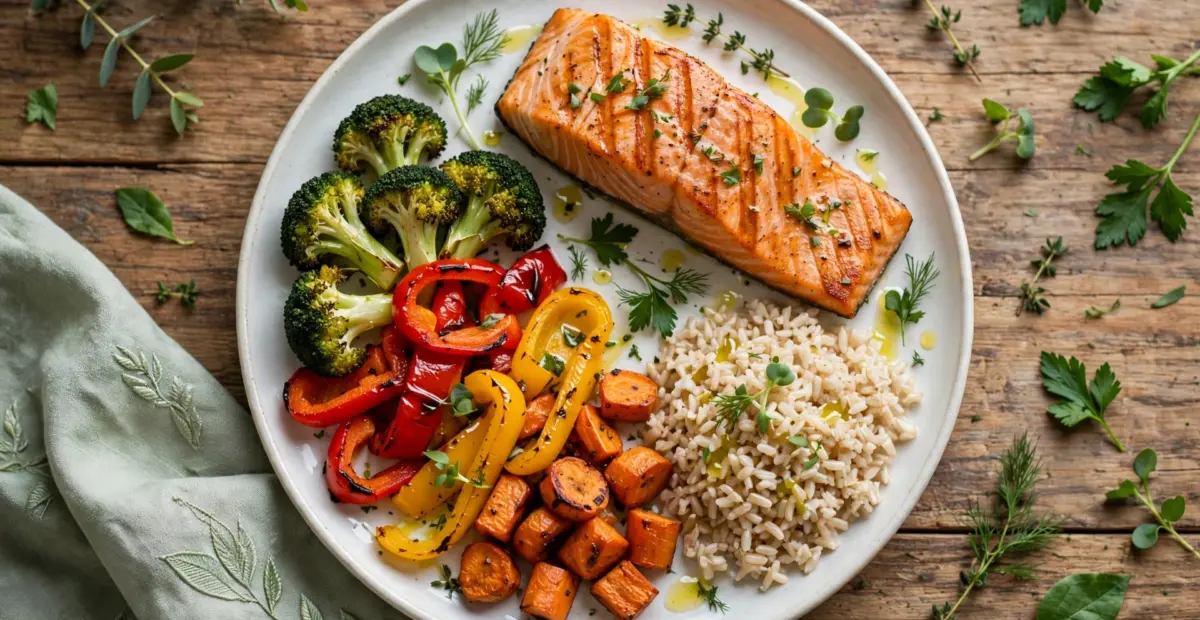
Picture your plate divided into three parts. Half of it goes to vegetables — or a mix of vegetables and fruit. A quarter goes to protein. The last quarter goes to whole grains or a starchy vegetable like sweet potato. Add a small drizzle or spoonful of healthy fat, and you’re done. This is the classic plate method: a way of eyeballing portions that dietitians have recommended for years because it works without measuring cups.
Why does this shape matter more than any superfood? Because it auto-corrects the two things most dinners get wrong. Most of us serve too little produce and too much of everything else. Flipping that ratio means you get more fiber, more potassium, more vitamins — and you end up comfortably full, not stuffed. The World Health Organization recommends at least 400 grams of fruits and vegetables a day (about five portions), and most adults land far short of that. Dinner is your single best chance to close the gap.
Start with the protein you’ll actually eat
Protein earns its quarter of the plate because it does the heavy lifting at dinner: it supports muscle maintenance and repair overnight, and it keeps you satisfied so you’re not raiding the pantry at 10 p.m. The 2025–2030 Dietary Guidelines raised the recommended protein target to 1.2 to 1.6 grams per kilogram of body weight per day, spread across meals — so dinner should carry a meaningful share, not an afterthought.
In practical terms, that means a palm-sized portion of something like grilled chicken, salmon, tuna, tofu, tempeh, eggs, or a generous scoop of lentils or beans. Lean animal proteins, seafood, and plant proteins like beans, lentils, and soy all count. Rotate them through the week — your taste buds and your budget will both thank you. A can of chickpeas costs almost nothing, and roasted with spices it genuinely competes with meat for the center of the plate.
If you eat meat, variety beats quantity. The guidelines encourage protein from both animal and plant sources, so let beans or fish take the lead a few nights a week. Your arteries won’t mind the break from red meat, either.
Let vegetables take up the most space — really
Half the plate is the part people nod at and then quietly shrink to a garnish. Fight that instinct. Two cupped handfuls of roasted broccoli, a big tangle of sautéed greens, a chopped salad, a tray of roasted peppers and zucchini — vegetables are where dinner gets its volume, its color, and a surprising amount of its flavor.
Frozen vegetables count fully. Canned ones count too, as long as you rinse them or choose versions with no added salt. The Dietary Guidelines specifically push whole or minimally processed produce, but frozen peas and corn were frozen at peak ripeness and often cost half the price of fresh. Nobody’s health was ever harmed by a bag of frozen broccoli.
Here’s a trick that changes everything: cook double the vegetables you think you need. Most people underestimate how much a heap of spinach shrinks or how fast roasted carrots disappear. Leftovers become tomorrow’s lunch, which means this habit pays you twice.
Keep the grain whole, and the portion honest
The last quarter of the plate is for energy that lasts: brown rice, quinoa, whole-wheat pasta, farro, barley, or a baked sweet potato. The guidelines recommend 2 to 4 servings of whole grains a day while cutting back on refined carbohydrates, and dinner is a natural place to fit one or two in.
This is also where portion honesty matters. A “serving” of cooked rice or pasta is about one cup — roughly a fistful — not the mountain that restaurants serve. Whole grains still carry fiber that slows digestion and steadies your blood sugar compared with their refined cousins. The American Heart Association recommends 25 to 30 grams of fiber a day from foods (not supplements), and a dinner with vegetables plus a whole grain can easily carry a third or more of that.
None of this means white rice or regular pasta are forbidden. But if refined grains show up at every meal, swapping even a couple of dinners a week to the whole-grain version is one of the easiest upgrades you can make.
A little healthy fat goes a long way
Fat isn’t the enemy — it’s the flavor carrier and the satiety signal. A spoonful of olive oil over roasted vegetables, a quarter of an avocado on a taco bowl, a small handful of nuts or seeds over a grain bowl, or the natural fat in a piece of salmon: that’s the scale you’re aiming for. The WHO advises keeping total fat under 30% of daily energy and saturated fat under 10%, which leaves plenty of room for the unsaturated fats in olive oil, nuts, seeds, and fish.
Where dinners go wrong with fat is usually invisible: the butter in the sauce, the cheese on everything, the cream in the soup. You don’t have to eliminate those — just notice them. If dinner already has cheese, you probably don’t also need a heavy cream sauce. Balance, not banishment.
Read also: High-Protein Meal Plan for Beginners
Five dinner templates that build themselves
Forget recipes for a second. These five frameworks each follow the plate formula and come together in under 30 minutes:
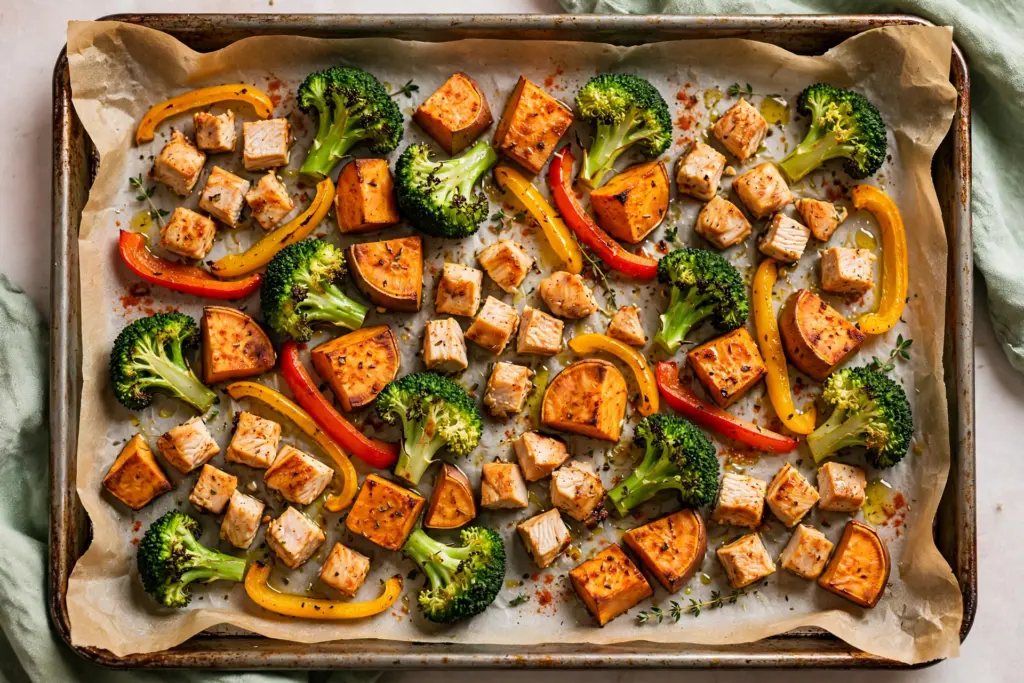
1. The sheet-pan dinner. Toss chicken pieces or tofu, broccoli, bell peppers, and sweet potato chunks in olive oil, salt, and paprika. Roast at 200°C (400°F) for 25 minutes. One pan, zero babysitting.
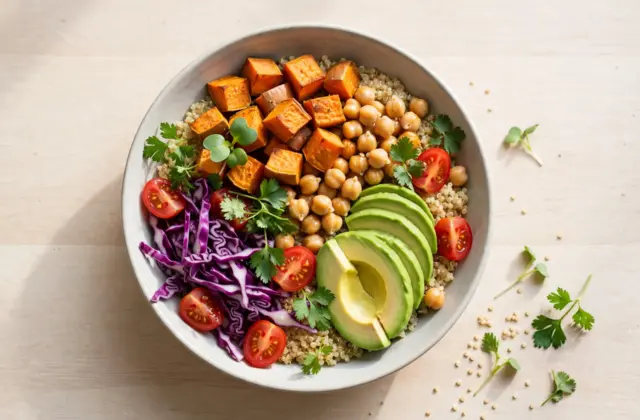
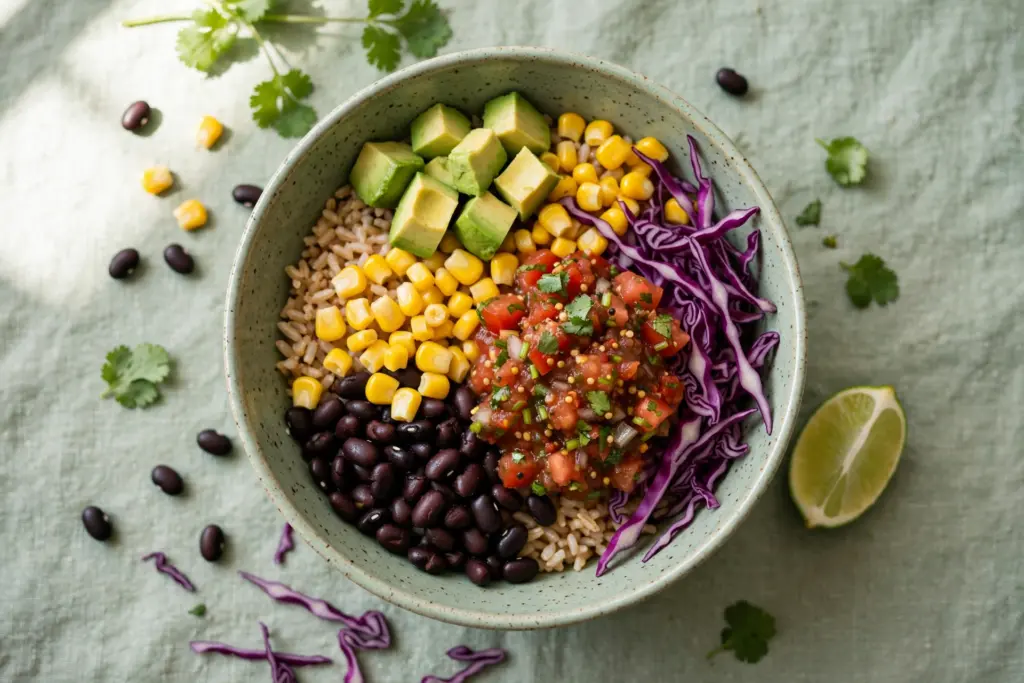
2. The taco bowl. Brown rice, black beans, corn, shredded cabbage, salsa, avocado, and a squeeze of lime. Beans plus rice give you a complete set of amino acids, and the whole thing costs less than a takeout appetizer.
3. The stir-fry. Whatever vegetables are wilting in your crisper, sliced thin, with strips of chicken, shrimp, or tempeh, garlic, ginger, and a splash of low-sodium soy sauce over brown rice or noodles. Faster than delivery, every time.
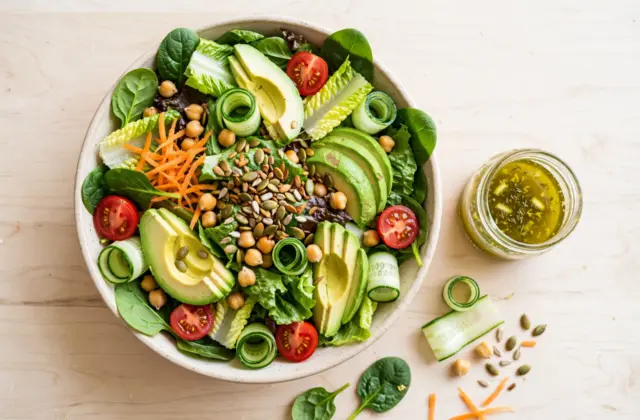
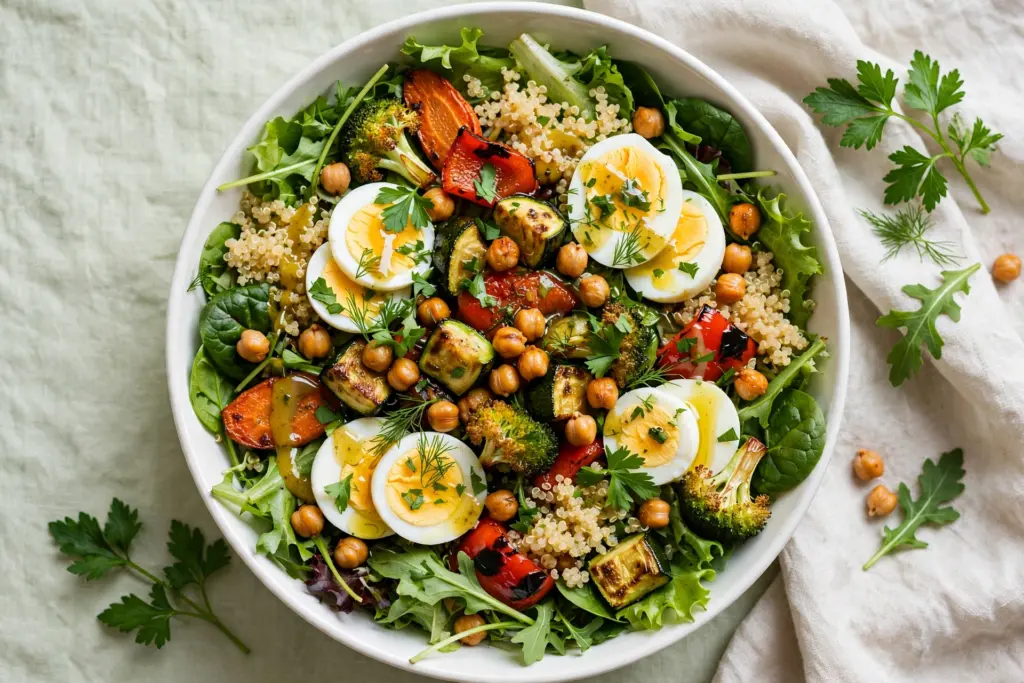
4. The big salad that eats like a meal. Greens, a grain (quinoa or farro), roasted vegetables, a protein (tuna, chickpeas, boiled eggs), and an olive-oil vinaigrette. The grain and protein are what turn a side salad into dinner.
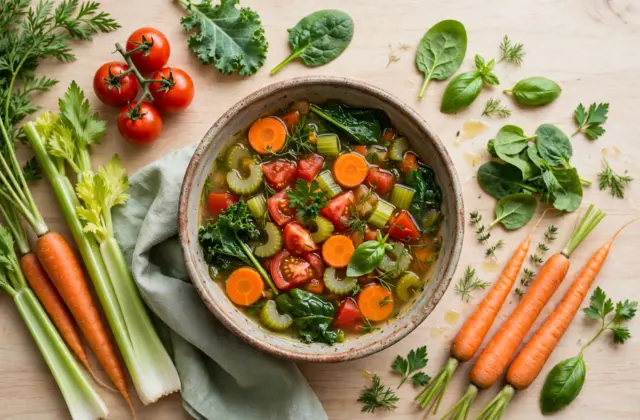
5. The soup pot. Lentil soup, minestrone, or a simple chicken-and-vegetable soup with a slice of whole-grain bread. Soups are the most forgiving balanced dinner in existence — throw the plate formula into a pot and simmer.
Weeknight shortcuts that don’t wreck the balance
Some nights you will not cook from scratch, and that’s fine. A rotisserie chicken plus a bag of frozen vegetables plus microwave brown rice is a balanced dinner that took ten minutes. Pre-washed salad kits, canned beans, frozen fish fillets, and whole-grain wraps are all legitimate building blocks — just check the label for sodium, since packaged foods carry most of the salt we eat. The American Heart Association advises staying under 2,300 milligrams of sodium a day (ideally closer to 1,500), and a single restaurant dinner can blow past that on its own.
Two more guardrails for the tired nights: keep added sugars out of dinner (save dessert for dessert, and keep it modest — the guidelines cap added sugars at under 10% of daily calories), and drink water. Sugar-sweetened drinks are one of the easiest ways to add hundreds of calories to a dinner that didn’t need them.
What about dinner timing?
You’ve probably heard that eating late is bad for you. The honest answer: what and how much you eat matters far more than the exact hour. Some research links very late, very heavy meals with more disrupted sleep and next-day grogginess, but the evidence is observational — it shows patterns, not proof.
What does seem to help most people: eating dinner at a roughly consistent time, giving yourself a couple of hours between dinner and bed, and not arriving at dinner starving (that’s how the bread basket wins). If a 9 p.m. dinner is what your schedule allows, make it a balanced one and don’t stress about the clock.
Frequently asked questions
How much protein should dinner actually contain?
The 2025–2030 Dietary Guidelines recommend 1.2 to 1.6 grams of protein per kilogram of body weight per day, spread across meals, with protein prioritized at every meal. At dinner, think of a palm-sized portion of fish, poultry, eggs, tofu, or legumes as your anchor — roughly a quarter of the plate.
Is it bad to eat dinner late at night?
Not inherently. The composition of the meal matters more than the clock. Very heavy meals close to bedtime may disturb some people’s sleep, so if you eat late, keep it balanced and moderate, and aim for some buffer before sleep.
Can a balanced dinner still include carbs?
Absolutely. The Dietary Guidelines recommend 2 to 4 servings of whole grains a day. Carbs aren’t the problem — refined portions are. A fist-sized serving of brown rice, quinoa, or whole-wheat pasta fits the plate formula perfectly.
What if my family won’t eat vegetables?
Don’t start with a salad mandate. Roast vegetables until they’re sweet and caramelized, blend them into sauces, stir frozen peas and corn into rice, or build dinners (like tacos or stir-fries) where vegetables are mixed in rather than served as a separate obligation. Repeated, low-pressure exposure works better than one heroic broccoli speech.
Sources
- Dietary Guidelines for Americans, 2025–2030 (U.S. Department of Agriculture & U.S. Department of Health and Human Services) — https://cdn.realfood.gov/DGA.pdf
- World Health Organization, “Healthy diet” fact sheet — https://www.who.int/news-room/fact-sheets/detail/healthy-diet
- American Heart Association, Healthy Food Facts (fiber and sodium guidance) — https://www.heart.org/en/healthy-living/healthy-eating/healthy-food-facts
- U.S. Food and Drug Administration, Food Labeling Guide / Daily Values — https://www.fda.gov/Food/GuidanceRegulation/GuidanceDocumentsRegulatoryInformation/LabelingNutrition/ucm385663.htm
Disclaimer: This article is for general information only and is not medical advice. If you have a health condition or take medication, talk to your doctor or a registered dietitian before changing your diet.