Plant-Based Protein: Building a Complete Amino Acid Profile
You do not need to combine proteins at every meal. Variety across the day is enough to cover all essential amino acids.
Few nutrition anxieties are as persistent as this one: “If I eat mostly plants, will I get complete protein?” Somewhere along the way, plant protein got a reputation as a second-class nutrient — fine as a sidekick, risky as the main act. Vegetarians were told to combine rice and beans at every single meal like chemists, lest an amino acid go missing.
The reputation is outdated. Plant proteins can absolutely meet your needs — including for active people — but they do play by slightly different rules. Here’s the amino acid picture, what “complete” really means, and how to build a day of eating that covers all of it without a spreadsheet.
First, the 9 essential amino acids
Protein is built from 20 amino acids. Your body can manufacture 11 of them on its own, but 9 must come from food — the “essential” amino acids: histidine, isoleucine, leucine, lysine, methionine, phenylalanine, threonine, tryptophan, and valine. Every protein you eat is essentially a delivery vehicle for these nine.
A “complete” protein is simply one that delivers all nine in adequate proportions. Every animal protein qualifies by default. Most plant proteins fall short on one or two — they’re “limiting” in that amino acid, meaning it’s the one that runs out first. Grains tend to be low in lysine; legumes tend to be low in methionine; nuts and seeds are often low in lysine. This is the entire basis of the plant-protein worry, and it’s real — but it’s a logistics problem, not a dealbreaker.
Plants that are complete on their own
Several plant foods clear the bar without any help:
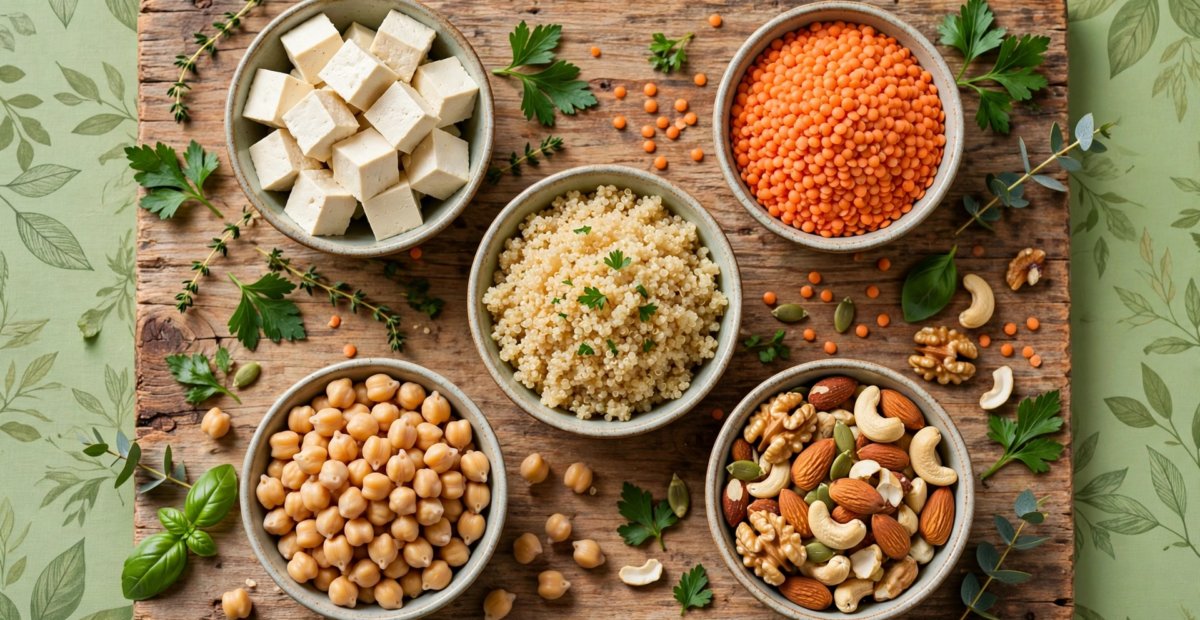
- Soy (tofu, tempeh, edamame, soy milk) — the standout. Soy protein isolate earns a full 1.0 on the PDCAAS protein-quality scale — the same top score as whey, milk, and eggs — and 98 on the newer DIAAS scale, putting it in the same league as animal proteins (protein quality review).
- Quinoa — a rare complete grain-like seed, containing all nine essential amino acids.
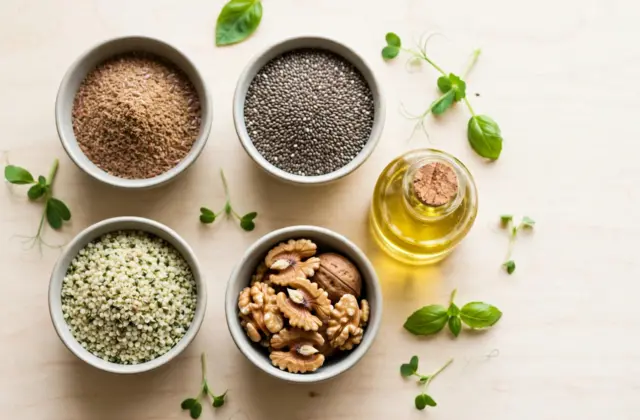
- Buckwheat, hemp seeds, chia seeds, and amaranth — all contain the full set of essential amino acids.
If your diet leans on these regularly, the amino acid question largely answers itself. A tofu-and-quinoa person has nothing to prove.
Where the gaps actually are
For the rest of the plant kingdom, the gaps are predictable — and that predictability is what makes them easy to manage. Research scoring plant foods with the DIAAS method (which measures how well we actually digest each essential amino acid) puts red lentils at 50, kidney beans at 51, chickpeas at 85, wheat at 54, and oats at 57, while pea protein concentrate lands at 73. The pattern is consistent: legumes are decent but often methionine-limited; grains are poorer and lysine-limited (see the full scoring table).
Here’s the key insight: the foods that are weak where the others are strong. Legumes bring the lysine that grains lack; grains bring the methionine that legumes lack. Put them together and the gaps cancel out. This is the entire logic of traditional food pairings that cultures figured out centuries before amino acids had names — rice and beans, dal and rice, hummus and pita.
Protein combining: the myth and the update
The old rule — you must combine complementary proteins at the same meal — came from Frances Moore Lappé’s 1971 book Diet for a Small Planet, and it was more rigid than the science required. Lappé herself retracted it in later editions, saying she’d created a second myth in the process of trying to end one (the retraction story). Your body maintains a pool of amino acids throughout the day and is perfectly capable of assembling complete proteins from foods eaten at different meals. As dietitians now routinely advise, you don’t need a perfect pairing at every sitting; you need variety across the day.
That said, the classic pairings are still worth knowing, because they’re delicious and they make hitting your totals easier:
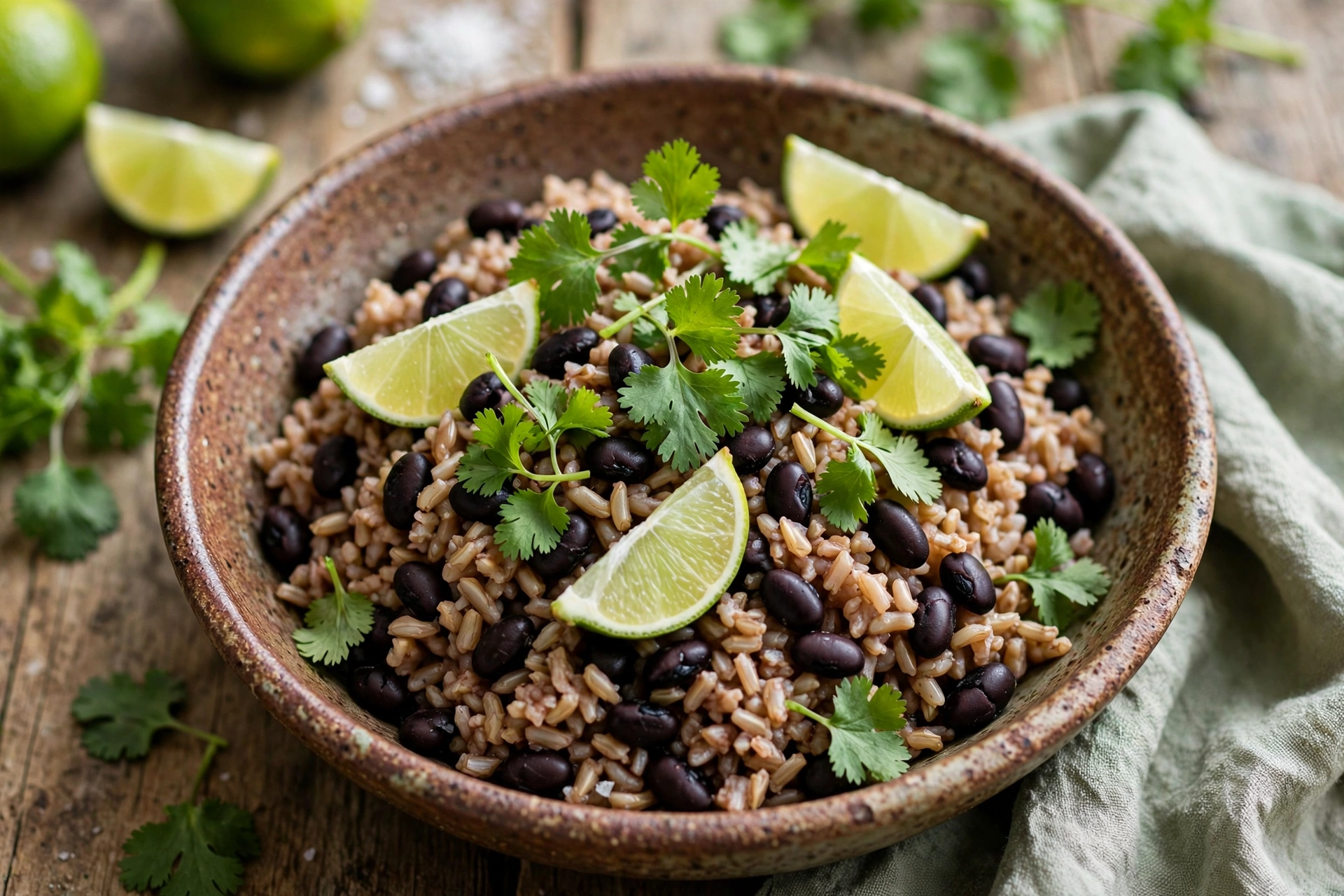
- Rice + beans — the original and still the champion
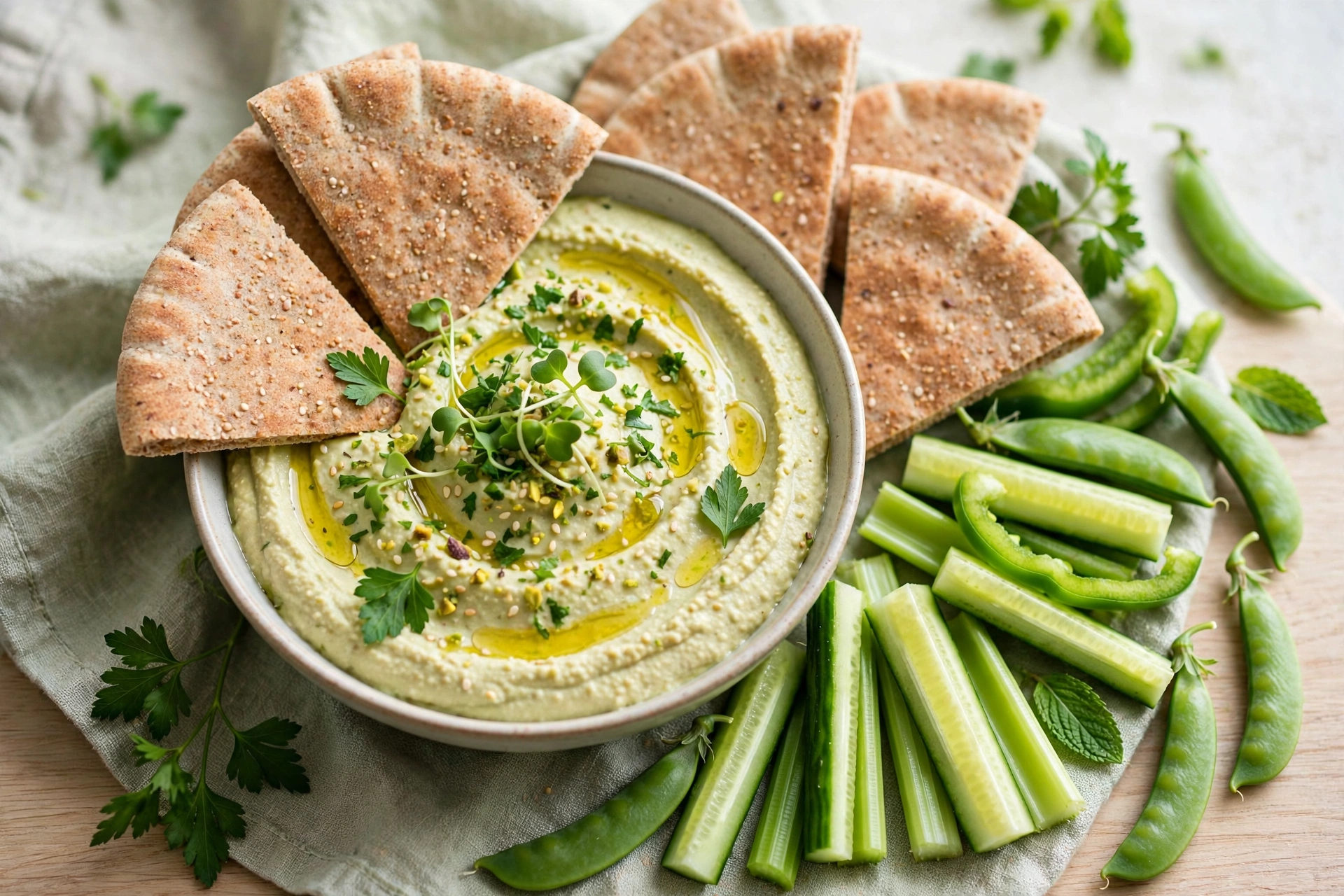
- Hummus + whole-wheat pita — legumes meet grain
Read also: A Beginner’s Guide to Eating More Plants
- Peanut butter + whole-grain bread — the lunchbox classic, now with a scientific alibi
- Lentil soup + crusty bread
- Tofu + rice — already complete, but the pairing boosts total intake
- Peas + rice — a surprisingly strong combination
Combine when it’s convenient. Don’t stress when it isn’t.
Hitting your protein target on plants
Two adjustments make plant-based protein work as hard as animal protein. First, aim slightly higher on total grams — plant proteins are generally a little less digestible, so targeting the upper end of your range (say 1.2–1.6 g/kg if you’re active, well above the general adult RDA of 0.8 g/kg/day) provides a comfortable buffer. Second, think in per-meal doses: roughly 20–40 grams of protein per meal, the same distribution guidance sports nutrition gives everyone.
What does that look like without meat, eggs, or dairy?
- Breakfast: Oatmeal cooked in soy milk with peanut butter and hemp seeds — about 22 g protein. Soy milk (7–8 g per cup) quietly does heavy lifting here; almond or oat milk mostly doesn’t.
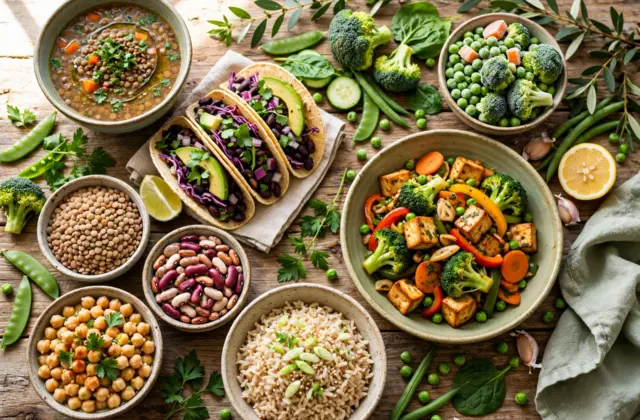
- Lunch: Big lentil-and-vegetable soup with two slices of whole-grain bread — about 24 g protein.
- Snack: Hummus with pita plus a handful of almonds — about 12 g protein.
- Dinner: Tofu-vegetable stir-fry over brown rice — about 28 g protein.
That’s roughly 85 grams from ordinary food, no powders involved. For higher targets, tempeh (about 20 g per 100 g) and edamame are the heavy artillery of the plant world.
The fine print worth knowing
A few honest qualifications. Heavily processed vegan products — the nuggets, the fake bacon — vary wildly in protein quality and often carry plenty of sodium and saturated fat; they’re fine occasionally but they’re not the foundation. Whole-food sources should carry the load.
Also, if you’re an athlete chasing performance on a fully plant-based diet, the margin for error is thinner and the totals are higher — that’s a case for working with a sports dietitian rather than winging it. And vitamin B12 deserves its own mention: it’s not a protein issue, but no plant food reliably provides it, so anyone fully plant-based needs a B12 source (fortified foods or a supplement). Protein handled, B12 handled, you’re covered.
Frequently asked questions
Do I need to combine proteins at every meal?
No. That was the old rule, and it’s been relaxed by modern nutrition science. Your body pools amino acids across the day, so variety across meals — legumes here, grains there, nuts somewhere in between — is enough. The classic pairings are still handy, just not mandatory per meal.
Is soy safe to eat regularly?
Yes. Soy is one of the most studied foods in nutrition, and the evidence supports regular consumption as part of a balanced diet. The old phytoestrogen fears have not held up in human research at normal dietary intakes.
Can you build muscle on plant protein alone?
Yes, with attention to totals. Muscle building runs on total protein plus progressive training, and plant proteins can do the job when intake is matched — the keys are eating enough overall grams and spreading them across the day, same rules as everyone else.
What’s the single easiest upgrade for a plant-based eater?
Swap your plant milk for soy milk and make legumes a daily habit rather than an occasional one. Those two changes fix the majority of amino acid and total-protein gaps in one move.
Sources
- Protein Nutrition: Understanding Structure, Digestibility, and Bioavailability for Optimal Health (2024 review) — PDCAAS and DIAAS protein-quality scores for plant and animal foods
- Jäger R. et al. — International Society of Sports Nutrition Position Stand: Protein and Exercise (2017) — daily intake ranges and per-meal distribution
- Dietary Reference Intakes for protein: EAR 0.66 and RDA 0.80 g/kg/day for healthy adults (Institute of Medicine)
- The history of the protein-combining rule and Frances Moore Lappé’s retraction
This article is for general information only and is not medical advice. If you follow a fully plant-based diet, pay attention to vitamin B12 from fortified foods or supplements, and consult a registered dietitian if you have elevated needs (athletes, pregnancy, medical conditions).