Iron Deficiency: Signs, Causes and Food Sources
Fatigue is easy to blame on a busy week, but iron deficiency is a common and treatable cause. Learn the signs, the causes and how to eat more absorbable iron.
You know that tiredness sleep doesn’t fix? You wake up after eight hours and still feel like you’re wading through wet sand by mid-afternoon. For a lot of people, the culprit isn’t a busy schedule or a bad mattress. It’s iron — or rather, the lack of it.
Iron deficiency is the most common nutritional deficiency in the world. It can drag on for months before it ever shows up as anaemia on a blood test, and its early signs are so ordinary — fatigue, a foggy head, getting winded on the stairs — that most people blame something else. The good news: it is straightforward to spot once you know what to look for, and it usually responds well to the right food and, when needed, treatment.
What iron actually does in your body
Iron’s main job is carrying oxygen. It sits at the centre of haemoglobin, the protein in red blood cells that picks up oxygen in your lungs and delivers it to every muscle, organ and brain cell. Iron also helps your cells turn food into energy and supports the immune system.
Your body is careful with iron: there is no easy way to excrete excess, so absorption is tightly controlled — when stores are full, the gut takes in less; when they run low, it takes in more. Problems start when losses outpace that system for weeks or months, and because the decline is gradual, you adapt to feeling worse without noticing.
The signs people miss
Iron deficiency rarely announces itself dramatically. Watch for a cluster of these rather than any single symptom:
- Fatigue that rest doesn’t fix. Not normal end-of-day tiredness, but a heavy exhaustion that lingers after a full night’s sleep.
- Shortness of breath during ordinary activity. Climbing stairs or carrying groceries leaves you winded when it didn’t before.
- Pale skin, pale inner eyelids, or brittle, spoon-shaped nails. Less oxygen in the blood shows up in places with thin skin and fast-growing tissue.
- Headaches, dizziness, or trouble concentrating. Your brain is a heavy oxygen user, and it complains early when supply drops.
- Restless legs, especially at night. An urge to move your legs when resting is a recognised feature of low iron.
- Unusual cravings. Craving ice, starch, clay or dirt — called pica — is a classic, if strange, sign of iron deficiency.
Any one of these has a dozen possible causes. Several together — especially with heavy periods, a plant-based diet, or a gut condition — should prompt a blood test, not a supplement order (more on why below).
Why iron runs low: four routes to deficiency
Deficiency is always a supply-and-loss problem: too little comes in, too little gets absorbed, or too much leaves.
Blood loss
This is the most common cause in adults. Heavy menstrual bleeding tops the list for premenopausal women — periods that soak through a pad or tampon every hour or two, last longer than a week, or regularly include large clots. Gastrointestinal bleeding is the other major route: ulcers, regular use of anti-inflammatory painkillers (NSAIDs), inflammatory bowel disease, and, more rarely, a tumour. Frequent blood donation can also drain stores faster than diet replaces them.
Not enough iron in the diet
People who eat little or no meat are at higher risk, because plant iron is absorbed far less efficiently (see below). Restrictive diets and diets heavy in processed foods with little variety can also fall short. Children, teenagers in growth spurts, and pregnant women need more iron than average and can slip into deficiency even on a reasonable diet.
Poor absorption
Coeliac disease damages the gut lining where iron is absorbed. Low stomach acid — from long-term acid-suppressing medication or after stomach surgery — also reduces uptake, since acid helps free iron from food. Bariatric surgery has a similar effect.
Increased demand
Pregnancy is the big one: blood volume expands and the growing baby draws on the mother’s stores. The World Health Organization estimates that around 30% of non-pregnant women and more than 40% of pregnant women worldwide have anaemia, much of it iron-related. Endurance athletes, who lose iron through sweat and foot-strike damage to red blood cells, are another group worth watching.
Haem iron vs non-haem iron: why the source matters
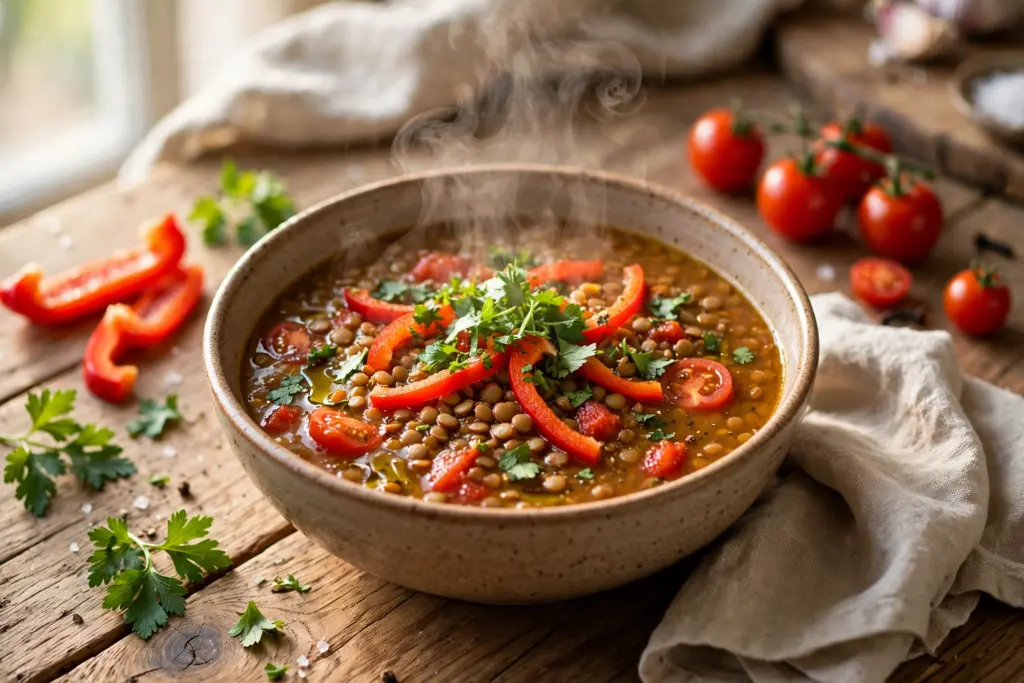
Food iron comes in two forms, and your gut treats them very differently. Haem iron, found in animal foods, is absorbed at roughly 15–35%. Non-haem iron, found in plants and fortified foods, is absorbed at closer to 2–20% — and how much you actually get depends heavily on what else is on the plate.
| Food (typical serving) | Iron | Type |
|---|---|---|
| Beef liver (100 g cooked) | ~6.5 mg | Haem |
| Lean ground beef (100 g cooked) | ~2.7 mg | Haem |
| Clams (100 g cooked) | ~28 mg | Haem |
| Lentils (1 cup cooked) | ~6.6 mg | Non-haem |
| Cooked spinach (1 cup) | ~6.4 mg | Non-haem |
| Firm tofu (100 g) | ~3.4 mg | Non-haem |
| Pumpkin seeds (1 oz) | ~2.5 mg | Non-haem |
| Dark chocolate 70–85% (1 oz) | ~3.4 mg | Non-haem |
Read also: Magnesium: The Mineral Behind Sleep, Muscles and Mood
How to absorb more iron from the same meal
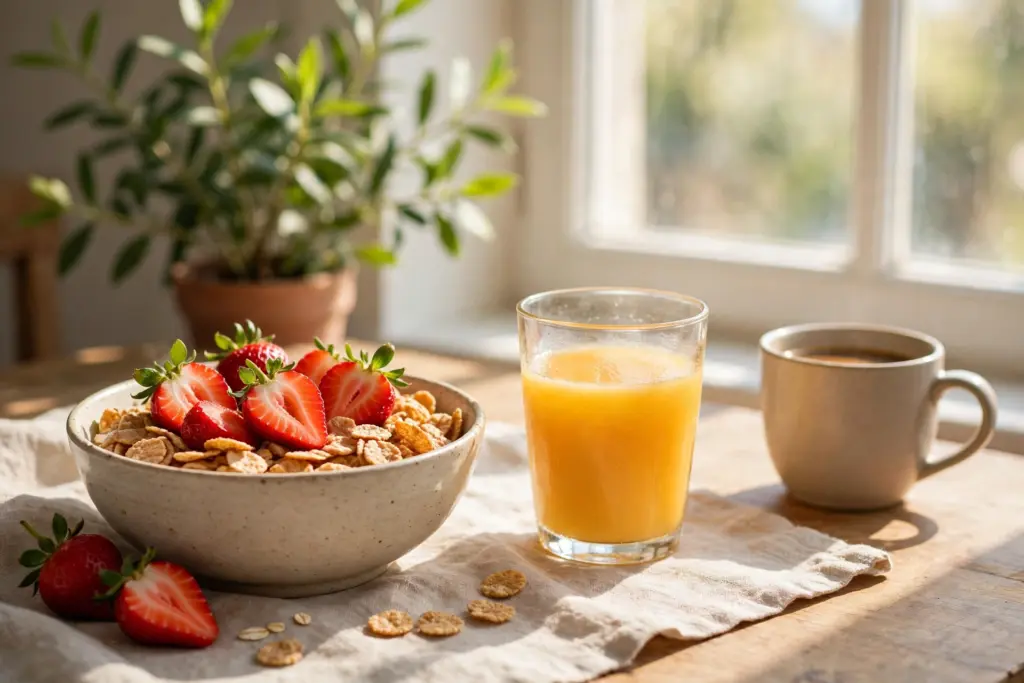
Three small habits can change how much iron you actually take in.
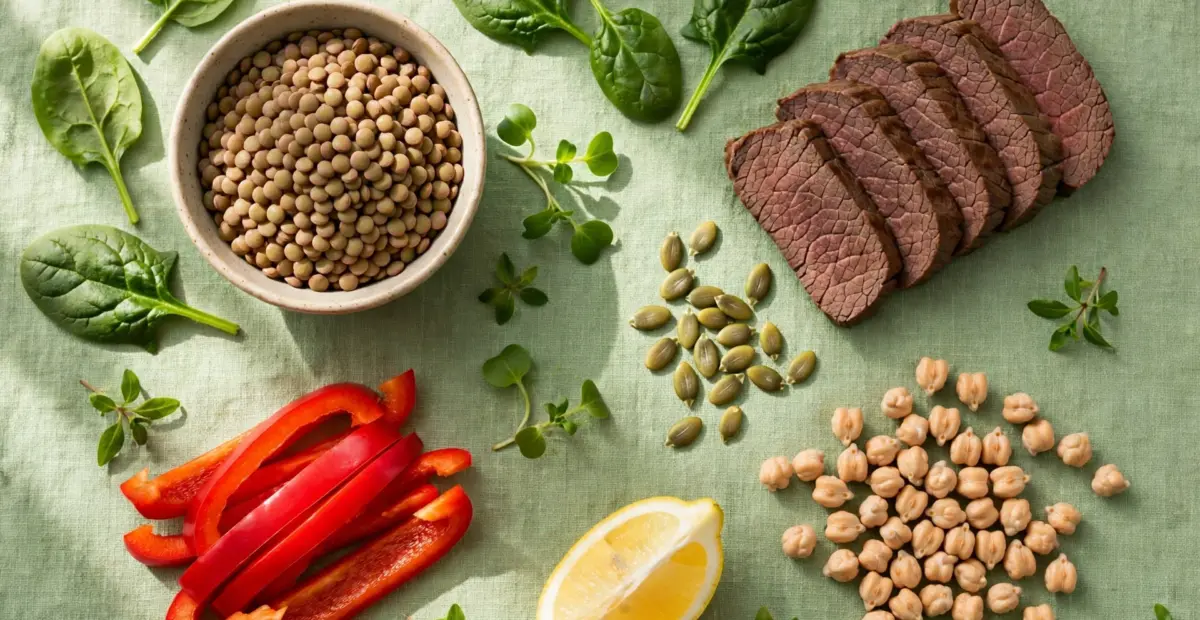
Pair plant iron with vitamin C. Vitamin C converts plant iron into the form your gut can absorb and can multiply uptake several-fold. Squeeze lemon over lentil soup, add red pepper strips to a bean salad, or finish a tofu stir-fry with tomatoes. This is the single most useful trick for anyone eating mostly plants.
Move tea and coffee away from meals. The tannins in tea and coffee bind non-haem iron and sharply reduce absorption. Keep your coffee for an hour or two after eating rather than with the meal — a small timing change with a real payoff.
Keep calcium supplements away from iron-rich meals. Calcium competes with iron for absorption, so take a calcium supplement at a different time of day.
How much iron do you actually need?
The US National Institutes of Health sets these daily recommended intakes:
| Group | Daily iron (mg) |
|---|---|
| Adult men (19+) | 8 |
| Women (19–50) | 18 |
| Women (51+) | 8 |
| Pregnancy | 27 |
| Breastfeeding | 9 |
Note the jump for women aged 19–50: menstruation roughly doubles the daily requirement. Vegetarians need about 1.8 times more iron than meat-eaters, according to the NIH, because plant iron is absorbed less efficiently — so a vegetarian woman in her thirties is effectively aiming for around 32 mg a day from food. There is also a ceiling: the tolerable upper intake level is 45 mg a day for adults, which is why iron supplements should be treated as medicine, not a general health tonic.
Testing: ferritin falls before haemoglobin does
This is the part most people get wrong. A standard blood count measures haemoglobin — but haemoglobin is the last thing to fall. Your body protects it by draining its iron stores first, so you can be genuinely iron deficient while your haemoglobin still looks normal.
The test that catches deficiency early is serum ferritin, which reflects your iron stores. The World Health Organization defines iron deficiency in adults as ferritin below 15 micrograms per litre, and anaemia as haemoglobin below 120 g/L in non-pregnant women and below 130 g/L in men. Many clinicians treat ferritin below 30 µg/L as worth acting on, since a level in the teens usually means stores are nearly empty even if haemoglobin hasn’t dropped yet.
One caveat: ferritin rises with inflammation, so it can look normal during an infection or chronic inflammatory condition even when iron is low. A doctor will usually pair it with a full blood count and, if needed, transferrin saturation (below 20% also points to deficiency).
If you suspect deficiency, ask specifically for ferritin alongside the standard blood count. It is a cheap test, and it changes the conversation from “your bloods are normal” to “here is what is actually going on.”
Read also: Vitamin D: How Much Do You Actually Need?
Supplements: when they help, and when they hurt
When deficiency is confirmed, iron supplements work — but best under guidance. A doctor will usually start with an oral iron tablet, check your response after a few weeks, and look for the underlying cause rather than just topping you up indefinitely. Common side effects are constipation, nausea and dark stools; taking the tablet with a little vitamin C can improve both absorption and tolerance.
Do not self-prescribe iron. Excess iron accumulates in the liver, heart and pancreas, and iron overload (haemochromatosis) causes real organ damage. Iron tablets are also a leading cause of accidental poisoning in young children, so keep them locked away. And in an adult, new iron deficiency deserves an explanation — masking it with supplements can delay diagnosis of something that needs treatment, like a bleeding ulcer.
When to see a doctor
Book an appointment promptly if you notice:
- Fatigue, breathlessness or dizziness lasting more than a couple of weeks
- Heavy periods: soaking a pad or tampon hourly, lasting over a week, or large clots
- Black or bloody stools, or unexplained weight loss
- Racing heartbeat, chest pain, or fainting — seek urgent care
- Symptoms in a child, during pregnancy, or after stomach surgery
Iron deficiency is common, treatable, and often hiding in plain sight behind “just being tired.” The fix starts with a blood test, not a supplement bottle — and with a plate that gives your body iron it can actually use.
Frequently asked questions
Can you be iron deficient without being anaemic?
Yes — and this is common. Ferritin (your iron stores) falls months before haemoglobin drops, so you can have real symptoms while your haemoglobin is still normal. That is why asking for a ferritin test matters.
Do vegetarians need iron supplements?
Not automatically. A well-planned vegetarian diet — lentils, beans, tofu and fortified foods, paired with vitamin C at meals and tea or coffee kept between meals — can meet needs. But vegetarians need about 1.8 times more iron from food, and a ferritin check is a sensible way to know whether diet alone is enough.
How long does it take to feel better after starting iron treatment?
Many people notice energy improving within a few weeks, but rebuilding iron stores fully usually takes several months. Your doctor will typically recheck ferritin after a few months to confirm stores — not just haemoglobin — have recovered.
Medical disclaimer: This article is for general information only and is not a substitute for professional medical advice. If you suspect iron deficiency, see a healthcare professional for testing before starting any supplement.
Sources
- NIH Office of Dietary Supplements — Iron Fact Sheet
- Harvard T.H. Chan — Iron: The Nutrition Source
- Iron deficiency without anaemia: a diagnosis that matters
- Iron deficiency anemia in women: detection, diagnosis, and treatment
- Prevention and Management of Iron Deficiency Anemia in Women: Asian Expert Consensus