High-Protein Foods: A Practical Guide
Protein has quietly become the nutrient everyone is watching. It shows up on yogurt tubs, cereal boxes, and coffee-shop menus, and “high-protein” gets stamped on foods that barely deserve it. Underneath the marketing, though, protein really does matter: it builds and repairs muscle, keeps you full after a meal, and supports everything from immune cells to hair and skin. The trick is knowing how much you actually need, which foods deliver it best, and how to fit more of it into meals you already enjoy — without turning every plate into a math problem.
What protein actually does for you
Think of protein as your body’s construction crew. Every cell contains protein, and your body is constantly breaking it down and rebuilding it. The amino acids from the food you eat become new muscle fibers after a workout, enzymes that run chemical reactions, antibodies that fight off infections, and hormones that carry messages around the body.
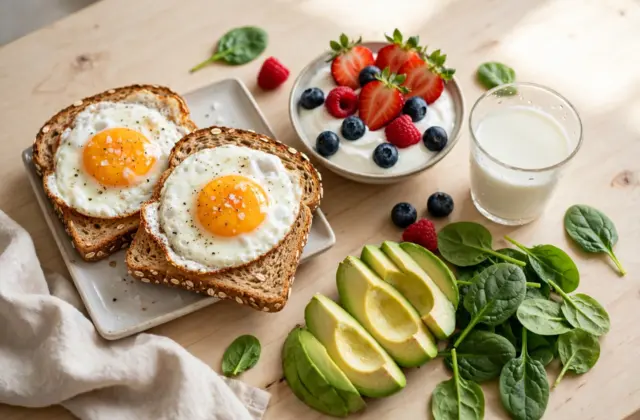
Protein also has a practical, everyday job: it keeps you satisfied. Gram for gram, protein tends to be more filling than carbohydrate or fat, which is one reason a breakfast of eggs and toast holds you longer than a pastry of the same calories. In one small but well-known trial, 19 adults who raised protein from 15% to 30% of their calories — keeping carbohydrate the same — felt markedly fuller and, when allowed to eat freely, spontaneously ate about 441 fewer calories a day. Over 12 weeks they lost an average of 4.9 kg, most of it fat, without being told to cut back. The study was small and had no separate control group, so it is not proof that protein alone causes weight loss — but it lines up with a wider body of research showing that higher-protein meals reliably increase fullness in the short term.
None of this means more protein is always better. Protein works best as part of a balanced plate, alongside fiber-rich vegetables, whole grains, and healthy fats — not as a reason to push everything else off the plate.
How much protein do you need?
The official floor is the Recommended Dietary Allowance (RDA): 0.8 grams of protein per kilogram of body weight per day, set by the National Academies. That number is designed to prevent deficiency in nearly all healthy adults — it is a minimum, not a target for feeling your best.
To find your own minimum, divide your weight in pounds by 2.2 to get kilograms, then multiply by 0.8. A 150-pound adult weighs about 68 kg, so the RDA works out to roughly 55 grams a day. A 180-pound adult lands near 65 grams.
Many experts now argue that active people, older adults, and anyone losing weight may benefit from more. The Dietary Guidelines for Americans, 2025–2030, suggest 1.2 to 1.6 grams per kilogram per day — for our 150-pound adult, that is roughly 82 to 109 grams. The Acceptable Macronutrient Distribution Range puts protein at 10% to 35% of total calories, and the FDA’s Daily Value on nutrition labels is 50 grams, based on a 2,000-calorie diet.
Older adults deserve special attention. After about age 65, the body becomes less efficient at turning dietary protein into muscle, a change researchers call anabolic resistance. The PROT-AGE Study Group, convened by the European Union Geriatric Medicine Society, recommends 1.0 to 1.2 grams per kilogram per day for healthy adults over 65, and at least 1.2 grams per kilogram for those who exercise regularly. They also suggest aiming for about 25 to 30 grams of protein per meal, since the per-meal threshold for stimulating muscle building rises with age. Adults lose roughly 3% to 8% of muscle mass per decade starting in midlife, and that loss speeds up after 60 — steady protein intake, spread across the day, is one of the simplest ways to push back.
If you have kidney disease or another condition that affects how your body handles protein, talk with your clinician before changing your intake — the general guidance above does not apply to everyone.
The highest-protein foods, at a glance
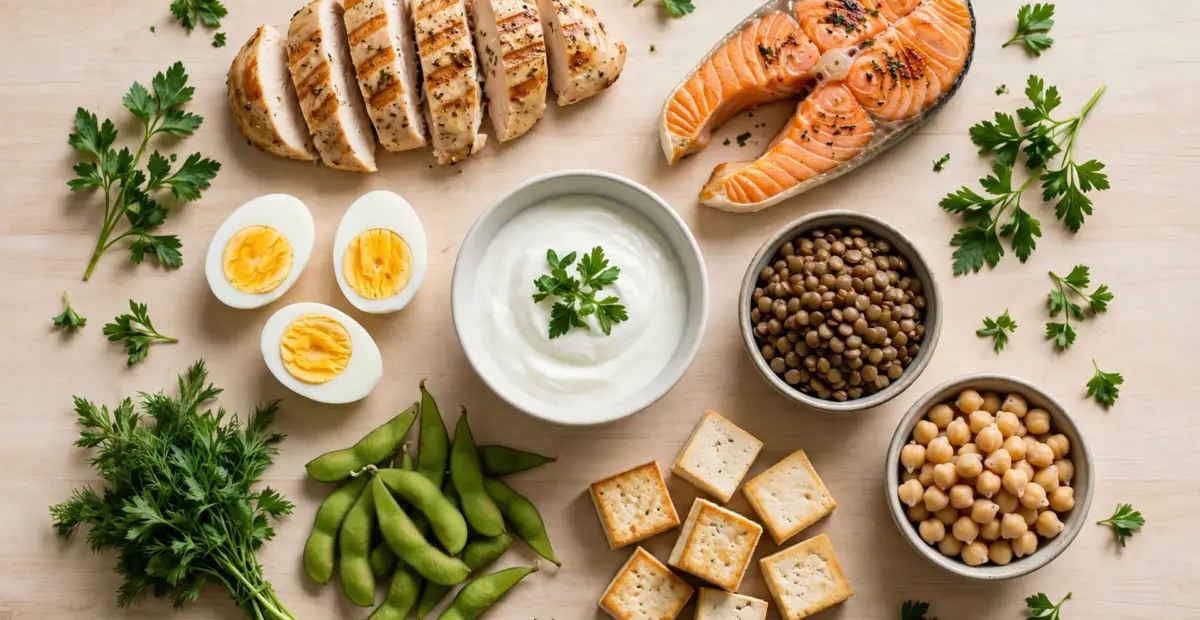
Serving sizes make all the difference when you compare protein foods. A cup of lentils and a single egg are both “high-protein,” but one delivers three times the protein of the other. Here is how everyday foods stack up, using values from the USDA’s FoodData Central database.
| Food | Typical serving | Protein | Also brings |
|---|---|---|---|
| Chicken breast, roasted | 3 oz (85 g) | ~26 g | Lean, low in fat |
| Salmon, cooked | 3 oz (85 g) | ~19 g | Omega-3 fats |
| Edamame, shelled | 1 cup (155 g) | ~18 g | Fiber, iron |
| Lentils, cooked | 1 cup (198 g) | ~18 g | 15.6 g fiber, folate, iron |
| Greek yogurt, plain nonfat | 3/4 cup (170 g) | ~17 g | Calcium, probiotics |
| Black beans, cooked | 1 cup (172 g) | ~15 g | Fiber, magnesium |
| Chickpeas, cooked | 1 cup (164 g) | ~15 g | Fiber, folate |
| Two large eggs | 2 eggs (100 g) | ~13 g | Choline, vitamin D |
| Firm tofu | 1/2 cup (126 g) | ~10 g | Calcium (if set with calcium sulfate) |
| Milk | 1 cup (240 ml) | ~8 g | Calcium, vitamin D |
Two things stand out. First, the humble legumes hold their own against animal foods: a cup of lentils nearly matches a piece of salmon. Second, protein density varies enormously within the same food group — plain Greek yogurt has roughly twice the protein of regular yogurt in the same serving, because the straining process concentrates it
Animal-based high-protein foods
Animal foods are the most concentrated protein sources, and they all contain the nine essential amino acids your body cannot make on its own. Poultry and fish are the leanest options: a palm-sized piece of chicken breast gives you about 26 grams of protein for roughly 140 calories. Salmon adds omega-3 fats that most diets are short on, while canned tuna — about 20 grams per 3 ounces — is one of the cheapest protein sources per gram.
Eggs are the workhorse of the protein world. One large egg has about 6 grams of protein for around 70 calories, plus choline, which supports brain health, and vitamin D. Hard-boiling a batch on Sunday gives you a grab-and-go protein for the whole week.
Dairy earns its place too. Plain nonfat Greek yogurt packs about 17 grams of protein into a 170-gram serving, and cottage cheese is similarly rich, at roughly 24 grams per cup. Milk contributes about 8 grams per cup, which is why a bowl of cereal with milk is a better protein start than cereal with juice. If you buy flavored yogurts, check the label — the added sugar can climb quickly, and the protein is often lower than the plain version.
Plant-based high-protein foods
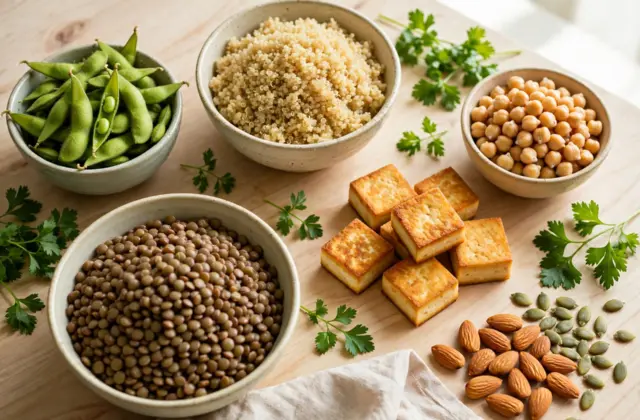
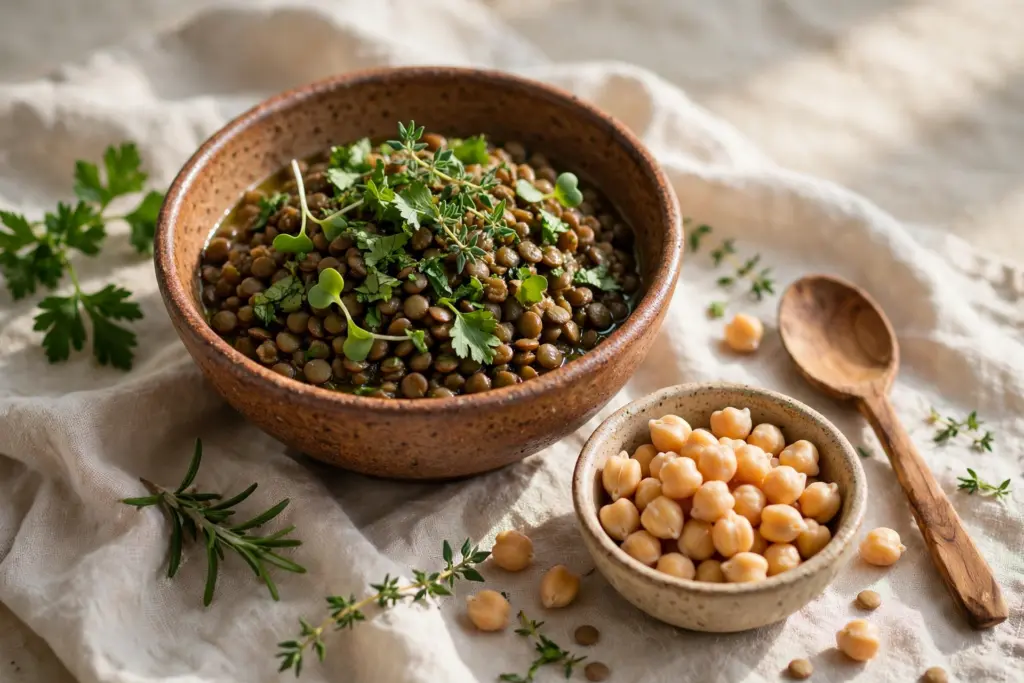
You do not need animal foods to hit your protein target. Lentils, beans, and chickpeas are the backbone of plant-based protein, and they come with a bonus animal foods cannot offer: fiber. A cup of cooked lentils delivers about 18 grams of protein and 15.6 grams of fiber — more than half the daily fiber target for most women — along with folate and iron.
Soy foods are the most complete plant proteins. Tofu, tempeh, and edamame all contain all nine essential amino acids in useful amounts. A cup of shelled edamame has about 18 grams of protein and makes a snack that actually fills you up. Tempeh, made from fermented soybeans, is denser still, at roughly 19 grams per 100 grams.
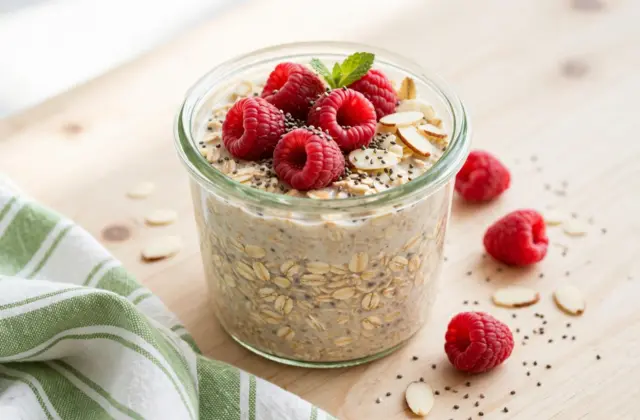
Nuts and seeds contribute smaller amounts per serving but add up across a day: two tablespoons of peanut butter add about 7 grams, and a small handful of pumpkin seeds adds about 5. Whole grains help as well — a cup of cooked quinoa has about 8 grams of protein, and even oats contribute roughly 5 grams per cooked cup.
Read also: How to Create a Balanced Vegetarian Plate
What “complete protein” really means
You have probably heard that animal proteins are “complete” and plant proteins are “incomplete.” The distinction is real but often overstated. A complete protein contains all nine essential amino acids in proportions your body can use. Most animal foods qualify, as do soy foods and quinoa.
Most other plant foods are low in one or two essential amino acids — beans tend to be low in methionine, grains low in lysine. That sounds like a problem until you remember that your body pools amino acids across the whole day. Eat beans at lunch and rice at dinner, and the amino acids complement each other. You do not need to combine them in the same meal, and you certainly do not need a protein powder to “complete” a plant-based diet. Variety across the day does the job.
What matters more than the complete-or-incomplete label is total intake and variety. If you eat a mix of legumes, grains, nuts, seeds, and vegetables — or include some animal foods — you are very likely covering all nine essential amino acids without thinking about it.
How to add more protein without overhauling your meals
The easiest protein upgrades are swaps, not additions. Trade regular yogurt for Greek yogurt at breakfast and you gain about 7 extra grams without eating more food. Stir a spoonful of peanut butter into oatmeal instead of brown sugar. Swap half the rice in a stir-fry for edamame or lentils. Add a boiled egg to a salad, or a scoop of cottage cheese beside fruit.
Think in anchors: put one clear protein source at the center of each meal and build around it. Breakfast might be eggs or Greek yogurt; lunch, lentils or chicken; dinner, fish or tofu with beans. Snacks count too — a handful of nuts, a small cup of yogurt, or a glass of milk between meals can add 10 to 15 grams without any cooking.
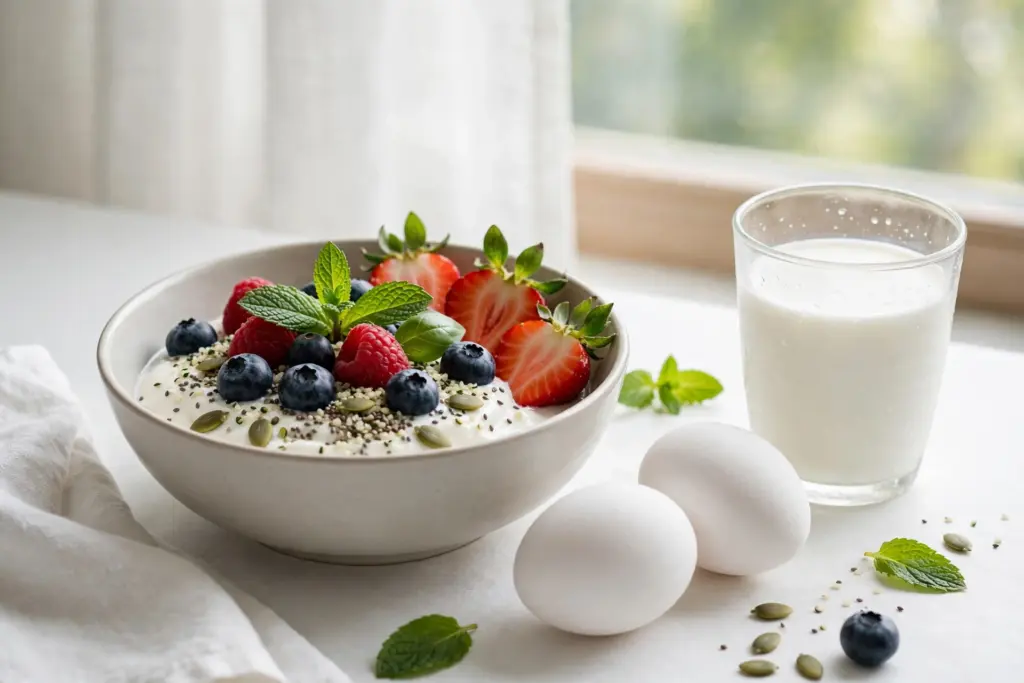
A practical target for many adults is 25 to 30 grams of protein per meal. That looks like two eggs with toast and fruit at breakfast, a lentil-and-grain bowl at lunch, and a palm-sized piece of salmon with vegetables at dinner. You do not need to weigh anything to get close — a palm-sized portion of meat or fish, a fist-sized serving of beans, or a cupped hand of yogurt are all reasonable guides.
Read also: How to Add Protein to Everyday Meals
Protein and feeling full
If you are trying to manage your weight, protein is one of the most useful tools in the kitchen — not because it burns fat directly, but because it changes how hungry you feel. Higher-protein meals raise fullness hormones and slow the return of hunger, which makes it easier to eat a little less without feeling deprived.
The Weigle trial mentioned earlier is a good illustration, but it is worth keeping the caveats in view: it was small, with 19 participants, and the phases ran in the same order rather than being randomized. A 2015 review in the same journal found that higher-protein meals reliably make people feel fuller in the short term, but the effect on how much people eat at the next meal is less consistent. In other words, protein helps with hunger — it is not an appetite off-switch.
Protein also helps protect muscle while you lose weight. When calories drop, the body can break down muscle along with fat; eating a bit more protein — around 1.2 to 1.6 grams per kilogram per day, according to research summarized in recent reviews — helps preserve lean tissue, especially when paired with resistance exercise such as lifting weights or bodyweight training.
What about protein powders and bars?
Protein powders and bars can be convenient, but they are supplements, not food groups. A scoop of whey or pea protein typically adds 20 to 25 grams of protein to a smoothie, which is handy after a workout or on a rushed morning. Bars are more variable: some are essentially candy with added protein, carrying 10 or more grams of added sugar. Check the label for protein per serving, added sugars, and the ingredient list — and remember that whole foods bring fiber, vitamins, and minerals that an isolated powder does not.
For most people eating a varied diet, powders are optional. They make the most sense when your schedule or appetite makes it hard to get enough protein from meals, or when you train hard and your needs are higher. If you use one, treat it as a backup, not the foundation.
Frequently asked questions
How much protein should I eat each day?
The RDA is 0.8 grams per kilogram of body weight — about 55 grams for a 150-pound adult. Many experts suggest 1.2 to 1.6 grams per kilogram for active people and those losing weight, and 1.0 to 1.2 grams per kilogram for adults over 65. Spread it across meals rather than loading it all into dinner.
Can I get enough protein without meat?
Yes. Lentils, beans, chickpeas, tofu, tempeh, edamame, and quinoa all provide substantial protein, and eating a variety of plant foods across the day covers all nine essential amino acids. A cup of lentils plus a serving of tofu can already supply about 28 grams.
Is too much protein bad for your kidneys?
For healthy adults, research has not identified a clear upper limit where protein itself causes harm, and the National Academies could not set a Tolerable Upper Intake Level for protein. The exception is people with existing kidney disease, who are usually advised to limit protein — if that applies to you, follow your clinician’s guidance.
Does protein timing matter?
Somewhat. Spreading protein across meals supports muscle maintenance better than eating almost none at breakfast and a huge portion at dinner, and older adults in particular benefit from about 25 to 30 grams per meal. But total daily intake matters more than perfect timing, so start with the total and refine from there.
Read also: Easy High-Protein Breakfast Ideas
Sources
- Optimizing Protein Intake in Adults: Interpretation and Application of the Recommended Dietary Allowance — Advances in Nutrition (2017). RDA 0.8 g/kg, AMDR, and the case for higher intakes.
- Dietary Guidelines for Americans, 2025–2030 — U.S. Department of Agriculture and U.S. Department of Health and Human Services. Protein guidance of 1.2–1.6 g/kg/day.
- Evidence-Based Recommendations for Optimal Dietary Protein Intake in Older People: A Position Paper From the PROT-AGE Study Group — Journal of the American Medical Directors Association (2013). 1.0–1.2 g/kg for adults over 65; 25–30 g per meal.
- A high-protein diet induces sustained reductions in appetite, ad libitum caloric intake, and body weight — Weigle et al., American Journal of Clinical Nutrition (2005). 15% to 30% protein; 441 fewer kcal/day; 4.9 kg lost over 12 weeks.
- USDA FoodData Central — U.S. Department of Agriculture. Protein values for chicken breast, salmon, lentils, beans, eggs, Greek yogurt, tofu, and edamame.
- Dietary Reference Intakes for Energy, Carbohydrate, Fiber, Fat, Fatty Acids, Cholesterol, Protein, and Amino Acids — National Academies Press (2005). The RDA and AMDR for protein.
This article is for general information only and is not medical advice. If you have a health condition, are pregnant, or take medication that affects your diet, talk with your clinician or a registered dietitian before making significant changes to how you eat.