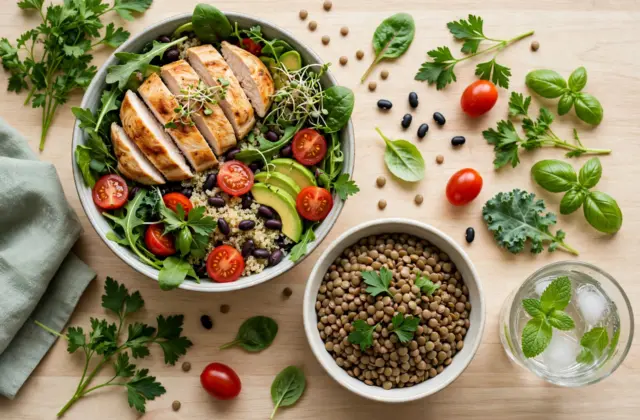
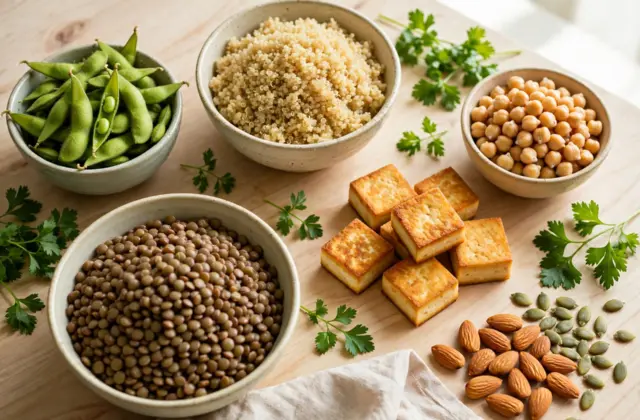
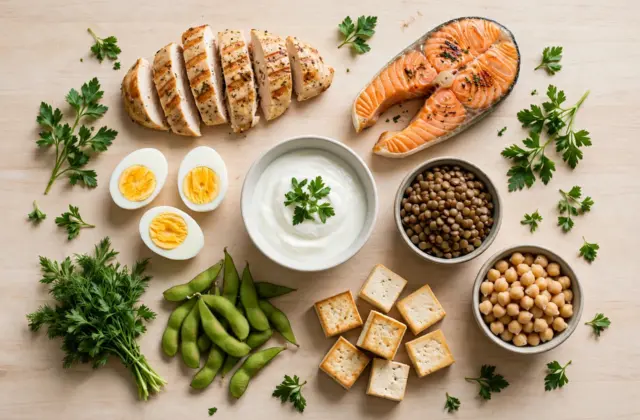
High-Protein Breakfast Foods to Keep on Hand
You know the pattern: breakfast at seven, stomach growling by ten, and suddenly the office biscuits look like a reasonable lunch. The problem usually isn’t willpower. It’s that breakfast didn’t contain enough protein to carry you through the morning.
Most breakfasts lean heavily on carbohydrates — toast, cereal, fruit, juice. Nothing wrong with those foods, but on their own they digest quickly. Add a solid serving of protein and the same meal holds you for hours instead of one. The good news is that you don’t need protein powder or a complicated recipe. A few staple foods, kept on hand and rotated through the week, will get you there.
Why protein at breakfast works
Protein slows digestion and steadies appetite in a way carbohydrates alone don’t. In a 2013 trial published in the American Journal of Clinical Nutrition, researchers at the University of Missouri gave overweight teenage girls who usually skipped breakfast one of three 350-calorie morning meals for six days: a high-protein breakfast built on eggs and beef (35 grams of protein), a normal-protein cereal breakfast (13 grams), or no breakfast at all.
The high-protein breakfast came out ahead on nearly every measure. Those who ate it reported greater fullness through the day, had lower levels of ghrelin — the hormone that signals hunger — and higher levels of peptide YY, a hormone linked to satiety. They also snacked less on high-fat foods in the evening. The cereal breakfast helped compared with skipping breakfast entirely, but it didn’t produce the same hormonal shift or the same drop in evening snacking.
That was a small study in a specific group, so it isn’t proof that a protein-rich breakfast will transform everyone’s appetite. But the direction of the finding lines up with a much larger body of research: protein is the most satiating of the three macronutrients, and front-loading it in the morning seems to set the tone for the rest of the day.
Read also: High-Protein Foods: A Practical Guide
How much protein do you actually need?
The recommended dietary allowance (RDA) for protein is 0.8 grams per kilogram of body weight per day for adults — about 56 grams a day for a 70-kilogram (154-pound) person. That figure is a floor, set to prevent deficiency, not a target for feeling your best.
The 2025–2030 Dietary Guidelines for Americans suggest a higher range of 1.2 to 1.6 grams per kilogram per day, which works out to roughly 84 to 112 grams a day for that same 70-kilogram adult. Spread across three meals, that means aiming for about 25 to 35 grams of protein at breakfast — a realistic target once you know which foods actually deliver it.
For reference, the Daily Value printed on nutrition labels is 50 grams of protein per day, based on a 2,000-calorie diet. It’s a labelling benchmark, not a personal recommendation, but it gives you a sense of scale: a breakfast with 25 grams of protein already covers half the Daily Value before 9 a.m.
Ten high-protein breakfast foods to keep on hand
These ten foods cover the fridge, the freezer, and the pantry. Keep most of them stocked and you can build a protein-rich breakfast in five minutes, whatever kind of morning it is. All protein figures come from the USDA’s FoodData Central database, using ordinary serving sizes.
| Food | Serving | Protein |
|---|---|---|
| Eggs | 1 large | ~6 g |
| Greek yogurt, plain nonfat | 170 g container | ~17 g |
| Cottage cheese, 2% | ½ cup (113 g) | ~12 g |
| Milk, 2% | 1 cup (244 g) | ~8 g |
| Rolled oats, dry | ½ cup (40 g) | ~5 g |
| Peanut butter | 2 tablespoons | ~7 g |
| Chia seeds | 1 tablespoon (15 g) | ~2.5 g |
| Tofu, firm | ½ cup (126 g) | ~22 g |
| Quinoa, cooked | 1 cup | ~8 g |
| Almonds | Small handful (14 g) | ~3 g |
Eggs: the workhorse
One large egg gives you about 6 grams of complete protein for roughly 78 calories, and eggs keep for three to five weeks in the fridge, according to USDA food-safety guidance. That makes them the most forgiving protein in the kitchen.
Two eggs alone won’t reach the 25-gram mark, which is why eggs work best paired with something else — a slice of toast with cottage cheese, a handful of spinach wilted into a scramble, or a spoonful of Greek yogurt on the side. Hard-boil a batch on Sunday and you have grab-and-go protein for the whole week: peel them, store them in a covered container, and eat within a week for the best quality.
Egg whites are an option if you want more protein with fewer calories — three large egg whites carry about 11 grams of protein for around 50 calories — but the yolk holds most of the egg’s vitamins, so whole eggs are the better everyday choice for most people.
Greek yogurt and cottage cheese: the quiet overachievers
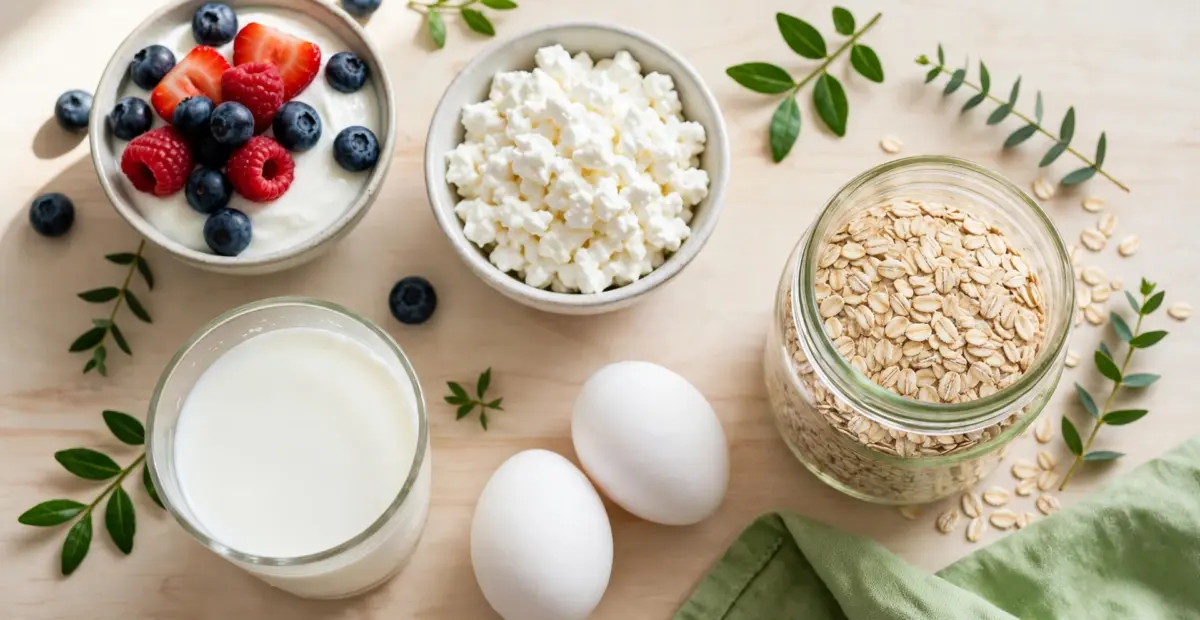
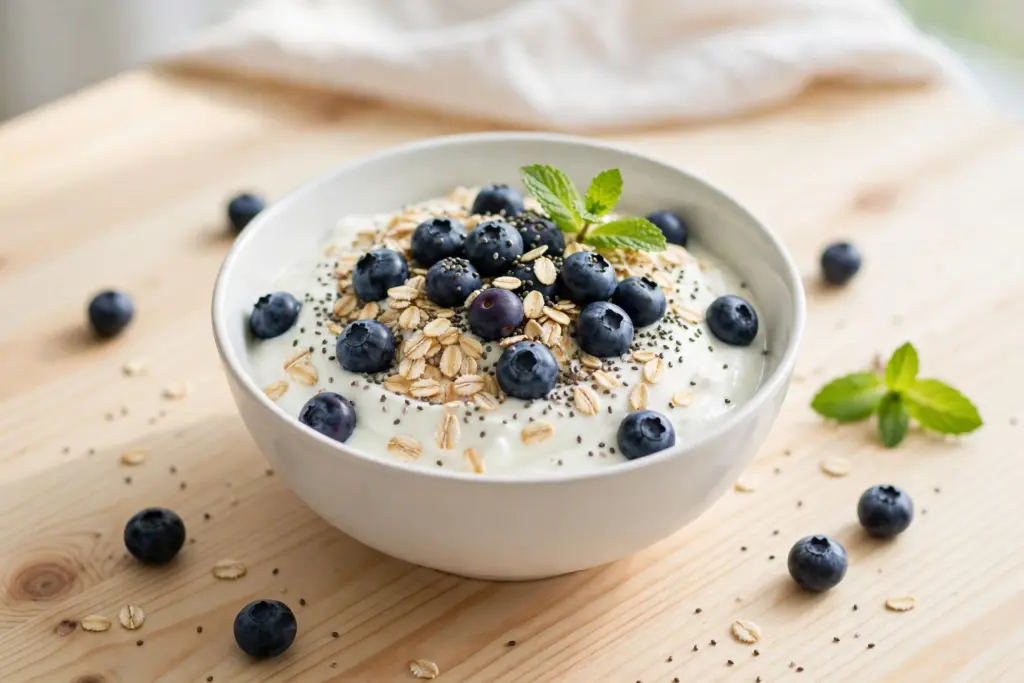
Plain nonfat Greek yogurt is the single easiest way to add protein to a morning. One 170-gram container gives you about 17 grams — more than two eggs — for around 100 calories. Stir in berries and a spoonful of oats and you have a complete breakfast with no cooking at all.
Watch the label, though: flavoured yogurts can carry 10 grams of added sugar or more per container, which turns a protein food into a dessert. Plain is the version that earns its place. If the tartness puts you off, a drizzle of honey or a few sliced strawberries softens it without adding much sugar.
Cottage cheese is the other dairy standout. Half a cup of the 2% variety gives about 12 grams of protein for 90 calories, and a full cup delivers close to 24 grams. It works sweet — with peaches, berries, or a spoonful of jam — or savoury, spread on toast with tomato and cracked pepper. If the texture bothers you, blend it smooth; it turns into a creamy spread that works in place of cream cheese.
Read also: How to Add Protein to Everyday Meals
Oats, quinoa, and the plant-based staples
Oats don’t look like a protein food, but half a cup of dry rolled oats carries about 5 grams — and cooked oats give you roughly 6 grams a cup. That makes oats a useful base rather than a star: pair them with yogurt, milk, or an egg and the numbers add up fast.
Quinoa is the stronger grain here, with about 8 grams of protein per cooked cup, and it keeps well in the fridge for three to four days. Cook a pot on Sunday and you can reheat it with milk and cinnamon for a warm breakfast bowl, or toss it cold into a yogurt bowl for crunch.
Tofu is the plant-based heavyweight on this list: half a cup of firm tofu gives about 22 grams of protein. Crumble it into a scramble with turmeric and vegetables and it behaves a lot like scrambled eggs, or cube and pan-fry it the night before and reheat it in the morning. Peanut butter (about 7 grams per two tablespoons) and chia seeds (about 2.5 grams per tablespoon) are the pantry additions that lift an ordinary breakfast — spread on toast, stirred into oats, or blended into a smoothie.
Three breakfasts that hit about 25 grams
Numbers are easier to trust when you can see them add up. Here are three combinations built entirely from the foods above:
Greek yogurt power bowl — about 25 grams. One 170-gram container of plain nonfat Greek yogurt (17 g) with half a cup of dry oats (5 g) and a tablespoon of chia seeds (2.5 g). Add berries for flavour. No cooking, five minutes, one bowl.
Two eggs with cottage cheese — about 25 grams. Two large eggs (about 12.5 g) with half a cup of cottage cheese (12 g) on the side, plus fruit or toast. Cook the eggs however you like; the cottage cheese needs no preparation at all.
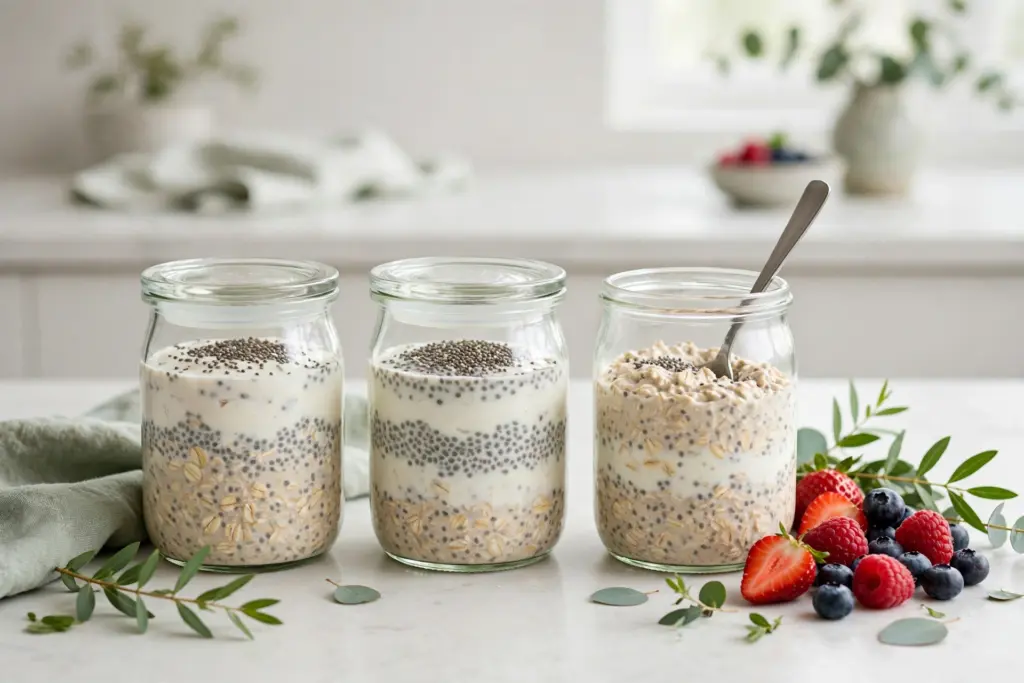
Overnight oats — about 25 grams. Half a cup of rolled oats (5 g) mixed with a 170-gram container of Greek yogurt (17 g) and a tablespoon of chia seeds (2.5 g), left in the fridge overnight. Make two or three jars at once and breakfast is sorted for half the week.
Notice the pattern: none of these needs a supplement or a special product. Each one is a protein-rich food plus a supporting food, and the total lands in the 25-gram range without much effort.
Stocking and storing: keeping it simple
A high-protein breakfast only happens if the food is actually there when you wake up. A short weekly routine keeps the list stocked without much thought:
Fridge: eggs, Greek yogurt, cottage cheese, milk, firm tofu. Buy yogurt and cottage cheese in the larger tubs — they’re cheaper per gram of protein than single-serve cups, and both keep for a week or more once opened if you keep them cold and sealed.
Freezer: bread for toast, berries for yogurt bowls, and a bag of edamame (about 18 grams of protein per shelled cup) for the mornings when you want something different. Frozen berries are usually cheaper than fresh and just as nutritious.
Pantry: rolled oats, quinoa, peanut butter, chia seeds, almonds. These keep for months, so buy them in bulk and forget about them until you need them. Natural peanut butter — the kind with just peanuts and salt on the label — avoids the added sugars and hydrogenated oils in some sweetened spreads.
What to watch out for
Not everything marketed as a “protein breakfast” earns the label. Flavoured yogurts, protein bars, and sweetened breakfast cereals often carry as much sugar as protein, and some processed breakfast meats — sausage, bacon, deli ham — bring a lot of sodium and saturated fat along with their protein. The International Agency for Research on Cancer classifies processed meat as carcinogenic to humans, with each daily 50-gram portion linked to an estimated 18% higher colorectal cancer risk, so these are foods to keep occasional rather than daily.
Protein powders can fill a gap on a rushed morning, but they shouldn’t replace real food as a habit. A scoop of whey adds about 25 grams of protein, which is useful — but a yogurt bowl gives you the same protein plus calcium, probiotics, and food that actually fills you up.
One more caution: more protein isn’t automatically better. The research supports spreading protein across meals rather than loading it all into one. If your breakfast already hits 25 to 30 grams, the extra scoop can wait for lunch.
Read also: Easy High-Protein Breakfast Ideas
Frequently asked questions
How much protein should breakfast have?
There is no official per-meal target, but a useful working range is 20 to 35 grams. That comes from spreading the 2025–2030 Dietary Guidelines’ suggested 1.2 to 1.6 grams per kilogram per day across three meals. The high-protein breakfast in the Leidy trial contained 35 grams, and participants who ate it reported greater fullness and snacked less in the evening than those who ate a 13-gram cereal breakfast.
Is it okay to eat eggs every day?
For most healthy adults, yes. Dietary cholesterol from eggs has a modest effect on blood cholesterol for most people, and current guidance focuses more on overall dietary patterns — especially saturated fat intake — than on any single food. If you have a specific condition such as familial hypercholesterolaemia, ask your clinician about your individual limits.
What is the highest-protein breakfast food?
Per serving, firm tofu leads this list at about 22 grams per half cup, followed by plain nonfat Greek yogurt at about 17 grams per container. But the highest-protein breakfast is usually a combination — yogurt plus oats, or eggs plus cottage cheese — because pairing foods is how you reach 25 grams without eating an enormous portion of any one thing.
Can I get enough protein at breakfast without dairy or eggs?
Yes. Firm tofu (about 22 grams per half cup), soy milk (about 7 to 8 grams per cup), quinoa (about 8 grams per cooked cup), peanut butter, and chia seeds can build a plant-based breakfast in the same 20- to 30-gram range. A tofu scramble with quinoa on the side, or overnight oats made with soy milk and peanut butter, both get there.
Disclaimer: This article is for general information only and is not medical advice. Protein needs vary with age, activity level, pregnancy, and health conditions. If you have kidney disease, a metabolic condition, or other health concerns, talk with your clinician or a registered dietitian before changing your protein intake.
Sources
- USDA FoodData Central — protein values for eggs, Greek yogurt, cottage cheese, milk, oats, tofu, quinoa, chia seeds, and almonds
- Leidy HJ, Ortinau LC, Douglas SM, Hoertel HA. Beneficial effects of a higher-protein breakfast on the appetitive, hormonal, and neural signals controlling energy intake regulation in overweight/obese, “breakfast-skipping,” late-adolescent girls. American Journal of Clinical Nutrition 2013;97(4):677–688
- Phillips SM, Chevalier S, Leidy HJ. Protein “requirements” beyond the RDA: implications for optimizing health. Applied Physiology, Nutrition, and Metabolism 2016;41(5):565–572
- Dietary Guidelines for Americans, 2025–2030 — protein recommendations of 1.2–1.6 g/kg/day (table reproduced in LibreTexts, Introduction to Nutrition)
- UC Davis Nutrition Department — Protein Requirements (RDA 0.8 g/kg/day; Daily Value 50 g)