Healthy Fats in Plant-Based Eating
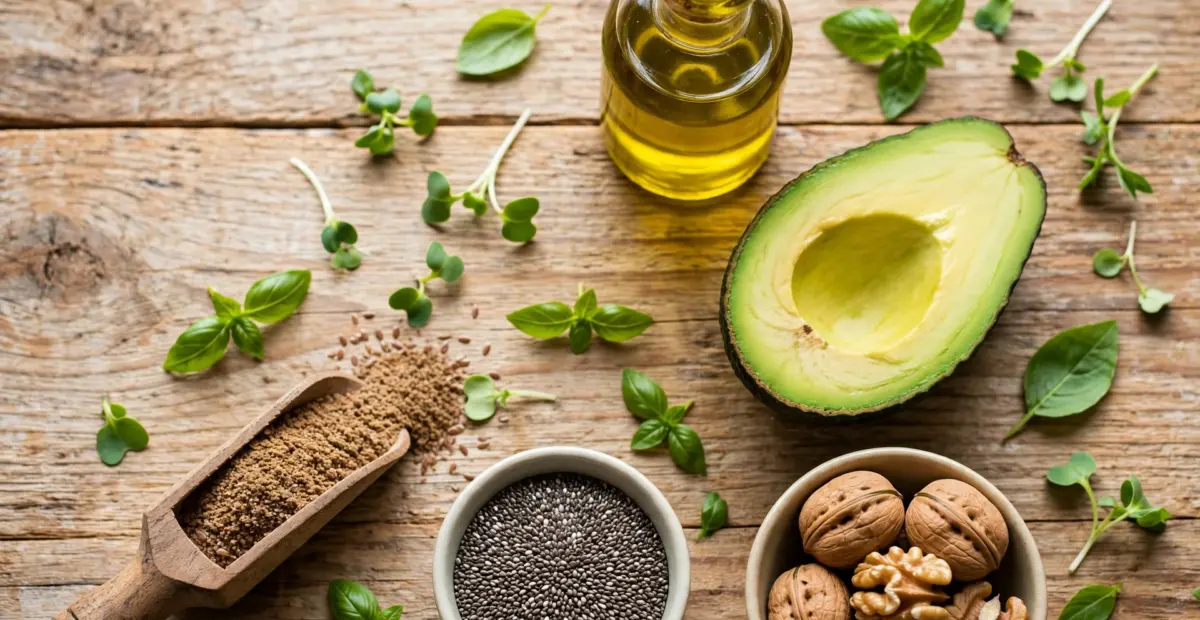
When you build your meals around plants, fat stops being the thing you try to cut out and becomes a nutrient you plan for. Olive oil drizzled over roasted vegetables, a spoonful of ground flaxseed in your morning oats, a handful of walnuts at your desk — these are not indulgences to feel guilty about. They are how a plant-based plate delivers the fats your body actually needs: the monounsaturated and polyunsaturated fats linked to healthier cholesterol levels, plus the essential omega-3 your body cannot make on its own.
That said, “plant-based” does not automatically mean “healthy fat.” Coconut oil is plant-based and is about 82% saturated fat. A bag of potato chips fried in palm oil is plant-based too. The difference between a fat that supports your health and one that works against it comes down to type, amount, and what it replaces. Here is how to get it right.
First, the three kinds of fat in plain language
Every fat you eat falls into one of three broad groups, and the group matters more than the total grams.
Monounsaturated fats (MUFAs) are the workhorses of a plant-based kitchen. They are liquid at room temperature and show up in olive oil, canola oil, avocado, almonds, and peanuts. When you swap them in for saturated fat, they tend to lower LDL (“bad”) cholesterol without dragging down HDL (“good”) cholesterol.
Polyunsaturated fats (PUFAs) include the essential fats your body cannot make: linoleic acid (omega-6) and alpha-linolenic acid, or ALA (omega-3). Walnuts, flaxseed, chia seeds, hemp seeds, and soybean and canola oils are the plant sources that matter most here.
Saturated fats are the ones to keep in check. They are solid at room temperature — butter, coconut oil, palm oil — and a pattern high in saturated fat is linked to higher LDL cholesterol and cardiovascular risk. The Dietary Guidelines for Americans recommend keeping saturated fat below 10% of daily calories, and the American Heart Association goes further, aiming for under 6% — about 13 grams a day on a 2,000-calorie diet.
The strongest evidence is not about cutting fat altogether. In randomized trials reviewed in the American Heart Association’s presidential advisory on dietary fats, lowering saturated fat and replacing it with polyunsaturated vegetable oil reduced cardiovascular disease by about 30% — a reduction similar to what statin treatment achieves. The swap, not the subtraction, is the point.
The plant-based fat all-stars
You do not need exotic ingredients to cover your healthy fats. A few everyday foods do most of the work.
Olive oil. About three-quarters of the fat in olive oil is monounsaturated. One tablespoon carries roughly 119 calories and 13.5 grams of fat, of which about 10 grams are monounsaturated and under 2 grams saturated. Extra virgin olive oil also brings polyphenols, the plant compounds behind its peppery bite, and about 1.6 mg of vitamin E per tablespoon. Use it for dressings, sautéing, and finishing roasted vegetables — and measure it, because the calories add up fast.
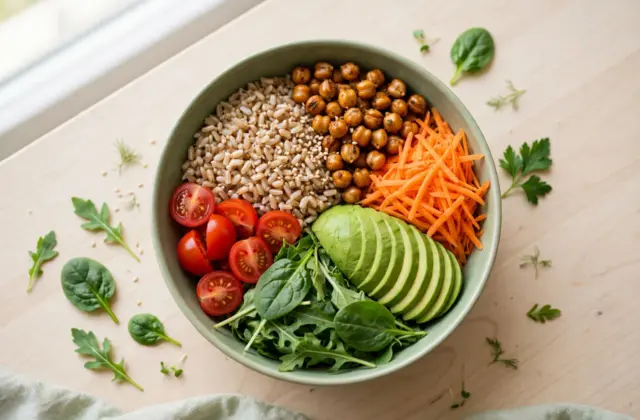
Avocado. Half an avocado gives you roughly 7 grams of monounsaturated fat along with about 5 grams of fiber and a solid dose of potassium. It works as a spread instead of butter, a creamy base for dressings, or a way to make a bean-and-grain bowl feel complete.
Nuts. Walnuts are the standout: one ounce (about 14 halves) delivers about 2.6 grams of ALA, the plant omega-3, plus protein, magnesium, and polyphenols. Almonds and pistachios are richer in monounsaturated fat and vitamin E. A small handful — about an ounce — is the sweet spot; a whole bag is a meal’s worth of calories.
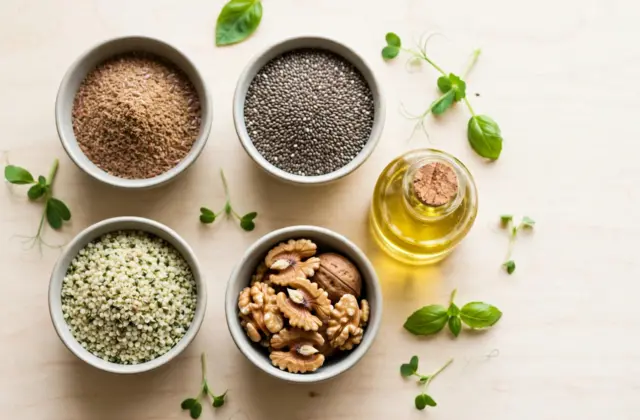
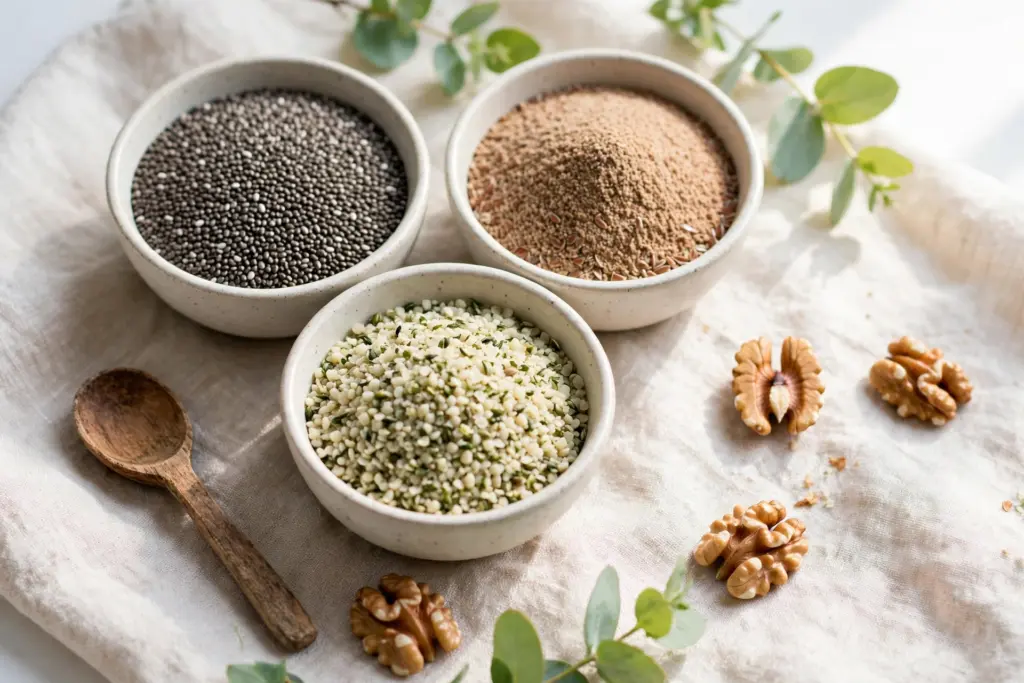
Seeds. Ground flaxseed, chia seeds, and hemp seeds are the most concentrated plant omega-3 sources you can buy. One tablespoon of ground flaxseed gives you about 1.6 grams of ALA; an ounce of chia seeds (about two tablespoons) gives you about 5 grams. Flaxseed needs to be ground — whole seeds often pass through digestion intact, taking their ALA with them. Chia needs no grinding at all.
Read also: Plant Sources of Omega-3 Fats
Omega-3s: the one gap worth planning around
Here is where plant-based eating needs a plan rather than good intentions. There are three omega-3s that matter: ALA from plants, and EPA and DHA, the long-chain forms found in fish and algae. ALA is the only one with an official intake value — the National Academies set an Adequate Intake of 1.6 grams a day for men and 1.1 grams for women — and hitting it from plants is genuinely easy. A tablespoon of ground flaxseed or a small handful of walnuts covers it.
The catch is conversion. Your body can turn some ALA into EPA and then DHA, but the National Institutes of Health Office of Dietary Supplements describes the conversion as very limited, with reported rates under 15%. Eating EPA and DHA directly is, in the NIH’s words, the only practical way to raise their levels in your body. That is not a reason to abandon plant eating — it is a reason to know where the gap is and fill it deliberately.
| Food | Serving | ALA (omega-3) |
|---|---|---|
| Flaxseed oil | 1 tablespoon | ~7.3 g |
| Chia seeds | 1 ounce (about 2 tbsp) | ~5.1 g |
| Ground flaxseed | 1 tablespoon | ~1.6–2.4 g |
| English walnuts | 1 ounce (about 14 halves) | ~2.6 g |
| Hemp seeds | 3 tablespoons | ~2.6 g |
| Canola oil | 1 tablespoon | ~1.3 g |
Values from USDA FoodData Central, as compiled by the NIH Office of Dietary Supplements.
The most direct plant-based source of preformed EPA and DHA is algal oil — oil grown from the same microalgae that fish eat to accumulate their omega-3s. The NIH lists algal oil as a vegetarian source of EPA and DHA, and in a 2023 randomized trial, a daily 250 mg DHA supplement from microalgae raised blood DHA levels in omnivores, vegetarians, and vegans alike. If you eat no fish at all, an algal oil supplement is worth discussing with your clinician — especially during pregnancy, when DHA demand rises and the NIH raises the ALA Adequate Intake to 1.4 grams a day.
Read also: Best Plant-Based Protein Sources
How much fat do you actually need?
Fat is not a nutrient to fear, but it is a nutrient to measure. Every oil — olive, canola, coconut, avocado — carries about 120 calories per tablespoon. That sameness is the trap: the type of fat changes, the calories do not. A free pour over a salad can quietly add 300 calories, the same as a small meal.
A practical pattern looks like this:
- Two to three tablespoons of unsaturated oil a day for cooking and dressings, measured rather than poured.
- One ounce of nuts or two tablespoons of seeds a day — a handful of walnuts, or chia or ground flaxseed stirred into oats, smoothies, or yogurt.
- Avocado most days, a third to a half of one, as a spread or a salad addition.
- Saturated fat kept under the ceiling — under 10% of calories by the Dietary Guidelines, closer to 6% if you are watching LDL cholesterol.
That pattern covers your ALA target with room to spare, keeps saturated fat low, and leaves the rest of your calories for the foods that make a plant-based plate filling: vegetables, beans, whole grains, and fruit.
The plant fats to use sparingly
Not every plant fat earns a place in daily rotation. Coconut oil is the clearest example: at about 82% saturated fat, a single tablespoon carries roughly 11 to 12 grams of saturated fat — nearly the entire daily allowance the American Heart Association suggests for someone eating 2,000 calories. It has its uses — a curry here, a baked good there — but as an everyday cooking fat it works against the pattern you are building. The same goes for palm oil and palm kernel oil, which hide in processed snacks and spreads, and for vegan butters that are mostly coconut or palm oil in disguise. Check the label: if saturated fat is the first fat listed, treat it as an occasional food, not a staple.
Butter, for comparison, carries about 7 grams of saturated fat per tablespoon — less than coconut oil, still more than any liquid plant oil. Swapping butter for olive or canola oil in cooking is one of the simplest upgrades in a plant-based kitchen, and it costs nothing in flavor once the pan is hot.
Everyday ways to add healthy fats
The best fat strategy is one you do not have to think about. A few habits make it automatic:
Start the day with seeds. Stir a tablespoon of ground flaxseed or chia into oatmeal, overnight oats, or a smoothie. It is the easiest ALA you will eat all day, and the fiber keeps you full until lunch.
Dress, don’t drown. Whisk olive oil with lemon juice, mustard, and a pinch of salt for a dressing you can make in a jar and keep in the fridge. A measured two tablespoons dresses a large salad; a free pour can triple that.
Make nuts the snack, not the garnish. Keep a small container of walnuts or almonds at your desk. An ounce is a snack; a handful from the bag is a guess. Pair them with fruit and you have a snack with staying power — fat, fiber, and protein in one bite.
Read also: Vitamin E Food Sources and Meal Ideas
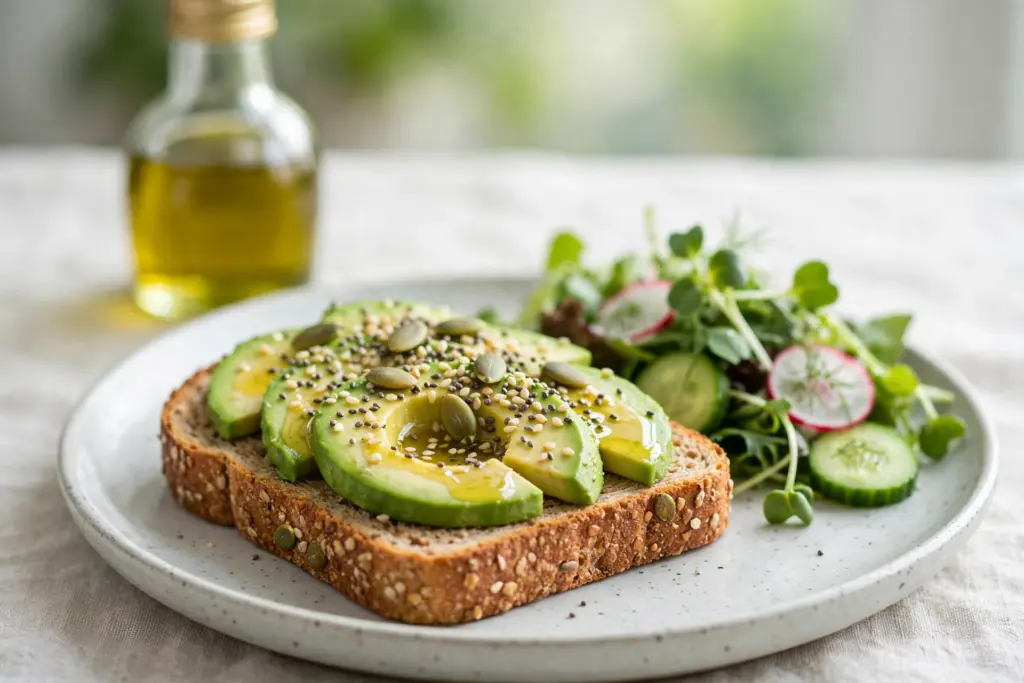
Let avocado replace, not add. Swap avocado for cheese on a sandwich or for mayonnaise in a wrap and you trade saturated fat for monounsaturated fat and gain fiber in the bargain. Adding it on top of everything else just adds calories.
Roast with the right oil. Olive oil handles most roasting and sautéing; canola oil, with its neutral flavor and higher smoke point, suits higher-heat cooking. Save flaxseed oil for cold dishes — its omega-3s break down with heat, and it belongs in dressings, not frying pans.
Frequently asked questions
Can a plant-based diet provide enough healthy fat?
Yes. Olive oil, avocado, nuts, and seeds supply monounsaturated and polyunsaturated fats in abundance, and a tablespoon of ground flaxseed or an ounce of walnuts covers the daily Adequate Intake for ALA. The one nutrient that needs deliberate planning is EPA and DHA, the long-chain omega-3s, because the body converts only a small share of ALA into them — algal oil is the plant-based way to get them directly.
Is coconut oil healthy because it comes from a plant?
Not in the way it is often marketed. Coconut oil is about 82% saturated fat, and one tablespoon carries roughly 11 to 12 grams of it — close to the whole day’s suggested limit on a 2,000-calorie diet. Enjoy it occasionally in recipes where its flavor matters, but do not treat it as a health food or a daily cooking oil.
How much olive oil should I use a day?
There is no official daily target, but two to three measured tablespoons a day fits comfortably in most eating patterns and keeps the calories in check — about 120 calories per tablespoon. Measure it with a spoon rather than pouring from the bottle, and count oil used in cooking as well as oil in dressings.
Do I need an omega-3 supplement on a plant-based diet?
Not necessarily, but it is worth considering if you eat no fish. Whole foods cover ALA easily, yet the body converts less than 15% of ALA into EPA and DHA. An algal oil supplement that provides preformed DHA (and ideally EPA) is the plant-based option, and it is worth a conversation with your clinician — particularly during pregnancy or if you take blood-thinning medication, since high-dose omega-3s can affect clotting.
Disclaimer: This article is for general information only and is not medical advice. If you have a heart condition, high cholesterol, or take medication that affects blood clotting, talk with your clinician or a registered dietitian before changing your fat intake or starting a supplement.
Sources
- National Institutes of Health, Office of Dietary Supplements. Omega-3 Fatty Acids: Fact Sheet for Health Professionals
- National Institutes of Health, Office of Dietary Supplements. Omega-3 Fatty Acids: Fact Sheet for Consumers
- American Heart Association. Saturated Fats
- Sacks FM, et al. Dietary Fats and Cardiovascular Disease: A Presidential Advisory From the American Heart Association, Circulation, 2017.
- U.S. Department of Agriculture. FoodData Central: Walnuts, English
- Dominguez-Lopez I, et al. Changes in fatty acid levels after consumption of a novel docosahexaenoic supplement from algae, European Journal of Nutrition, 2023.