Oats vs. Oatmeal: Understanding the Basics
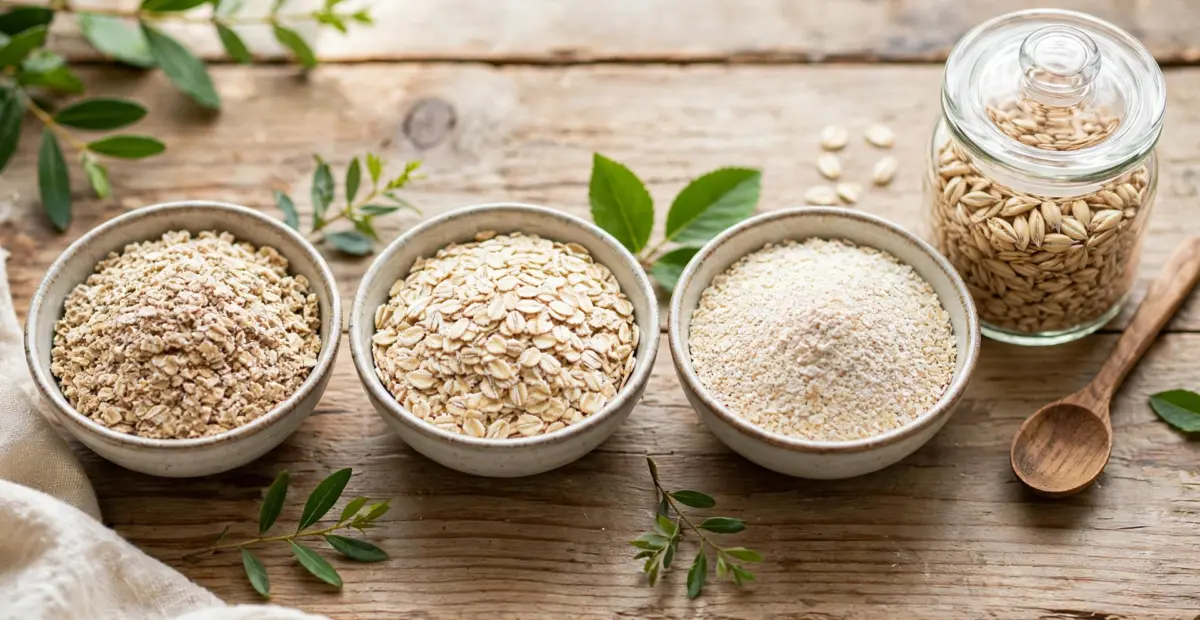
Walk down the breakfast aisle and you will meet half a dozen products that all call themselves oats: steel-cut, old-fashioned, quick, instant, Scottish, oat bran. They look different, cook at wildly different speeds, and carry very different price tags — yet they all start life as the exact same grain. If you have ever stood there wondering whether the pricier steel-cut bag is worth it, or whether a packet of instant oatmeal counts as a whole grain, you are asking the right question. The answer is less dramatic than the marketing suggests, and more useful than you might expect.
Here is the short version: oats are the whole grain; oatmeal is the porridge you make from them. Every form on the shelf is a whole grain, because the bran, germ, and endosperm stay intact through every kind of milling. What changes between the boxes is not the nutrition on the label so much as how fast your body can get at it.
Oats vs. Oatmeal: What the Words Actually Mean
Strictly speaking, “oats” are the grain itself — the kernels that grow on the oat plant — while “oatmeal” is the dish you make by cooking those kernels in water or milk, or the processed form of the grain that goes into the bowl. In everyday use, the two words get swapped constantly, and nobody is wrong for doing so. A packet labeled “instant oatmeal” and a bag labeled “steel-cut oats” are both oats; one is simply cut and pre-cooked further along the way.
It helps to picture the journey. Once harvested, oat kernels are cleaned and hulled, which removes the inedible outer shell and leaves the inner kernel: the groat. The groat is the whole grain in its simplest form — bran, germ, and endosperm all present. Everything after that is a question of how the groat is cut, steamed, or flattened. That processing is what sets cook time, texture, and how quickly the starch turns into blood sugar. It does not strip the grain of its fiber.
From Groat to Bowl: The Five Main Types
Whole oat groats
Groats, sometimes sold as oat berries, are the least processed form you can buy. They are simply hulled kernels, and they cook like a chewy grain — about 50 to 60 minutes on the stove. Their texture is firm and nutty, closer to wheat berries than to porridge, which makes them a good fit for grain bowls, soups, and savory side dishes. They hold up beautifully when reheated, and they carry the lowest glycemic impact of any oat form.
Steel-cut oats (Irish oats)
Steel-cut oats are groats chopped into two or three pieces with steel blades. Nothing is flattened and nothing is pre-cooked beyond the initial kilning, so the pieces stay dense and take 20 to 30 minutes to soften. The result is a porridge with distinct, chewy beads and a nutty flavor — the texture many oatmeal fans swear by. An overnight soak cuts the morning cook time to roughly 8 to 12 minutes, which closes most of the convenience gap. Because the starch structure stays largely intact, steel-cut oats digest more slowly than any of the flaked forms.
Scottish oats
Scottish oats are often confused with steel-cut, but they are made differently: the groats are stone-ground into uneven bits, including some fine flour. They cook in about 30 minutes to a smooth, thick, creamy porridge rather than a bowl of distinct grains.
Rolled oats (old-fashioned oats)
Rolled oats — sold as old-fashioned oats — are the workhorse of the aisle. The groats are steamed soft, then pressed flat between rollers and dried. Steaming partly gelatinizes the starch, and flattening gives each flake a large surface for water to enter, so five minutes on the stove is enough. They cook up creamy with the flake still visible, and they are the default oat for baking, overnight oats, and granola. Rolled and old-fashioned are the same product under two names.
Quick oats and instant oats
Quick oats take the rolled-oat idea further: the groat is cut first, then rolled thinner, so the flakes hydrate in one or two minutes. Instant oats go one step further still — they are fully cooked at the factory, dried, and rolled thinnest of all. They do not really cook in your bowl; they rehydrate. Plain instant oats are still a whole grain, but the fine, soft texture means they break down fast. Flavored packets are a different story: they often carry several grams of added sugar per serving, which is where an otherwise solid breakfast can quietly turn sweet.
Read also: How to Choose Whole Grains
The Nutrition: Remarkably Similar Across the Board
Here is the part that surprises most shoppers. Measured dry, the different oat forms are nutritionally almost identical. According to USDA FoodData Central, 100 grams of dry rolled or quick oats provides about 379 calories, 13 grams of protein, 68 grams of carbohydrate, and 10 grams of fiber. Steel-cut oats land in the same neighborhood, with USDA’s Foundation Foods entry recording about 12 grams of fiber per 100 grams. A standard 40-gram serving — roughly half a cup dry — works out to around 152 calories and 4 grams of fiber, and cooks up into about a cup of oatmeal.
The differences that do exist are small and mostly about serving size. A packet of instant oats is usually a smaller portion than the half-cup of rolled oats you might measure yourself, so it looks lower in calories on the label. Per gram, the grain is the same. What you are really choosing between is texture, cook time, and how your blood sugar responds — not a different food.
Beta-Glucan: The Fiber That Does the Heavy Lifting
The ingredient that makes oats stand out is beta-glucan, a soluble fiber that dissolves in water and forms a thick gel as it moves through your digestive tract. USDA measurements put beta-glucan at roughly 5.4 grams per 100 grams of steel-cut oats, and around 4 grams per 100 grams in rolled oats — a meaningful share of the total fiber.
That gel is the mechanism behind oats’ best-studied benefit. Harvard T.H. Chan School of Public Health explains that beta-glucan can bind to cholesterol-rich bile acids in the intestine and help carry them out of the body, which nudges the liver to pull more cholesterol from the blood. A meta-analysis of 28 randomized controlled trials found that eating at least 3 grams of oat beta-glucan a day lowered LDL (“bad”) cholesterol by 0.25 mmol/L and total cholesterol by 0.30 mmol/L on average — a modest but real shift, larger in people whose cholesterol started out high.
The evidence is strong enough that the U.S. Food and Drug Administration authorized a health claim for oats back in 1997: soluble fiber from whole oats, as part of a diet low in saturated fat and cholesterol, may reduce the risk of heart disease. The effective daily intake is 3 grams or more of oat beta-glucan — roughly a bowl and a half of cooked oatmeal, or about 60 grams of dry rolled oats. Harvard also notes that beta-glucan may help limit sharp rises in blood sugar after a meal and increase feelings of fullness.
Where the Types Actually Differ: Blood Sugar and Staying Power
If the nutrition labels look the same, why does the type matter at all? Because your body does not digest a label — it digests structure. The more intact the oat, the longer it takes enzymes to reach the starch, and the gentler the rise in blood sugar.
Published glycemic index values tell the story in one line: steel-cut oats sit around 42 to 55, rolled oats around 55 to 69, and instant oats can reach 75 or higher. Harvard describes the glycemic load of less processed oats such as steel-cut as low to medium, while highly processed instant oats carry a high glycemic load. For most people eating a balanced breakfast, that difference is worth knowing rather than worrying about. For anyone watching blood sugar closely, it is a genuine reason to favor the coarser cuts — or to pair instant oats with protein and fat, like nuts or Greek yogurt, which slows the whole meal down.
How to Choose (and How to Cook Each Type)
Choose by your morning, not by a ranking. If you have 25 minutes and like a chewy, nutty bowl, steel-cut oats are the pick — soaking them overnight in the fridge cuts the cook to about 10 minutes. If you want a reliable five-minute breakfast that works in baking, overnight oats, and smoothies, rolled oats are the obvious default. If you need breakfast in 60 seconds, plain instant oats are still a whole grain and a perfectly reasonable choice; just check the packet for added sugar and skip the flavored versions most days.
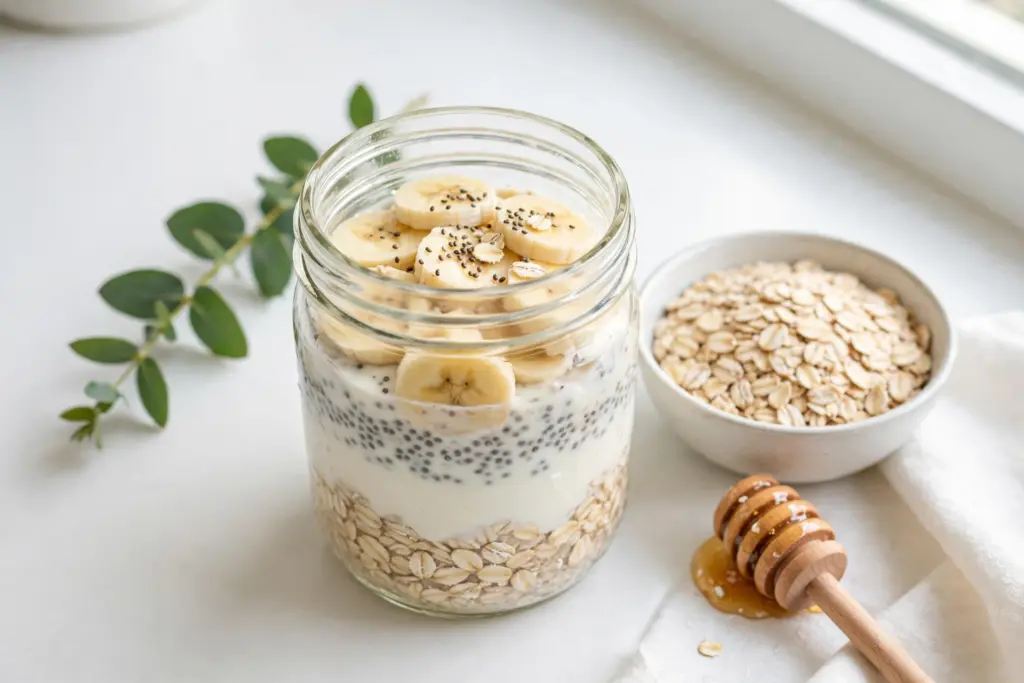
A few practical details make any of them better. Use about one part oats to two parts liquid for rolled oats, and one to four for steel-cut — the denser pieces need more water and more time. Salt the water lightly, not the finished bowl, for even seasoning. Cook a big batch of steel-cut oats on Sunday and they reheat well all week; rolled oats go soft and pasty when reheated, so they are better made fresh. And if you are trying overnight oats, rolled oats are the right cut — steel-cut stays too firm, and instant turns to mush.
Read also: How to Build a Better Breakfast
The Gluten Question and Oat Bran
Oats are naturally gluten-free, but they are often grown near wheat or processed in facilities that handle gluten-containing grains, so cross-contamination is common. If you have celiac disease or a gluten sensitivity, look for oats labeled certified gluten-free — that label means the supply chain was kept separate, not that the oat itself is different.
One more form deserves a mention: oat bran. It is the outer layer of the kernel, separated during milling, and it concentrates the fiber — including beta-glucan — into a smaller serving. A spoonful stirred into porridge, smoothies, or baked goods is an easy way to add soluble fiber without changing the meal. It cooks in about five to ten minutes and works much like a finer porridge on its own.
What to Put on Top Matters More Than the Cut
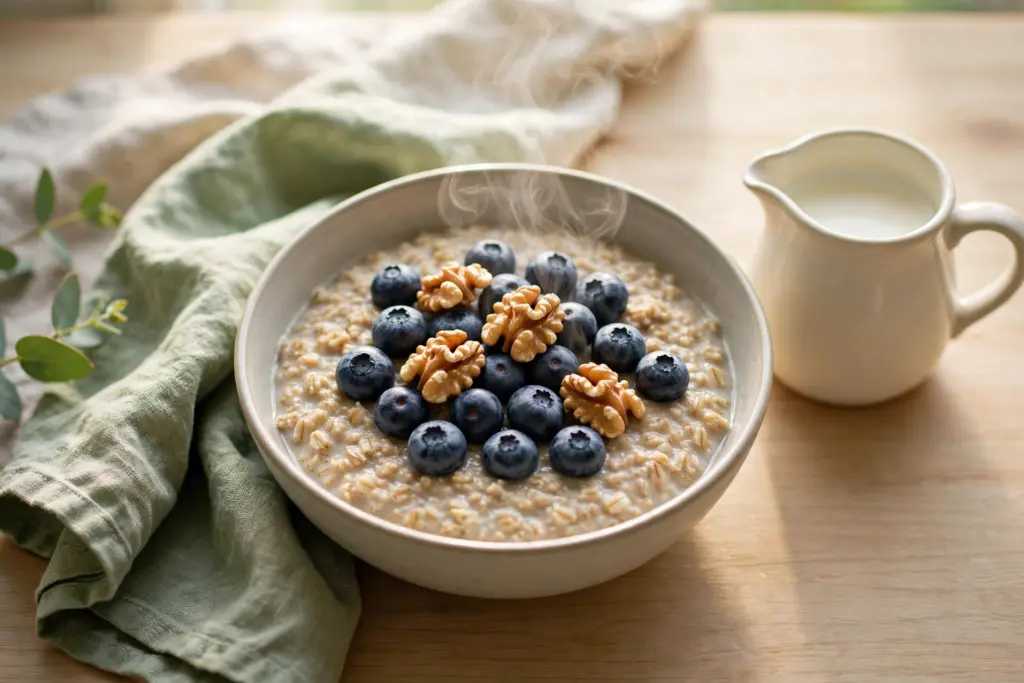
It is worth saying plainly: the gap between steel-cut and rolled oats is small compared with the gap between a plain bowl and a sweetened one. A flavored instant packet can carry 10 or more grams of added sugar, while the same oats plain carry none. Fresh or frozen berries, sliced banana, a spoonful of peanut butter, a handful of walnuts, or a dollop of Greek yogurt all add nutrients and staying power without adding sugar.
Read also: Healthy Overnight Oats Combinations
Frequently Asked Questions
Are oats and oatmeal the same thing?
Almost. Oats are the whole grain; oatmeal is the porridge made by cooking oats, and also the name for the processed grain that goes into the bowl. In practice the terms are used interchangeably, and every form — steel-cut, rolled, quick, instant — starts from the same oat groat.
Is instant oatmeal still a whole grain?
Yes. Plain instant oats keep the bran, germ, and endosperm, so they count as a whole grain. They are simply pre-cooked and rolled thinner, which raises their glycemic index and softens the texture. The thing to watch is added sugar in flavored packets, not the oat itself.
Which type of oats is healthiest?
By the numbers, the differences are small: all forms deliver similar fiber, protein, and minerals per gram. Steel-cut oats have a slight edge for blood sugar control because their intact structure digests more slowly, with a glycemic index around 42 to 55 compared with 75 or higher for instant. For most people, the best oat is the one you will actually cook and enjoy — plain, with nutritious toppings.
How much oatmeal should I eat for the cholesterol benefit?
The FDA’s authorized health claim is based on at least 3 grams of oat beta-glucan a day, as part of a diet low in saturated fat and cholesterol. That is roughly one and a half cups of cooked oatmeal, or about 60 grams of dry rolled oats. Oats are one part of a heart-healthy eating pattern, not a substitute for prescribed cholesterol treatment.
The Bottom Line
Oats versus oatmeal is not really a contest — it is one grain, cut five different ways. The groat is the same, the fiber is nearly the same, and every form counts as a whole grain. What changes is how long it takes to cook, how it feels to eat, and how quickly it raises your blood sugar. Pick the cut that fits your morning, keep it plain, and spend your attention on the toppings. That is where an ordinary bowl of oats becomes a genuinely good breakfast.
This article is for general information only and is not a substitute for medical advice. If you have a medical condition such as diabetes, high cholesterol, or celiac disease, talk with your clinician or a registered dietitian about the choices that fit your needs.
Sources
- USDA FoodData Central — nutrient values for dry rolled/quick oats (379 kcal, 13.2 g protein, 10.1 g fiber per 100 g) and steel-cut oats (beta-glucan 5.44 g, total fiber 12 g per 100 g)
- Harvard T.H. Chan School of Public Health — Oats — beta-glucan, cholesterol, blood sugar, and satiety
- U.S. Food and Drug Administration, 21 CFR 101.81 — authorized health claim: 3 g or more per day of beta-glucan soluble fiber from whole oats and reduced risk of coronary heart disease
- Whitehead A, et al. (2014), American Journal of Clinical Nutrition — meta-analysis of 28 randomized controlled trials: ≥3 g/day oat beta-glucan lowered LDL cholesterol by 0.25 mmol/L and total cholesterol by 0.30 mmol/L
- University of Wyoming Extension — Types of Oatmeal, Explained — oat types, cook times, and nutrition (1 cup cooked oats, 166 calories)