Canned Vegetables: How to Compare Labels
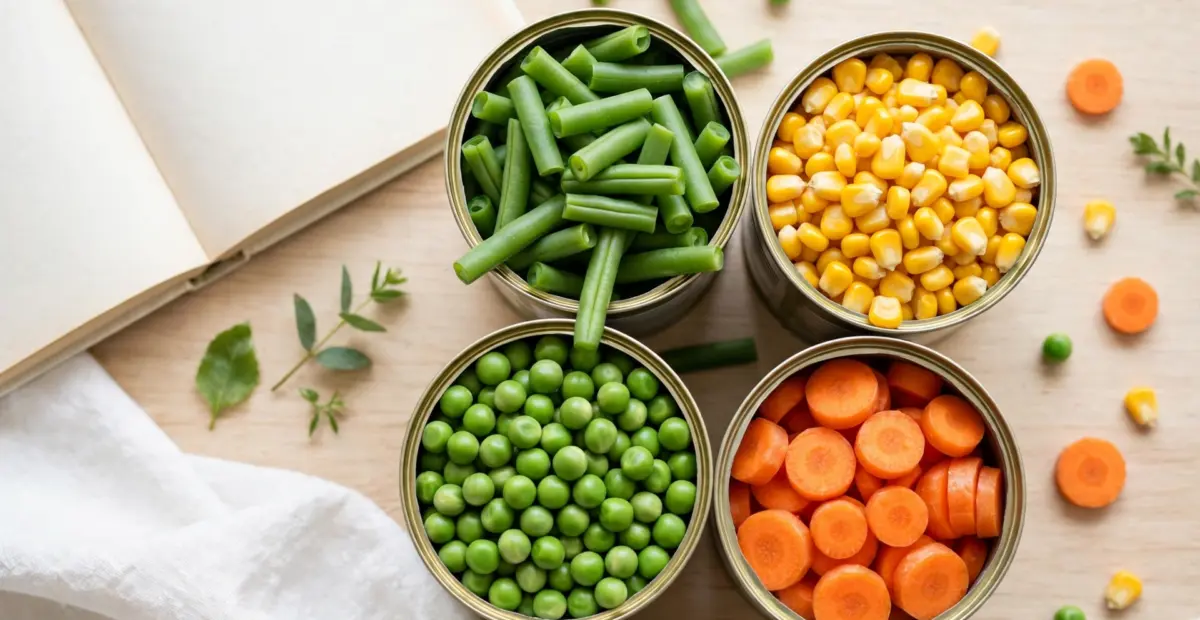
Canned vegetables get a bad reputation they mostly don’t deserve. Picked at peak ripeness and sealed within hours, they can hold their own against fresh produce that has spent a week in the fridge — but only if you pick the right can. Two cans of green beans can sit side by side on the same shelf, look nearly identical, and still differ by hundreds of milligrams of sodium. The difference is all on the label, and once you know where to look, comparing them takes about thirty seconds.
Start with the serving size, not the sodium number
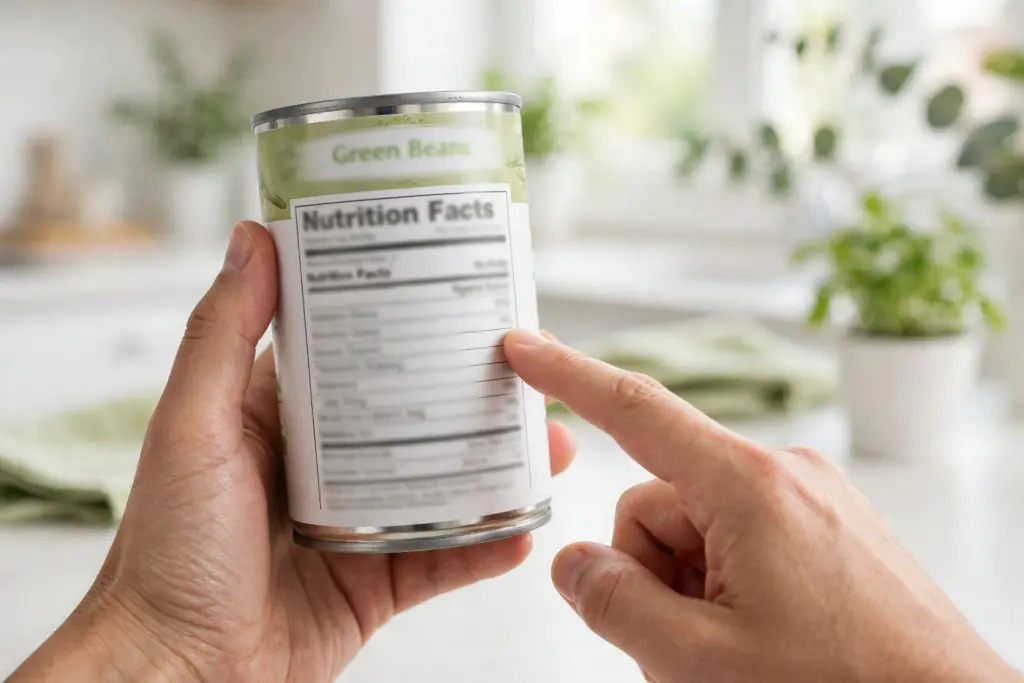
The first thing to check on any Nutrition Facts label is the serving size, printed right at the top. Canned vegetables are usually listed at half a cup (about 120 grams), but some brands use a full cup, and a few use a third of a cup. That matters because every number below it — sodium, calories, fibre — describes one serving, not the whole can.
A can that lists 300 mg of sodium per half-cup serving actually contains about 600 mg if you eat the whole can, which most people do when cooking for one or two. So before you compare two cans, make sure their serving sizes match. If they don’t, do the quick maths: multiply the sodium by the number of servings in the can (also printed on the label) to get the total for the can. The can with the lower per-serving number isn’t always the lower-sodium choice once the servings are equalised.
Read also: How to Read Food Labels
Sodium is the number that decides most comparisons
Salt is the main thing that separates one canned vegetable from another. Fresh green beans contain almost no sodium; the canned version’s sodium comes from the salt added during processing. The U.S. Food and Drug Administration (FDA) sets the Daily Value for sodium at less than 2,300 mg per day — roughly a teaspoon of table salt — and the average American eats about 3,400 mg a day, well above that limit.
Use the % Daily Value (%DV) column as a shortcut. The FDA’s own rule of thumb: 5% DV or less per serving counts as low sodium, while 20% DV or more counts as high. A can of corn at 15% DV per half cup is a middle-of-the-road choice; one at 25% DV is doing a lot of your day’s sodium work in a single side dish.
Here’s a realistic comparison. A standard can of green beans might list around 380 mg of sodium per half-cup serving — about 17% of the daily value. A no-salt-added version of the same beans lists around 10 mg. Same vegetable, same can size, a thirty-fold difference. That’s why the sodium line, not the brand or the price, is usually the deciding factor.
What the front-of-pack claims actually mean
The words on the front of the can are regulated by the FDA, and each one has a precise definition. Knowing them stops a “reduced sodium” can from passing as a low-sodium one:
- Sodium-free: less than 5 mg of sodium per serving.
- Very low sodium: 35 mg or less per serving.
- Low sodium: 140 mg or less per serving.
- Reduced sodium: at least 25% less sodium than the regular version of the same product — but 25% less than a very salty original can still be a lot of salt.
- Light in sodium / lightly salted: at least 50% less sodium than the regular product.
- No salt added / unsalted: no salt was added during processing. The vegetable may still contain a small amount of naturally occurring sodium, but it will be close to the fresh version.
The claim to watch is “reduced sodium.” It sounds reassuring, yet it only promises a comparison with the brand’s own regular product. A reduced-sodium can at 290 mg per serving is still more than twice the 140 mg ceiling for a “low sodium” claim. When you have the choice, “no salt added” or “low sodium” beats “reduced sodium” almost every time.
The rinse trick: a free sodium cut after you buy
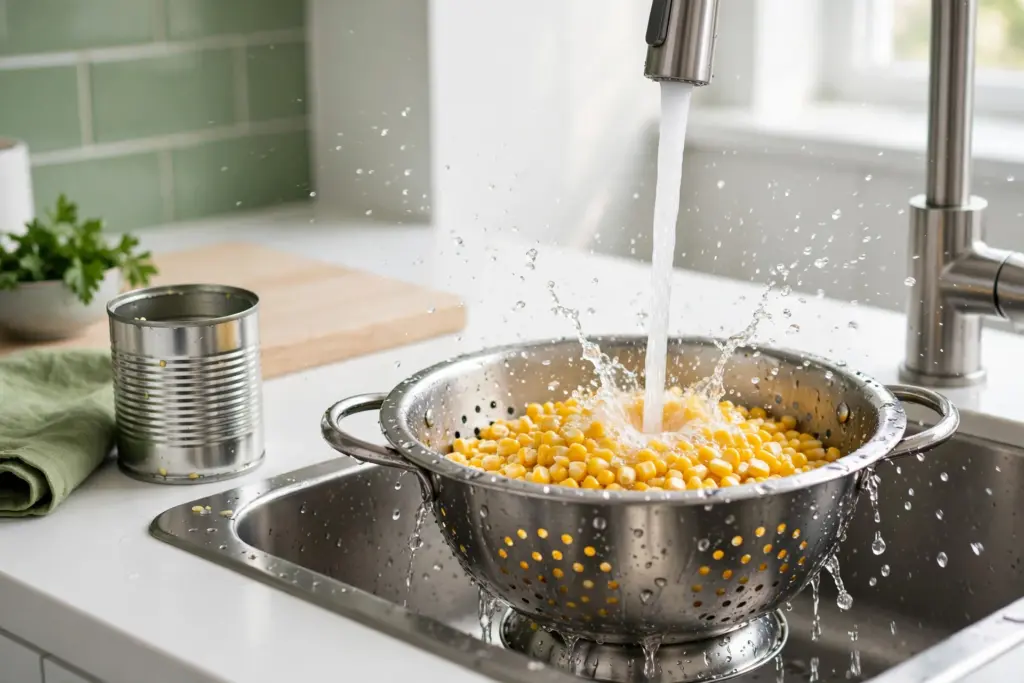
Even if the only can on the shelf is the regular salted version, you can still cut a meaningful share of the sodium at home. Research from the U.S. Department of Agriculture (USDA) found that draining and rinsing canned vegetables under running water lowers their sodium by roughly 9% to 23%, depending on the vegetable — corn responds more than peas or green beans. The same research found that rinsing also trims a little vitamin C, by about 6% to 21%, so it is a trade-off, but for most people the sodium saving is the better deal.
Canned beans respond even better: draining alone cuts sodium by about 36%, and draining plus rinsing cuts it by about 41%, according to a study presented by Duyff and colleagues in 2011. The method is simple — tip the can into a colander, run cold water over the contents for about 30 seconds, and shake off the excess. It costs nothing and takes less time than opening the can did.
Read also: How to Compare Nutrition Labels
Read the ingredient list: shorter is usually better
After sodium, flip the can over and read the ingredient list. Ingredients are listed in descending order by weight, so the first item should be the vegetable itself. A good canned vegetable list reads like a recipe with two or three items: green beans, water, salt. That’s it.
A few things worth noticing:
- “In water” vs “in brine”: vegetables packed in plain water are the lower-sodium starting point. Brine is salt water, and it shows up in the sodium number.
- Added sugar: some canned vegetables, especially corn, carrots and beets, contain added sugar. Check the “Added Sugars” line on the Nutrition Facts label — the best cans list 0 g.
- Calcium chloride: a firming agent that keeps vegetables crisp. It is generally recognised as safe and not a reason to reject a can.
- Calcium disodium EDTA: a preservative that protects colour. Also generally recognised as safe, but if two cans are otherwise equal, the one without it is the simpler choice.
- Sauces and seasonings: cans labelled “in butter sauce,” “seasoned,” or “with cheese sauce” are a different product — the sauce usually adds sodium, saturated fat and calories that the plain version doesn’t have.
What about the nutrients?
The most common worry about canned vegetables is that the heat of canning destroys their nutrition. The picture is more balanced than the reputation suggests. According to the USDA’s home canning guide, the heating process destroys roughly one-third to one-half of vitamins A and C, thiamin and riboflavin — the heat-sensitive vitamins. But the amounts of other vitamins and minerals are only slightly lower than in fresh food, and mineral content stays stable for the whole shelf life.
Two details work in the can’s favour. Vegetables are usually canned within hours of harvest, while fresh produce keeps losing vitamins during transport and storage — the USDA notes that nearly half the vitamins in fresh produce can be lost within a few days unless it is cooled or preserved. Heat can also increase some nutrients: lycopene in tomatoes and beta-carotene in carrots become more available after heating, so a canned tomato may deliver more usable lycopene than a raw one.
Cans, linings and “best by” dates
Two questions come up often: what’s inside the can lining, and what does the date mean?
On linings: many cans use an epoxy coating, historically made with bisphenol A (BPA), to protect the food from the metal. The FDA’s current position is that BPA is safe at the levels occurring in foods, and the agency continues to review new evidence, including a petition filed in 2022 asking it to restrict BPA’s authorised uses. Many brands now label their cans “BPA-free” — that means the lining was made without BPA, though it may use a substitute coating.
On dates: the “best by” date on a can is about quality, not safety. The USDA’s guidance is that high-acid canned foods such as tomatoes keep their best quality for 12 to 18 months, while low-acid foods — most vegetables, beans and soups — keep for 2 to 5 years. A can past its date is usually still safe if the can itself is in good condition, but its flavour and nutrients will have faded. What matters more than the date is the condition of the can: skip any can that is bulging, swollen, leaking, deeply dented (especially on a seam), or heavily rusted. Those are signs the seal may have failed, and the contents should be discarded whatever the date says.
Read also: How to Add More Vegetables to Your Meals
A 30-second comparison routine
Put it together and comparing two cans takes less than a minute:
- Check the serving size — make sure both cans use the same one before comparing anything else.
- Read the sodium %DV — aim for 5% DV or less per serving; treat 20% DV or more as high.
- Read the front claim — “no salt added” or “low sodium” beats “reduced sodium.”
- Scan the ingredients — the vegetable first, water second, and no added sugar or sauce.
- Check the can — no dents on seams, no bulging, no rust, and a date within the USDA’s quality window.
At home, drain and rinse before cooking — it’s the one step that improves almost any can you buy. Keep a few no-salt-added cans in the pantry and they become the easy base for soups, stir-fries and grain bowls on nights when fresh vegetables aren’t happening. That’s the real point of canned vegetables: not that they replace fresh ones, but that they make eating vegetables possible on the days when fresh isn’t practical.
Frequently asked questions
Are canned vegetables as healthy as fresh?
They are close. Canning preserves fibre and minerals well, and heat can even increase the availability of some nutrients like lycopene in tomatoes. Heat-sensitive vitamins such as vitamin C are lower than in fresh produce, but canned vegetables still count fully toward your daily vegetable intake.
Is “reduced sodium” the same as “low sodium”?
No. “Low sodium” means 140 mg or less per serving, an FDA-defined limit. “Reduced sodium” only means at least 25% less sodium than the brand’s regular version, which can still be a high-sodium product. Check the %DV: 5% or less is low, 20% or more is high.
Does rinsing canned vegetables really help?
Yes. USDA research found draining and rinsing canned vegetables cuts sodium by roughly 9% to 23%, and for canned beans the cut is about 41%. Rinsing trims a little vitamin C too, but for most people the sodium saving is worth it. Rinse under cold running water for about 30 seconds.
How long do canned vegetables last?
According to the USDA, low-acid canned foods such as vegetables keep their best quality for 2 to 5 years when stored in a cool, dry place. The “best by” date is a quality guide, not a safety deadline. Discard any can that is bulging, leaking, deeply dented or heavily rusted, whatever the date says.
This article is for general nutrition education and is not medical advice. If you have been advised to follow a low-sodium diet or you manage a health condition such as high blood pressure or kidney disease, talk with your clinician or a registered dietitian about the sodium level that is right for you.
Sources
- U.S. Food and Drug Administration — Sodium in Your Diet (Daily Value for sodium less than 2,300 mg; 5% DV low, 20% DV high; sodium claim definitions; average intake about 3,400 mg/day)
- U.S. Food and Drug Administration — Interactive Nutrition Facts Label: Sodium
- Best Food Facts — Should You Rinse Canned Food? (summarises Haytowitz 2011, USDA: draining and rinsing canned vegetables cuts sodium 9–23%; Duyff et al. 2011: canned beans 36% drained, 41% drained and rinsed)
- U.S. Department of Agriculture, Agricultural Research Service — Effect of Draining and Rinsing on the Sodium and Water-Soluble Vitamin Content of Canned Vegetables (Haytowitz, 2011)
- Healthy Canning — Just How Nutritious Are Home Canned Foods? (quoting USDA Complete Guide to Home Canning: heat destroys one-third to one-half of vitamins A and C, thiamin and riboflavin; other vitamins only slightly lower)
- Houston Methodist — Are Canned & Frozen Veggies as Healthy as Fresh Ones?
- U.S. Department of Agriculture, Food Safety and Inspection Service — Shelf-Stable Food Safety (best quality 12–18 months high-acid, 2–5 years low-acid; can condition guidance)
- U.S. Food and Drug Administration — List of Select Chemicals in the Food Supply Under FDA Review (BPA under scientific assessment; 2022 food additive petition under review)