How to Build a Daily Hydration Routine
Most of us know we should drink more water. The problem is rarely knowledge — it’s the day itself. Meetings run long, the bottle stays in the car, and by 4 p.m. your head aches and you can’t figure out why. A daily hydration routine fixes that by turning drinking water into something automatic, the same way brushing your teeth is. You don’t need a fancy app or a gallon jug. You need a few anchors in your day, a bottle you actually like carrying, and a rough sense of how much is enough for you.
Water does quiet, constant work. It carries nutrients to your cells, helps regulate body temperature, cushions your joints, and keeps digestion moving. Your body is roughly 60% water, and it loses some every hour through breathing, sweating, and trips to the bathroom. A routine simply replaces what you lose before the deficit shows up as a headache or an afternoon slump.
How much water do you actually need?
There is no single number that fits everyone, and anyone who gives you one without caveats is oversimplifying. The best-known reference values come from the US National Academies (formerly the Institute of Medicine), which set an Adequate Intake for total water — everything from drinks plus the water in food — at about 3.7 litres a day for adult men and 2.7 litres a day for adult women. Roughly 20% of that comes from food, so the drinks portion works out to around 3.0 litres (about 13 cups) for men and 2.2 litres (about 9 cups) for women.
European guidance lands a little lower. The European Food Safety Authority sets adequate total water intake at 2.5 litres a day for men and 2.0 litres for women, under conditions of moderate temperature and moderate physical activity. It adds about 300 ml a day during pregnancy and about 700 ml a day while breastfeeding.
Why do the two sets of numbers differ? They come from different population surveys, and both are adequate intakes — amounts that keep most healthy people well hydrated — not strict requirements. Your own number moves with the weather, your activity, your body size, and your health. A hot day, a long run, or a fever all push it up. A desk-bound day in an air-conditioned office pushes it down.
One practical shortcut: aim for the drinks portion of the guideline as a starting point — roughly 2 to 3 litres from beverages a day for most adults — then adjust by how you feel. Pale yellow urine, regular bathroom trips, and steady energy are better feedback than any fixed target.
Read also: How Much Water Do You Need? A General Guide
Start the day with water, before coffee
You wake up mildly dehydrated every morning. You have gone seven or eight hours without a sip, and you have been losing water through breathing all night. A glass of water before anything else is the easiest anchor in the whole routine — it takes ten seconds and it sets the tone.
Keep a glass or bottle on your nightstand or next to the kettle. Drink it while the coffee brews or the shower warms up. You don’t need lemon, salt, or anything special in it; plain water does the job. If you like the ritual of something warm, a mug of herbal tea counts too.
Anchor drinks to things you already do
Willpower fades by mid-afternoon. Habits don’t, because they ride on cues you already have. The trick is to attach drinking to moments that happen anyway:
- With every meal. A glass of water on the table at breakfast, lunch, and dinner adds up to three glasses before you have thought about it.
- Before you leave the house. Finish a glass before you walk out the door, and refill the bottle you take with you.
- At the top of each hour. If you work at a desk, a few sips every hour beat a desperate litre at 5 p.m.
- With your medication or vitamins. If you take anything daily, the glass beside it is a free reminder.
- Before, during, and after exercise. Sip before you start, keep the bottle within reach while you move, and drink again when you finish — especially on hot days.
Pick two or three of these anchors, not all five at once. A routine that asks too much on day one is a routine you abandon by Thursday.
Make water easy to reach
Distance is the enemy. Studies of everyday behaviour keep finding the same thing: when something is visible and within arm’s reach, you do it more; when it is in another room, you don’t. A bottle on your desk gets drunk. A bottle in the kitchen cupboard does not.
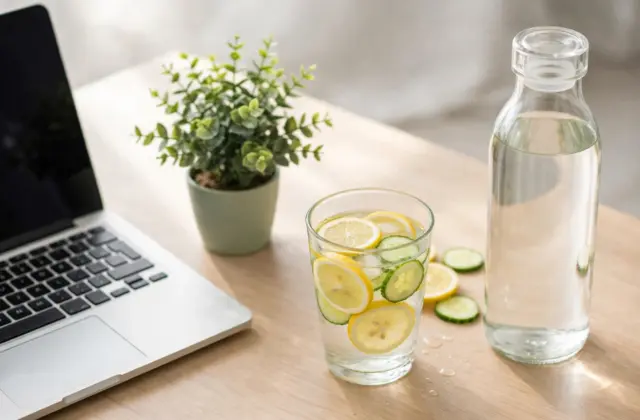
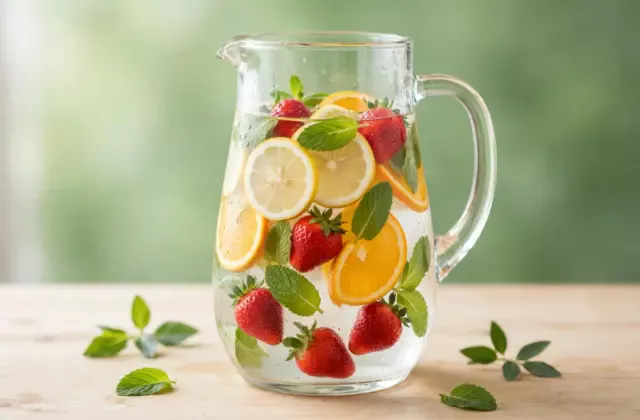
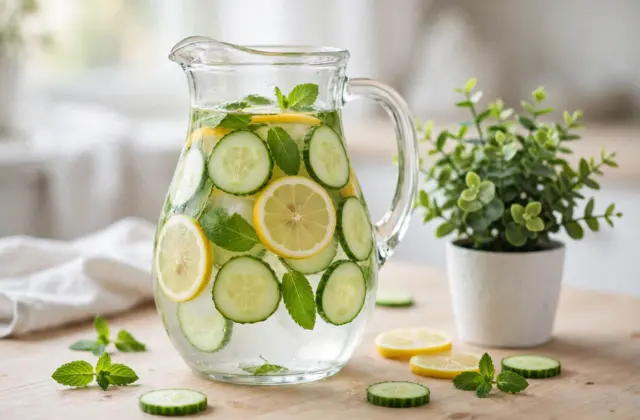
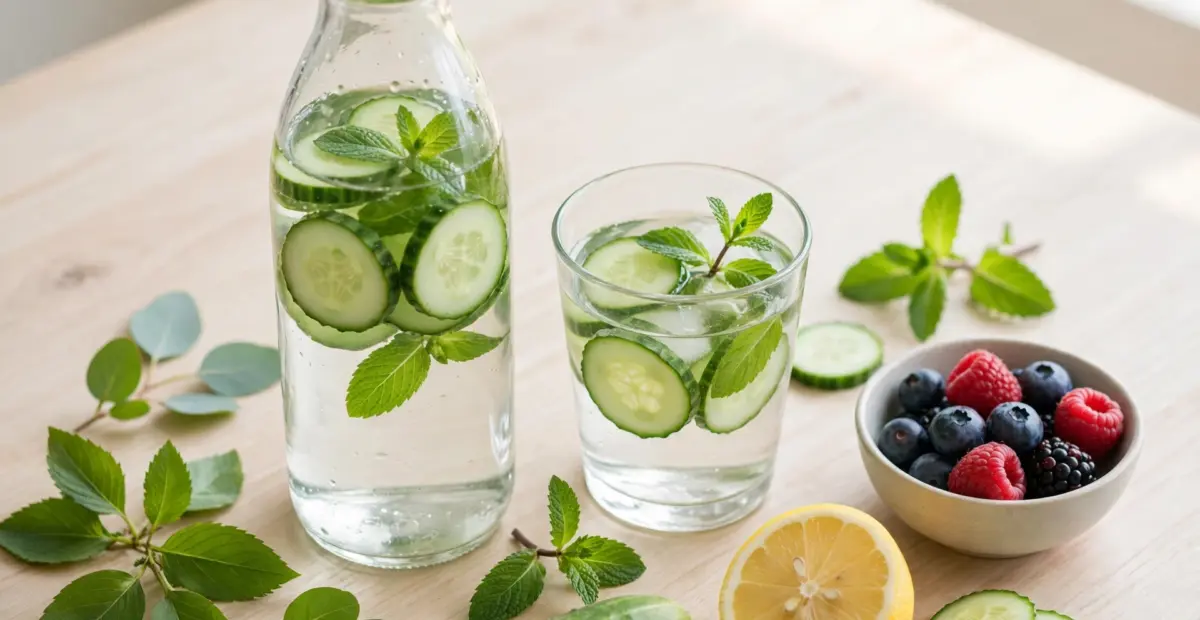
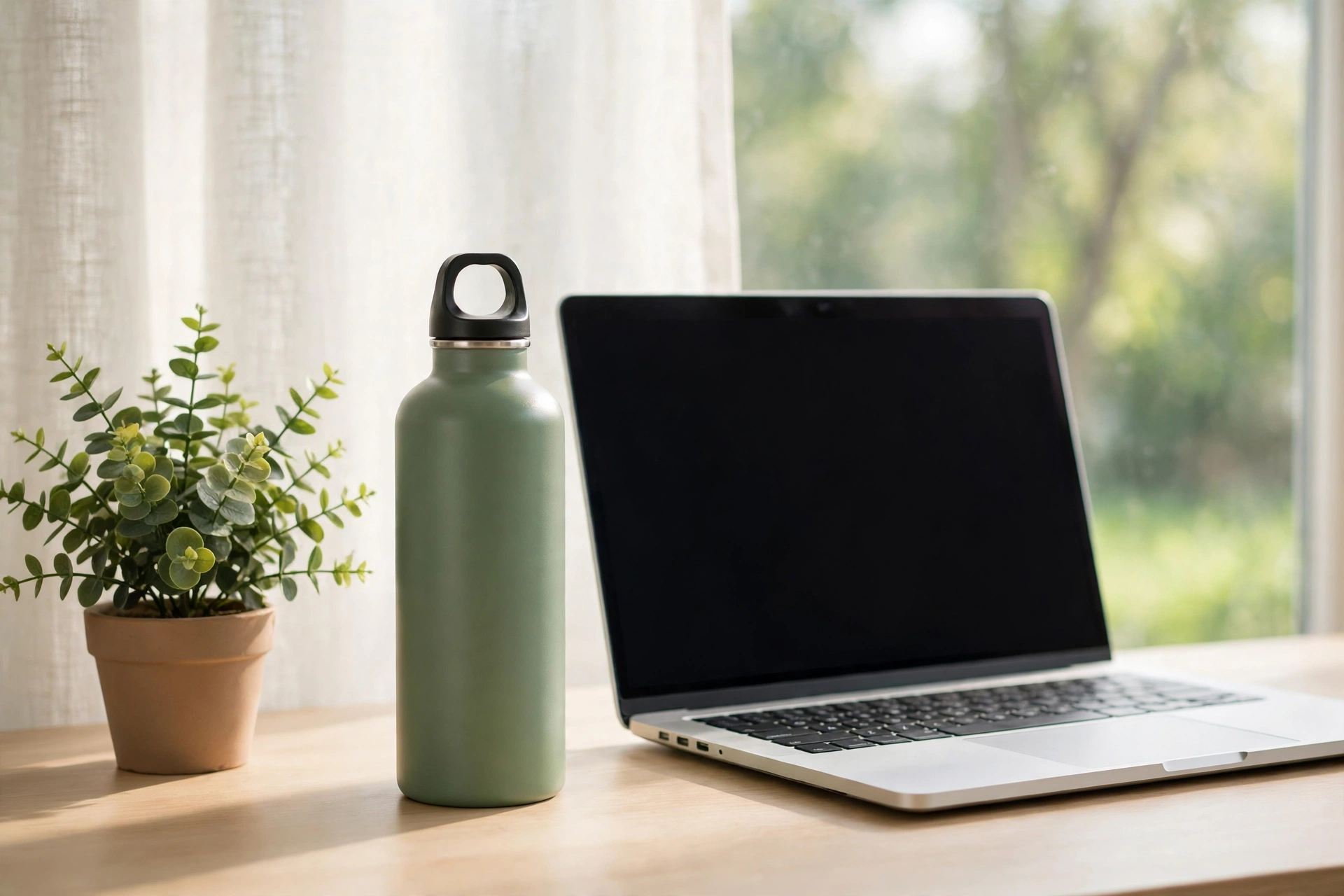
Choose a bottle you enjoy using — one that fits your bag, doesn’t leak, and is easy to clean. A bottle with measurements on the side can help you see your progress through the day: finish the first half by lunch, the second half by dinner. If you dislike plain water, infuse it. Cucumber slices, orange wedges, mint, or a handful of berries change the flavour without adding sugar.
At home, keep a jug of water in the fridge so a cold glass is always one step away. At work, park the bottle where you can see it. Small friction, big difference.
Read also: How to Make Fruit-Infused Water
Let food carry some of the load
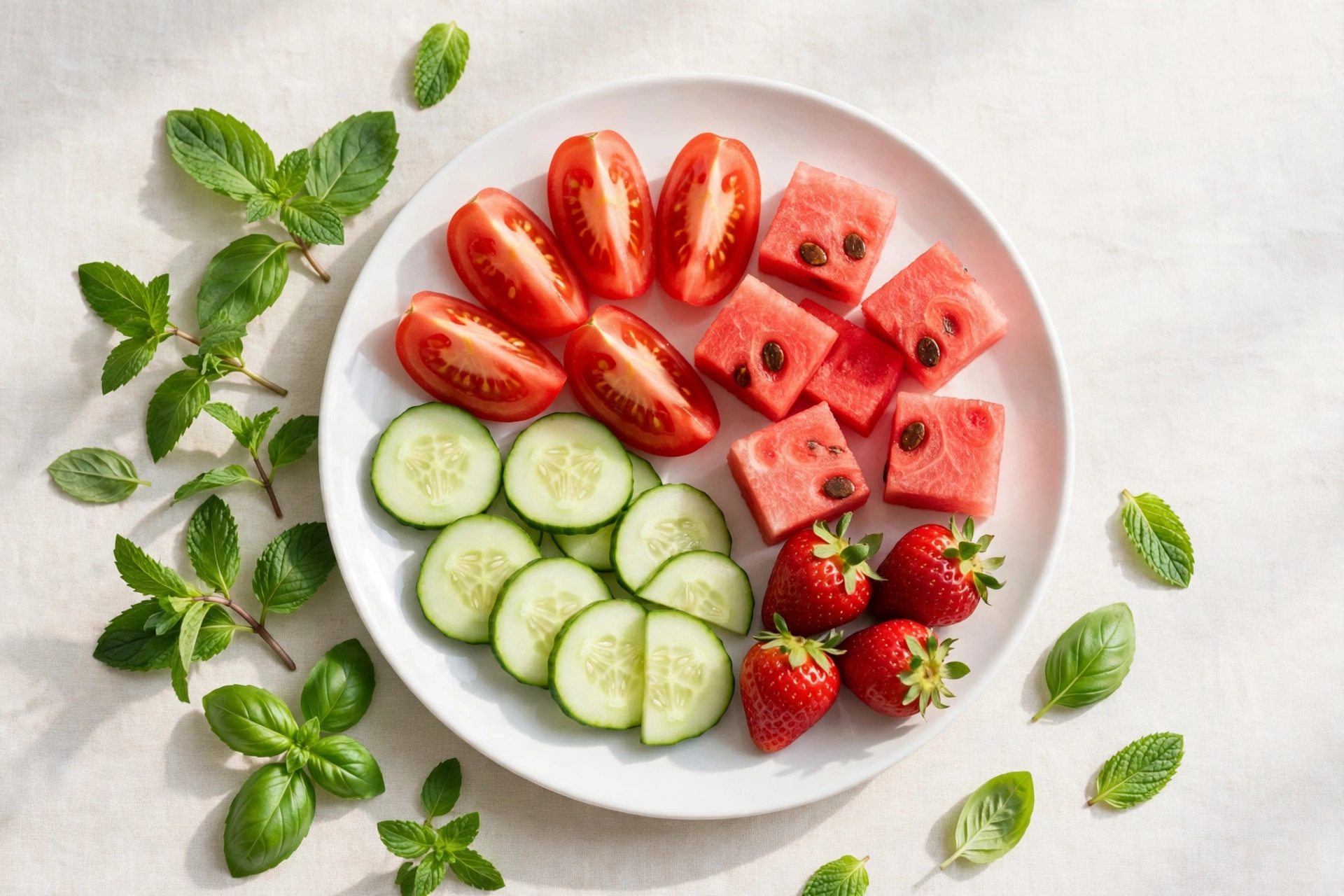
About a fifth of your daily water comes from food, and you can push that share higher without trying hard. Fruits and vegetables are the obvious helpers: cucumber is about 96% water, lettuce around 96%, celery about 95%, tomatoes about 94%, and watermelon and strawberries around 92%. Soup, yoghurt, and milk also contribute — plain yoghurt is roughly 85% water.
This is one reason a produce-rich plate supports hydration as well as nutrition. A lunch of soup, a salad with cucumber and tomatoes, and a piece of fruit quietly adds several hundred millilitres to your day. It doesn’t replace drinking, but it means your bottle doesn’t have to do all the work.
What counts — and what doesn’t quite
Almost every fluid counts toward your total: water, milk, herbal tea, soup, and even coffee and tea. The old idea that caffeinated drinks dehydrate you has not held up — in regular amounts, coffee and tea still contribute fluid. They just shouldn’t be your only source.
What deserves more caution is sugary drinks. Soda, sweetened iced tea, and energy drinks add fluid, but they also add sugar and calories your body doesn’t need. The American Heart Association suggests keeping added sugars to no more than 36 grams a day for men and 25 grams for women, and a single large sweetened drink can use up most of that. If you want flavour, sparkling water with a squeeze of citrus gives you the fizz without the sugar.
Adjust for heat, exercise, and illness
Your routine needs a dial, not a fixed setting. Sweat is the main variable. On a hot day, or during a workout that leaves your shirt damp, you lose noticeably more fluid, and your intake should rise to match. Drink before you feel thirsty during exercise, sip regularly while you move, and keep drinking after you finish until your urine returns to a pale yellow.
For workouts longer than an hour in the heat, an electrolyte drink or a salty snack with your water can help replace what sweat takes out — mainly sodium. For most everyday activity under an hour, plain water is enough.
Illness changes the maths too. Fever, vomiting, and diarrhoea all increase fluid loss, so sipping water, broth, or an oral rehydration solution little and often matters more than usual. If you can’t keep fluids down, or you notice signs of severe dehydration — confusion, fainting, very dark urine or no urine at all, a rapid heartbeat — seek medical care promptly.
How to tell if your routine is working
You don’t need a urine chart on the bathroom wall, but a few simple checks tell you a lot. According to MedlinePlus, signs of mild to moderate dehydration include thirst, a dry or sticky mouth, urinating less than usual, darker yellow urine, dry skin, headache, and muscle cramps. Thirst itself is a late signal — by the time you feel properly thirsty, you are already a little behind, and older adults often feel less thirsty even when they need fluid.
Use these checks instead:
- Urine colour: pale straw yellow is the sweet spot. Dark yellow means drink more; completely clear all day may mean you are overdoing it.
- Frequency: urinating every few hours during the day is normal. Long gaps are a clue.
- Energy and focus: a dull headache or foggy afternoon that lifts after a glass of water is your body filing a report.
- Skin and lips: dry lips and dry skin can be early signs, especially in dry or air-conditioned rooms.
If you take medication that affects fluid balance, such as diuretics, or you have kidney, heart, or liver disease, check with your clinician about how much fluid is right for you — the general guidelines don’t apply to everyone.
A simple routine you can start tomorrow
Here is a full day in one compact shape. Adjust the amounts to your size and your climate; the structure is what matters.
- On waking: one glass of water before coffee or breakfast.
- Breakfast: a glass of water or milk with your meal.
- Mid-morning: keep the bottle on your desk; finish half of it by lunch.
- Lunch: a glass of water with the meal, plus water-rich foods like cucumber, tomato, or fruit.
- Afternoon: finish the bottle; refill if it’s hot or you exercised.
- Dinner: a glass of water with the meal.
- Evening: a small glass or a cup of herbal tea an hour or two before bed — enough to stay comfortable, not so much that you are up all night.
That pattern lands most adults near the 2 to 3 litres of drinks the guidelines suggest, without counting, measuring, or thinking about it much after the first week.
Read also: Simple Ways to Drink More Water Every Day
Frequently asked questions
Is eight glasses a day a real rule?
Not exactly. The “eight glasses” idea is a handy shorthand, not a guideline from any health authority. The actual adequate intakes are about 3.7 litres of total water a day for men and 2.7 litres for women in US guidance — including water from food — or 2.5 and 2.0 litres in European guidance. Eight glasses (about 2 litres) is a reasonable floor for many people, but your needs depend on your body, the weather, and how active you are.
Can you drink too much water?
Yes, though it is uncommon in healthy people. Drinking very large volumes in a short time can dilute sodium in the blood, a condition called hyponatraemia. It is mainly a risk during extreme endurance events or when someone forces down litres out of anxiety. For everyday life, drinking to thirst plus a steady routine is a safe approach — and if you have a condition that affects fluid balance, follow your clinician’s advice.
Does coffee count toward my daily fluid?
Yes. Caffeinated drinks still contribute fluid, and regular coffee and tea drinkers do not lose more water than they take in from them. Water should still be your main source, but your morning coffee is not working against you.
What’s the best time to drink water?
Spread through the day beats any single “best” time. A glass on waking, one with each meal, and sips between meals covers the bases. Drinking a lot right before bed can disturb sleep, so taper off in the last hour or two before you turn in.
Sources
- Institute of Medicine — Dietary Reference Intakes for Water, Potassium, Sodium, Chloride, and Sulfate (National Academies Press, 2004)
- EFSA Panel on Dietetic Products, Nutrition, and Allergies — Scientific Opinion on Dietary Reference Values for water (EFSA Journal, 2010)
- MedlinePlus — Dehydration (U.S. National Library of Medicine)
- UCLA Health — 15 Foods That Help You Stay Hydrated
- Cleveland Clinic — Foods to Help Keep You Hydrated
This article is for general information only and is not medical advice. If you have a medical condition that affects fluid balance, or you take medication that changes how much you should drink, talk to your clinician or a registered dietitian.