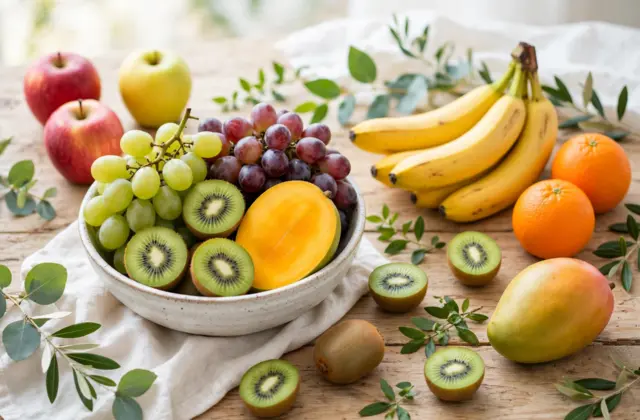
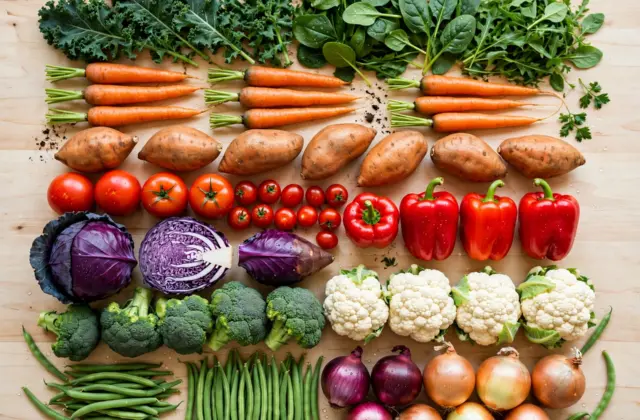
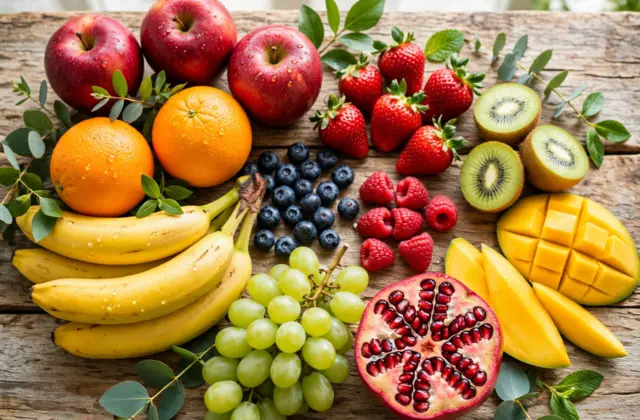
How to Include More Colorful Produce in Meals
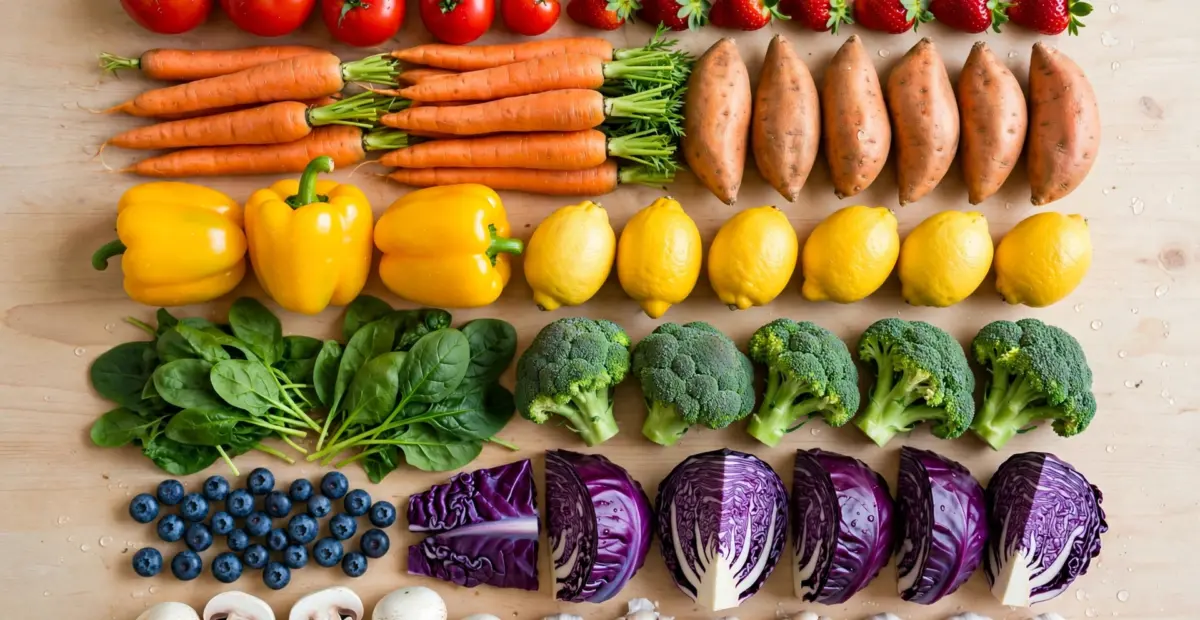
If your plate looks mostly beige — rice, bread, chicken, a few pale potatoes — you are probably missing out on more than color. The pigments that make a strawberry red, a carrot orange, and a blueberry blue are not decoration. They are phytonutrients, plant compounds that come bundled with vitamins, minerals, and fiber, and each color family brings something a little different to the table.
You do not need a new diet or a supplement shelf to benefit. You need a wider cast of colors showing up across your week. Here is what each color offers, how much produce to aim for, and the small, practical moves that make a colorful plate the default rather than the exception.
Why color is a useful shortcut
Plants make pigments for their own protection — to fend off pests, soak up sunlight, and survive stress. When you eat those plants, you get many of the same compounds. Researchers have identified more than 25,000 phytonutrients in plants, and color is the quickest way to tell them apart at a glance.
That matters because no single fruit or vegetable covers everything. Spinach gives you lutein and folate; carrots give you beta-carotene; blueberries give you anthocyanins. Eat only one color and you get a narrow slice of the range. Eat several and the gaps start to close on their own.
The World Health Organization recommends at least 400 grams of fruits and vegetables a day — roughly five portions, not counting potatoes and other starchy tubers. Most adults fall well short: global research published in the British Journal of Nutrition found the majority of adults would need to roughly double their intake to reach that 400-gram minimum. Adding color is not a separate chore on top of that target. It is the simplest way to hit it without getting bored.
Red: lycopene and anthocyanins
Red produce gets its color from lycopene, found in tomatoes, watermelon, and pink grapefruit, and from anthocyanins, found in strawberries, raspberries, and red grapes. Lycopene is a carotenoid linked in research to heart health, and one useful quirk is that cooking tomatoes — into sauce or soup, for example — makes their lycopene easier for your body to absorb than eating them raw.
Red foods also tend to be solid sources of vitamin C. A cup of strawberries gives you more vitamin C than an orange, and red bell peppers beat both. If your salads and stir-fries are all green and white, a handful of cherry tomatoes or a sliced red pepper is the fastest color to add.
Read also: How to Add More Vegetables to Your Meals
Orange and yellow: beta-carotene and vitamin A
Orange and yellow produce is colored by carotenoids, above all beta-carotene, which your body converts into vitamin A. Vitamin A supports vision, immune function, and healthy skin. Carrots, sweet potatoes, pumpkin, mango, and cantaloupe are the usual standouts — sweet potatoes and carrots are among the richest everyday sources.
These foods also tend to bring folate and vitamin C along. A practical point: beta-carotene is fat-soluble, so a little fat helps your body use it. Roast carrots with a drizzle of olive oil, or toss mango into a salad with avocado, and you absorb more than you would from the same foods eaten plain and fat-free.
Green: lutein, folate, and vitamin K
Green is the color most people already associate with healthy eating, and for good reason. Leafy greens are rich in lutein and zeaxanthin, carotenoids that accumulate in the retina and are linked to eye health, along with folate, vitamin K, and calcium in many cases.
But “green” is a broad family, and variety inside it still counts. Kale, spinach, and chard are not interchangeable with broccoli, peas, or green beans — cruciferous greens like broccoli and kale also contain glucosinolates, compounds studied for their role in the body’s detoxification processes. In the CDC’s powerhouse ranking of fruits and vegetables by nutrient density, watercress scored a perfect 100, followed by Chinese cabbage at 91.99, chard at 89.27, and spinach at 86.43.
If you already eat greens most days, the win is not more of the same leaf. It is rotating them: spinach on Monday, broccoli on Wednesday, green beans on Friday.
Blue and purple: anthocyanins
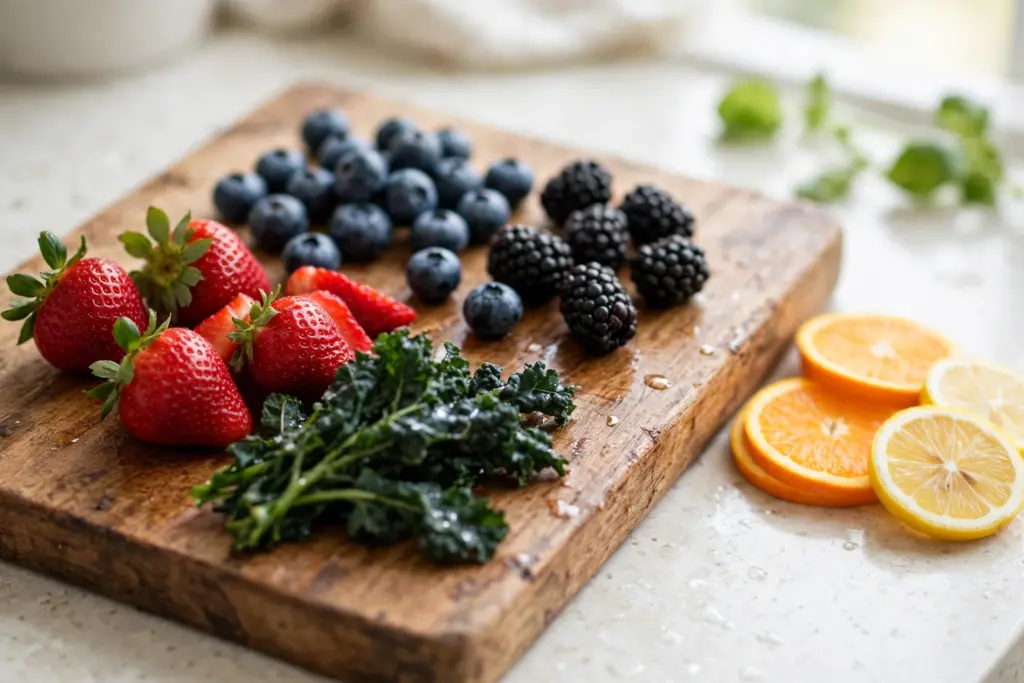
Blue and purple foods get their color from anthocyanins, the same pigment family behind some red produce, concentrated here in blueberries, blackberries, plums, purple grapes, eggplant, and purple cabbage. Laboratory and population research links anthocyanins to reduced inflammation and oxidative damage, processes associated with cardiovascular disease and type 2 diabetes.
Blueberries are the classic example, and frozen ones count — they are picked and frozen at peak ripeness, so their anthocyanin content holds up well. Purple cabbage is the budget hero of this group: cheap, long-lasting in the fridge, and vivid enough to change the look of a whole plate with a small handful of shreds.
Read also: Simple Ways to Eat More Fruit
White and brown: fiber and flavor compounds
White produce is easy to overlook in a conversation about color, but it earns its place. Garlic, onions, mushrooms, cauliflower, and bananas bring fiber, potassium, and their own distinctive compounds — onions and garlic contain sulfur compounds studied for heart and immune health, and mushrooms are one of the few non-animal foods that can provide vitamin D when exposed to sunlight.
A Dutch study published with the American Heart Association followed people for ten years and found that those with the highest intake of white fruits and vegetables had a 52 percent lower risk of stroke than those with the lowest intake. White is not the absence of nutrition. It is a different set of nutrients, and a plate that includes it is more complete than one that does not.
How much color is enough?
There is no official quota per color, and you do not need one. The evidence points to a simpler target: variety across the week, with the 400-gram daily total as the anchor. A large Harvard study published in Circulation in 2021 found that two servings of fruit and three servings of vegetables a day were associated with the lowest risk of death from all causes, with little additional benefit beyond five servings total.
A workable rule of thumb, suggested by university extension nutrition educators, is to aim for at least three colors at every meal, or at least three colors across the day if a meal is simple. Count a color only once per day if you want to keep it honest — three shades of green at lunch do not cover red, orange, and purple.
Try a weekly check instead of a daily scorecard. At the end of the week, ask which colors barely appeared. Most people find one or two gaps — usually blue and purple, or orange — and fixing a gap is easier than overhauling every meal.
Simple ways to add color without extra cooking
The reason colorful eating fails is rarely knowledge. It is friction: the colorful foods sit in the fridge while the beige foods are already on the plate. These moves lower that friction.
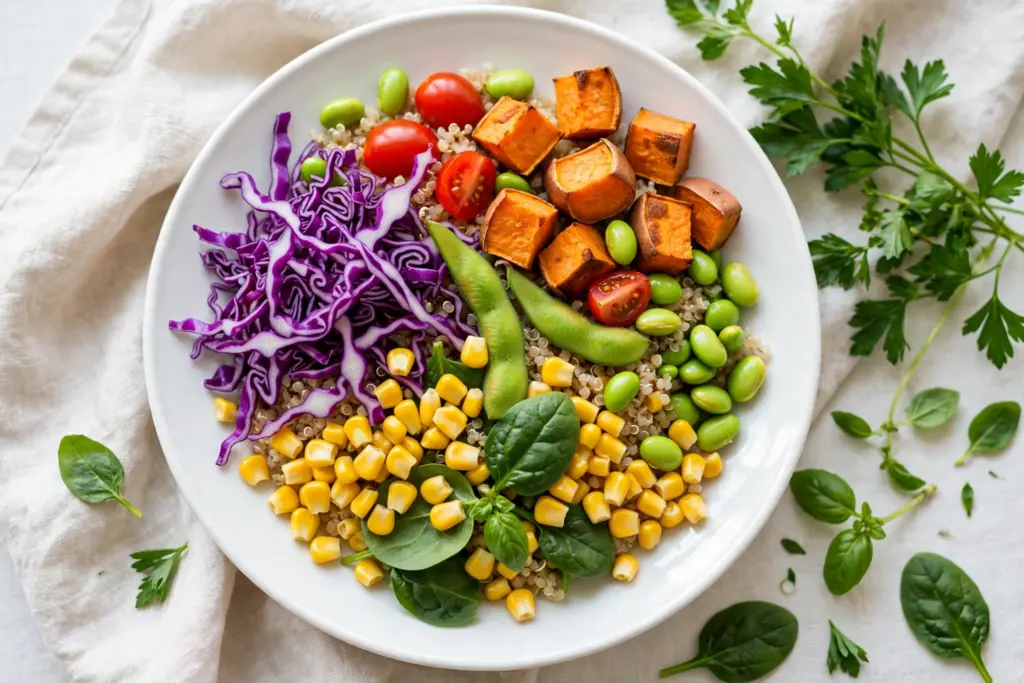
Start with one swap per meal. Add berries to oatmeal instead of sugar. Swap half the white rice for roasted sweet potato cubes. Put sliced cucumber and cherry tomatoes next to a sandwich instead of chips. One color per meal, added to food you already make, beats a rainbow overhaul you abandon by Thursday.
Keep two colors ready to eat. Wash and cut bell peppers, carrots, or cucumber on shopping day and store them where you can see them. Produce you have to prep at 6 p.m. competes with takeout; produce already cut competes with nothing.
Use frozen color. Frozen blueberries, mixed berries, broccoli, and stir-fry vegetable mixes keep their nutrients and cost less per serving than fresh out of season. They also remove the guilt of watching fresh produce wilt — a common reason people stop buying it.
Let one dish carry the color. A grain bowl, a soup, or a stir-fry can hold four or five colors in a single pan. If the rest of the day is plain, one colorful main dish still moves your weekly average.
Shop by color, not by list alone. When you shop, glance at your cart: if everything is green and white, pick up one red, one orange, and one purple item before you leave. Seasonal produce helps here — it is usually cheaper, tastier, and more colorful than out-of-season options.
Read also: How to Build a Balanced Plate
What about juices, powders, and supplements?
A glass of juice is not a substitute for the fruit it came from. Juicing strips out most of the fiber, which is part of what makes whole produce filling and good for gut health, and concentrates the sugars. Whole fruit, or a smoothie that keeps the pulp, is the better trade.
Greens powders and phytonutrient supplements can fill a gap on a bad week, but they do not replicate the combination of fiber, water, and the full range of compounds in whole foods, and the evidence for their long-term benefit is much thinner than the evidence for eating actual produce. Treat them as a backup, not a replacement.
Frequently asked questions
Do I need to eat every color every day?
No. Variety across the week matters more than a perfect daily rainbow. Aim for three colors most days and cover all of them across the week.
Does frozen produce count?
Yes. Frozen fruits and vegetables are processed at peak ripeness and retain most of their nutrients, including anthocyanins and carotenoids. They are a practical way to keep color in your diet year-round.
Is a colorful diet expensive?
It can be, if you buy out-of-season berries every week. It does not have to be: carrots, cabbage, onions, bananas, and frozen vegetables are among the cheapest foods in the store, and seasonal produce is usually the best value.
Can children benefit from eating the rainbow?
Yes, and color can make it easier. Letting children pick one colorful item at the shop, or naming the colors on their plate, turns variety into a game rather than a lecture. The same 400-gram guidance applies in smaller portions for younger children.
The bottom line
Color is not a diet trend. It is a visible clue to what is inside the food: lycopene in red, beta-carotene in orange, lutein in green, anthocyanins in blue and purple, and fiber and sulfur compounds in white. You do not need to memorize any of that. You need to notice what is missing from your plate and add one color at a time.
Start this week with the color you eat least. Buy one bag of it, use it in a dish you already like, and see how quickly the rest of the rainbow follows.
This article is for general information only and is not a substitute for personalized medical or dietary advice. If you have a health condition or take medication, talk with your clinician or a registered dietitian before making major changes to your diet.
Sources
- World Health Organization — Healthy diet
- USDA Agricultural Research Service — The Healthy Colors of Your Diet
- University of Wyoming Extension — Nutrition Rainbow of Pigment Power
- Wang et al., Circulation (2021) — Fruit and vegetable intake and mortality
- Di Noia, Preventing Chronic Disease (2014) — Defining powerhouse fruits and vegetables