Homemade Low-Sugar Drink Ideas
Most of us watch what we eat. Far fewer of us watch what we drink — and drinks are where sugar sneaks in most easily. A can of soda with lunch, a sweet tea in the afternoon, a juice box with breakfast: none of them feels like a big deal on its own, but together they can quietly use up your whole day’s sugar budget before dinner. The good news is that homemade drinks flip the equation. You keep the flavor, the fizz, and the ritual, and you decide exactly how much sugar goes in — which, in most of these recipes, is none at all.
Why your drink matters more than you think
Here’s the math that surprises most people. A standard 12-ounce can of cola contains 39 grams of sugar and about 140 calories, according to Coca-Cola’s own nutrition data. A bottle of sweet tea isn’t far behind: a 16.9-ounce bottle carries roughly 38 grams of sugar and 140 calories. Even 100% orange juice — no added sugar, just fruit — packs about 21 grams of natural sugar and 110 calories per 8-ounce glass, per USDA FoodData Central.
Now compare that with the limits. The American Heart Association recommends no more than 25 grams of added sugar a day for women (about 6 teaspoons) and 36 grams for men (about 9 teaspoons). The World Health Organization advises keeping free sugars below 10% of daily energy — around 50 grams on a 2,000-calorie diet — and says going below 5% may bring extra health benefits. One can of cola alone exceeds the entire daily limit for women. Two sweet drinks in a day, and most people are well past the line without having eaten a single cookie.
That doesn’t mean you have to give up flavored drinks. It means the drinks you buy ready-made are usually the worst deal in the fridge, and the ones you make at home are usually the best. A homemade drink starts at zero sugar and only gets as sweet as you choose.
Read also: How Much Water Do You Need? a General Guide
The low-sugar drink formula
Every drink in this article follows the same simple formula, so you can invent your own once you get the hang of it:
Base + flavor + fizz (optional) + chill. The base is water, sparkling water, brewed tea, or cold-brew coffee. The flavor comes from real fruit, herbs, cucumber, citrus, or a splash of 100% juice. The fizz is plain sparkling water. And the chill — plenty of ice, or fruit frozen into cubes — does more work than people give it credit for. A cold drink tastes sweeter and more refreshing than the same drink at room temperature, which is why so many of these recipes need no sweetener at all.
If you do want a little sweetness, measure it. One level teaspoon of sugar or honey is about 4 grams — a small, honest amount in a tall glass. The trouble with store-bought drinks isn’t that they contain sugar; it’s that they contain ten teaspoons of it in a container you’re expected to finish in one sitting. When you sweeten at home, one teaspoon is usually plenty, and you can taste the difference a single spoon makes.
10 homemade low-sugar drink ideas
1. Cucumber-citrus infused water
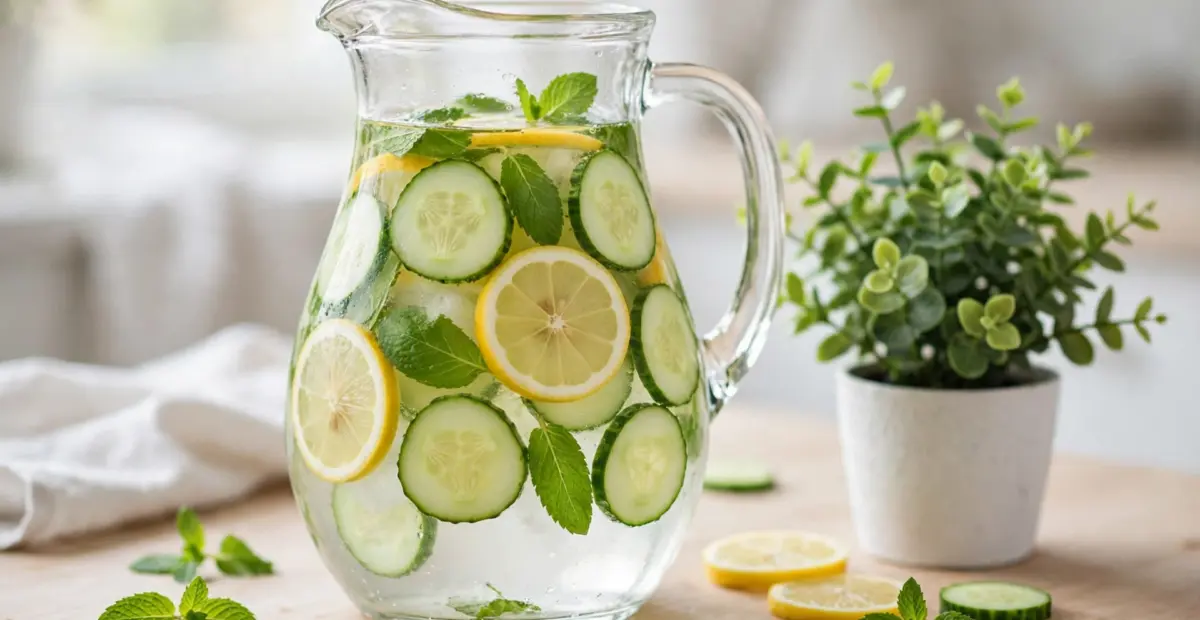
The classic for a reason. Slice half a cucumber and half a lemon into a pitcher of cold water, add a few mint leaves if you have them, and let it sit for 20–30 minutes. It tastes like a spa drink, costs almost nothing, and has zero sugar. Make it the night before and the flavor gets even better by morning.
2. Berry-mint infused water
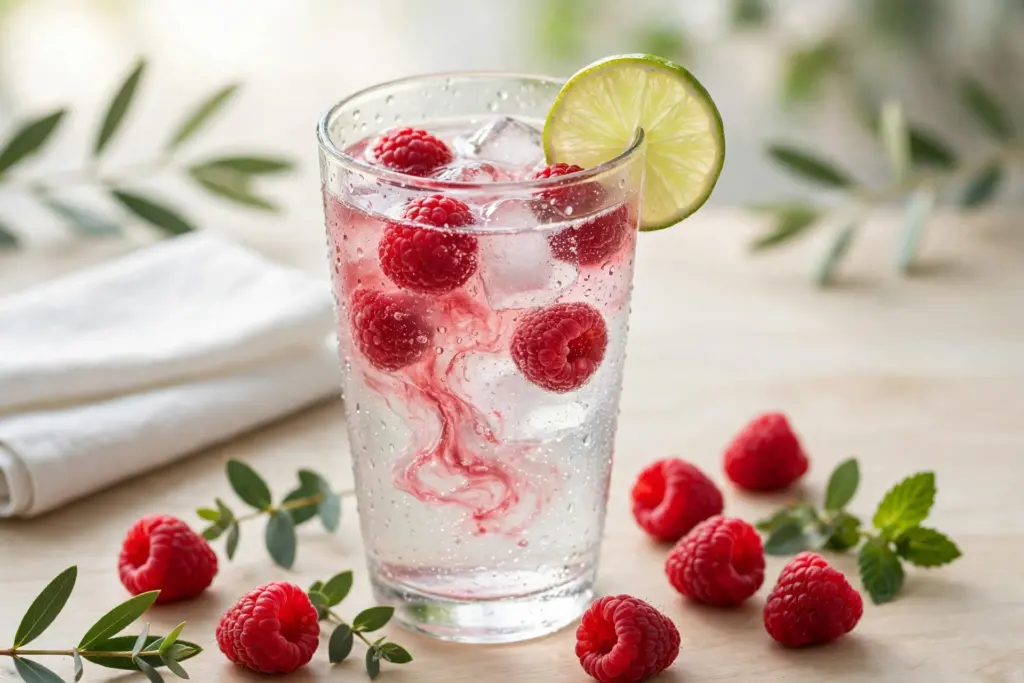
Drop a handful of strawberries or raspberries — fresh or frozen — into a bottle of cold water with a sprig of mint. Lightly crush the berries with a spoon to release their juice. Frozen berries double as ice cubes, so the drink stays cold without getting watered down.
3. Iced green tea with lime and mint
Brew green tea, let it cool, and pour it over ice with a squeeze of lime and a few mint leaves. Green tea brings a gentle, slightly grassy flavor that needs no sugar once it’s cold. If you’re used to sweet tea, try a half teaspoon of honey in the first few glasses and taper it down — your taste buds adjust faster than you’d expect.
4. Hibiscus iced tea
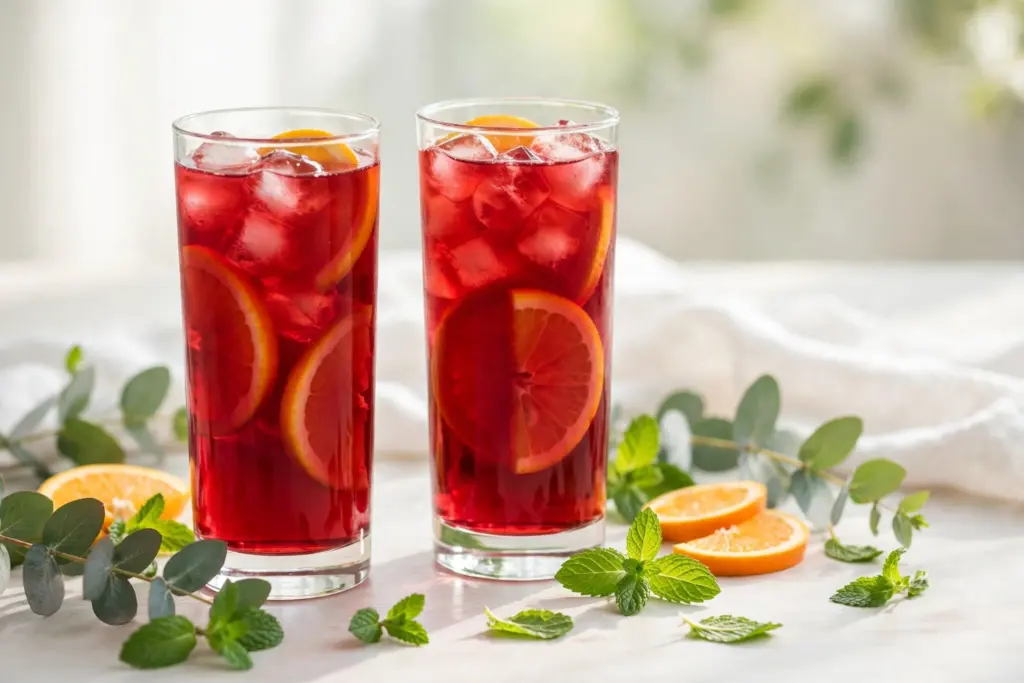
Hibiscus tea brews a deep ruby red and tastes naturally tart and cranberry-like, which makes it one of the easiest teas to drink unsweetened. Brew it strong, chill it, and serve over ice with an orange slice. It looks spectacular in a glass, which helps when you’re serving guests who expect something special.
5. Sparkling water with a splash of juice
This is the single best swap for soda. Fill a glass three-quarters full with plain sparkling water, then add a splash — about a quarter cup — of 100% juice: cranberry, pomegranate, orange, or grape. You get the fizz, the fruit flavor, and the color, with roughly a quarter of the sugar of a full glass of juice. A whole orange squeezed into sparkling water works the same way and costs less.
6. Watermelon-mint cooler
Blend two cups of cubed watermelon with the juice of half a lime and a few mint leaves, then strain it into a pitcher and serve over ice. Watermelon is mostly water, so the drink is light and refreshing, and the fruit’s own sweetness carries the whole glass — no added sugar needed. It’s a good one for hot afternoons when plain water feels boring.
7. Iced coffee, lightly sweetened
Cold-brew coffee is naturally smoother and less bitter than hot coffee, which means it needs less sugar to taste good. Pour it over ice with a splash of milk, and if you want sweetness, start with half a teaspoon of sugar or a dash of vanilla extract — vanilla tricks your taste buds into sensing sweetness without adding any sugar at all. Compare that with a bottled coffee drink, which can easily hide 30 grams of sugar or more.
8. Cinnamon-vanilla iced latte
Warm a little milk with a cinnamon stick and a drop of vanilla, let it cool, and pour it over iced coffee or iced black tea. The cinnamon and vanilla give the drink a warm, bakery-like flavor that reads as sweet even though there’s no sugar in it. Use low-fat or fat-free milk if you like — the flavor comes from the spices, not the fat.
9. Cucumber-lime agua fresca
Blend one peeled cucumber with the juice of two limes, two cups of cold water, and a pinch of salt. Strain, pour over ice, and sweeten only if you need to — one teaspoon of honey for the whole pitcher is usually enough. It’s the drink that makes a plain weeknight dinner feel like a restaurant meal.
10. Frozen fruit ice cubes in sparkling water
Freeze berries, grapes, or citrus slices in an ice cube tray with water. Drop two or three cubes into a glass of plain or sparkling water. As they melt, they flavor the drink and look beautiful doing it. Kids love this one, and it’s a genuinely fun way to get a child who “doesn’t like water” to drink a full glass.
Read also: Healthy Drinks to Pair With Everyday Meals
How to sweeten without going overboard
If a drink genuinely needs sweetness, pick your sweetener with your eyes open:
- Sugar, honey, and maple syrup are nutritionally almost identical. Honey has trace minerals, but at one teaspoon per glass the difference is meaningless — all three are about 4 grams of sugar per teaspoon and roughly 16 calories. Use whichever you like, just measure it.
- Keep the dose small. One teaspoon per glass is a good ceiling for everyday drinks. If a recipe calls for more, ask whether a stronger flavor — more citrus, more mint, colder serving — could do the job instead.
- Zero-calorie sweeteners are a personal choice. Stevia and monk fruit can sweeten a drink with no sugar at all, and many people use them happily. The evidence on long-term use is still developing, so treat them as a tool rather than a free pass, and notice how much you actually need — often less than the packet suggests.
- Cut store-bought sweetness in half, gradually. If you’re switching from soda or sweet tea, mix half homemade and half store-bought for a week, then move to three-quarters homemade. Your palate recalibrates within a week or two, and drinks that once tasted “not sweet enough” start tasting just right.
What to check on store-bought bottles
Not every drink has to be homemade — but when you buy one, read the label like a detective. First, look at the “Added Sugars” line, not just “Total Sugars”: added sugars are the ones the guidelines target. Second, check the serving size. A 20-ounce bottle often lists two servings, so the 22 grams on the label is really 44 grams in the bottle you just finished. Third, watch for sugar in disguise — honey, agave, cane juice, and fruit juice concentrate all count as added sugars. And finally, remember that “100% juice” means no sugar was added, but the natural sugar is still there: an 8-ounce glass of orange juice has about 21 grams of it, which is fine as part of a meal but a lot to drink on its own.
Read also: How to Read Food Labels
Frequently asked questions
Is fruit-infused water really sugar-free?
Almost. A few grams of sugar may leach from the fruit into the water, but it’s a tiny fraction of what you’d get from juice or soda — usually less than 1–2 grams per glass. If you eat the fruit afterward, you get the fiber too.
Is honey healthier than sugar in drinks?
Not in any way that matters at drink-sized amounts. Honey and sugar have nearly identical calories and effects on blood sugar. The real win is using less of either one, not switching between them.
Are diet sodas a good swap for regular soda?
They remove the sugar, which is a real improvement, but they’re still an acquired taste and don’t help you enjoy unsweetened drinks. Many people find that switching to sparkling water with fruit is easier to stick with long-term, because it retrains the palate instead of just replacing the sweetener.
How much sugar is okay in a homemade drink?
A good rule of thumb: keep it at or below one teaspoon (4 grams) per glass. That keeps a couple of homemade drinks a day well inside the American Heart Association’s daily limit, and it leaves room for the sugar in your food.
The bottom line
You don’t need a special diet to fix your drinks — you need a pitcher, some fruit, and ten minutes. Start with one swap: replace your afternoon soda or sweet tea with a sparkling water and juice spritzer, or an iced hibiscus tea. Once that tastes normal, the rest follows easily. The flavor stays, the ritual stays, and the sugar — most of it, anyway — quietly disappears.
This article is for general information only and is not medical advice. If you have diabetes or another condition that affects how you handle sugar, talk with your clinician or a registered dietitian about what drink choices fit your plan.
Sources